
Jantar Mantar
#4of 12 places to visit in JaipurJaipur, Rajasthan
Also known as Yantra Mandir · Jaipur Observatory
Quick answer
Opening hours: 09:00–16:30, last entry 16:00. Entry: ₹50 Indian · ₹200 foreign. Allow 1.5 hrs. Best time: 11:30 – 13:00.
Updated · Compiled by Traveliac, AI-assisted · 5 min read
- Opening hours
- 09:00–16:30
- Entry fee
- ₹50 Indian
- Ticket from
- Time needed
- 1.5 hrs
- Best time of day
- 11:30 – 13:00
- Best months
- Oct – Mar
- Address
- Gangori Bazaar Road, adjacent to City Palace, Jaipur, Rajasthan 302002
About Jantar Mantar
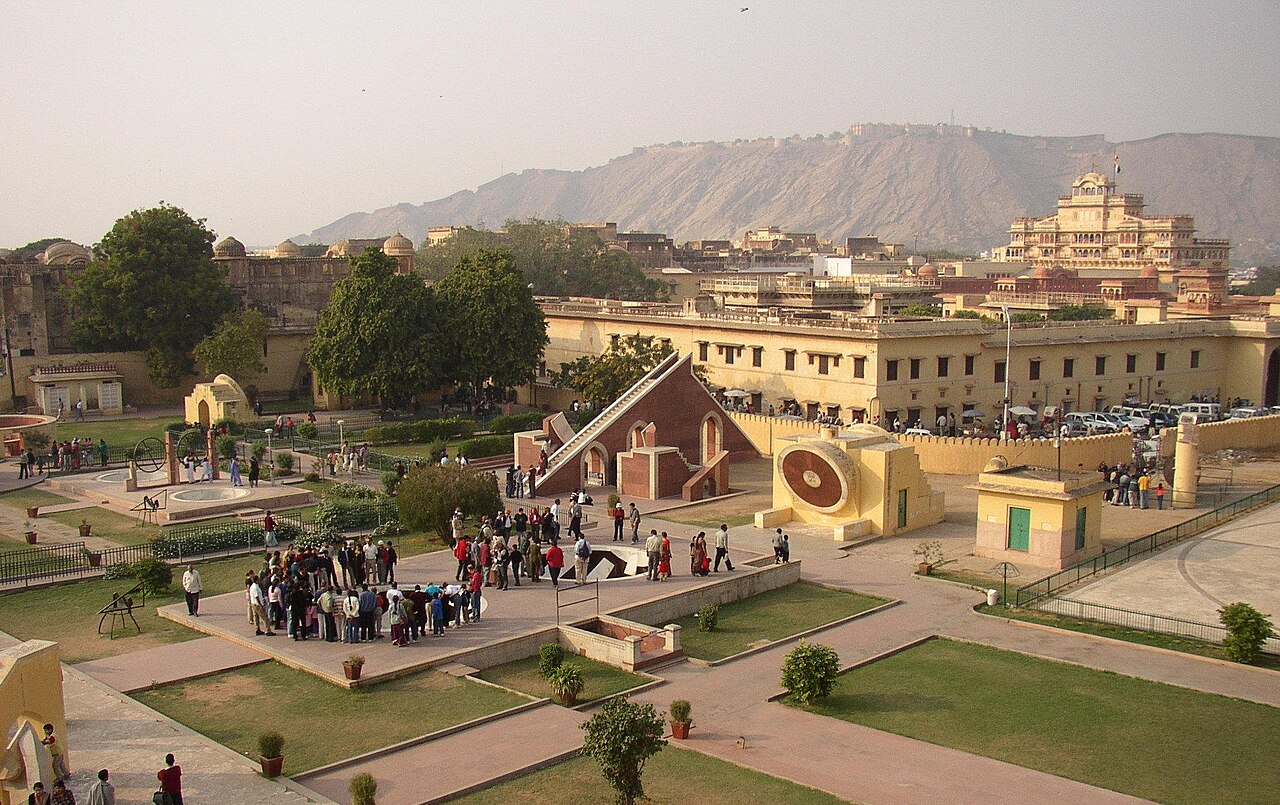
Jantar Mantar reads, at first glance, like an abstract sculpture garden — a field of oversized stone and marble geometric forms with no obvious function. It is in fact a working solar observatory, the largest and best-preserved of five such complexes Maharaja Sawai Jai Singh II built across northern India, and the instruments still return measurements accurate enough to teach astronomy students today. The dominant structure is the Samrat Yantra, a triangular gnomon rising 27 metres at a precise latitudinal angle of 27 degrees, flanked by a pair of quarter-circle scales calibrated to read time to an accuracy of two seconds — a tolerance that predates the mechanical chronometer's arrival in India by decades. The material logic is exacting rather than decorative: the load-bearing cores are rubble masonry finished in white lime plaster over a base of local stone, with the graduated scales — the actual measuring surfaces — cut and inlaid in white Makrana marble for its dimensional stability under Rajasthan's extreme daily temperature swing, which would crack a lesser stone over repeated thermal cycles and throw off the readings by degrees that matter.
Best time of day: 11:30 – 13:00. When the sun is near its zenith and the Samrat Yantra's shadow moves visibly along the time scale — the instrument's actual function is only legible around solar noon.
Jantar Mantar timings
Jantar Mantar opens at 09:00 and closes at 16:30. The weekend is no different: Saturday and Sunday follow the same times.
- Opening hours
- 09:00–16:30
Mon–Sun 09:00–16:30 - Closed on
- Open every day
Opening hours compiled from rajasthantourism.gov.in and public records, last updated . They change without notice — confirm before you travel. How we write these guides
Jantar Mantar ticket price
| Ticket | Price |
|---|---|
| Indian visitors | ₹50 |
| Foreign visitors | ₹200 |
| Children | Free |
| Camera | Free |
Included in the Rajasthan Composite Ticket (₹300 Indian / ₹1,000 foreign, valid 2 days, also covers Amber Fort, Hawa Mahal, Nahargarh Fort, and Albert Hall Museum). Handheld still photography using mobile phones or personal cameras is free; commercial tripod use and pre-wedding photography carry an explicit surcharge of ₹200 (obtainable at the Archaeology Department ticket window on-site). Video cameras are charged ₹50.
Prices compiled from rajasthantourism.gov.in and public records, last updated . They change without notice — confirm before you travel. How we write these guides
Best time to visit Jantar Mantar
- Quiet
- Moderate
- Busy
- Very busy
09:00 – 10:30
Morning OpeningBest time to go
Quietest window; instruments still in cool morning shade, easiest to walk the full circuit without queuing at the Samrat Yantra staircase.
Quiet10:30 – 13:00
Midday Solar Peak
Best time to actually see the instruments function, but also when tour coaches concentrate — expect a short wait to access upper platforms on the Samrat Yantra.
Very busy13:00 – 15:00
Afternoon Heat
Open stone surfaces radiate heat; crowd thins as groups move to indoor sites like the Textile Museum.
Moderate15:00 – 16:30
Late Afternoon
Photographers arrive for long-shadow images across the instrument field before last entry at 16:00.
Busy
History of Jantar Mantar
Sawai Jai Singh II, in addition to founding Jaipur and commissioning its urban grid, held a serious scholarly interest in astronomy, corresponding with European observatories and consulting Ptolemaic, Islamic, and Hindu astronomical treatises before designing his instruments. Dissatisfied with the accuracy of existing brass astrolabes, which were vulnerable to measurement error at small scale, he reasoned that instruments built at monumental scale in masonry would deliver proportionally finer precision — an engineering insight that the Samrat Yantra's continued accuracy still bears out.
Construction at the Jaipur site ran from 1728 to 1734, following Jai Singh's earlier observatory at Delhi (1724) and preceding those at Ujjain, Mathura, and Varanasi. The complex holds nineteen instruments, including the Rashivalayas — twelve individual instruments, one for each zodiac sign, each oriented to calculate that constellation's position with maximum accuracy at its own specific time of year — and the Jai Prakash Yantra, a pair of concave hemispherical bowls that map the sky onto a marked interior surface, allowing an observer to plot a celestial body's position by the shadow cast through a central wire.
The observatory fell into disuse through the 19th century as European instruments superseded manual masonry astronomy, and underwent restoration under British antiquarian Arthur Garrett in 1901–02 and again by the Rajasthan state government through the 20th century. UNESCO inscribed Jantar Mantar as a World Heritage Site in 2010, citing it as an exceptional testimony to the Mughal-era cosmological and astronomical conceptions of court elites.
Rules & etiquette at Jantar Mantar
The site rewards a guide far more than most Jaipur monuments, since the instruments are unlabelled beyond basic signage and unintuitive without explanation — licensed guides operate from a kiosk near the entrance at approximately ₹300–400 for a 45-minute circuit and are worth the cost here specifically.
Several instruments, including the Samrat Yantra's staircases and the Rama Yantra's inner walkway, have low railings and uneven worn-stone steps; the Archaeology Department restricts access to the uppermost platforms of the Samrat Yantra during high wind advisories, posted at the entrance on the day. Footwear is not required to be removed anywhere on-site. Climbing on instrument surfaces beyond the designated viewing platforms is prohibited and monitored by on-site staff — the marble scales are original 18th-century material, not replicas, and are irreplaceable if chipped.
Drones are prohibited without prior written clearance from the Archaeology Department, arranged at least 48 hours in advance.
Tips for visiting Jantar Mantar
- 1
Visit as close to local solar noon as your schedule allows — most of these instruments are literally illegible outside a window either side of noon, since their entire function depends on shadow position, and a visit at 4 PM shows you sculpture rather than science.
- 2
The Samrat Yantra's shadow moves at a rate of roughly 1 millimetre every second on its lower scale — ask the on-site guide to demonstrate this in real time with a wristwatch; it is the single most convincing thing about the entire complex and photographs poorly, so watch it rather than photograph it.
- 3
Combine Jantar Mantar with City Palace and Hawa Mahal as a single walking morning: it sits directly between the two, roughly 400 metres from Hawa Mahal and immediately adjacent to City Palace's Tripolia Gate side. Arrive by 09:00 to beat both the heat and the tour-coach arrivals that cluster from 10:30.
How to reach Jantar Mantar
The red star is Jantar Mantar; the numbered pins are the 10 nearest places in our guides, each showing its rank in its city. Tap a pin for details.
Gangori Bazaar Road, adjacent to City Palace, Jaipur, Rajasthan 302002Directions in Google Maps
From Jaipur International Airport (JAI)
₹300–₹45012 km · 30–40 min
OLA/Uber).
From Jaipur Junction Railway Station (JP)
₹90–₹1404 km · 12–20 min
Auto).
From Sindhi Camp ISBT
₹60–₹903 km · 10–15 min
Auto).
Nearest airport
From Jaipur International Airport (JAI)
12 km, 30–40 minutes.
Nearest railway station
From Jaipur Junction (JP)
4 km, 12–20 minutes.
Jantar Mantar FAQs
What time of day does Jantar Mantar's Samrat Yantra actually show accurate time?
Any time during opening hours, but the reading is easiest to interpret and demonstrate around solar noon (roughly 11:30–13:00 local time), when the shadow crosses the central scale markings at a visibly measurable rate.
Is a guide necessary to understand the instruments?
Strongly recommended. Unlike Amber or Hawa Mahal, the instruments have minimal signage and are not self-explanatory. Licensed guides operate from the entrance kiosk at ₹300–400 for a 45-minute circuit.
Is Jantar Mantar covered by the Rajasthan Composite Ticket?
Yes. The ₹300 Indian / ₹1,000 foreign composite ticket, valid 2 days, covers Jantar Mantar alongside Amber Fort, Hawa Mahal, Nahargarh Fort, and Albert Hall Museum.
How does Jantar Mantar fit into a walking route with City Palace and Hawa Mahal?
It sits directly between the two — adjacent to City Palace's Tripolia Gate side and roughly 400 metres from Hawa Mahal — making a logical single-morning walking circuit in either direction.
Compiled with AI assistance from official sources and public records, and published only after the checks in How we write these guides. Nobody from Traveliac has visited this place. Last updated . How we rank and check places
Places to visit near Jantar Mantar
Straight-line distances from our map; times are estimates.
 #2 in Jaipur
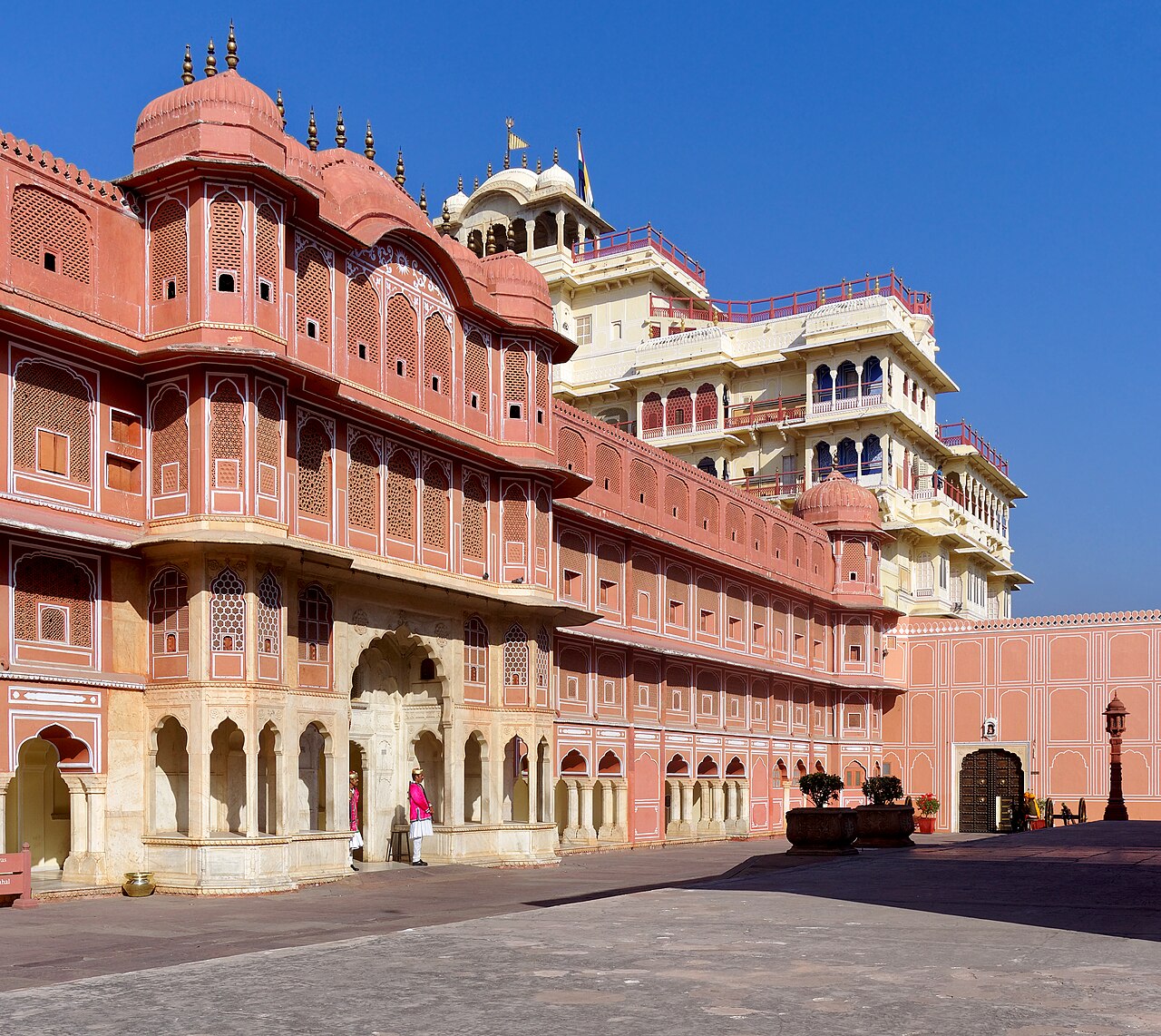
City Palace Jaipur
Palace · 150 m · about 2 min walk
 #3 in Jaipur
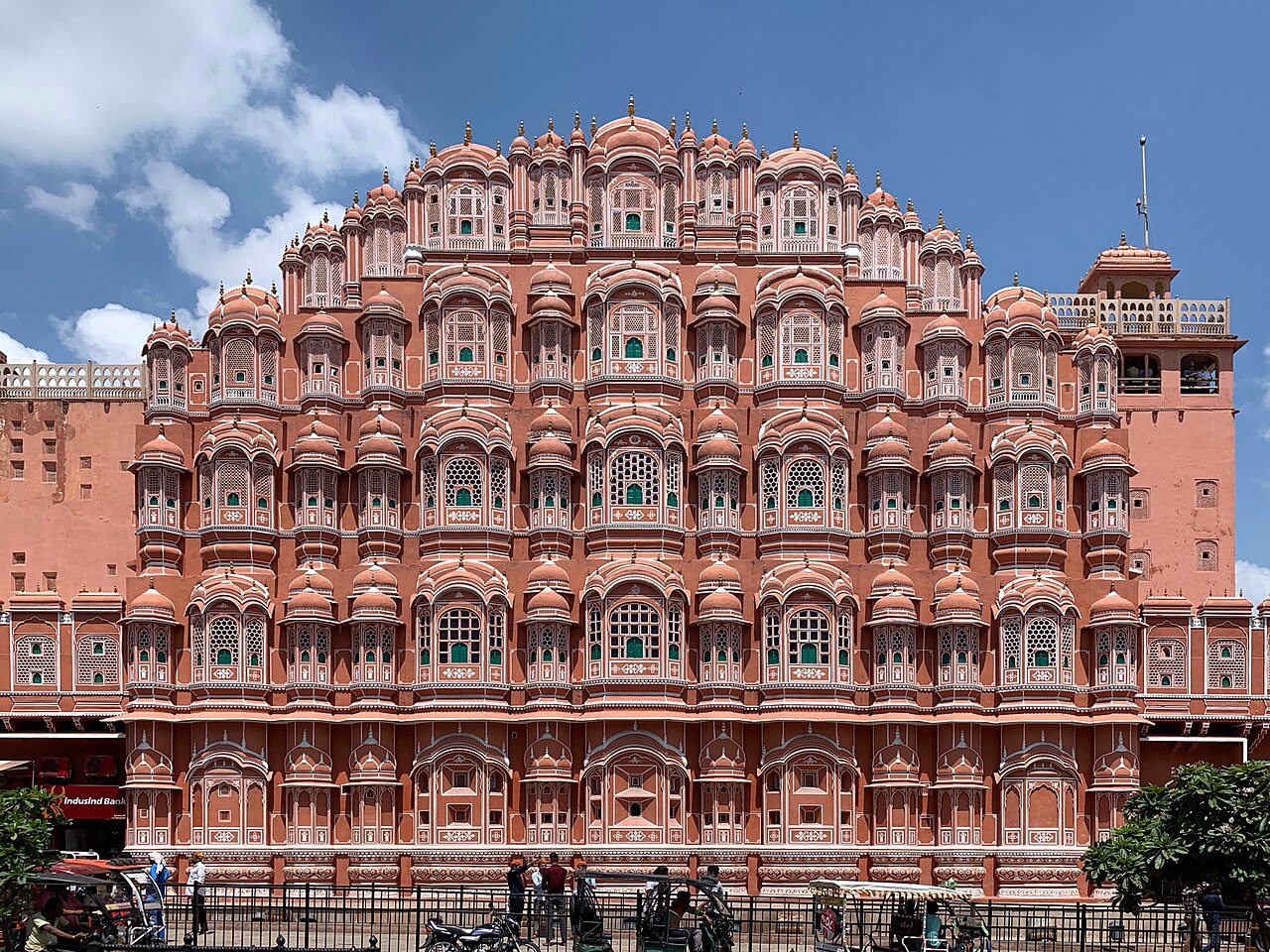
Hawa Mahal
Palace · 250 m · about 4 min walk
 #6 in Jaipur
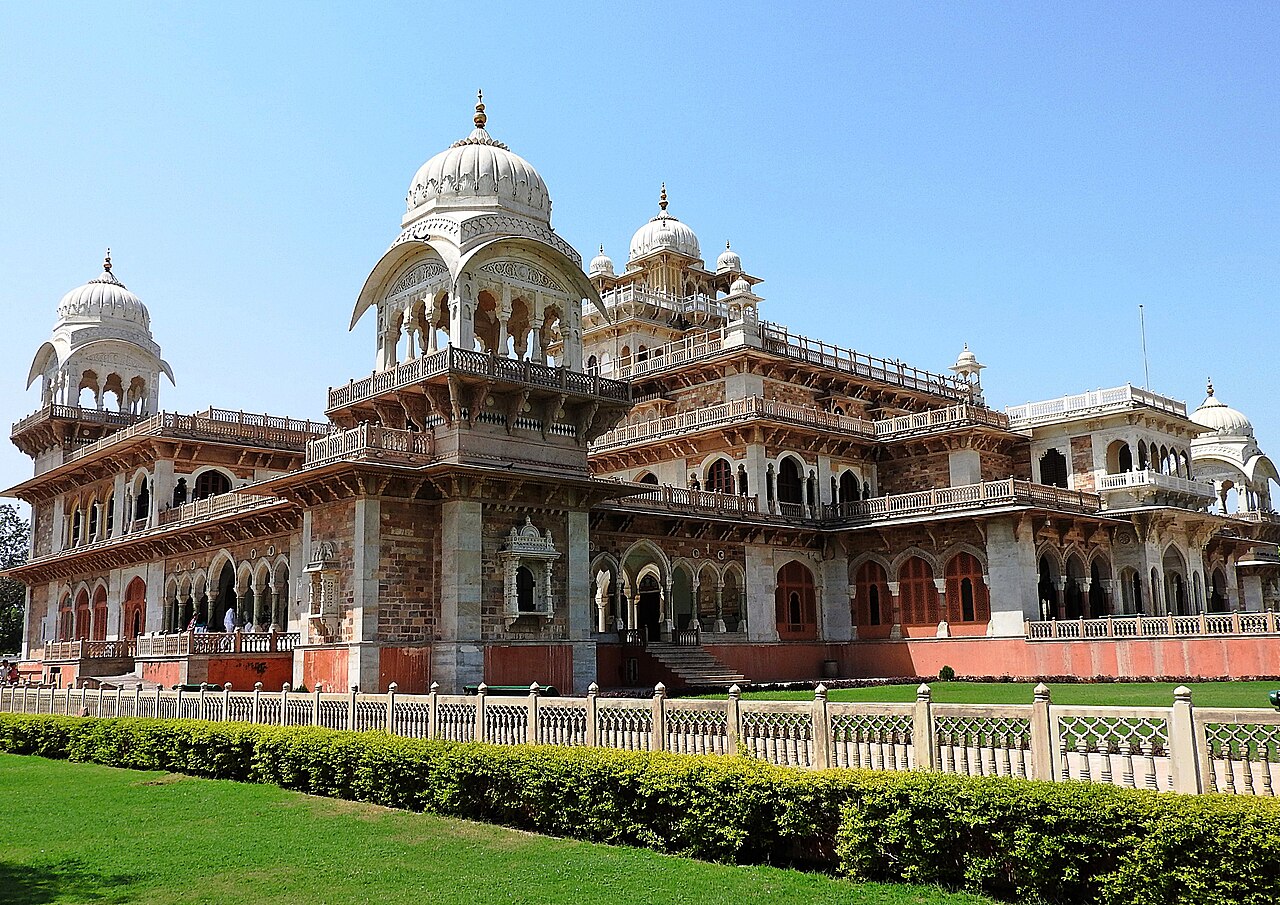
Albert Hall Museum
Museum · 1.6 km · about 25 min walk
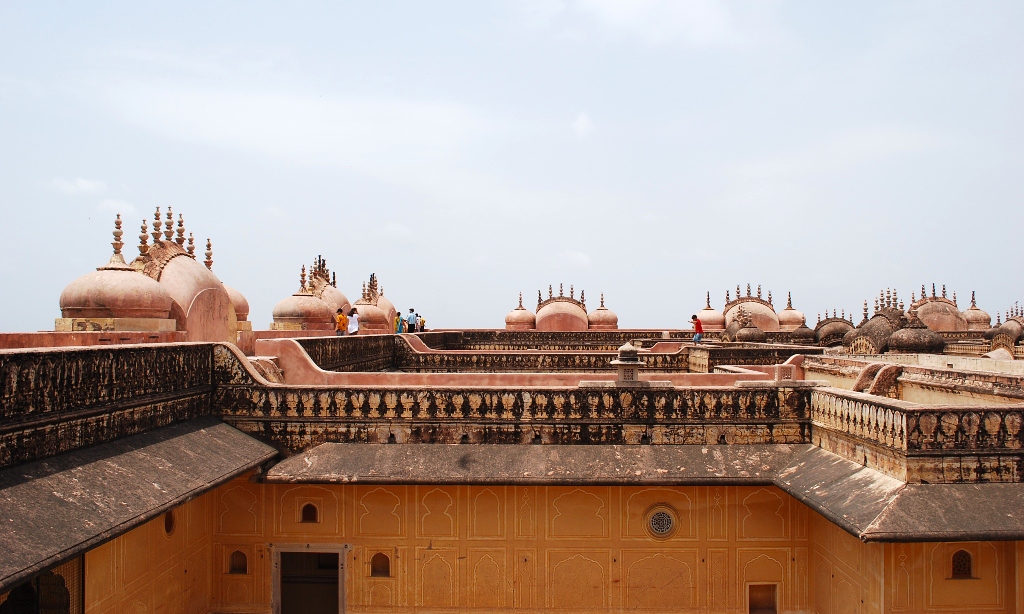 #5 in Jaipur
Nahargarh Fort
Fort · 1.6 km · about 27 min walk