
Galta Ji (Monkey Temple & Sun Temple)
#10of 12 places to visit in JaipurJaipur, Rajasthan
Also known as Galtaji Temple · Galta Kund
Quick answer
Opening hours: 05:00–20:00. Entry is free. Allow 2 hrs. Best time: 07:00 – 09:00.
Updated · Compiled by Traveliac, AI-assisted · 4 min read
- Opening hours
- 05:00–20:00
- Entry fee
- Free
- Time needed
- 2 hrs
- Best time of day
- 07:00 – 09:00
- Best months
- Oct – Mar
- Address
- Galta Road, Devnagar, Jaipur, Rajasthan 302029
About Galta Ji (Monkey Temple & Sun Temple)
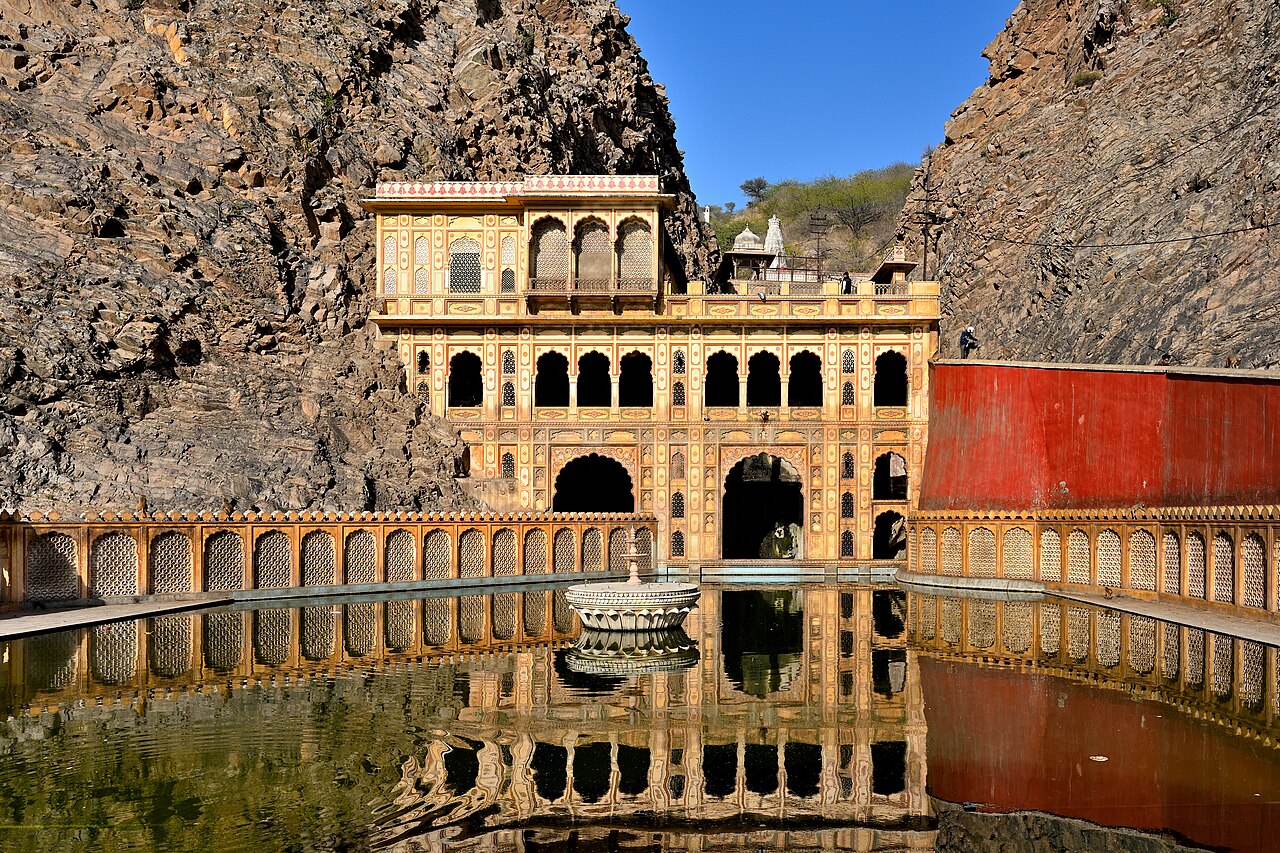
Galta Ji occupies a narrow defile in the Aravalli hills east of Jaipur, a landscape of pink-grey granite outcrops where natural springs have fed a chain of stone-walled water tanks, or kunds, for centuries — the principal one, Galta Kund, is held by local tradition to never run dry, even in the region's harshest drought years. The temple complex descends the ravine in tiers: the Sun Temple (Surya Mandir) crowns the ridge above, visible from much of eastern Jaipur as a white silhouette against the skyline, while the lower complex holds pavilions dedicated to Balaji (Hanuman) built in pink sandstone with painted ceiling panels depicting Krishna legends in fading vegetable-dye pigments. The resident population of rhesus macaques and grey langurs, numbering in the several hundreds, is the site's other defining feature and the source of its popular English name — the monkeys move freely through the temple courtyards and kunds, largely tolerated and even ritually fed by pilgrims as an act of devotion to Hanuman.
Best time of day: 07:00 – 09:00. When the monkey troops are most active feeding near the kunds and the temperature in the narrow ravine is still manageable before midday heat settles into the gorge.
Photography
₹20 camera fee
Galta Ji (Monkey Temple & Sun Temple) timings
Galta Ji (Monkey Temple & Sun Temple) opens at 05:00 and closes at 20:00. Those hours hold on Saturday and Sunday too.
- Opening hours
- 05:00–20:00
Mon–Sun 05:00–20:00 - Closed on
- Open every day
Opening hours compiled from rajasthantourism.gov.in and public records, last updated . They change without notice — confirm before you travel. How we write these guides
Galta Ji (Monkey Temple & Sun Temple) ticket price
| Ticket | Price |
|---|---|
| Indian visitors | Free |
| Foreign visitors | Free |
| Children | Free |
| Camera | ₹20 |
No entry ticket; the site operates as an active place of pilgrimage under temple trust management rather than an Archaeology Department monument. A nominal camera fee is collected informally by temple attendants at some approach points, payable in cash. Donations at individual shrine boxes are voluntary.
Prices compiled from rajasthantourism.gov.in and public records, last updated . They change without notice — confirm before you travel. How we write these guides
Best time to visit Galta Ji (Monkey Temple & Sun Temple)
- Quiet
- Moderate
- Busy
05:00 – 07:00
Dawn Pilgrimage
Early devotees perform morning rituals at the main kund; quiet but not empty, since this is prime local worship time.
Moderate07:00 – 09:00
Morning Peak Activity
Monkey troops most active near feeding areas; good light for the Surya Mandir climb before heat sets in.
Moderate09:00 – 16:00
Midday HeatBest time to go
Fewest visitors; the exposed ridge to Surya Mandir becomes uncomfortably hot for the climb in summer months.
Quiet16:00 – 19:00
Evening Devotion
Local families return for evening aarti at the Balaji shrines; monkeys congregate for evening feeding rituals.
Busy
History of Galta Ji (Monkey Temple & Sun Temple)
The site's religious significance predates its architectural complex by centuries: Hindu tradition identifies the ravine as the meditation retreat (ashram) of the sage Galav, after whom Galta Ji is named, a site associated in Puranic accounts with penance and where the spring water is described as possessing purifying qualities tied to the sage's austerities.
The temple structures visible today were substantially built in the 18th century under the patronage of Sawai Jai Singh II's court, with the principal construction attributed to Diwan Rao Kriparam, a nobleman in Jai Singh's administration, during the 1740s. The Sun Temple atop the ridge was added somewhat later, in the 19th century, funded by wealthy Jaipur merchant patrons, and its elevated position was deliberately chosen to catch the first light of sunrise across the eastern approach to the city — a symbolic alignment for a temple dedicated to Surya.
The complex functioned as an active pilgrimage and monastic centre for the Ramanandi sect through the colonial period, and it remains under continuous religious administration by the Galta Peeth Temple Trust today, distinguishing it from most other Jaipur heritage sites, which are secular monuments under state archaeological management.
Rules & etiquette at Galta Ji (Monkey Temple & Sun Temple)
Footwear must be removed before entering any of the shrine platforms, though the outer kund terraces and walking paths do not require it. Modest dress is expected throughout, given the site's active-worship status; shoulders and knees should be covered, more strictly enforced here than at Jaipur's secular monuments.
The monkeys are semi-wild and will grab food, plastic bags, sunglasses, and loose items directly from visitors' hands with little warning — do not carry visible food or hold bags loosely, and remove sunglasses before entering monkey-dense sections. Bites and scratches, while uncommon, do occur; anyone bitten should seek a rabies post-exposure consultation promptly rather than dismissing it as minor.
Bathing in the kunds is permitted and practised by pilgrims, particularly at the main Galta Kund, but the water is not treated to any modern potability standard — swallowing it is inadvisable despite its ritual significance to devotees.
Tips for visiting Galta Ji (Monkey Temple & Sun Temple)
- 1
Arrive early and combine the visit with the climb to Surya Mandir at the ridge top — the temperature difference and the exertion are real, but the payoff is one of the widest sunrise views over Jaipur available from any site, arguably superior to Nahargarh's more crowded sunset equivalent.
- 2
The access road from the main Jaipur–Agra highway side is steep and narrow near the final approach; hired taxis often park at a lower lot and require a 10–15 minute walk up, which is worth confirming with the driver in advance to avoid surprise.
- 3
Avoid carrying loose food, water bottles with visible caps the monkeys have learned to open, or dangling jewellery through the lower kund section — locals watch this daily and can offer real-time guidance on which stretches currently have the most assertive troops, since monkey behaviour and territory shift seasonally.
How to reach Galta Ji (Monkey Temple & Sun Temple)
The red star is Galta Ji (Monkey Temple & Sun Temple); the numbered pins are the 10 nearest places in our guides, each showing its rank in its city. Tap a pin for details.
Galta Road, Devnagar, Jaipur, Rajasthan 302029Directions in Google Maps
From Jaipur International Airport (JAI)
₹400–₹55017 km · 40–55 min
OLA/Uber).
From Jaipur Junction Railway Station (JP)
₹250–₹35011 km · 30–40 min
Auto).
From Sindhi Camp ISBT
₹200–₹30010 km · 25–35 min
Auto).
Nearest airport
From Jaipur International Airport (JAI)
17 km, 40–55 minutes.
Nearest railway station
From Jaipur Junction (JP)
11 km, 30–40 minutes.
Galta Ji (Monkey Temple & Sun Temple) FAQs
Is it safe to visit Galta Ji given the monkeys?
Generally yes with basic precautions: avoid carrying visible food, loose bags, or dangling items like sunglasses and jewellery. Bites are uncommon but occur; anyone bitten or scratched should seek a rabies post-exposure medical consultation without delay.
Is there an entry fee for Galta Ji?
No official entry ticket exists, since it is an active temple under trust management rather than a state monument. A small informal camera fee (around ₹20) may be collected, and shrine donations are voluntary.
How difficult is the climb to Surya Mandir (Sun Temple)?
It is a steep but manageable ridge climb of roughly 20–30 minutes from the lower Balaji temple complex, best attempted in early morning before heat builds in the exposed, shadeless final stretch.
Can you bathe in the kunds at Galta Ji?
Yes, pilgrims regularly bathe in the main Galta Kund as a ritual practice, but the water is untreated by modern standards; swallowing it is not advisable despite its traditional purifying significance.
Compiled with AI assistance from official sources and public records, and published only after the checks in How we write these guides. Nobody from Traveliac has visited this place. Last updated . How we rank and check places
Places to visit near Galta Ji (Monkey Temple & Sun Temple)
Straight-line distances from our map; times are estimates.
 #12 in Jaipur
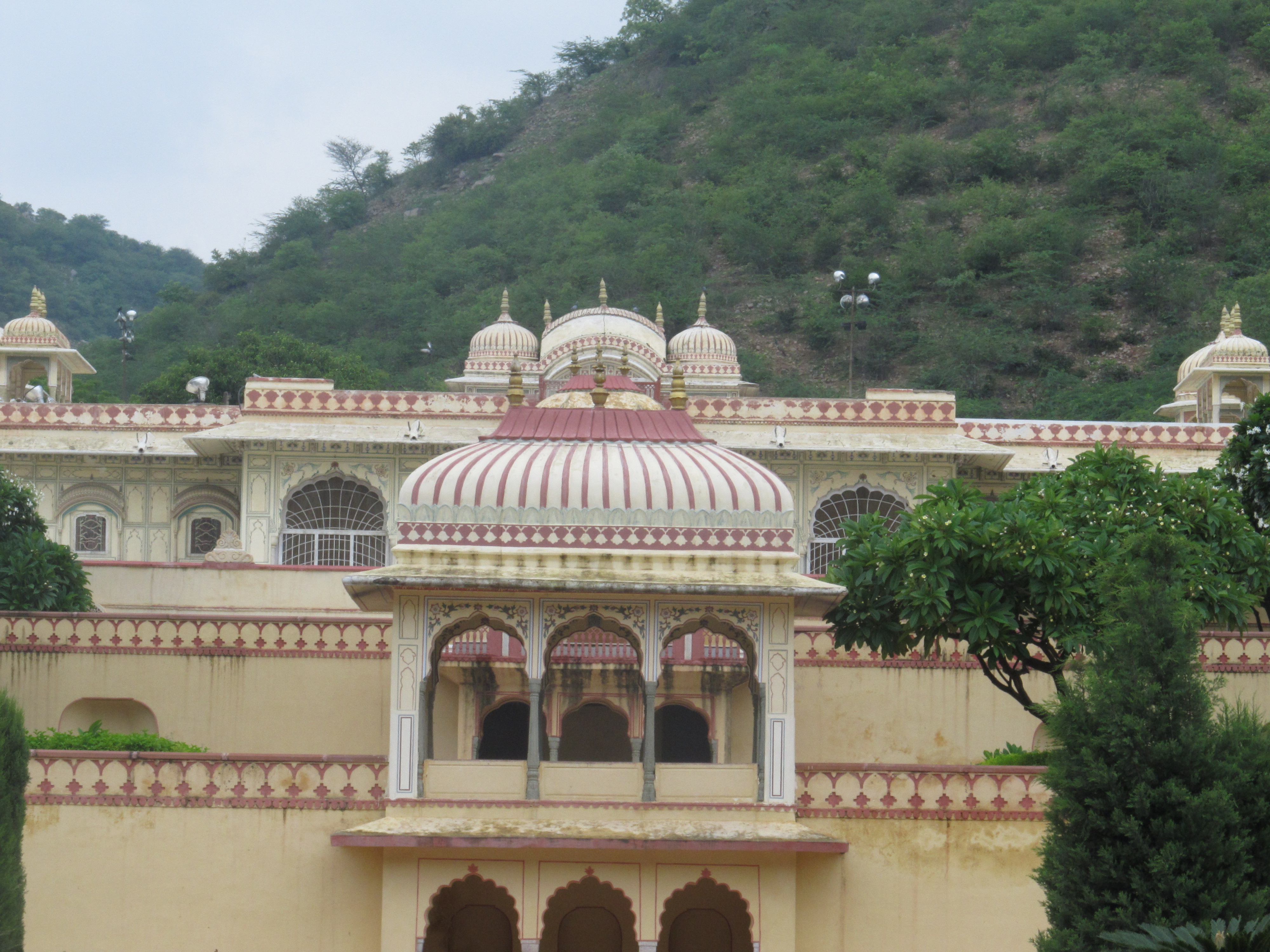
Sisodia Rani Ka Bagh & Palace
Palace · 3 km · about 10 min by road
 #3 in Jaipur
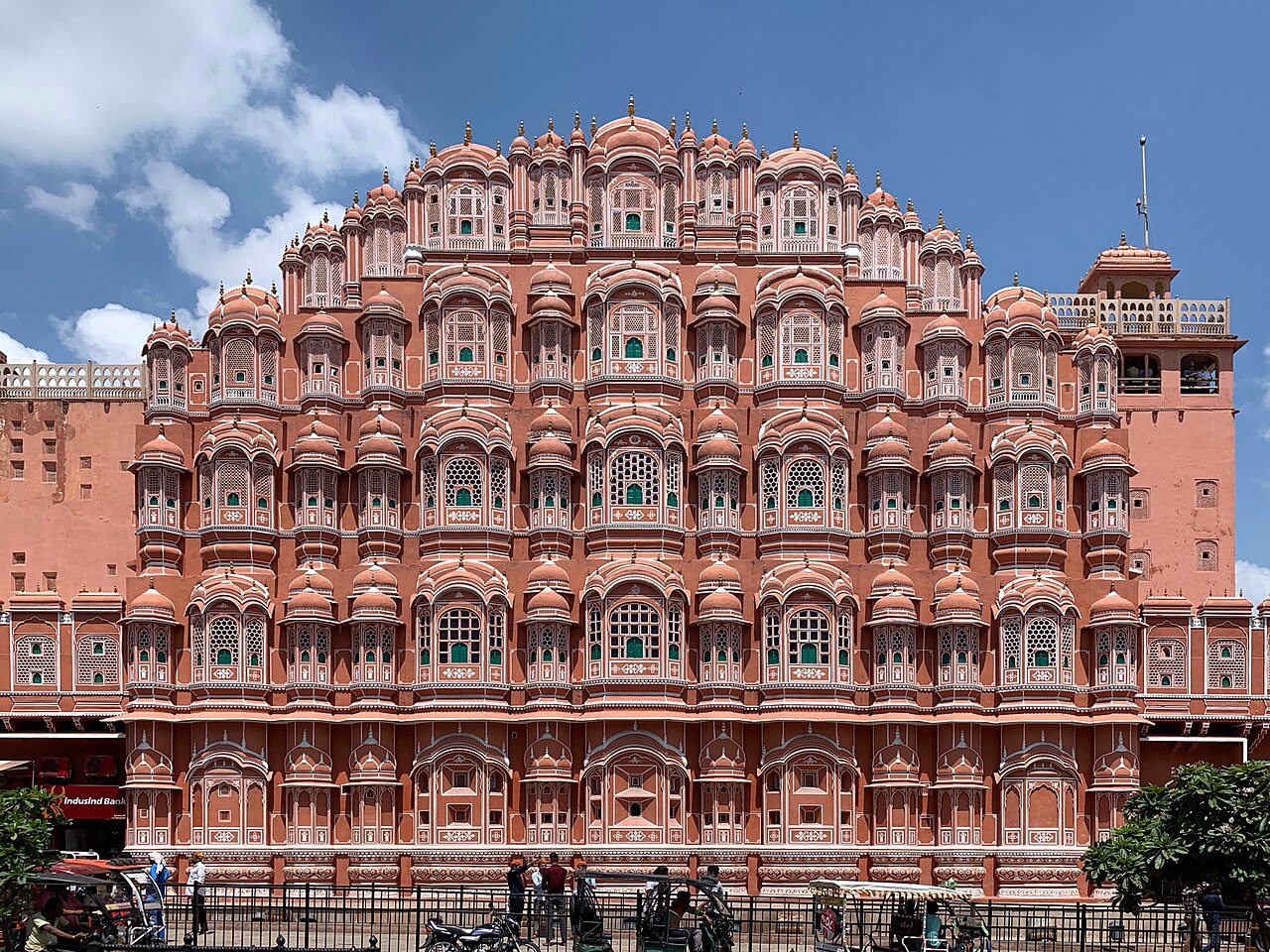
Hawa Mahal
Palace · 3 km · about 10 min by road
 #4 in Jaipur
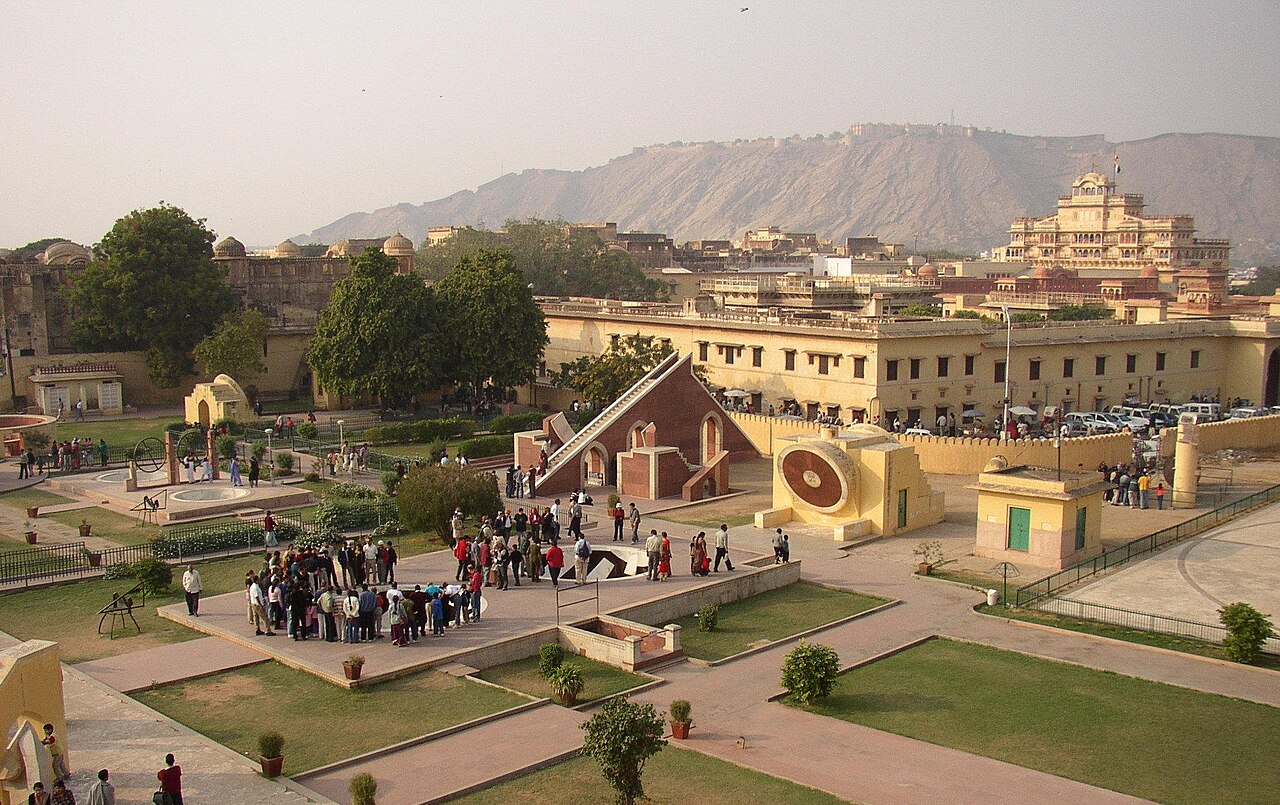
Jantar Mantar
Heritage · 3 km · about 10 min by road
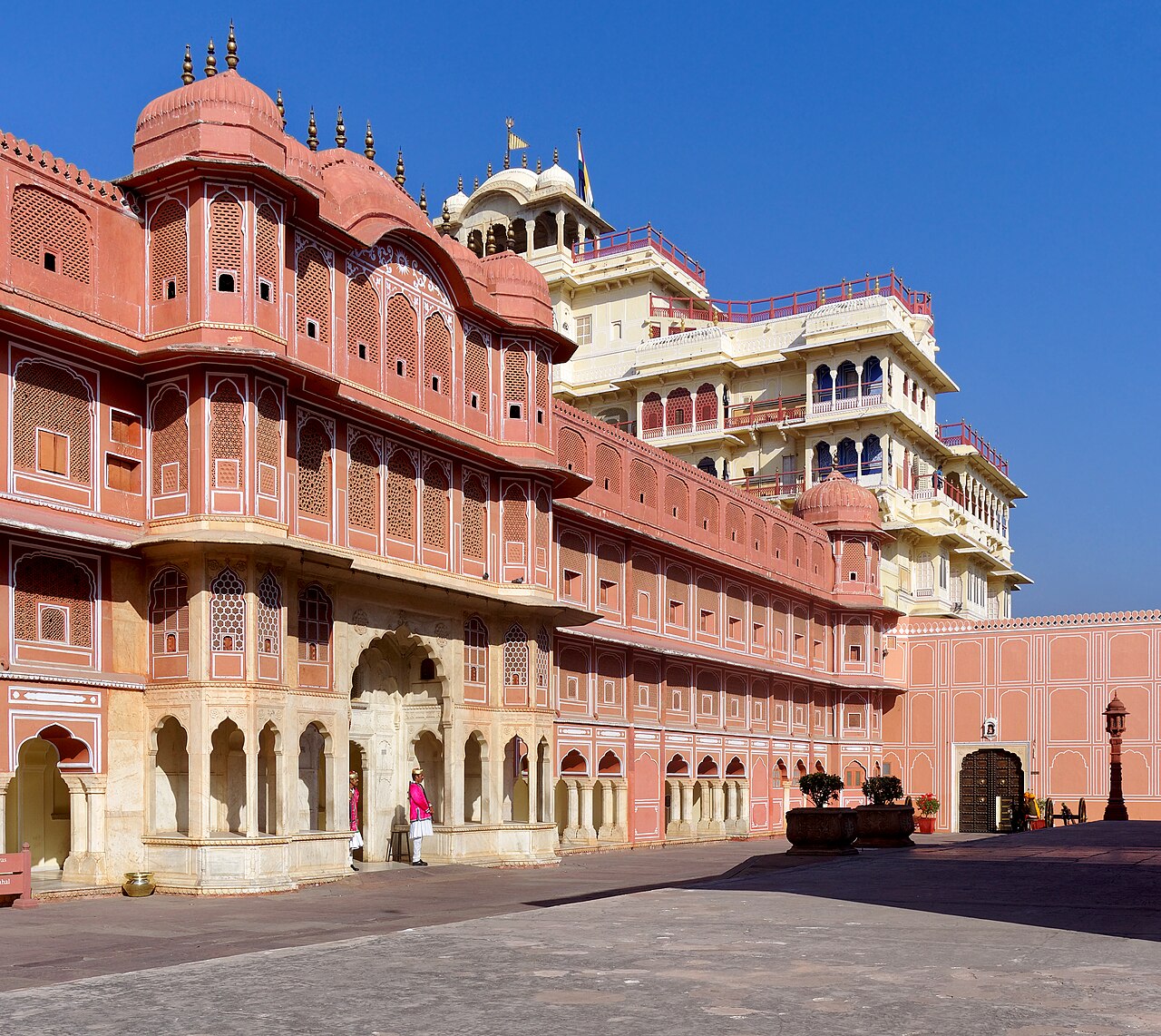 #2 in Jaipur
City Palace Jaipur
Palace · 3 km · about 10 min by road