Desert National Park
#10of 10 places to visit in JaisalmerJaisalmer, Rajasthan
Also known as DNP · Thar Desert National Park
Quick answer
Opening hours: 06:00–18:00. Entry: ₹100 Indian · ₹400 foreign. Allow 3 hrs. Best time: 06:00 – 09:00 or 16:00 – 18:00.
Updated · Compiled by Traveliac, AI-assisted · 5 min read
- Opening hours
- 06:00–18:00
- 06:00 – 18:00 daily, with safari entry slots typically fixed at dawn and late afternoon for the best wildlife visibility and to avoid peak heat.
- Entry fee
- ₹100 Indian
- Ticket from
- Time needed
- 3 hrs
- Best time of day
- 06:00 – 09:00 or 16:00 – 18:00
- Best months
- Oct – Mar
- Address
- Desert National Park, Jaisalmer district, Rajasthan 345001, core zones located southwest of Jaisalmer city near Sam and Sudashri
About Desert National Park
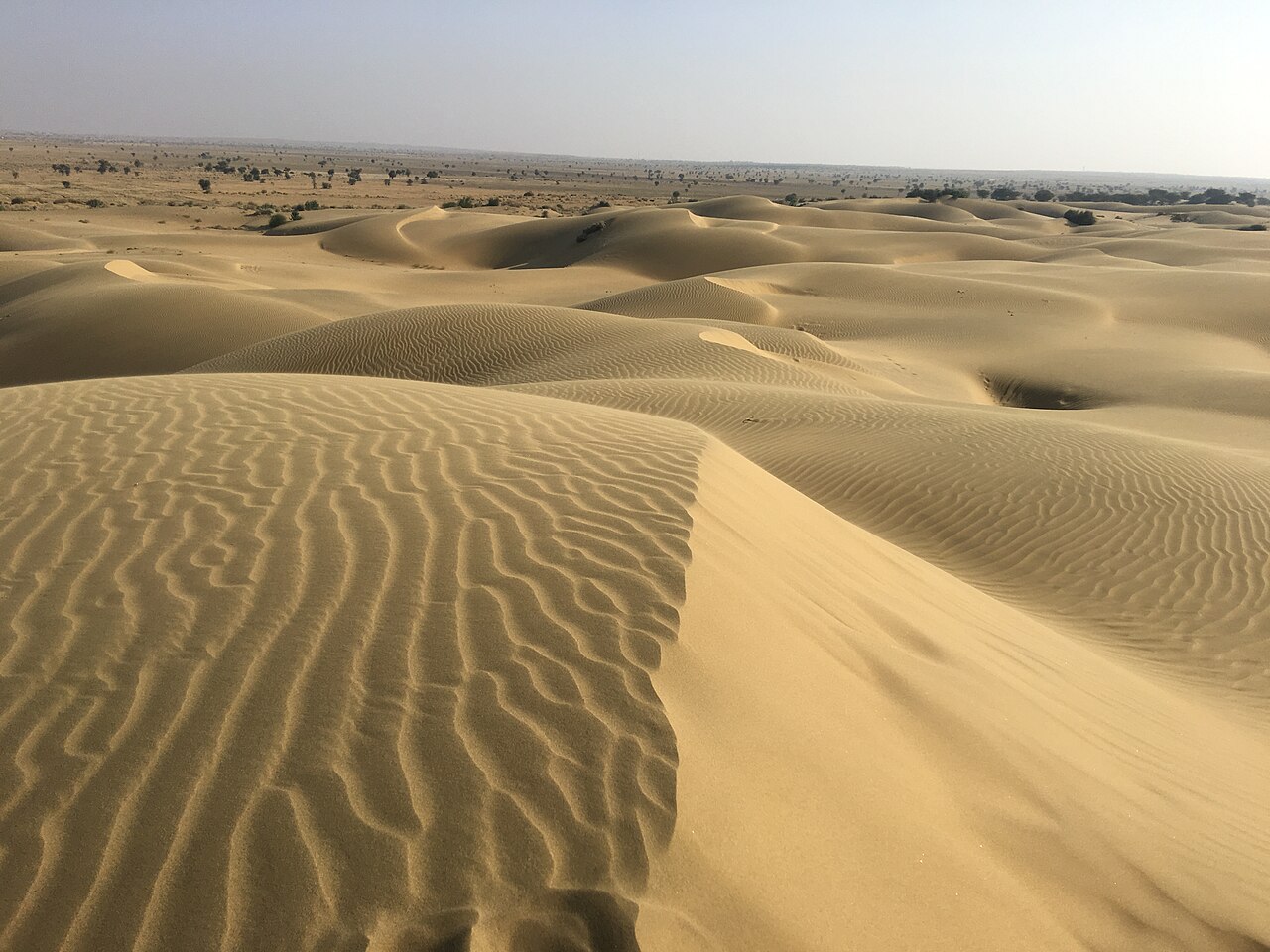
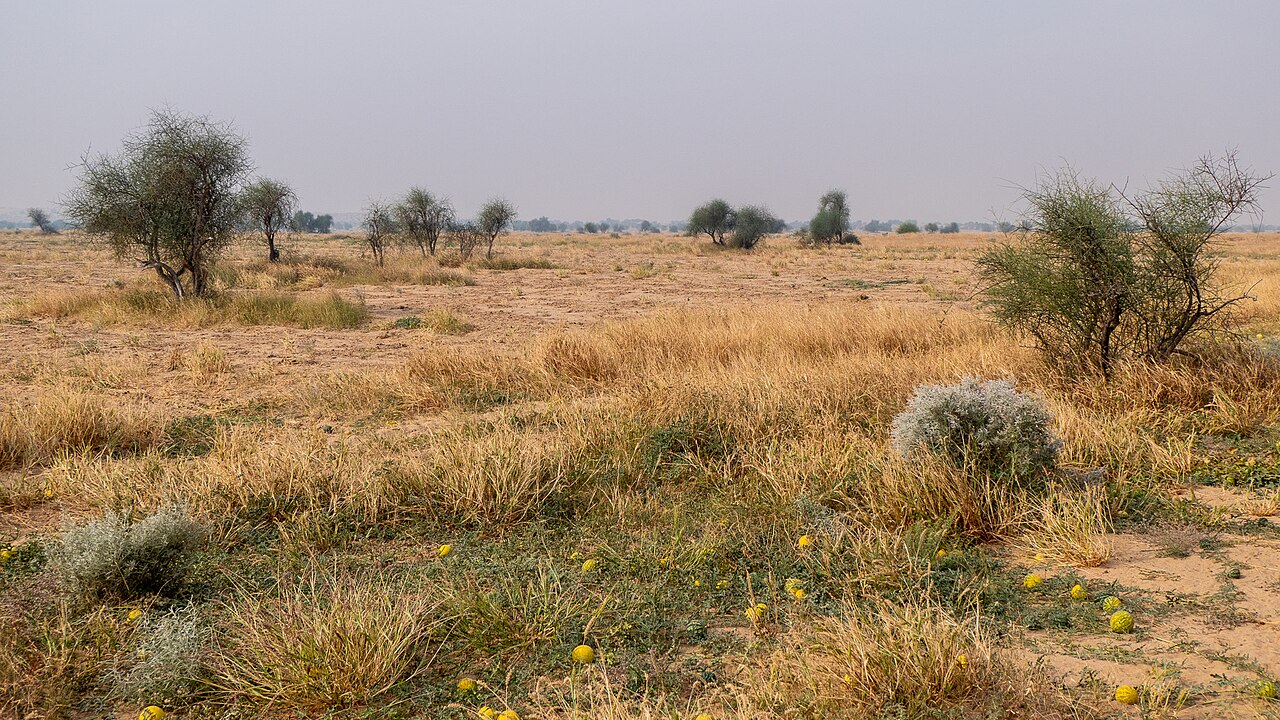
Desert National Park spans a vast stretch of the Thar around Jaisalmer, protecting one of the largest and most ecologically intact tracts of desert habitat in India and, more urgently, one of the last strongholds of the Great Indian Bustard — a ground-dwelling bird now reduced to a global population numbering only in the low hundreds, making it one of the most critically endangered birds on Earth. The terrain here is deliberately less photogenic than the silky dunes at Sam: much of the park is a mix of scrubland, rocky outcrops, saline depressions, and fixed as well as mobile dunes, a genuine cross-section of Thar desert ecology rather than the single dramatic dune landscape most visitors picture.
Best time of day: 06:00 – 09:00 or 16:00 – 18:00. For the best chance of spotting the Great Indian Bustard and other wildlife, when animals are most active before the heat sets in; 16:00 – 18:00 as a secondary window with good light for photography.
Photography
₹200 camera fee
Desert National Park timings
Desert National Park opens at 06:00 and closes at 18:00. It keeps the same hours on Saturday and Sunday.
- Opening hours
- 06:00–18:00
Mon–Sun 06:00–18:00 - 06:00 – 18:00 daily, with safari entry slots typically fixed at dawn and late afternoon for the best wildlife visibility and to avoid peak heat.
- Closed on
- Open every day
Good to know: Some interior zones may restrict access during the Great Indian Bustard breeding season (roughly March to August) to minimise disturbance; check current restrictions with a registered operator before planning a visit in these months.
Opening hours compiled from rajasthantourism.gov.in and public records, last updated . They change without notice — confirm before you travel. How we write these guides
Desert National Park ticket price
| Ticket | Price |
|---|---|
| Indian visitors | ₹100 |
| Foreign visitors | ₹400 |
| Children | ₹50 |
| Camera | ₹200 |
Fees are collected by the Rajasthan Forest Department at the designated entry checkpoint, typically arranged through a registered safari operator rather than an independent walk-in ticket window, since access requires a permitted vehicle and, in many sectors, an accompanying forest guide. Fees vary somewhat by specific zone and vehicle type; a jeep safari package including guide and permit typically runs ₹2,500–₹4,500 for a half-day circuit.
Prices compiled from rajasthantourism.gov.in and public records, last updated . They change without notice — confirm before you travel. How we write these guides
Best time to visit Desert National Park
- Quiet
- Moderate
06:00 – 09:00
Dawn SafariBest time to go
Best wildlife activity window; visitor numbers are naturally limited by the early hour and permit requirements.
Quiet09:00 – 15:00
Midday
Heat drives most wildlife to cover; few safaris operate during this window, and the park sees minimal visitor traffic.
Quiet15:00 – 16:00
Pre-Afternoon Safari Prep
Operators prepare for the second daily safari window; still quiet on the ground.
Quiet16:00 – 18:00
Late Afternoon Safari
Second main wildlife-viewing window of the day, drawing a modest number of dedicated wildlife tourists and photographers rather than casual day-trippers.
Moderate
History of Desert National Park
The park was established in 1980 under the Wildlife Protection Act, with its boundaries drawn to encompass critical habitat for the Great Indian Bustard alongside other Thar specialists including blackbuck, chinkara (Indian gazelle), desert fox, and a range of raptors and migratory birds that use the desert as a wintering or passage habitat. At the time of its establishment, the Great Indian Bustard population, while already in decline from historic levels, was substantially larger than today; the species has since collapsed further due to a combination of habitat loss, hunting pressure prior to stricter enforcement, and — increasingly identified as the dominant modern threat — collision mortality with high-tension power transmission lines strung across its flight paths, since the bird's poor frontal vision and heavy body make it particularly vulnerable to overhead wires it does not detect in time to avoid.
Conservation efforts since the mid-2010s have intensified considerably, including a captive-breeding and conservation-breeding programme run in coordination between the Rajasthan Forest Department, the Wildlife Institute of India, and international partners, based partly at a dedicated breeding centre near Sam. Efforts to bury or reroute sections of power infrastructure and install bird-diverter markers on transmission lines within core bustard habitat have been undertaken following Supreme Court directives, though the species' recovery trajectory remains precarious and its total wild population is still measured in the low hundreds nationally.
Rules & etiquette at Desert National Park
Entry to core zones generally requires a registered guide or forest department escort rather than independent self-drive access, both for visitor safety in trackless desert terrain and to limit disturbance to sensitive wildlife, particularly during the bustard breeding season; book through a Jaisalmer-based operator with genuine forest department permits rather than an informal 'desert safari' that may only skirt the park's buffer rather than its protected core.
Staying on designated tracks is not merely courtesy but active conservation practice, since off-track vehicle movement disturbs ground-nesting birds including the bustard and damages the fragile biological soil crust that stabilises much of the desert surface. Loud noise, including music played from vehicles, is discouraged and in some areas prohibited, given how easily desert wildlife is startled by sound carrying across open terrain.
Photography is generally permitted but a substantial telephoto lens is genuinely necessary for wildlife photography here — the animals, particularly the bustard, keep considerable distance from vehicles and are not habituated to close approach the way wildlife in more heavily visited parks elsewhere in India can be.
Tips for visiting Desert National Park
- 1
Set expectations correctly before going: this is not a safari park in the African-savanna sense with reliably close, frequent sightings, and a visit built around 'guaranteed bustard sighting' expectations will likely disappoint, given the species' rarity and skittishness. Treat a Desert National Park visit as a genuine ecological experience — the range of habitats, the chance of blackbuck and chinkara sightings, and a rich raptor and migratory bird population in winter — rather than a single-species pursuit, and any bustard sighting as a rare bonus rather than the baseline expectation.
- 2
Winter (November–February) is unambiguously the best season both for temperature and for the presence of migratory birds, including houbara bustard (a related but distinct and less endangered species) and numerous raptors. Combine a park visit with Sam Sand Dunes, given the geographic overlap between the two, but budget it as a separate, dedicated activity with its own guide and vehicle rather than an add-on squeezed into a sunset-dune itinerary, since the wildlife-focused early morning timing conflicts with a typical dune sunset schedule.
- 3
Bring binoculars — this is a park best experienced through careful scanning of open terrain rather than close encounters, and a decent pair of binoculars will do more for the visit than any camera lens.
How to reach Desert National Park
We haven't pinned Desert National Park's exact position yet; the map shows the other places in our Jaisalmer guide. Use the address below or the directions link.
Desert National Park, Jaisalmer district, Rajasthan 345001, core zones located southwest of Jaisalmer city near Sam and SudashriDirections in Google Maps
From Jaisalmer city (fort area)
₹2,000–₹3,50040 km · 50–65 min
Private taxi round-trip, negotiated, or included in a booked safari package).
From Jaisalmer Railway Station
₹2,000–₹3,00042 km · 55–70 min
Private taxi, one-way, negotiated).
From Jaisalmer Airport (JSA)
₹1,800–₹2,80040 km · 50–65 min
Prepaid taxi).
Nearest airport
From Jaisalmer Airport (JSA)
approximately 40 km to the nearest park access point, 50–65 minutes by road. Flights are seasonal and limited.
Nearest railway station
From Jaisalmer Railway Station
approximately 42 km to the nearest park access point, 55–70 minutes by road.
Desert National Park FAQs
What wildlife can you actually expect to see at Desert National Park?
Blackbuck, chinkara (Indian gazelle), desert fox, and a range of raptors and migratory birds are reasonably likely sightings, especially in winter. The Great Indian Bustard, the park's flagship species, is critically endangered with a global population in the low hundreds, so a sighting is a rare bonus rather than a guaranteed outcome.
Do you need a permit or guide to enter Desert National Park?
Yes, core zones generally require a registered guide or forest department escort rather than independent self-drive access, both for safety in trackless desert terrain and to limit disturbance to sensitive wildlife. Book through a Jaisalmer-based operator holding genuine forest department permits.
Why is the Great Indian Bustard so endangered?
Collision with high-tension power transmission lines is now considered the dominant threat, since the bird's poor frontal vision and heavy body make it prone to fatal collisions with overhead wires. Combined with historic hunting pressure and habitat loss, the global population has fallen to only a few hundred birds, prompting a conservation-breeding programme run with the Wildlife Institute of India near Sam.
How does Desert National Park differ from Sam Sand Dunes?
Sam Sand Dunes is a commercially developed tourist site within the park's buffer zone, focused on camel and jeep safaris and sunset viewing over silky dunes. The park's core zones cover a much larger and more ecologically varied area — scrubland, rocky outcrops, and mixed dune terrain — managed specifically for wildlife conservation, with more restricted, guide-required access.
Compiled with AI assistance from official sources and public records, and published only after the checks in How we write these guides. Nobody from Traveliac has visited this place. Last updated . How we rank and check places