
Salim Singh Ki Haveli
#7of 10 places to visit in JaisalmerJaisalmer, Rajasthan
Also known as Jahar Palace
Quick answer
Opening hours: 08:00–18:00, last entry 17:30. Entry: ₹60 Indian · ₹100 foreign. Allow 45 min. Best time: 16:00 – 17:30.
Updated · Compiled by Traveliac, AI-assisted · 5 min read
- Opening hours
- 08:00–18:00
- Entry fee
- ₹60 Indian
- Ticket from
- Time needed
- 45 min
- Best time of day
- 16:00 – 17:30
- Best months
- Oct – Mar
- Address
- Salim Singh Ki Haveli Road, near Jaisalmer Fort, Jaisalmer, Rajasthan 345001
About Salim Singh Ki Haveli
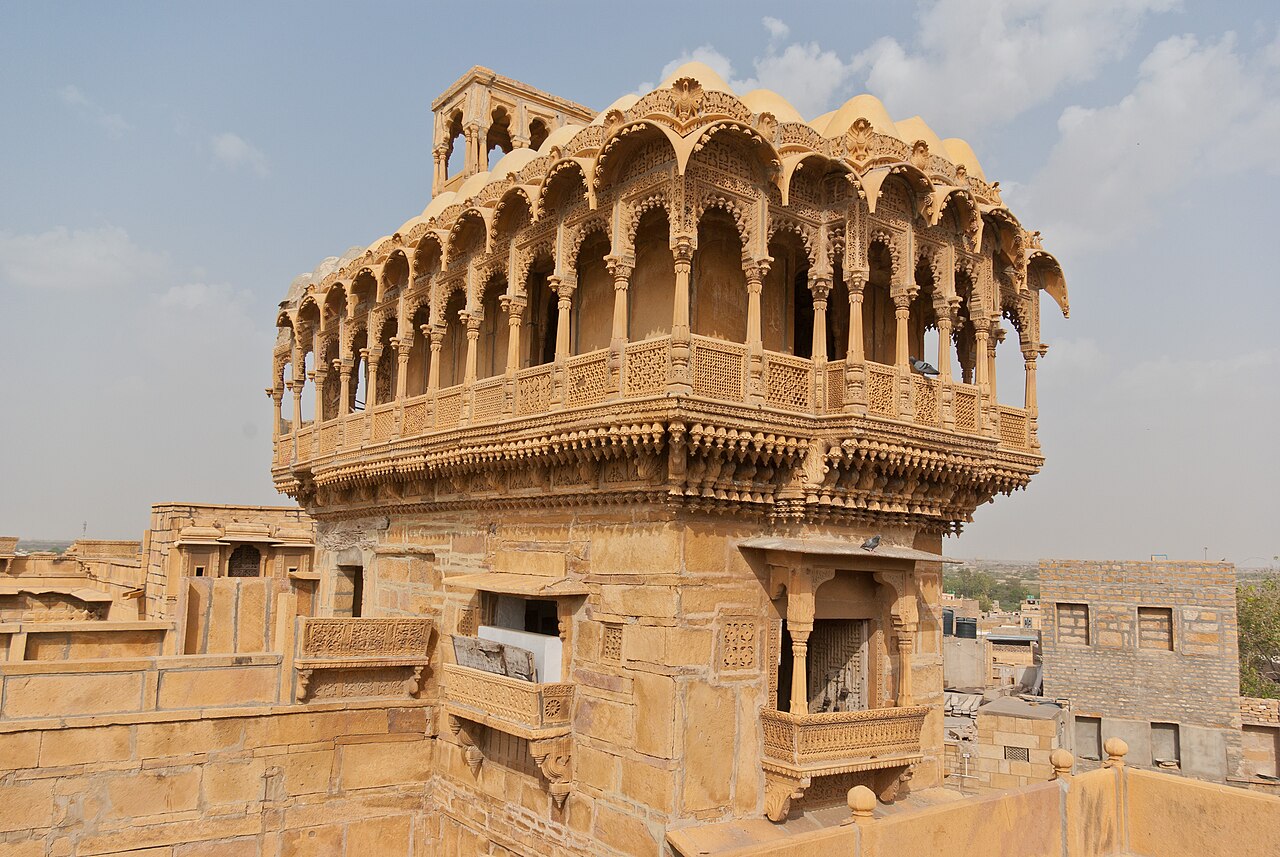
Salim Singh Ki Haveli is instantly recognisable from a distance for one feature: its top storey curves outward and upward from the building's base like the neck and fanned tail of a peacock, an overhanging arched section entirely disproportionate to the comparatively narrow, boxy lower floors it sits on. Built around 1815, the haveli was originally taller still — local accounts describe an upper section removed after a dispute with the ruling Bhati family over the builder's ambition to match the height of the royal palace itself, though the surviving structure at roughly five to seven storeys remains one of the tallest private residences in the old city. Blue-tinted glazed tiles bordering some of the window frames are a later addition, and stand out distinctly against the golden-yellow sandstone body of the building.
Best time of day: 16:00 – 17:30. When the low western sun catches the underside of the arched, peacock-shaped overhang from the courtyard below and turns the stone a deeper amber than midday light allows.
Photography
₹50 camera fee
Salim Singh Ki Haveli timings
Salim Singh Ki Haveli opens at 08:00 and closes at 18:00. The weekend is no different: Saturday and Sunday follow the same times.
- Opening hours
- 08:00–18:00
Mon–Sun 08:00–18:00 - Closed on
- Open every day
Opening hours compiled from rajasthantourism.gov.in and public records, last updated . They change without notice — confirm before you travel. How we write these guides
Salim Singh Ki Haveli ticket price
| Ticket | Price |
|---|---|
| Indian visitors | ₹60 |
| Foreign visitors | ₹100 |
| Children | Free |
| Camera | ₹50 |
Entry covers the ground and first-floor rooms currently open to visitors; the upper storeys, including the distinctive curved overhang, are viewable from the courtyard but not always accessible for a full walkthrough depending on ongoing conservation work. A composite ticket combining this haveli with Patwon Ki Haveli and Nathmal Ki Haveli is sometimes sold at a discount by local operators, though this is not an official government scheme — check the fine print.
Prices compiled from rajasthantourism.gov.in and public records, last updated . They change without notice — confirm before you travel. How we write these guides
Best time to visit Salim Singh Ki Haveli
- Quiet
- Moderate
08:00 – 10:00
Early OpeningBest time to go
Quiet at opening; good light on the eastern face of the building.
Quiet10:00 – 13:00
Mid-Morning Circuit
Visitors doing the three-haveli circuit pass through; still comparatively uncrowded relative to Patwon Ki Haveli.
Moderate13:00 – 16:00
Midday Lull
Heat and lunch breaks thin visitor numbers noticeably.
Quiet16:00 – 17:30
Golden Hour
Photographers arrive for the best light on the curved overhang; last entry at 17:30.
Moderate
History of Salim Singh Ki Haveli
The haveli takes its name from Salim Singh, who served as prime minister (diwan) of Jaisalmer state in the early 19th century under Maharawal Mulraj II. Salim Singh is remembered in local histories less for architectural patronage than for political notoriety: contemporary and later accounts describe him as having accumulated near-absolute administrative power, levying heavy taxes on merchants and imposing conditions on Jaisalmer's trading families that several local legends — including the abandonment of Kuldhara village — attribute directly to his conduct. Whether every specific accusation against him is historically verifiable or has been amplified through generations of oral retelling is difficult to establish with certainty, but the consistency of his reputation for coercive rule across independent local traditions suggests it rests on a real basis.
Salim Singh commissioned the haveli as a residence to project the wealth and status his office had accumulated, and the building's most distinctive feature — the flared, peacock-shaped upper section supported on carved brackets — is popularly explained as a deliberate architectural assertion of prestige, built to rival or exceed the profile of the ruler's own palace. Whether the state authorities forced a reduction in its height is part of the same oral tradition surrounding the man; no single definitive contemporary record settles the question, but the truncated, asymmetric roofline visible today is consistent with the story.
Rules & etiquette at Salim Singh Ki Haveli
The haveli remains partly under private family ownership, and staff at the entrance are typically family members or their employees rather than government archaeology department personnel — tipping conventions and flexibility on rules are somewhat more informal here than at government-run sites, but this also means opening hours can shift without notice for family events; confirm before making it the centrepiece of a tight itinerary.
The carved wooden and stone screens on the upper floors are original and structurally aged; visitors are asked not to lean on or touch the jharokha lattice work directly. Photography of the exterior curved overhang is best done from the small public square in front of the haveli rather than from directly beneath it, where the angle flattens the curve.
As with the other haveli sites in Jaisalmer, freelance guides cluster near the entrance offering unofficial tours; agree a fixed price (typically ₹150–₹250 for a 20–30 minute explanation) before starting, since some quote per-person rates that escalate once the tour has begun.
Tips for visiting Salim Singh Ki Haveli
- 1
This is the fastest of the three major Jaisalmer havelis to visit properly — thirty to forty-five minutes covers it comfortably, including time in the small square outside for photographs — which makes it easy to combine with Patwon Ki Haveli and Nathmal Ki Haveli in a single morning, all three within a ten-minute walk or short auto-rickshaw ride of one another and of the fort itself.
- 2
The building is sometimes locally referred to as Jahar Palace, and older guidebooks or drivers may use that name instead — don't assume it's a different site if you hear it. Because the haveli sits at a slightly lower elevation on a side lane rather than directly on a main tourist thoroughfare, it draws noticeably fewer visitors than the other two major havelis, making it a reliable choice if you want architectural photography without a crowd in frame.
- 3
The blue glazed window borders, unusual in Jaisalmer's otherwise monochrome sandstone palette, are worth a closer look up close — bring a zoom lens or binoculars if serious about architectural photography, since the best-preserved tilework is on the upper floors, out of reach for a standard phone camera from the courtyard.
How to reach Salim Singh Ki Haveli
The red star is Salim Singh Ki Haveli; the numbered pins are the 7 nearest places in our guides, each showing its rank in its city. Tap a pin for details.
Salim Singh Ki Haveli Road, near Jaisalmer Fort, Jaisalmer, Rajasthan 345001Directions in Google Maps
From Jaisalmer Fort (main gate)
1 km · 5–10 min
Walkable; auto-rickshaw ₹50–₹80.
From Jaisalmer Railway Station
₹60–₹1002.5 km · 8–10 min
Auto-rickshaw, negotiated).
From Jaisalmer Airport (JSA)
₹350–₹50016 km · 20–30 min
Prepaid taxi).
Nearest airport
From Jaisalmer Airport (JSA)
approximately 16 km, 20–30 minutes by road. Flights are seasonal and limited.
Nearest railway station
From Jaisalmer Railway Station
approximately 2.5 km, 8–10 minutes by auto-rickshaw.
Salim Singh Ki Haveli FAQs
Why does Salim Singh Ki Haveli have a curved upper floor?
The top section flares outward and upward in a shape often compared to a peacock's fanned tail, supported on carved stone brackets. Local tradition holds that the building was originally taller and was reduced in height after political friction with the ruling family, who reportedly objected to a minister's residence rivalling the royal palace's scale.
Who was Salim Singh and why is he significant in Jaisalmer history?
Salim Singh served as prime minister (diwan) of Jaisalmer state in the early 19th century under Maharawal Mulraj II. He is remembered in regional oral history as a powerful and often oppressive administrator, and his conduct toward local merchant communities is cited in the legend surrounding the abandonment of Kuldhara village.
How long does a visit to Salim Singh Ki Haveli take?
Around 30 to 45 minutes, making it the quickest of Jaisalmer's three major haveli visits. It pairs well with Patwon Ki Haveli and Nathmal Ki Haveli, all within a short walk of each other near the fort.
Is Salim Singh Ki Haveli the same as Jahar Palace?
Yes, some local drivers and older references use 'Jahar Palace' interchangeably with Salim Singh Ki Haveli — it is the same building, not a separate site.
Compiled with AI assistance from official sources and public records, and published only after the checks in How we write these guides. Nobody from Traveliac has visited this place. Last updated . How we rank and check places
Places to visit near Salim Singh Ki Haveli
Straight-line distances from our map; times are estimates.
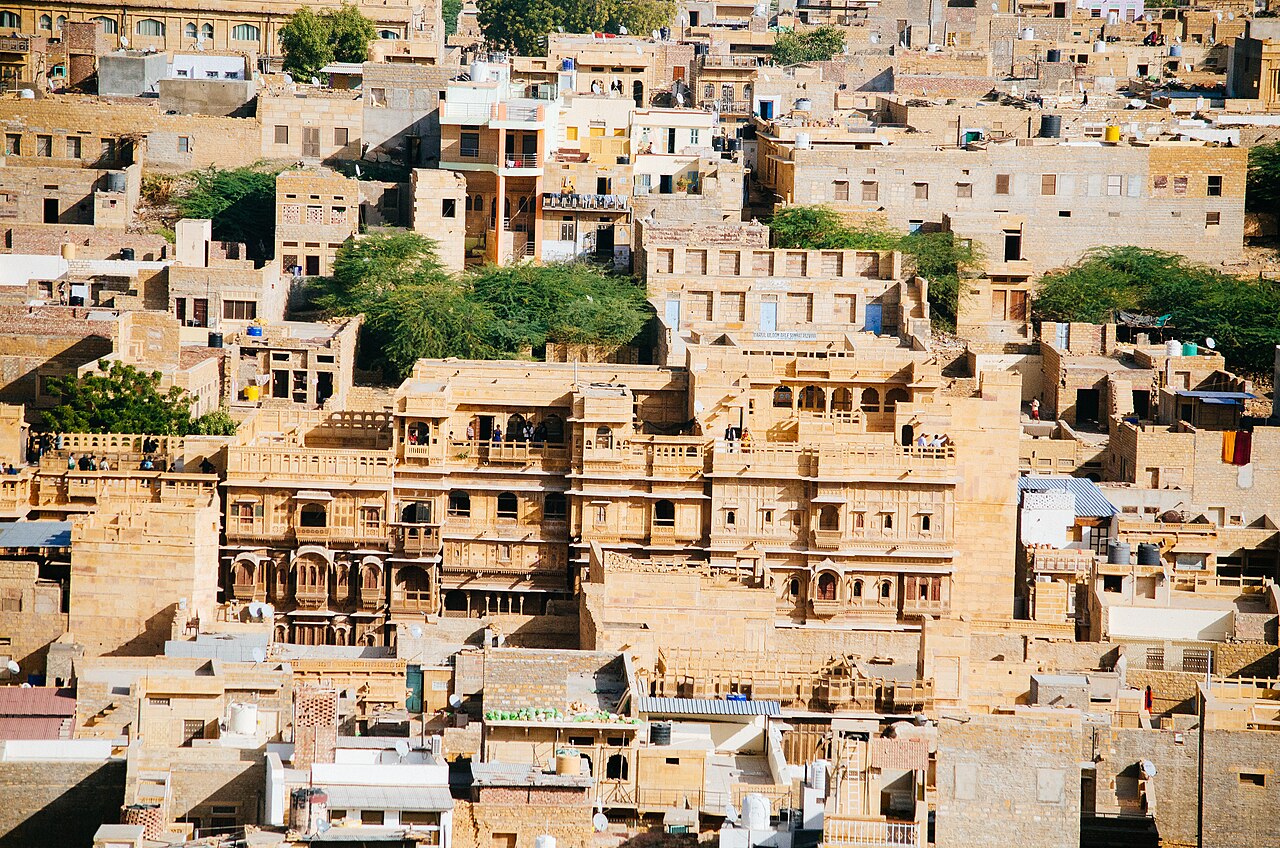 #2 in Jaisalmer
Patwon Ki Haveli
Palace · 300 m · about 5 min walk
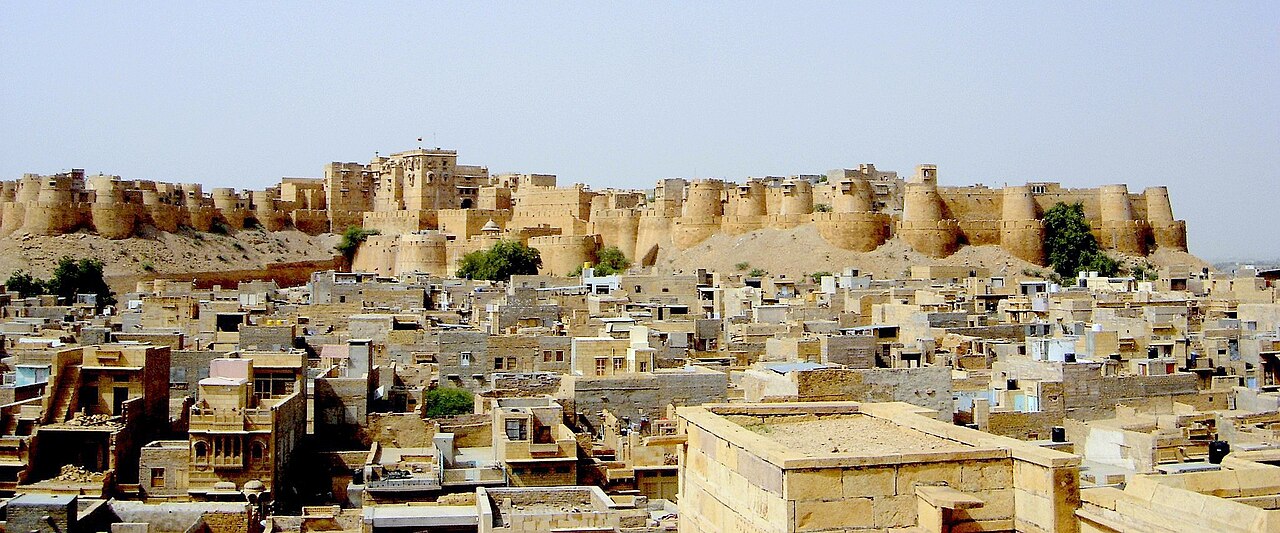 #1 in Jaisalmer
Jaisalmer Fort
Fort · 350 m · about 6 min walk
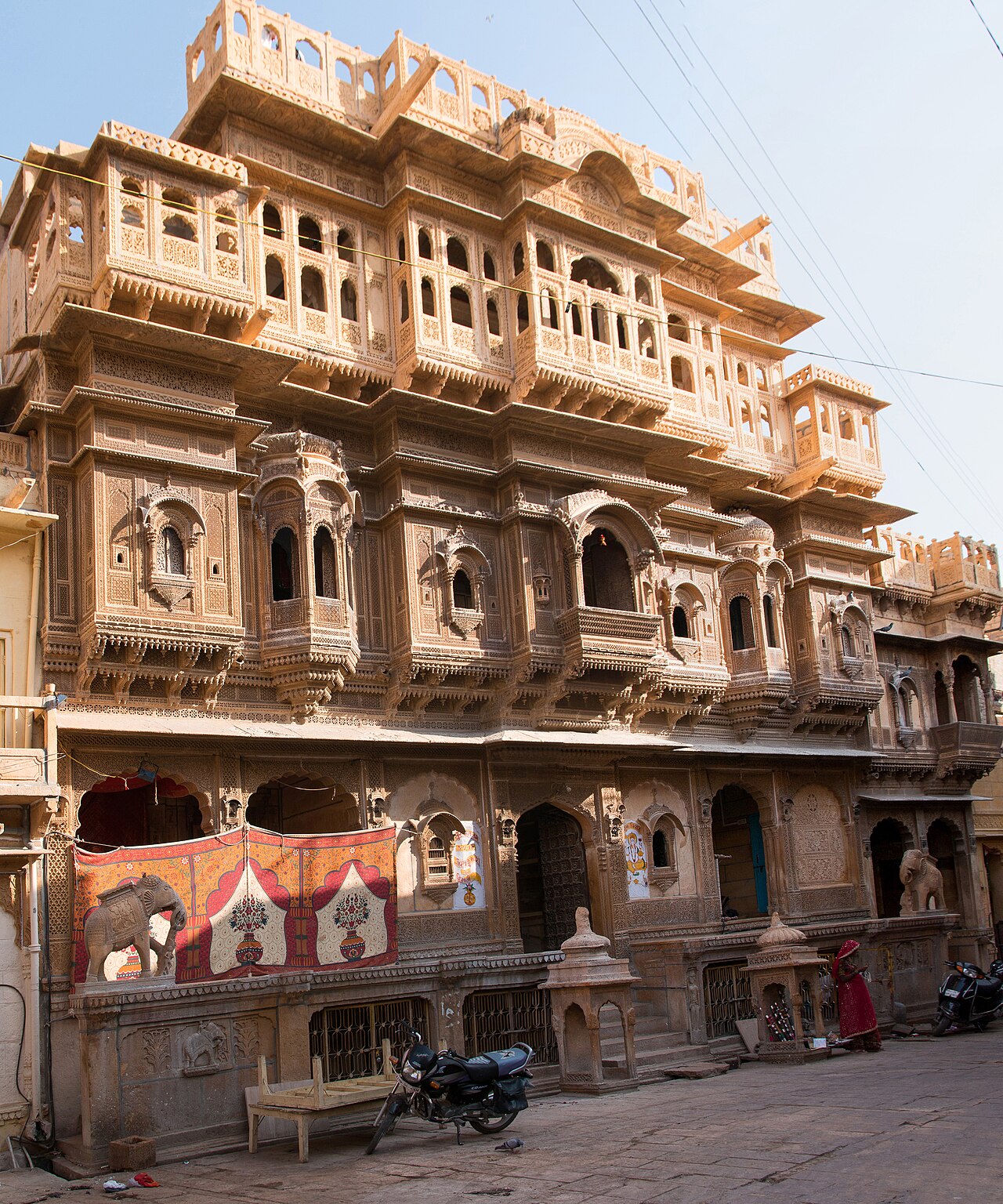 #8 in Jaisalmer
Nathmal Ki Haveli
Palace · 400 m · about 7 min walk
 #4 in JaisalmerFree entry
Gadisar Lake
Lake · 850 m · about 14 min walk