
Jaisalmer Fort
#1of 10 places to visit in JaisalmerJaisalmer, Rajasthan
Also known as Sonar Quila · Golden Fort · Sonar Kila
Quick answer
Opening hours: Open at all hours. Entry: ₹50 Indian · ₹250 foreign. Allow 3 hrs. Best time: 07:00 – 09:00 or 17:00 – 19:00.
Updated · Compiled by Traveliac, AI-assisted · 6 min read
- Opening hours
- Open 24h
- The fort is a living residential township, so its lanes never close. Raj Mahal Palace Museum inside opens 09:00–18:00 with last entry 17:30; the Jain temple complex opens 08:00–12:00, with an afternoon slot of 14:00–17:00 for non-Jain visitors on some days — confirm at the gate.
- Entry fee
- ₹50 Indian
- Ticket from
- Time needed
- 3 hrs
- Best time of day
- 07:00 – 09:00 or 17:00 – 19:00
- Best months
- Oct – Mar
- Address
- Jaisalmer Fort, Jaisalmer, Rajasthan 345001
About Jaisalmer Fort
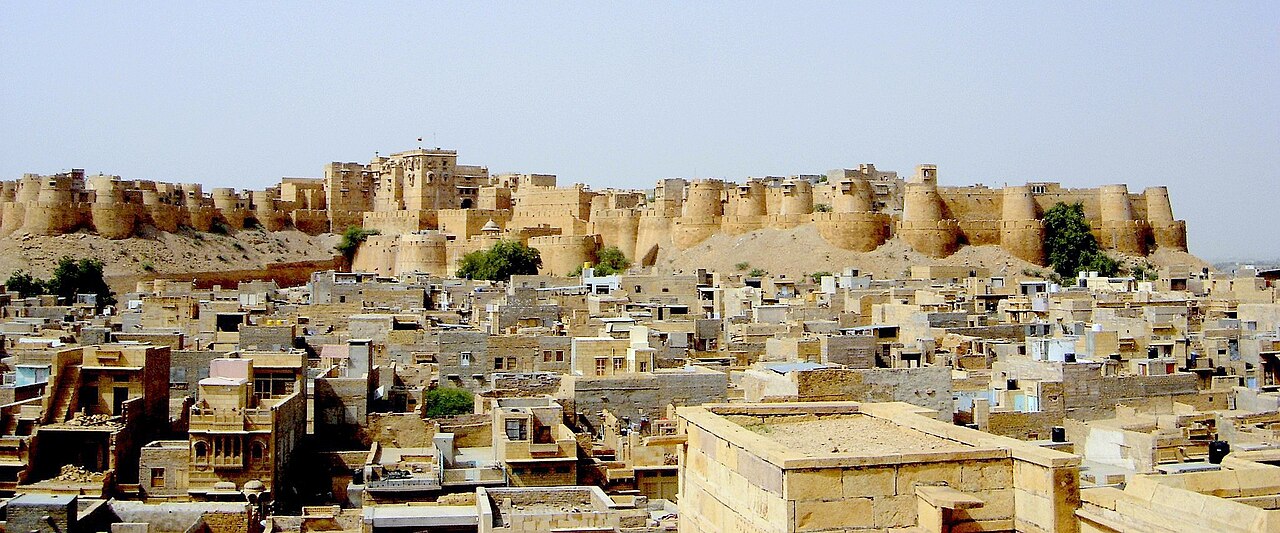
Jaisalmer Fort sits on Trikuta Hill, a 76-metre sandstone rise above the Thar plain, its walls built from the same golden-yellow sandstone quarried locally at Jaisalmer that gives the entire old city its colour and its nickname, Sonar Quila. What separates it from every other major Rajasthani fort is that it is not a monument you visit and leave — roughly 3,000 to 4,000 people still live inside its walls, in havelis and narrow lanes that double as a functioning township with guesthouses, shops selling pattu shawls and silver jewellery, and a working municipal water and sewage problem that UNESCO conservators consider the single greatest threat to the structure. Ninety-nine bastions ring the perimeter, built in two irregular concentric walls rather than one, a defensive design that meant an attacker breaching the outer wall still faced a second killing ground before reaching the palace.
Best time of day: 07:00 – 09:00 or 17:00 – 19:00. For the climb up from Gopa Chowk with low sun raking across the sandstone, and again 17:00 – 19:00 when the fort turns amber-gold and the bastions are lit from the west — the origin of the 'golden fort' name is literal, not marketing copy.
Jaisalmer Fort timings
Jaisalmer Fort is open 24 hours a day, every day of the week, including Saturday and Sunday.
- Opening hours
- Open 24h
Mon–Sun 00:00–23:59 - The fort is a living residential township, so its lanes never close. Raj Mahal Palace Museum inside opens 09:00–18:00 with last entry 17:30; the Jain temple complex opens 08:00–12:00, with an afternoon slot of 14:00–17:00 for non-Jain visitors on some days — confirm at the gate.
- Closed on
- Open every day
Good to know: During Paryushan and other major Jain observances the temple complex may close to tourists entirely for several days; the palace museum timing is unaffected.
Opening hours compiled from rajasthantourism.gov.in and public records, last updated . They change without notice — confirm before you travel. How we write these guides
Jaisalmer Fort ticket price
| Ticket | Price |
|---|---|
| Indian visitors | ₹50 |
| Foreign visitors | ₹250 |
| Children | Free |
| Camera | Free |
Entry fee applies only to the Raj Mahal (royal palace) museum inside the fort, collected at the palace ticket window in the second courtyard; the fort's ramparts, lanes, and Jain temple complex outside the palace are not separately ticketed but the Jain temples charge their own entry (₹50 Indian / ₹100 foreign, camera fee ₹100 extra, no leather items permitted). A composite Jain temple ticket covers all seven interconnected temples. Carrying a camera into the Raj Mahal costs an additional ₹100; tripods require prior written permission from the Department of Archaeology.
Prices compiled from rajasthantourism.gov.in and public records, last updated . They change without notice — confirm before you travel. How we write these guides
Best time to visit Jaisalmer Fort
- Quiet
- Moderate
- Busy
07:00 – 09:00
Early Light ClimbBest time to go
Residents going about morning routines outnumber tourists. Best photographic light on the eastern gate sequence. Palace museum not yet open.
Quiet09:30 – 13:00
Palace and Temple Peak
Domestic tour groups and day-trippers from Jodhpur concentrate at the Raj Mahal ticket window and the Jain temple entrance. Narrow lanes near Gopa Chowk become congested.
Busy13:00 – 16:00
Midday Heat Lull
Heat drives visitors to shaded shops and rooftop cafés. Good window for unhurried lane-walking, though many small vendors close for a midday break.
Moderate17:00 – 19:30
Golden Hour and Sunset
Ramparts and facing-hillside viewpoints fill with photographers as the sandstone turns deep gold, then amber. Restaurant rooftops with fort views take reservations from mid-afternoon in peak season.
Busy
History of Jaisalmer Fort
Rawal Jaisal, a Bhati Rajput ruler who had been displaced from his earlier capital at Lodhruva, founded the fort in 1156 after a Brahmin sage reportedly told him the site — commanding views over trade routes linking Sindh, Punjab, and Central Asia — was auspicious. The fort's location on the caravan route between Delhi and ports on the Sindh coast made Jaisalmer wealthy through customs duties on silk, opium, indigo, and spices moving between India and Central Asia through the 13th to 18th centuries, wealth that later built the ornately carved havelis in the town below.
The fort was besieged multiple times, most catastrophically in the early 14th century by forces of the Delhi Sultanate under Alauddin Khalji, an episode Rajput chronicles record as ending in jauhar — the mass self-immolation of the fort's women — after the male defenders rode out in a final saka charge they did not expect to survive. A second jauhar followed a subsequent siege later in the same century. The Bhati rulers rebuilt and reoccupied the fort each time, and it remained the seat of Jaisalmer state under British paramountcy until Indian independence in 1947, after which the last ruling family retained residential rights to sections of the Raj Mahal.
UNESCO inscribed Jaisalmer Fort in 2013 as part of the serial Hill Forts of Rajasthan World Heritage listing, alongside Amber, Chittorgarh, Gagron, Kumbhalgarh, and Ranthambore. Since the 1990s, conservationists including the Global Heritage Fund have flagged a structural crisis largely of modern making: the fort was engineered with stone drainage channels designed for a desert climate with almost no plumbing, and the introduction of piped water and flush toilets for the resident population and tourist guesthouses has saturated the sandstone foundations, causing several bastion collapses since the 1990s, including a serious wall failure in 2015.
Rules & etiquette at Jaisalmer Fort
Because people live inside the fort, behave as you would in any residential lane, not a museum — many doorways lead directly into private homes, and photographing residents or their thresholds without asking is a common source of friction. Cows, motorbikes, and hand-carts share the same narrow paved lanes as tourists; there is no one-way pedestrian system, so stay alert on the steeper switchback sections near the main gate.
The Jain temple complex (Chandraprabhu, Rikhabdev, Parshvanath, and others, interconnected by covered passages) enforces a strict no-leather rule — belts, wallets, and watch straps must be left at the entrance counter, not just shoes. Photography inside the inner sanctums is prohibited even where general temple photography is permitted; a camera fee ticket only covers the outer halls and carved pillars. Guides at the temple gate offering to 'unlock' additional shrines for a tip are working a minor scam — the temples' opening hours are fixed and posted.
Inside the Raj Mahal, several original chambers including the Rang Mahal and the Zenana courtyard are viewable but roped off; the audio guide (available in Hindi and English for a nominal rental fee) covers the throne room, the meshrabiya-screened queen's balcony, and the armoury reasonably well without a human guide. Drone flights over the fort are prohibited under Indian civil aviation and heritage-site rules without prior written clearance from both the district administration and Airports Authority of India — enforcement is active and confiscation of equipment has occurred.
Tips for visiting Jaisalmer Fort
- 1
Stay outside the fort. This is not a moral position but a structural one: the water-seepage crisis is measurably worsened by tourist guesthouses inside the walls, and most heritage bodies and increasingly the state tourism department steer visitors toward hotels in the town below or on the plain beyond, visiting the fort by day instead. Several formerly popular fort-interior guesthouses have closed or been ordered to stop new construction in recent years.
- 2
Enter via the main eastern approach through the sequence of four gates — Akhey Pol, Suraj Pol, Ganesh Pol, and Hawa Pol — each set at an angle to the last, a defensive design forcing attacking cavalry and war elephants to slow and turn rather than charge straight through. Walking this sequence slowly rather than rushing to the palace is worth the extra fifteen minutes; the bastions above each gate show individually carved details.
- 3
Sunset viewing works best from either the fort's own western ramparts near the Raj Mahal or from a rooftop restaurant on the facing hillside in the town, which gives the classic postcard silhouette of the whole fort rather than a close-up of individual walls. Touts near the main gate offering 'fort view rooftop, best price' typically upsell food far above town rates once you're seated — check a menu before ordering, not after. Bargaining for shawls, mirror-work textiles, and silver jewellery inside the fort's shops should start at roughly 40–50% of the first quoted price; fixed-price government emporiums exist in the town for travellers who prefer not to haggle.
How to reach Jaisalmer Fort
The red star is Jaisalmer Fort; the numbered pins are the 7 nearest places in our guides, each showing its rank in its city. Tap a pin for details.
Jaisalmer Fort, Jaisalmer, Rajasthan 345001Directions in Google Maps
From Jaisalmer Airport (JSA)
₹400–₹60017 km · 25–35 min
Prepaid taxi). Flights are seasonal and limited — confirm operational status before planning around them.
From Jaisalmer Railway Station
₹80–₹1502.5 km · 8–10 min
Auto-rickshaw, negotiated). Walkable in 30–35 minutes for light packers.
From Jaisalmer Bus Stand (Airforce Road)
₹100–₹1503 km · 10–12 min
Auto-rickshaw).
Nearest airport
From Jaisalmer Airport (JSA)
approximately 17 km, 25–35 minutes by road. Flight frequency is limited and seasonal (mainly October–March, often only 3–4 flights a week from Delhi or Mumbai via Jodhpur); check operating status directly with the airline before relying on it, as routes have been suspended in past off-seasons.
Nearest railway station
From Jaisalmer Railway Station
approximately 2.5 km, 8–10 minutes by auto-rickshaw.
Jaisalmer Fort FAQs
Why is Jaisalmer Fort called a 'living fort'?
Roughly 3,000 to 4,000 people currently live inside the fort walls in old havelis and residential lanes, running guesthouses, shops, and temples as part of a functioning township — unlike Amber, Chittorgarh, or most other major Rajasthani forts, which are uninhabited monuments. This is a defining and, per UNESCO, structurally precarious feature, since modern plumbing installed for residents and guesthouses has been linked to sandstone foundation damage and periodic bastion collapses.
Should tourists stay in a hotel inside Jaisalmer Fort?
Increasingly discouraged. Water seepage from modern toilets and pipes inside the fort has weakened its sandstone foundations and contributed to wall and bastion collapses since the 1990s. Heritage conservationists and much of the local tourism industry now recommend staying in the town below or on the plain outside, and visiting the fort during the day instead.
What is the entry fee for Jaisalmer Fort and the Jain temples?
Walking the fort's lanes and ramparts is free. The Raj Mahal palace museum charges roughly ₹50 for Indians and ₹250 for foreign nationals, plus a camera fee. The interconnected Jain temple complex charges a separate composite ticket, roughly ₹50/₹100, with an additional camera fee and a strict no-leather-items rule at the entrance.
What is the best time of day to photograph Jaisalmer Fort?
Early morning (07:00–09:00) gives soft raking light on the eastern gate sequence with few crowds. Sunset (roughly 17:00–19:00) turns the sandstone a deep gold and is the source of the 'Golden Fort' name; the classic wide silhouette shot is best taken from a rooftop on the facing hillside in town rather than from inside the fort itself.
Compiled with AI assistance from official sources and public records, and published only after the checks in How we write these guides. Nobody from Traveliac has visited this place. Last updated . How we rank and check places
Places to visit near Jaisalmer Fort
Straight-line distances from our map; times are estimates.
 #8 in Jaisalmer
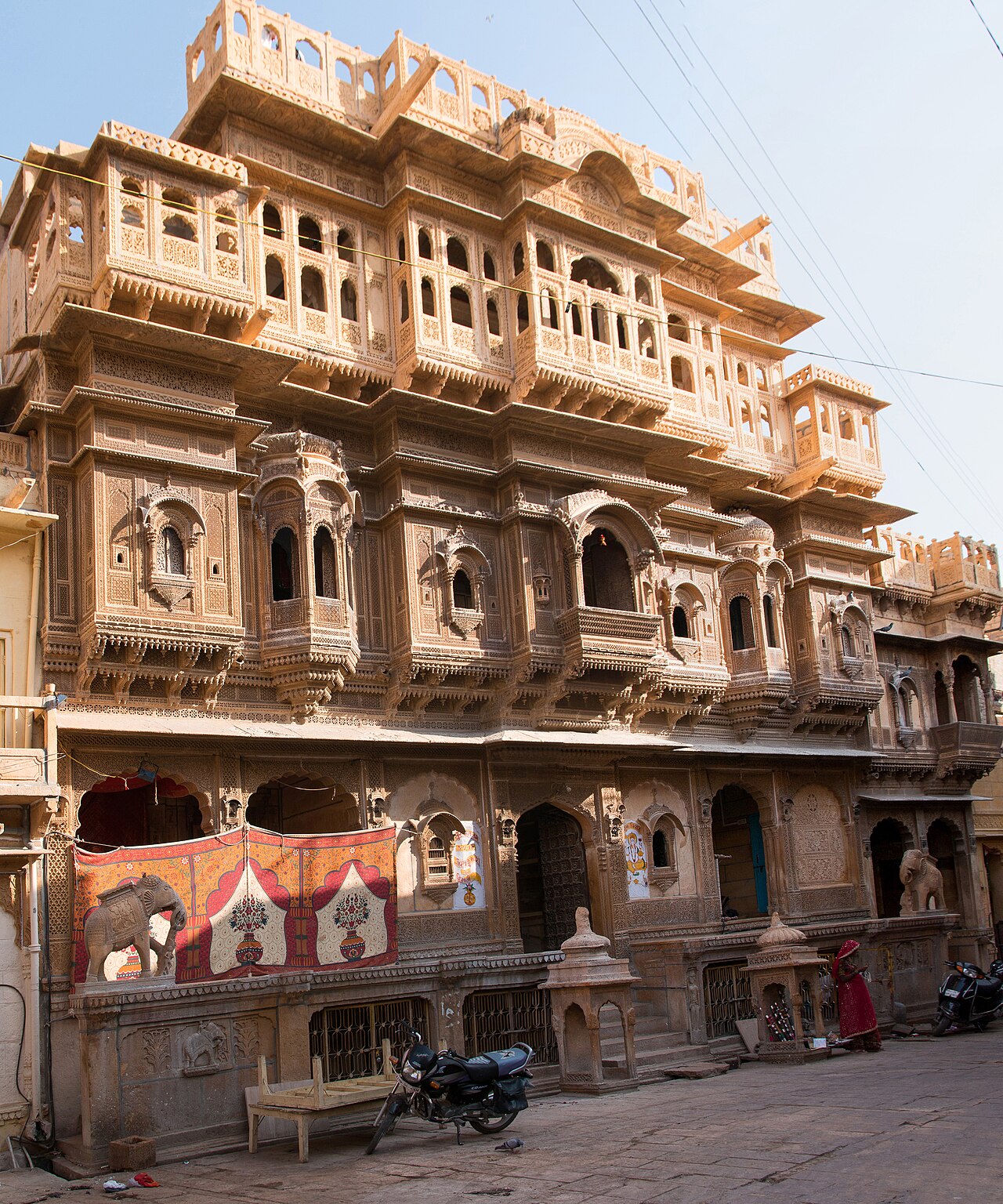
Nathmal Ki Haveli
Palace · 350 m · about 6 min walk
 #7 in Jaisalmer
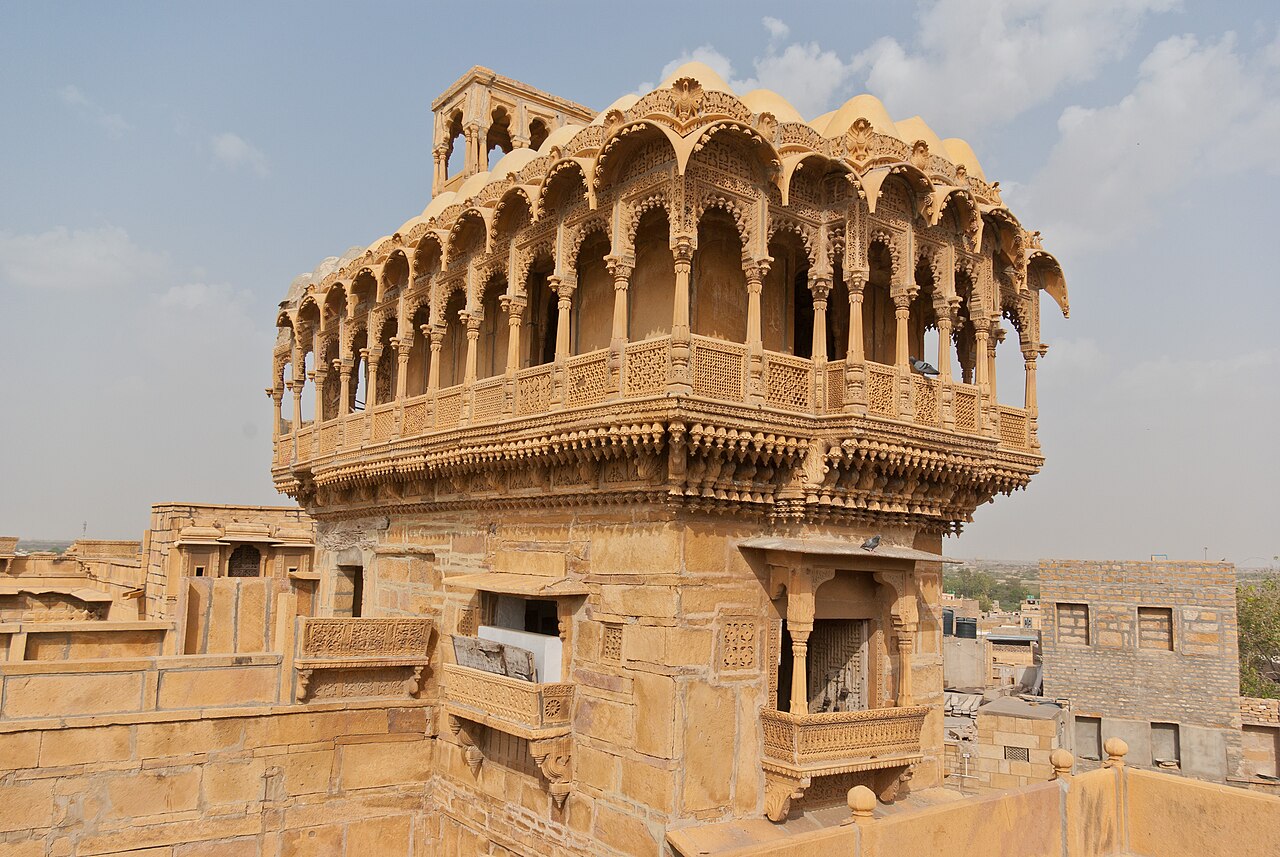
Salim Singh Ki Haveli
Palace · 350 m · about 6 min walk
 #2 in Jaisalmer
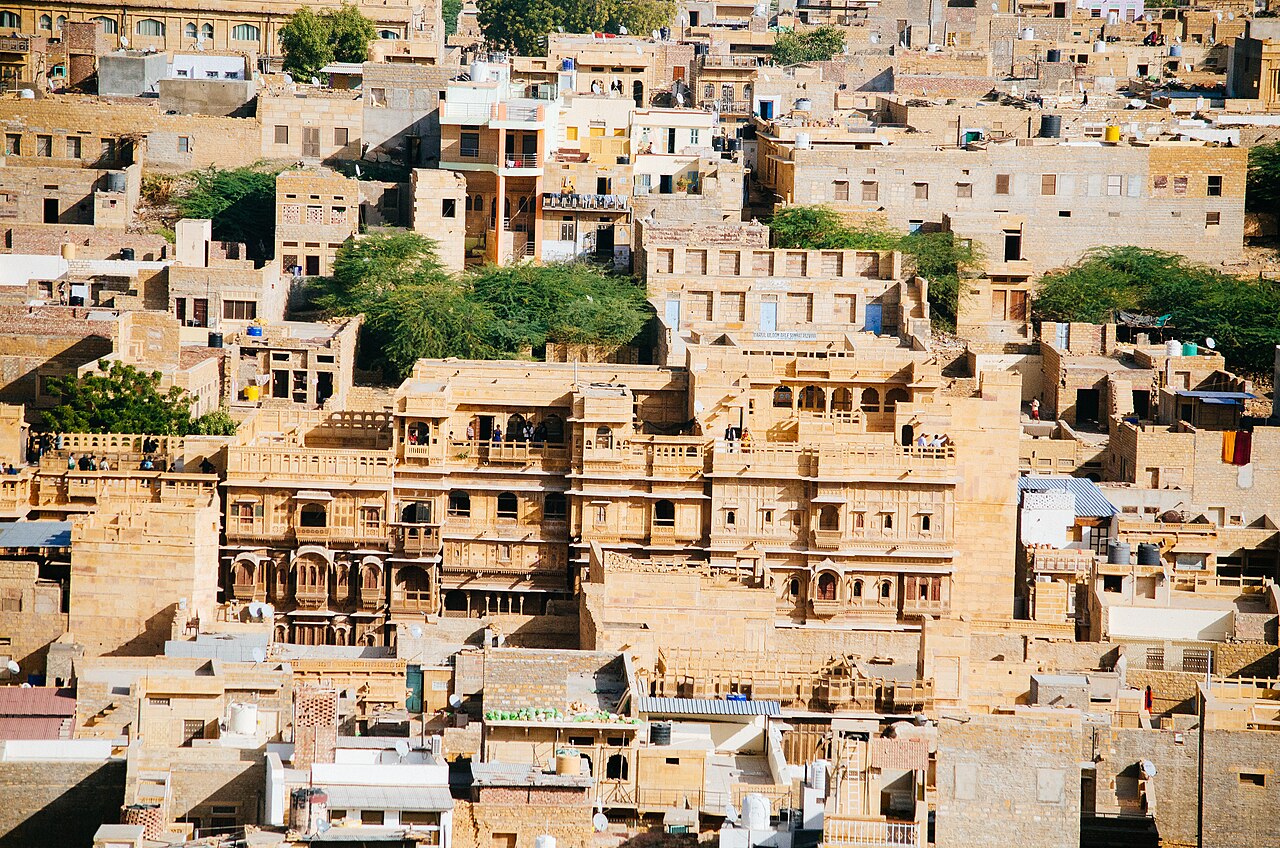
Patwon Ki Haveli
Palace · 450 m · about 7 min walk
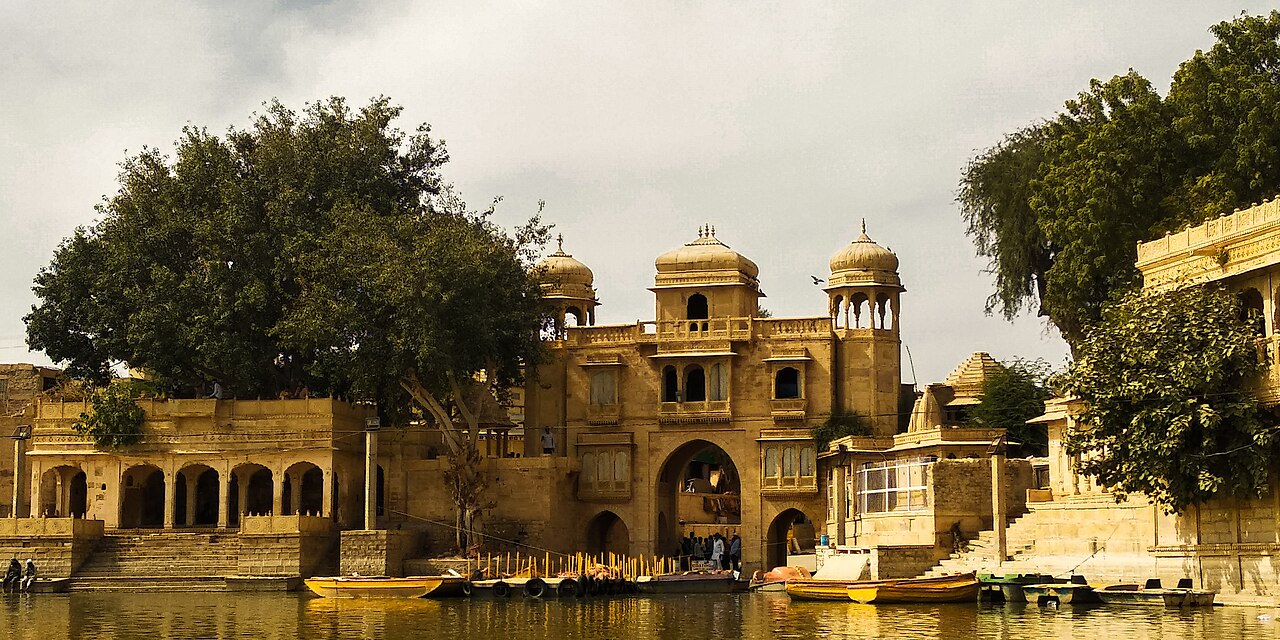 #4 in JaisalmerFree entry
Gadisar Lake
Lake · 1.1 km · about 17 min walk