
Gadisar Lake
#4of 10 places to visit in JaisalmerJaisalmer, Rajasthan
Also known as Gadi Sagar · Gadisagar Lake
Quick answer
Opening hours: 08:00–19:00. Entry is free. Allow 1.5 hrs. Best time: 17:00 – 19:00 or 06:30 – 08:00.
Updated · Compiled by Traveliac, AI-assisted · 5 min read
- Opening hours
- 08:00–19:00
- Open 24 hours as a public space; boating operations typically run 08:00 – 19:00 daily, weather and water-level permitting.
- Entry fee
- Free
- Time needed
- 1.5 hrs
- Best time of day
- 17:00 – 19:00 or 06:30 – 08:00
- Best months
- Oct – Mar
- Address
- Gadisar Lake Road, near Gopa Chowk, Jaisalmer, Rajasthan 345001
About Gadisar Lake
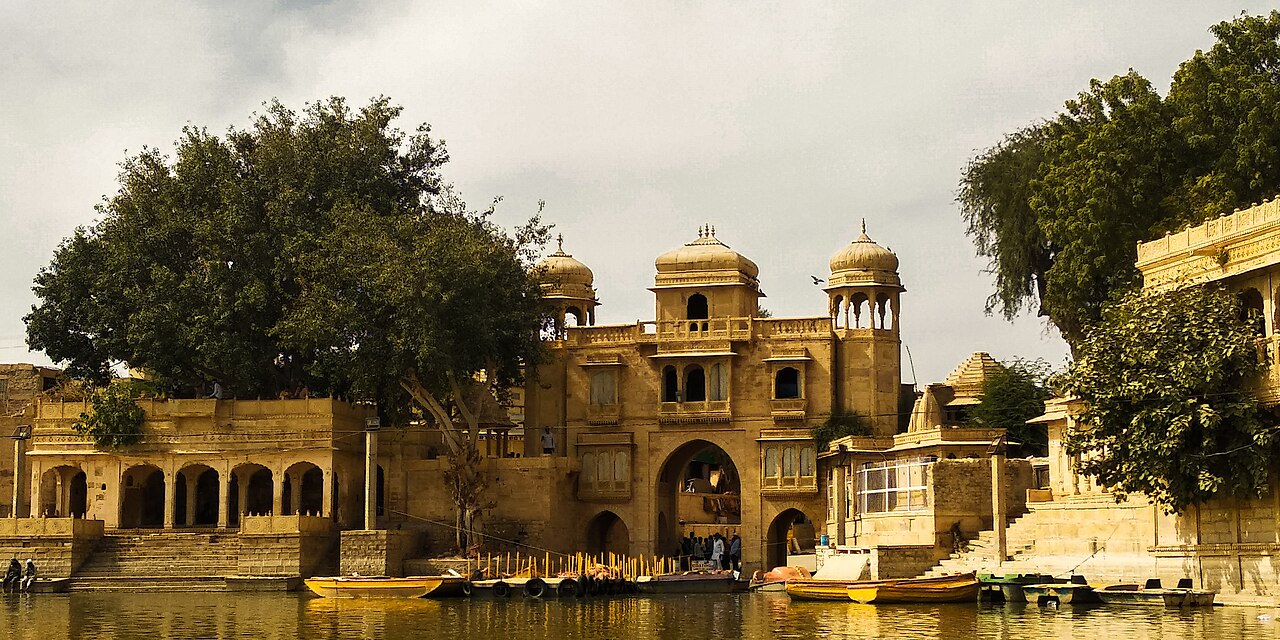
Gadisar Lake is an entirely artificial rainwater reservoir, built to be Jaisalmer's principal water supply in a region where a natural perennial river simply does not exist. Stone ghats descend on multiple sides toward the water, dotted with small temples and shrines built by wealthy merchant families over centuries as acts of both piety and civic reputation, and the lake's most photographed feature — the ornately carved yellow sandstone gateway known as Tilon Ki Pol, straddling the main approach path — is a structure with a history considerably more colourful than its decorative brackets and chhatris suggest.
Best time of day: 17:00 – 19:00 or 06:30 – 08:00. For sunset over the water and golden light on the Tilon Ki Pol gateway; 06:30 – 08:00 for migratory bird activity in winter months (November–February) when the lake hosts species including demoiselle cranes, coots, and various duck species.
Gadisar Lake timings
Gadisar Lake opens at 08:00 and closes at 19:00. The weekend is no different: Saturday and Sunday follow the same times.
- Opening hours
- 08:00–19:00
Mon–Sun 08:00–19:00 - Open 24 hours as a public space; boating operations typically run 08:00 – 19:00 daily, weather and water-level permitting.
- Closed on
- Open every day
Good to know: Boating may be suspended in years of low monsoon inflow when water levels drop significantly, or briefly during winter fog in December–January mornings.
Opening hours compiled from rajasthantourism.gov.in and public records, last updated . They change without notice — confirm before you travel. How we write these guides
Gadisar Lake ticket price
| Ticket | Price |
|---|---|
| Indian visitors | Free |
| Foreign visitors | Free |
| Children | Free |
| Camera | Free |
Free to walk the ghats and approach the Tilon Ki Pol gateway. Boating is separately priced: pedal boats roughly ₹150–₹200 for 30 minutes, rowboats with a boatman roughly ₹250–₹350 for 30 minutes, and battery-operated boats around ₹300–₹400 for 30 minutes. Small shrines around the lake accept voluntary donations.
Prices compiled from rajasthantourism.gov.in and public records, last updated . They change without notice — confirm before you travel. How we write these guides
Best time to visit Gadisar Lake
- Quiet
- Moderate
- Busy
06:30 – 08:30
Morning BirdwatchingBest time to go
Best window for migratory bird activity in winter months; few tourists present, mostly local morning walkers.
Quiet09:00 – 12:00
Mid-Morning
Boating operations active; day-trip groups stop by en route to other old-city sights.
Moderate12:00 – 16:00
Midday Heat
Heat discourages lingering; boating continues but ghats are quieter.
Quiet17:00 – 19:00
Sunset
Peak visitor window as both tourists and local families gather for sunset over the water and the illuminated Tilon Ki Pol gateway.
Busy
History of Gadisar Lake
Rawal Jaisal, the same Bhati ruler who founded Jaisalmer Fort in 1156, is credited with the lake's original construction as a monsoon catchment reservoir to secure drinking water for the new settlement below the fort in a landscape with no reliable river. The lake was substantially rebuilt and enlarged in the 14th century under Maharawal Gadsi Singh, whose name the lake carries today (Gadisar being a contraction of Gadsi Sagar, 'Gadsi's lake' or reservoir). Engineered inflow channels direct monsoon runoff from a wide catchment area into the reservoir, and for centuries this was effectively the only dependable water source for Jaisalmer's population, making the lake as functionally essential to the city's survival as the fort was to its defence.
The carved gateway, Tilon Ki Pol, has a well-known local origin story: it was built in the 19th century by a courtesan, Tilon, using funds she had accumulated, as an offering positioned directly across the lake's main ceremonial approach path. The story holds that the ruling Maharawal, objecting to a courtesan's monument standing on the route he used, ordered it demolished — to which Tilon is said to have responded by adding a small shrine to Krishna at the gateway's crown, since destroying a structure housing a deity would have been a far graver transgression than tearing down a mere gate. The gateway survived intact, and stands today essentially as built.
Over the following centuries, wealthy merchant and noble families added further shrines, temples, and cenotaphs along the ghats as acts of religious merit, giving the lake's edges the dense, layered accumulation of small sandstone structures visible today — a built record of successive generations of Jaisalmer's trading elite rather than a single unified architectural plan.
Rules & etiquette at Gadisar Lake
Small temples along the ghats are active places of worship, not purely photographic backdrops; remove footwear before stepping onto temple platforms and dress modestly if entering any shrine interior. The lake's ghats can be slippery near the waterline, particularly after rain or early morning dew — footwear with grip is worth the minor inconvenience over sandals for anyone planning to walk the full circuit.
Boat operators along the main ghat quote per-boat or per-person rates depending on boat type; confirm which before boarding, since a miscommunication here is a common source of dispute at payment time. Life jackets should be provided for all boat types and are worth insisting on if not offered, particularly for rowboats venturing toward the centre of the lake, where depth increases substantially.
Feeding the lake's resident and migratory birds with bought grain (sold by vendors near the ghats) is a popular local practice, but feeding aggressive or territorial water birds directly by hand is not advisable — stick to scattering grain on the ground or water's surface.
Tips for visiting Gadisar Lake
- 1
Combine a Gadisar Lake visit with sunset, when the water reflects the warm light off the surrounding sandstone ghats and the Tilon Ki Pol gateway is at its most photogenic; arrive by 17:30 in winter months to secure a good vantage point before the light fades, since sunset here is a popular local as well as tourist gathering time.
- 2
Winter (November through February) transforms the lake into a genuinely worthwhile birdwatching stop, with migratory waterfowl arriving from Central Asia and Siberia; a pair of binoculars adds considerably more than a phone camera can capture at this time of year. Outside winter, expect a quieter, more purely architectural and social visit rather than a wildlife one.
- 3
The walk from Jaisalmer Fort to Gadisar Lake takes roughly fifteen to twenty minutes on foot and passes through a mix of residential lanes and small shops, making it a reasonable non-motorised addition to a fort-and-haveli day rather than requiring a separate trip. Vendors near the lake's main entrance sell fish food, boat rides, and snacks at broadly fair fixed prices compared to more aggressive selling elsewhere in the old city, though it's still reasonable to confirm a price before ordering.
How to reach Gadisar Lake
The red star is Gadisar Lake; the numbered pins are the 7 nearest places in our guides, each showing its rank in its city. Tap a pin for details.
Gadisar Lake Road, near Gopa Chowk, Jaisalmer, Rajasthan 345001Directions in Google Maps
From Jaisalmer Fort (main gate)
1.2 km · 15–20 min walk
Walkable; auto-rickshaw ₹50–₹80 if preferred.
From Jaisalmer Railway Station
₹70–₹1203 km · 10 min
Auto-rickshaw, negotiated).
From Jaisalmer Airport (JSA)
₹400–₹55018 km · 25–35 min
Prepaid taxi).
Nearest airport
From Jaisalmer Airport (JSA)
approximately 18 km, 25–35 minutes by road. Seasonal, limited flight schedule.
Nearest railway station
From Jaisalmer Railway Station
approximately 3 km, 10 minutes by auto-rickshaw.
Gadisar Lake FAQs
Who built Gadisar Lake and when?
Rawal Jaisal, founder of Jaisalmer Fort, originally built the reservoir in 1156 to secure a monsoon-fed water supply for the new city. It was substantially rebuilt and expanded in the 14th century by Maharawal Gadsi Singh, whose name the lake bears today.
What is the story behind the Tilon Ki Pol gateway at Gadisar Lake?
According to local tradition, a courtesan named Tilon built the ornate gateway across the lake's main approach path in the 19th century. The ruling Maharawal reportedly ordered it torn down since it stood on his ceremonial route, but Tilon added a shrine to Krishna atop the structure, making its demolition a religious transgression — and the gateway survives intact today.
Is boating available at Gadisar Lake and what does it cost?
Yes. Pedal boats, rowboats with a boatman, and battery-operated boats are all available, typically priced from roughly ₹150 to ₹400 for a 30-minute session depending on boat type. Boating may be suspended in years of low monsoon rainfall.
When is the best time to see migratory birds at Gadisar Lake?
Winter months, roughly November through February, bring migratory waterfowl including demoiselle cranes, coots, and various ducks. Early morning (06:30–08:30) offers the most active birdwatching window.
Compiled with AI assistance from official sources and public records, and published only after the checks in How we write these guides. Nobody from Traveliac has visited this place. Last updated . How we rank and check places
Places to visit near Gadisar Lake
Straight-line distances from our map; times are estimates.
 #7 in Jaisalmer
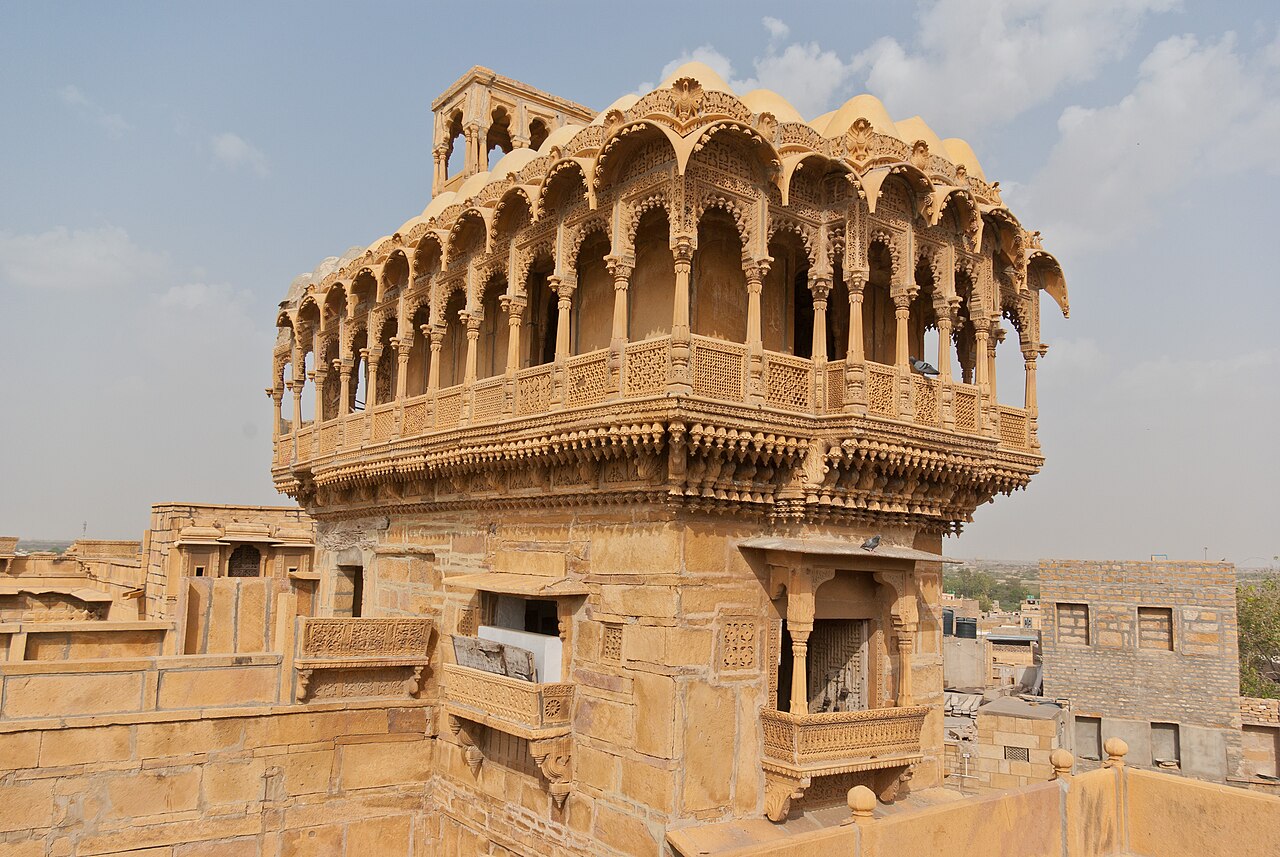
Salim Singh Ki Haveli
Palace · 850 m · about 14 min walk
 #1 in Jaisalmer
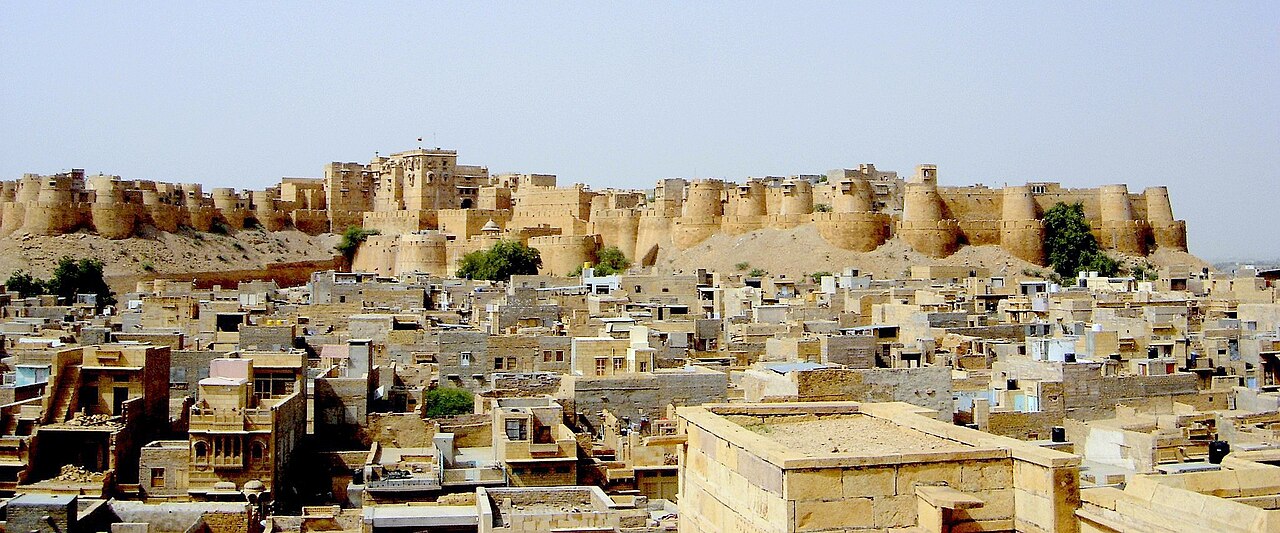
Jaisalmer Fort
Fort · 1.1 km · about 17 min walk
 #2 in Jaisalmer
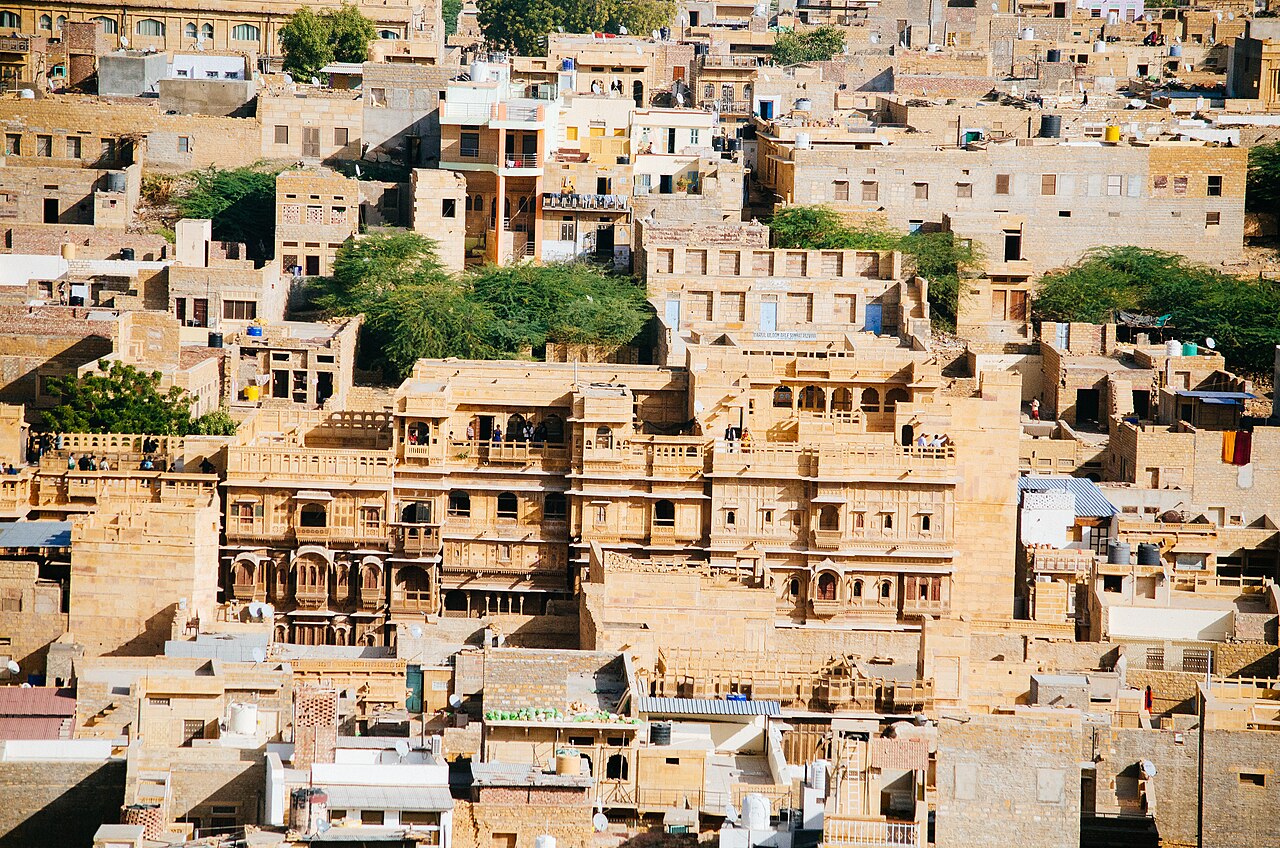
Patwon Ki Haveli
Palace · 1.2 km · about 19 min walk
 #8 in Jaisalmer
Nathmal Ki Haveli
Palace · 1.3 km · about 21 min walk