
Nathmal Ki Haveli
#8of 10 places to visit in JaisalmerJaisalmer, Rajasthan
Quick answer
Opening hours: 09:00–18:00, last entry 17:30. Entry: ₹50 Indian · ₹100 foreign. Allow 45 min. Best time: 09:00 – 10:30.
Updated · Compiled by Traveliac, AI-assisted · 4 min read
- Opening hours
- 09:00–18:00
- Entry fee
- ₹50 Indian
- Ticket from
- Time needed
- 45 min
- Best time of day
- 09:00 – 10:30
- Best months
- Oct – Mar
- Address
- Nathmal Ki Haveli Road, Jaisalmer, Rajasthan 345001
About Nathmal Ki Haveli
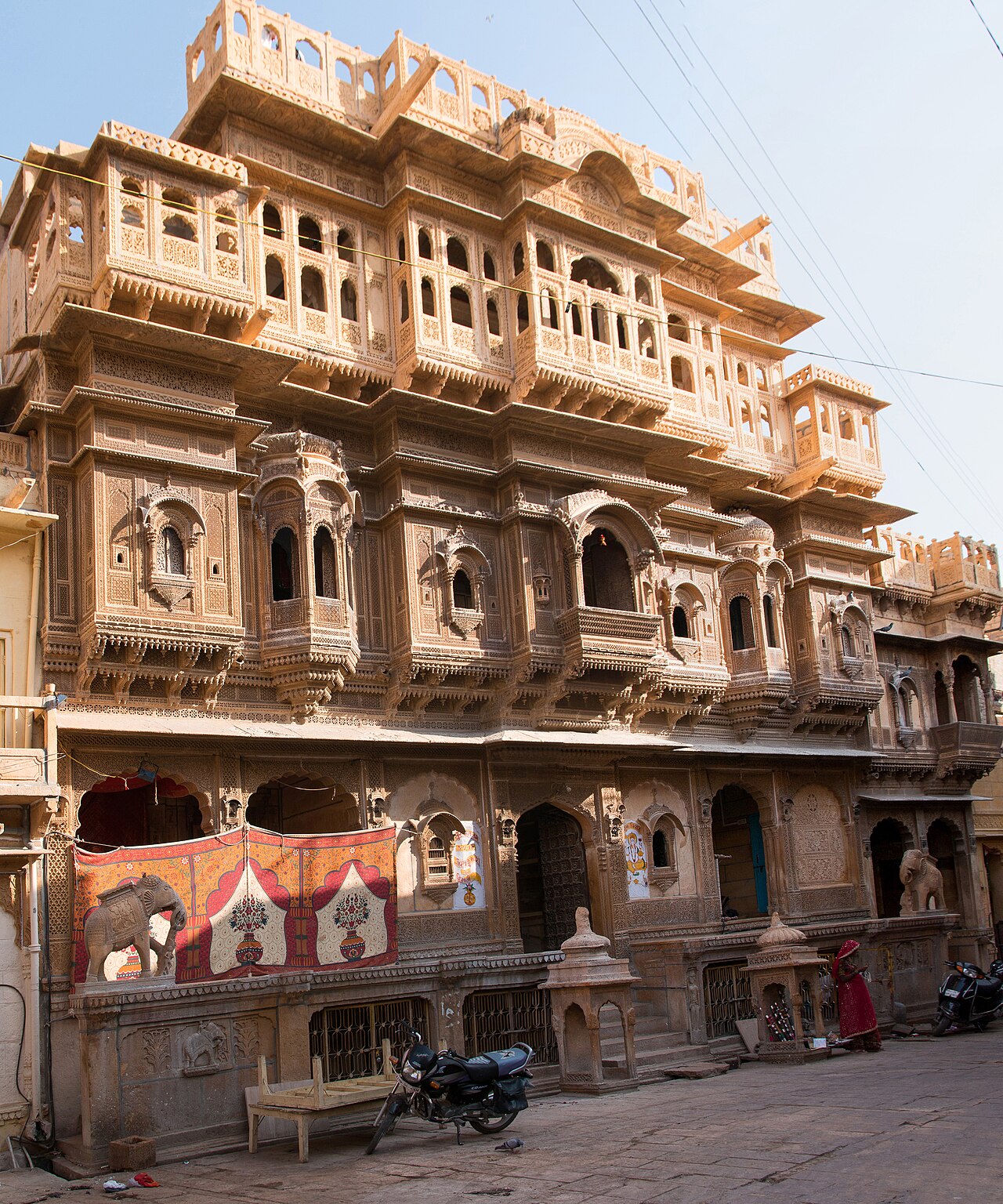
Nathmal Ki Haveli was built in 1885 as the residence of Diwan Nathmal, a prime minister of Jaisalmer state, and its defining oddity is that it was constructed by two brothers, Hathi and Lallu, who worked simultaneously on opposite halves of the building without formally coordinating every design decision between them. The result looks symmetric at a casual glance — matching jharokha balconies, matching sandstone elephant sculptures guarding the entrance, matching floor heights — but close inspection reveals the two halves are not identical: window shapes, bracket carving, and decorative motifs differ subtly from left to right, evidence of two independent hands working toward a shared brief rather than a single unified design.
Best time of day: 09:00 – 10:30. Before tour groups arrive, for unobstructed views of the two elephant sculptures flanking the entrance and the carved facade in soft morning light.
Photography
₹50 camera fee
Nathmal Ki Haveli timings
Nathmal Ki Haveli opens at 09:00 and closes at 18:00. Those hours hold on Saturday and Sunday too.
- Opening hours
- 09:00–18:00
Mon–Sun 09:00–18:00 - Closed on
- Open every day
Opening hours compiled from rajasthantourism.gov.in and public records, last updated . They change without notice — confirm before you travel. How we write these guides
Nathmal Ki Haveli ticket price
| Ticket | Price |
|---|---|
| Indian visitors | ₹50 |
| Foreign visitors | ₹100 |
| Children | Free |
| Camera | ₹50 |
Ground floor rooms with painted murals are included in the entry ticket; the upper floors remain a private residence of the owning family and are not open to the general public. Sections of the ground floor are also used as a shop selling textiles and antiques, which is free to browse without a ticket.
Prices compiled from rajasthantourism.gov.in and public records, last updated . They change without notice — confirm before you travel. How we write these guides
Best time to visit Nathmal Ki Haveli
- Quiet
- Moderate
09:00 – 10:30
Early OpeningBest time to go
Quietest window; best for unobstructed photos of the entrance elephants and facade.
Quiet10:30 – 13:00
Circuit Peak
Visitors combining this with Patwon Ki Haveli and Salim Singh Ki Haveli pass through in steady numbers.
Moderate13:00 – 16:00
Midday Lull
Heat reduces footfall; shop staff may be less active during this stretch.
Quiet16:00 – 18:00
Late Afternoon
Shopping traffic increases again before dinner; last entry at 17:30.
Moderate
History of Nathmal Ki Haveli
Diwan Nathmal held the office of prime minister of Jaisalmer state in the late 19th century, and commissioned this haveli as his official residence during a period when the princely state, though past the peak of its caravan-trade wealth, still maintained an administrative elite whose residences reflected considerable resources. The building's construction is attributed to two brothers, Hathi and Lallu, working as master masons — an arrangement local tradition frames as a friendly professional wager: each brother took one half of the facade and built it according to his own interpretation of the shared design brief, competing implicitly to produce the finer work.
The carving includes both Rajput and Mughal-influenced decorative elements, along with several distinctly playful additions attributed to the same builders: miniature sculpted depictions of a bicycle and a fan, along with a steam engine, worked into otherwise traditional sandstone reliefs — a detail sometimes cited as evidence that the carvers had been exposed to, or were imaginatively responding to, modern technologies reaching India by the late 19th century, though the carvings were done from description or imagination rather than direct observation given how novel such machines were in the Thar at the time.
The building remains in the ownership of the family lineage connected to its original construction, with part of the ground floor maintained as a small museum-shop combination and the upper floors retained as a private residence, unlike several other Jaisalmer havelis that were sold, abandoned, or fully converted to commercial use after their founding families' fortunes declined.
Rules & etiquette at Nathmal Ki Haveli
The upper floors are a private residence — visitors should not attempt to go beyond the roped-off ground-floor sections regardless of what a shop attendant downstairs might suggest is possible for an extra fee. The ground-floor rooms containing painted murals and family portraits are fragile; flash photography is discouraged by staff even where not formally banned, since repeated exposure degrades old pigment.
The ground floor doubles as a retail space for textiles, miniature paintings, and curios; browsing does not obligate a purchase, but sales staff here are notably more persistent than at Patwon Ki Haveli or Salim Singh Ki Haveli — a firm, polite decline is usually necessary more than once. As with the other havelis, agree any unofficial guide's fee before the tour begins rather than after.
Tips for visiting Nathmal Ki Haveli
- 1
Spend the first few minutes at ground level looking specifically for the asymmetries between the two halves of the facade — it's a genuinely rewarding exercise once you know to look for it, and most visitors who don't know the two-brothers story miss it entirely, walking away thinking the building is simply and unremarkably symmetric. A local guide or even a knowledgeable driver pointing out three or four specific mismatched details (a differently shaped window bracket, a variant floral motif) turns a five-minute glance into a genuinely engaging quarter-hour.
- 2
The two carved elephants flanking the entrance are a popular photo spot and one of the few places in the haveli circuit where a clear, unobstructed shot is reliably available even at busier times of day, since the entrance forecourt is wider than the lanes outside Patwon Ki Haveli.
- 3
Nathmal Ki Haveli is the closest of the three major havelis to Jaisalmer's main market area, making it a natural last or first stop on a combined haveli-and-bazaar walking circuit; several silver and textile shops in the immediate vicinity offer comparable goods to those inside Patwon Ki Haveli's lane at marginally more negotiable prices, since footfall here is somewhat lower.
How to reach Nathmal Ki Haveli
The red star is Nathmal Ki Haveli; the numbered pins are the 7 nearest places in our guides, each showing its rank in its city. Tap a pin for details.
Nathmal Ki Haveli Road, Jaisalmer, Rajasthan 345001Directions in Google Maps
From Jaisalmer Fort (main gate)
1 km · 5–8 min
Walkable; auto-rickshaw ₹50–₹80.
From Jaisalmer Railway Station
₹60–₹1002 km · 8 min
Auto-rickshaw, negotiated).
From Jaisalmer Airport (JSA)
₹350–₹50016 km · 20–30 min
Prepaid taxi).
Nearest airport
From Jaisalmer Airport (JSA)
approximately 16 km, 20–30 minutes by road. Flights are seasonal and limited.
Nearest railway station
From Jaisalmer Railway Station
approximately 2 km, 8 minutes by auto-rickshaw.
Nathmal Ki Haveli FAQs
Why is Nathmal Ki Haveli's facade slightly asymmetric?
The haveli was built in 1885 by two brothers, Hathi and Lallu, who each took responsibility for one half of the building and worked simultaneously without fully coordinating every design decision. The two halves match in overall proportion but differ in specific carving details — window brackets, floral motifs — a fact many visitors miss unless pointed out.
Can visitors go upstairs at Nathmal Ki Haveli?
No, the upper floors remain a private residence of the owning family. Only the ground floor, including painted mural rooms and an attached shop, is open to ticketed visitors.
What are the carved bicycle, fan, and steam engine at Nathmal Ki Haveli?
These are small sculptural reliefs worked into the sandstone facade alongside traditional Rajput and Mughal-influenced motifs, believed to reflect the carvers' imaginative response to emerging modern technologies reaching India in the late 19th century, even though such machines were still a novelty in the Thar region at the time.
Who was Diwan Nathmal?
Nathmal served as prime minister (diwan) of Jaisalmer state in the late 19th century and commissioned this haveli as his official residence, completed in 1885.
Compiled with AI assistance from official sources and public records, and published only after the checks in How we write these guides. Nobody from Traveliac has visited this place. Last updated . How we rank and check places
Places to visit near Nathmal Ki Haveli
Straight-line distances from our map; times are estimates.
 #2 in Jaisalmer
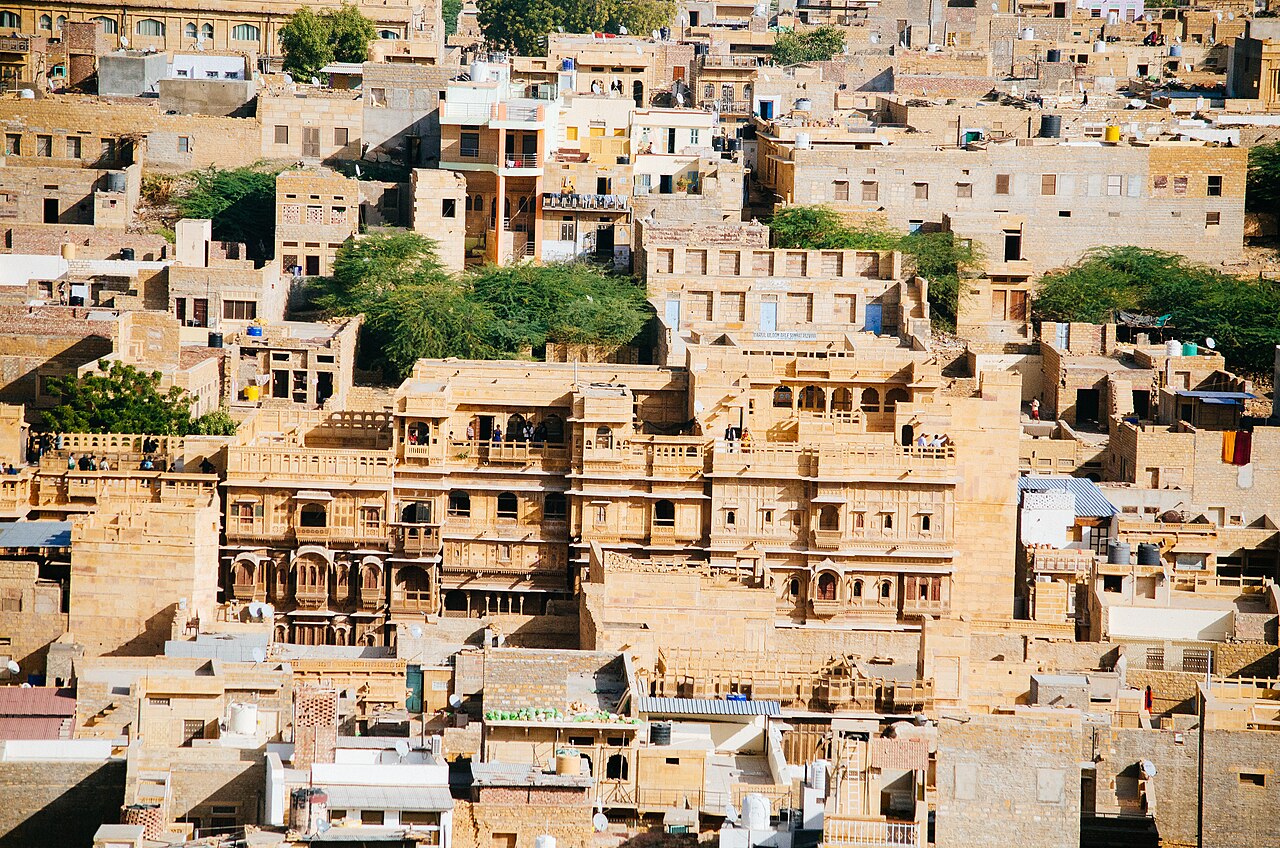
Patwon Ki Haveli
Palace · 200 m · about 4 min walk
 #1 in Jaisalmer
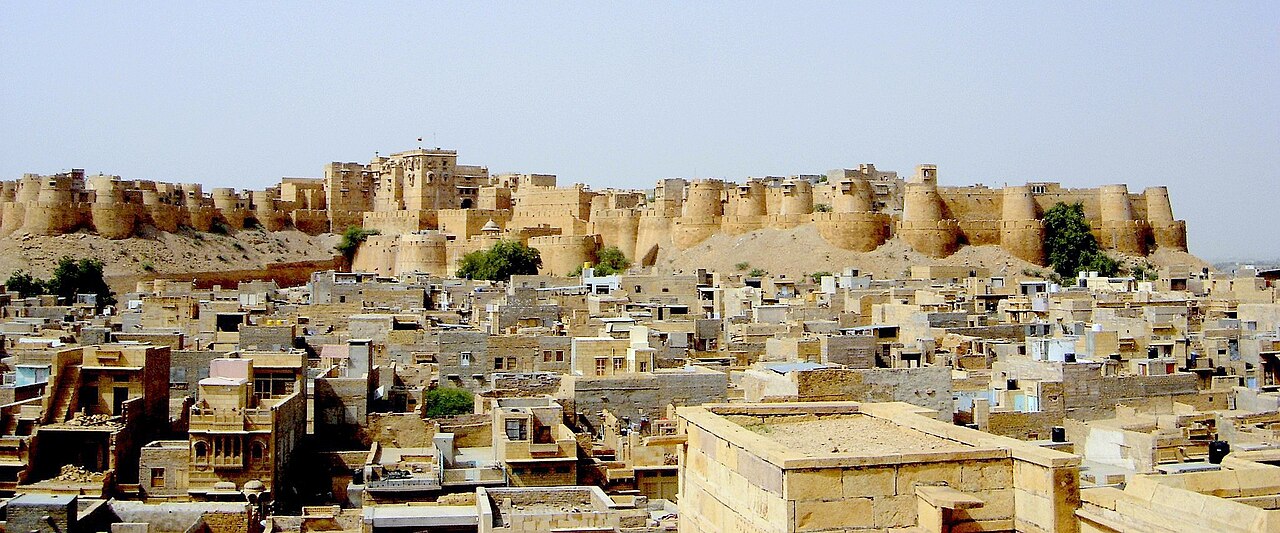
Jaisalmer Fort
Fort · 350 m · about 6 min walk
 #7 in Jaisalmer
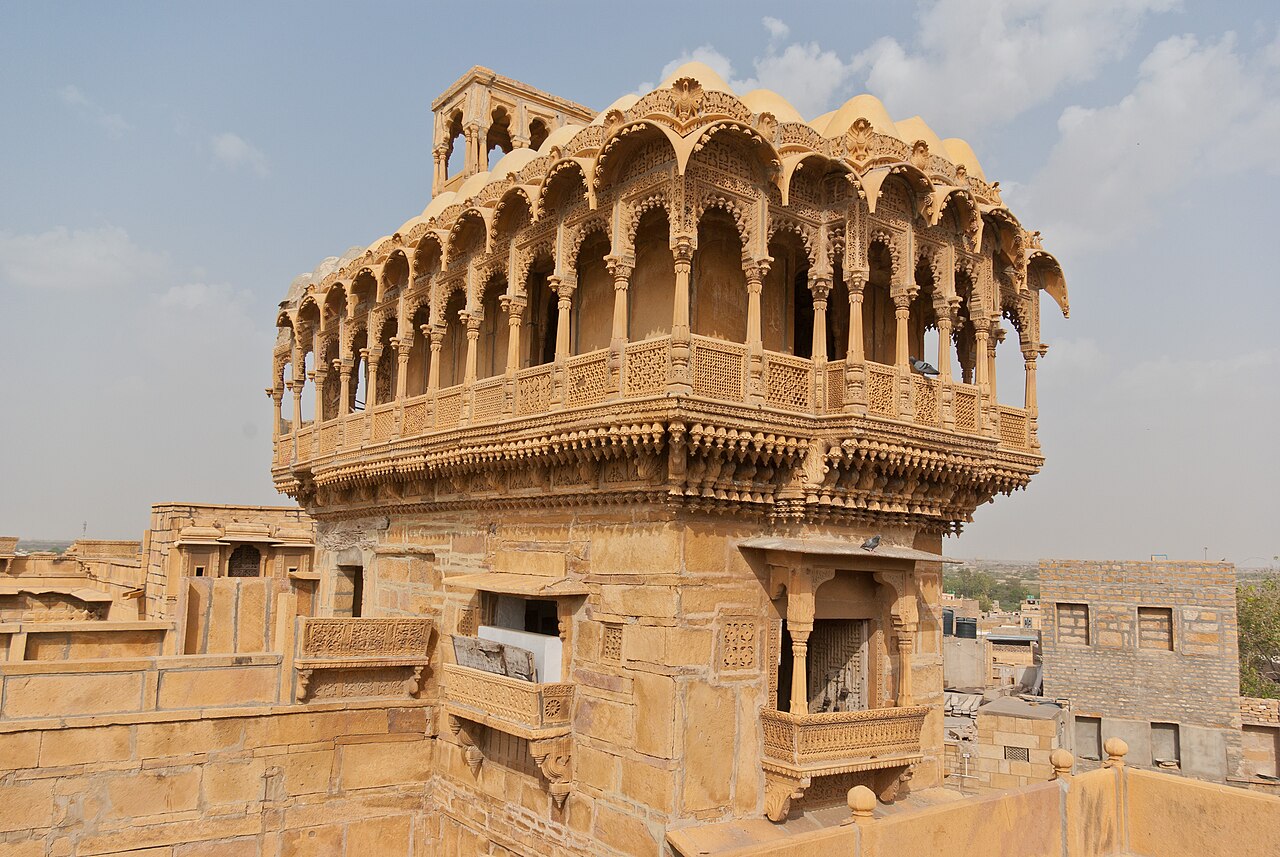
Salim Singh Ki Haveli
Palace · 400 m · about 7 min walk
 #4 in JaisalmerFree entry
Gadisar Lake
Lake · 1.3 km · about 21 min walk