
Patwon Ki Haveli
#2of 10 places to visit in JaisalmerJaisalmer, Rajasthan
Also known as Patwa Haveli · Haveli of the Brocade Merchants
Quick answer
Opening hours: 09:00–18:00, last entry 17:30. Entry: ₹100 Indian · ₹200 foreign. Allow 1 hr. Best time: 09:00 – 10:30.
Updated · Compiled by Traveliac, AI-assisted · 5 min read
- Opening hours
- 09:00–18:00
- Entry fee
- ₹100 Indian
- Ticket from
- Time needed
- 1 hr
- Best time of day
- 09:00 – 10:30
- Best months
- Oct – Mar
- Address
- Patwa Haveli Road, near Dhibba Para, Jaisalmer, Rajasthan 345001
About Patwon Ki Haveli
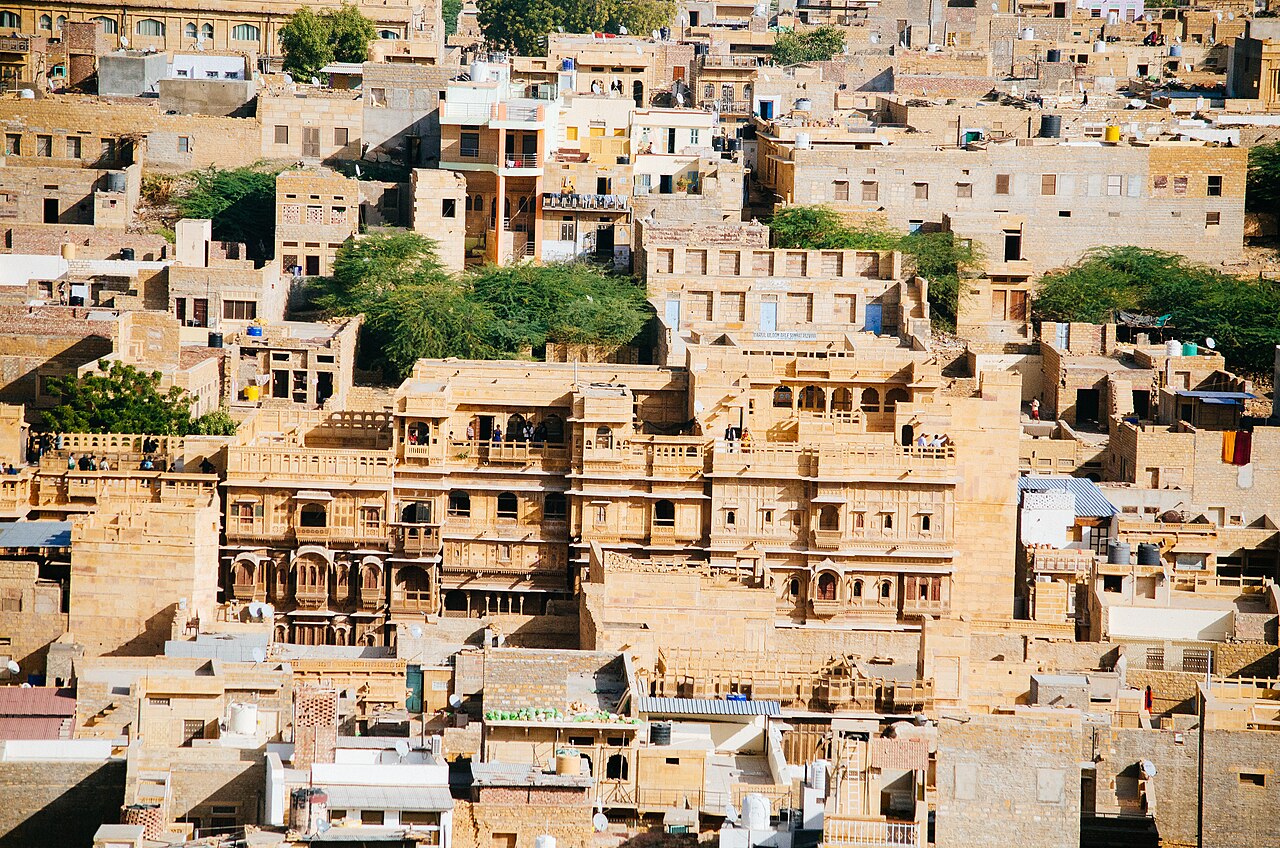
Patwon Ki Haveli is not one building but five, packed side by side down a lane barely wide enough for two people to pass, making it the largest cluster of havelis in Jaisalmer and, in the density of its carving, arguably the most ornate. The facades are cut from the same golden-yellow Jaisalmer sandstone as the fort above, but worked here into a filigree finer than almost anything else in the city: jharokha balconies stacked five storeys high, latticed jali screens cut so thin in places that sunlight passes through as individual points rather than shapes, and honeycombed niches originally designed for oil lamps at festival time. Only the first haveli, restored by the Kothari family, is open as a walk-through museum; the other four remain either private residences or ground-floor shops, so most of what you experience here is the exterior — which is, in this case, the point.
Best time of day: 09:00 – 10:30. When the lane is quiet enough to actually see the carving without a crush of tour groups, and the low sun catches the jharokha undersides.
Photography
₹50 camera fee
Patwon Ki Haveli timings
Patwon Ki Haveli opens at 09:00 and closes at 18:00. The weekend is no different: Saturday and Sunday follow the same times.
- Opening hours
- 09:00–18:00
Mon–Sun 09:00–18:00 - Closed on
- Open every day
Opening hours compiled from rajasthantourism.gov.in and public records, last updated . They change without notice — confirm before you travel. How we write these guides
Patwon Ki Haveli ticket price
| Ticket | Price |
|---|---|
| Indian visitors | ₹100 |
| Foreign visitors | ₹200 |
| Children | Free |
| Camera | ₹50 |
Fee applies to Kothari's Patwa Haveli, the first and largest of the five havelis, which alone is restored and opened as a heritage museum by the Kothari family. The remaining four havelis in the cluster are either privately occupied, run as small shops and emporiums at street level, or structurally closed to the public — walking the lane past their facades is free. A separate, cheaper camera-only fee applies if you already hold a combined heritage pass from another Jaisalmer haveli on the same circuit; ask at the counter.
Prices compiled from rajasthantourism.gov.in and public records, last updated . They change without notice — confirm before you travel. How we write these guides
Best time to visit Patwon Ki Haveli
- Quiet
- Moderate
- Busy
09:00 – 10:30
Early OpeningBest time to go
Museum section quiet, easiest to photograph the narrow lane without other visitors in frame.
Quiet10:30 – 13:00
Tour Group Window
Coach groups doing the standard haveli circuit converge here; the narrow lane becomes genuinely congested and shop touts are most active.
Busy13:00 – 16:00
Midday Lull
Heat reduces footfall; several ground-floor shops close for a break. Reasonable window for unhurried photography of the facades.
Moderate16:00 – 18:00
Late Afternoon
Shopping traffic picks back up as day-trippers finish other fort-area sights and pass through before dinner.
Moderate
History of Patwon Ki Haveli
The complex was commissioned between roughly 1800 and 1860 by Guman Chand Patwa, a Jain merchant who had built one of Jaisalmer's largest trading fortunes dealing in brocade, gold thread embroidery, and — by most local and scholarly accounts — opium, moved along caravan routes connecting Rajasthan to Afghanistan, Central Asia, and China. Patwa had five sons, and rather than dividing an inheritance after his death, the family appears to have built a haveli for each son concurrently or in close succession, resulting in the five linked but individually distinct structures that stand today. The name Patwon Ki Haveli literally means 'mansion of the Patwas,' plural, a rare instance in Rajasthani heritage naming that acknowledges multiple owners rather than a single patriarch.
The wealth behind the complex dried up as the trade routes that generated it declined through the late 19th and early 20th centuries — the opening of the port of Bombay to steamship trade, followed by the 1947 Partition, which severed the overland routes to Sindh that Jaisalmer's merchant economy had depended on for centuries, ended the caravan economy almost overnight. Many of Jaisalmer's grand haveli-owning families migrated to Bombay, Calcutta, and elsewhere in search of new commerce, leaving buildings like these under-maintained or split among absentee heirs, which is part of why only one of the five sections here has been fully restored while the others remain in varying states of private use.
Rules & etiquette at Patwon Ki Haveli
Only the Kothari-restored first haveli sells tickets and permits interior access; do not attempt to enter the other four sections, which are either private homes or leased shops — a shopkeeper waving you in to see 'the old rooms upstairs' for a fee is typically an unofficial arrangement, not a heritage-department one, and quality varies. Photography inside the ticketed museum section costs an additional camera fee, payable at the same counter as the entry ticket, and flash photography is discouraged near painted wall sections that have not been treated with UV-stable varnish.
The lane outside is one of Jaisalmer's most concentrated tourist-shopping stretches, selling mirror-work textiles, silver jewellery, and miniature paintings; prices here run higher than shops elsewhere in the old city precisely because footfall is higher, so treat opening offers as a starting point for negotiation, not a fixed price — 40–50% reductions from the first quote are standard. Touts offering 'free guide' service at the entrance typically expect a commission-driven detour into a specific shop afterward; a paid, fixed-rate guide booked through your hotel avoids this.
Tips for visiting Patwon Ki Haveli
- 1
Budget more time for the exterior than the interior. The single richest experience at Patwon Ki Haveli is standing at the base of the lane and looking straight up at the stacked jharokha balconies of all five facades in sequence — a view that costs nothing and reveals the carving density better than the ticketed rooms do, since the museum's furnished interior, while informative on 19th-century merchant domestic life, is comparatively modest.
- 2
The museum includes some restored period furniture, mirror-work ceilings, and a small display on the natural pigments historically used in the wall paintings — cross-reference this with the more extensive fresco tradition on view in the Shekhawati region if that interests you, since Jaisalmer's haveli painting tradition is comparatively understated next to its stonework.
- 3
Combine this stop with Nathmal Ki Haveli and Salim Singh Ki Haveli, both a short walk or auto-rickshaw ride away, to form a single morning haveli circuit — all three are frequently sold as a package by local guides at a lower combined rate than booking each separately, though verify the guide's credentials with your hotel first, since freelance touts sometimes claim official status they don't hold.
How to reach Patwon Ki Haveli
The red star is Patwon Ki Haveli; the numbered pins are the 7 nearest places in our guides, each showing its rank in its city. Tap a pin for details.
Patwa Haveli Road, near Dhibba Para, Jaisalmer, Rajasthan 345001Directions in Google Maps
From Jaisalmer Fort (main gate)
1 km · 5–8 min
Walkable; auto-rickshaw ₹50–₹80 if preferred.
From Jaisalmer Railway Station
₹60–₹1002 km · 8 min
Auto-rickshaw, negotiated).
From Jaisalmer Airport (JSA)
₹350–₹50015 km · 20–30 min
Prepaid taxi).
Nearest airport
From Jaisalmer Airport (JSA)
approximately 15 km, 20–30 minutes by road. Seasonal, limited flight schedule.
Nearest railway station
From Jaisalmer Railway Station
approximately 2 km, 8 minutes by auto-rickshaw.
Patwon Ki Haveli FAQs
Can you go inside all five havelis at Patwon Ki Haveli?
No. Only the first haveli, restored by the Kothari family, is ticketed and open as a museum. The other four are private residences or ground-floor shops and are not part of the official visitor circuit, though their facades are visible for free from the lane.
Who built Patwon Ki Haveli and why are there five of them?
Guman Chand Patwa, a Jain merchant who made his fortune in brocade and the opium trade along Central Asian caravan routes, had five sons. The five interlinked havelis appear to have been built for each son around 1800–1860, giving the complex its plural name and its unusual density of carved facades along one narrow lane.
Is Patwon Ki Haveli worth visiting if you skip the paid museum section?
Largely, yes. The most striking feature — the stacked jharokha balconies across all five facades — is visible for free from the lane. The ticketed museum adds context on 19th-century merchant furnishings and mirror-work interiors but is a secondary experience to the exterior.
How does Patwon Ki Haveli compare to Nathmal Ki Haveli and Salim Singh Ki Haveli?
Patwon Ki Haveli has the densest and most extensive facade carving of the three, spread across five linked buildings. Nathmal Ki Haveli is notable for being built as two near-symmetric halves by two brothers simultaneously, while Salim Singh Ki Haveli is distinguished by its curved, peacock-shaped upper storey. All three are within easy walking or short auto-rickshaw distance of each other and are commonly visited together.
Compiled with AI assistance from official sources and public records, and published only after the checks in How we write these guides. Nobody from Traveliac has visited this place. Last updated . How we rank and check places
Places to visit near Patwon Ki Haveli
Straight-line distances from our map; times are estimates.
 #8 in Jaisalmer
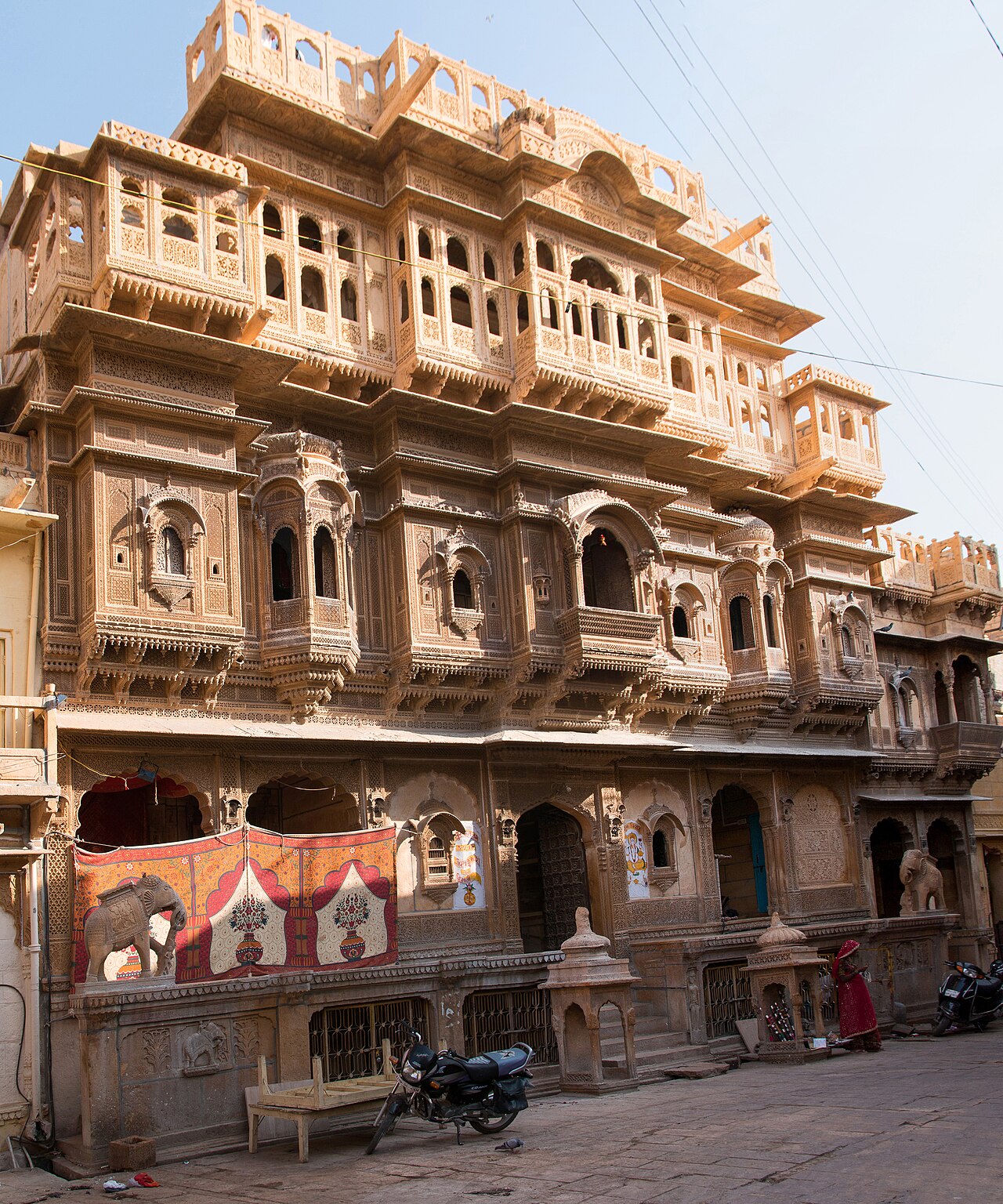
Nathmal Ki Haveli
Palace · 200 m · about 4 min walk
 #7 in Jaisalmer
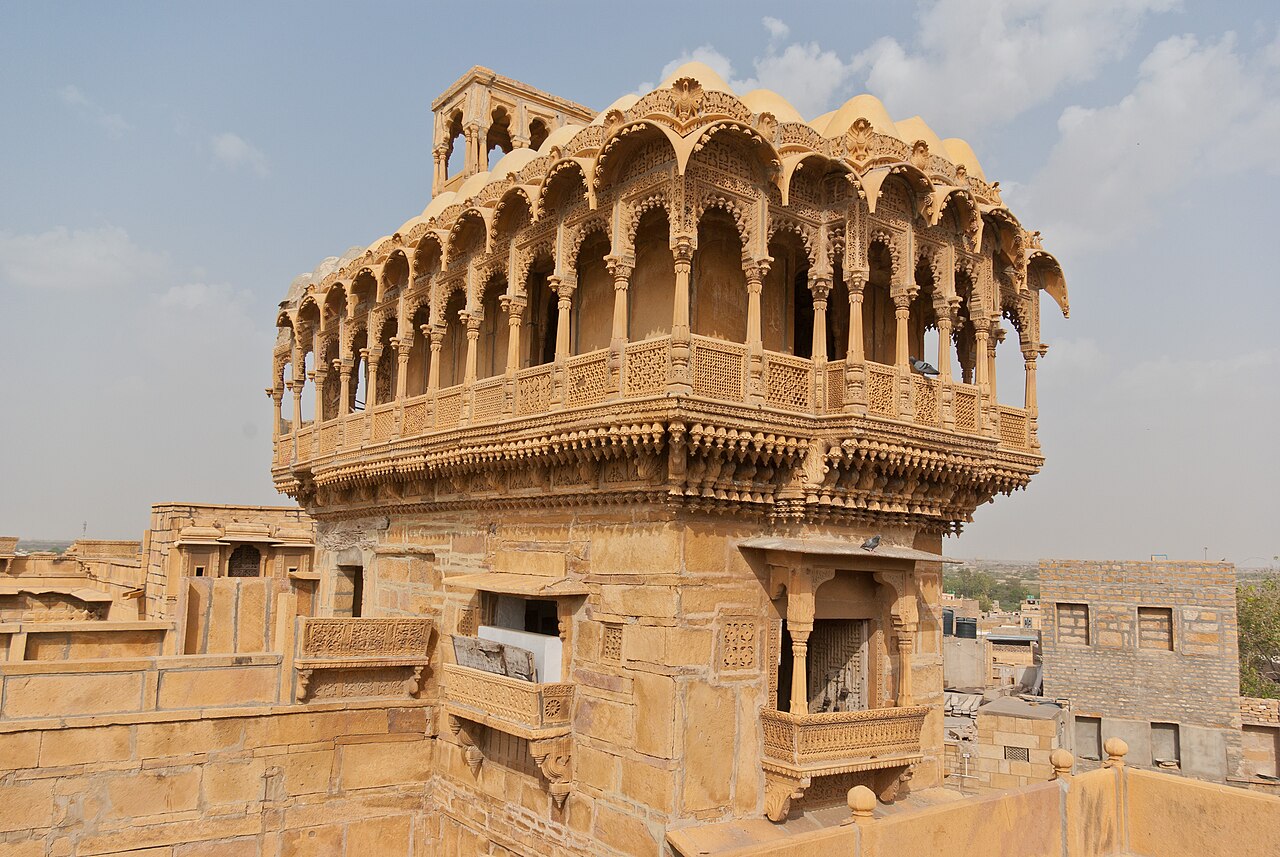
Salim Singh Ki Haveli
Palace · 300 m · about 5 min walk
 #1 in Jaisalmer
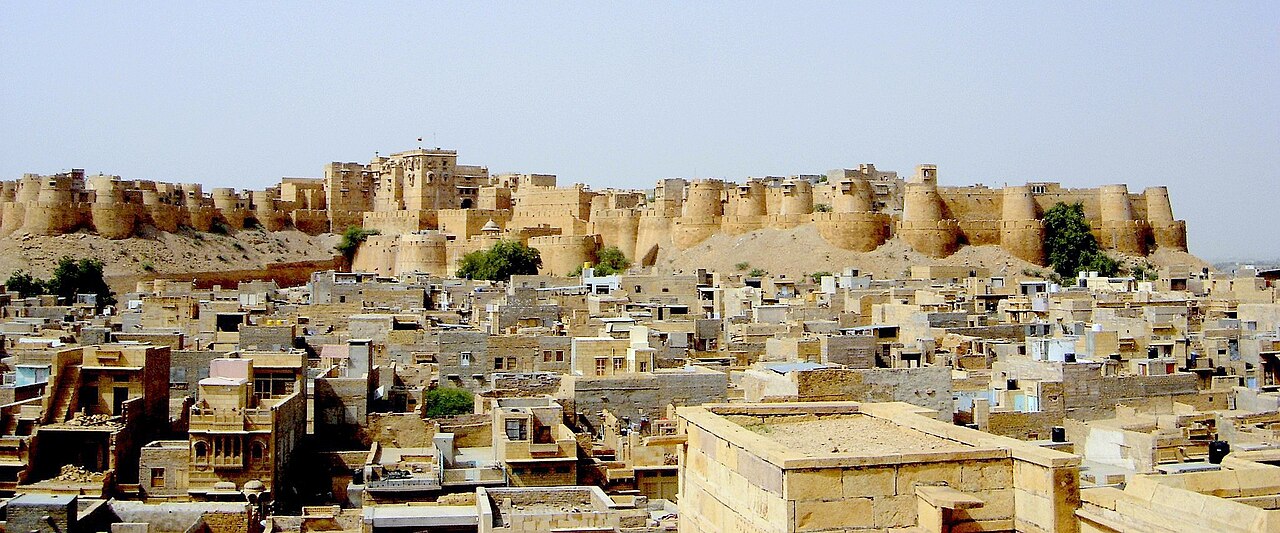
Jaisalmer Fort
Fort · 450 m · about 7 min walk
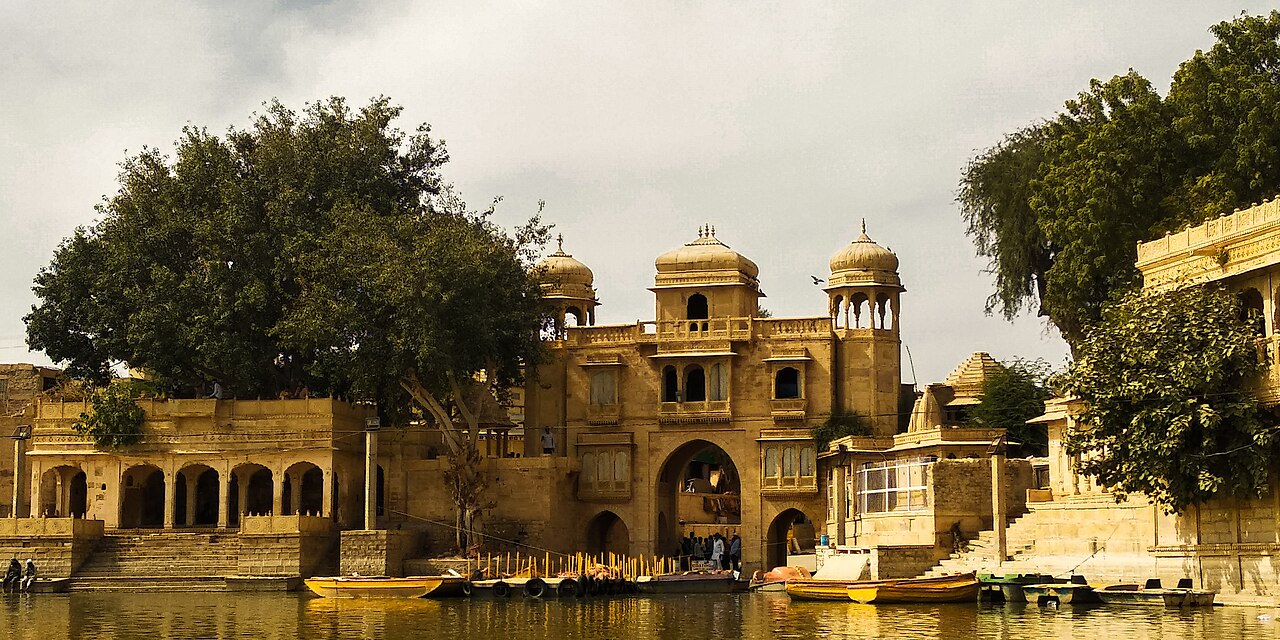 #4 in JaisalmerFree entry
Gadisar Lake
Lake · 1.2 km · about 19 min walk