
Mandore Gardens
#6of 9 places to visit in JodhpurJodhpur, Rajasthan
Also known as Old Mandore
Quick answer
Opening hours: 08:00–20:00 and 10:00–17:00. Entry is free. Allow 1.5 hrs. Best time: 16:00 – 18:30.
Updated · Compiled by Traveliac, AI-assisted · 5 min read
- Opening hours
- 08:00–17:00
- 08:00 – 20:00 daily for the gardens; the Hall of Heroes and museum building keep shorter hours, approximately 10:00 – 17:00.
- Entry fee
- Free
- Time needed
- 1.5 hrs
- Best time of day
- 16:00 – 18:30
- Best months
- Oct – Mar
- Address
- Mandore, Jodhpur, Rajasthan 342001, approximately 9 km north of the old city
About Mandore Gardens
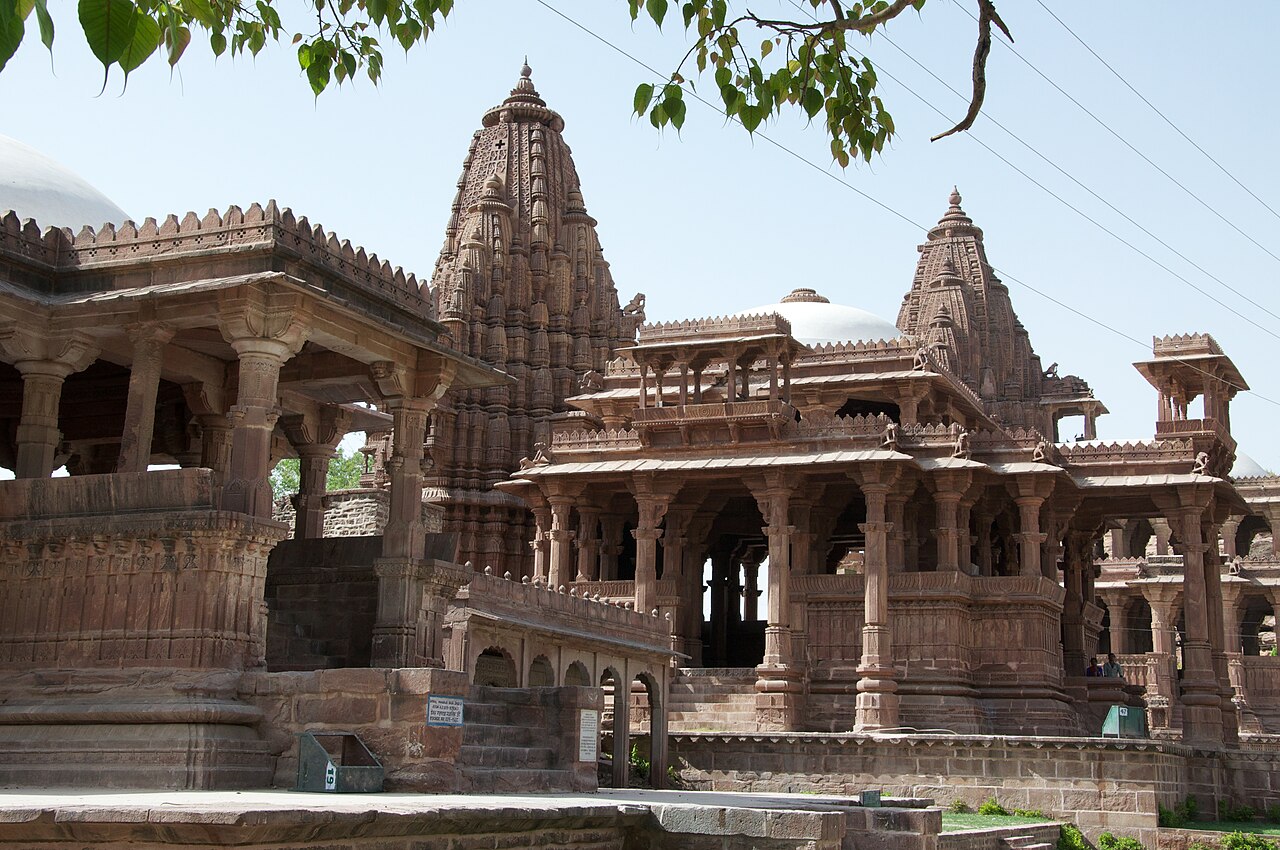
Mandore was the seat of Marwar for centuries before Rao Jodha abandoned it in 1459 in favour of the more defensible rock outcrop that became Mehrangarh, and the gardens that now occupy the old capital's grounds hold a cluster of royal cenotaphs built in a style found almost nowhere else in Rajput funerary architecture. Rather than the simple domed chhatri form seen at Jaswant Thada or most Rajasthan royal memorials, Mandore's cenotaphs are carved and stacked in a tall, tiered, temple-like structure with a curved shikhara-style spire — closer in silhouette to a Hindu temple tower than to a conventional Rajput pavilion, a divergence architectural historians attribute to the site's older, pre-Jodhpur religious associations and the specific masons commissioned across successive Rathore reigns. The grounds also hold the Hall of Heroes, a rock-cut gallery of 15 larger-than-life figures carved directly into a natural stone cliff face and brightly painted, depicting Rathore rulers, deified folk heroes, and regional deities in a single continuous frieze rather than as isolated statues. The gardens surrounding both the cenotaphs and the hall were laid out with shaded walkways and stepped water tanks, giving Mandore the feel of an unhurried public park that happens to contain some of Marwar's oldest and most architecturally distinct funerary monuments.
Best time of day: 16:00 – 18:30. When the light angles low across the red sandstone chhatris and local families arrive for evening picnics, giving the gardens their most lived-in atmosphere; mornings before 09:00 are quieter but the temple-style cenotaphs photograph better with warmer late-afternoon light.
Mandore Gardens timings
- Opening hours
- 08:00–17:00
Mon–Sun 08:00–20:00 and 10:00–17:00 - 08:00 – 20:00 daily for the gardens; the Hall of Heroes and museum building keep shorter hours, approximately 10:00 – 17:00.
- Closed on
- Museum building closed Fridays; gardens and cenotaphs remain open.
Opening hours compiled from rajasthantourism.gov.in and public records, last updated . They change without notice — confirm before you travel. How we write these guides
Mandore Gardens ticket price
| Ticket | Price |
|---|---|
| Indian visitors | Free |
| Foreign visitors | Free |
| Children | Free |
| Camera | Free |
The gardens and cenotaph grounds are free to enter. The small Hall of Heroes shrine hall and the government museum building within the complex may levy a nominal separate fee, typically under ₹20, for the museum portion only; the cenotaphs and gardens themselves carry no charge.
Prices compiled from rajasthantourism.gov.in and public records, last updated . They change without notice — confirm before you travel. How we write these guides
Best time to visit Mandore Gardens
- Quiet
- Moderate
- Busy
08:00 – 10:00
Morning QuietBest time to go
Gardens largely empty aside from morning walkers. Cenotaphs and Hall of Heroes accessible without crowds; museum building not yet open.
Quiet10:00 – 15:00
Midday
Heat discourages lingering in the open garden areas; a quiet stretch suited to unhurried viewing of the cenotaphs and rock-cut figures.
Quiet16:00 – 18:30
Evening Picnic Hours
Local families arrive in numbers for evening picnics on the lawns, especially weekends. Warmer light suits photography of the tiered cenotaphs.
Busy18:30 – 20:00
Dusk
Crowds thin as families head home; gardens take on a calmer atmosphere before closing, though lighting is minimal after dark.
Moderate
History of Mandore Gardens
Mandore's history as a seat of power predates the Rathore dynasty considerably — the site is associated with older Pratihara-era rule and appears in regional tradition as a settlement of significance well before the 13th century, when the Rathore clan, migrating from further north, established control over the area. Mandore served as the Rathore capital of Marwar for roughly two centuries until Rao Jodha, seeking a more defensible position after repeated vulnerability to siege on Mandore's relatively open ground, relocated the seat of power to the rock outcrop at Bhaurcheeria in 1459, founding both Mehrangarh Fort and the city of Jodhpur.
Despite losing its status as capital, Mandore retained deep ceremonial and religious significance for the Rathore rulers, who continued to be cremated and memorialised there for several more centuries — a practice that produced the cluster of cenotaphs visible today, built across different reigns from the 16th through 18th centuries and later. The temple-like, tiered architectural form of these cenotaphs, distinct from the simpler domed chhatri style adopted at Jaswant Thada and elsewhere, is generally explained by art historians as a continuation of temple-building conventions already established at Mandore before it became strictly a funerary site, blending devotional architecture with royal memorial function.
The Hall of Heroes, added later as a distinct commission, reflects a folk-religious tradition of venerating deified warriors and regional deities alongside formal royal ancestors — its 15 rock-cut figures include both historical Rathore rulers and figures drawn from local legend, painted in bright pigment and periodically repainted as part of ongoing maintenance by the state archaeology department.
Rules & etiquette at Mandore Gardens
The gardens function as a genuine public park as much as a heritage site, and on weekends and holidays they fill with local families picnicking on the lawns around the cenotaphs — a livelier, less formally managed atmosphere than Jaswant Thada or Mehrangarh, where footfall skews more heavily toward paying tourists. Visitors should not expect the hushed, curated feel of a ticketed monument; loud groups, vendors selling snacks and balloons, and children playing near the tanks are all part of the normal scene.
The cenotaphs themselves can be approached and photographed freely with no shoe-removal or dress-code requirement at the outer structures, though the small shrine areas within some of the cenotaphs do expect footwear removed at the threshold, marked informally rather than with a fixed counter. The Hall of Heroes gallery has its own modest entry arrangement and photography is generally permitted, though flash photography close to the painted rock-cut figures is discouraged informally by on-site caretakers concerned about pigment fading.
Mandore sits far enough from the old city — roughly 9 kilometres — that it requires a dedicated taxi or auto trip rather than a casual walk-on visit, and there is no reliable public transport running directly and frequently to the site, so arranging return transport before dismissing a driver is worth doing, particularly in the evening once the gardens' more relaxed pace makes it easy to lose track of time.
Tips for visiting Mandore Gardens
- 1
Mandore rewards visitors willing to treat it as a half-day outing rather than a quick stop bolted onto an old-city itinerary — the combination of gardens, cenotaphs, Hall of Heroes, and a small zoo and museum on the same grounds gives it more genuine breadth than its relatively modest tourist profile suggests. Because it sits outside the main old-city cluster, it draws noticeably fewer foreign tourists than Mehrangarh or Umaid Bhawan, and the atmosphere on an ordinary weekday afternoon can feel closer to a local park than an attraction.
- 2
The deified folk hero Pabuji, a recurring figure in Rajasthani oral epic tradition, appears among the Hall of Heroes' rock-cut figures, and asking any of the on-site caretakers about the individual figures usually yields more folklore than any posted signage offers — much of the storytelling here is oral rather than written, consistent with the broader regional tradition the hall commemorates.
- 3
Combining Mandore with a same-day visit to Kaylana Lake makes sense geographically, since both sit on the northern side of the city away from the old-town cluster, and a single taxi booking covering both in one loop is more efficient than two separate return trips from the old city.
How to reach Mandore Gardens
The red star is Mandore Gardens; the numbered pins are the 8 nearest places in our guides, each showing its rank in its city. Tap a pin for details.
Mandore, Jodhpur, Rajasthan 342001, approximately 9 km north of the old cityDirections in Google Maps
From Jodhpur Airport (JDH)
₹350–₹45014 km · 30–35 min
Prepaid cab or app-based).
From Jodhpur Junction (JU)
₹250–₹3509 km · 20–25 min
Auto, negotiated); ₹300–₹400 (cab).
From Clock Tower / Sardar Market
₹220–₹3008 km · 20 min
Auto).
Nearest airport
From Jodhpur Airport (JDH)
14 km, approximately 30–35 minutes.
Nearest railway station
From Jodhpur Junction (JU)
9 km, approximately 20–25 minutes.
Mandore Gardens FAQs
Why do Mandore's cenotaphs look different from other Rajasthan royal memorials?
Unlike the simple domed chhatri style used at Jaswant Thada and most Rajput memorials, Mandore's cenotaphs are built as tall, tiered, temple-like structures with curved shikhara spires, a form linked to the site's older religious and temple-building traditions predating its use purely as a royal cremation ground.
Was Mandore the capital of Marwar before Jodhpur?
Yes. Mandore served as the Rathore dynasty's capital for roughly two centuries until Rao Jodha relocated the seat of power in 1459 to the more defensible rock outcrop that became Mehrangarh Fort, founding the city of Jodhpur in the process.
What is the Hall of Heroes at Mandore Gardens?
A gallery of 15 larger-than-life figures carved directly into a natural rock cliff face and brightly painted, depicting Rathore rulers, deified folk heroes such as Pabuji, and regional deities in a single continuous frieze rather than as separate statues.
Is there an entry fee for Mandore Gardens?
The gardens and cenotaphs are free to enter. The Hall of Heroes and the small museum building within the complex may charge a nominal separate fee, typically under ₹20, but the outdoor grounds carry no charge.
Compiled with AI assistance from official sources and public records, and published only after the checks in How we write these guides. Nobody from Traveliac has visited this place. Last updated . How we rank and check places
Places to visit near Mandore Gardens
Straight-line distances from our map; times are estimates.
 #2 in Jodhpur
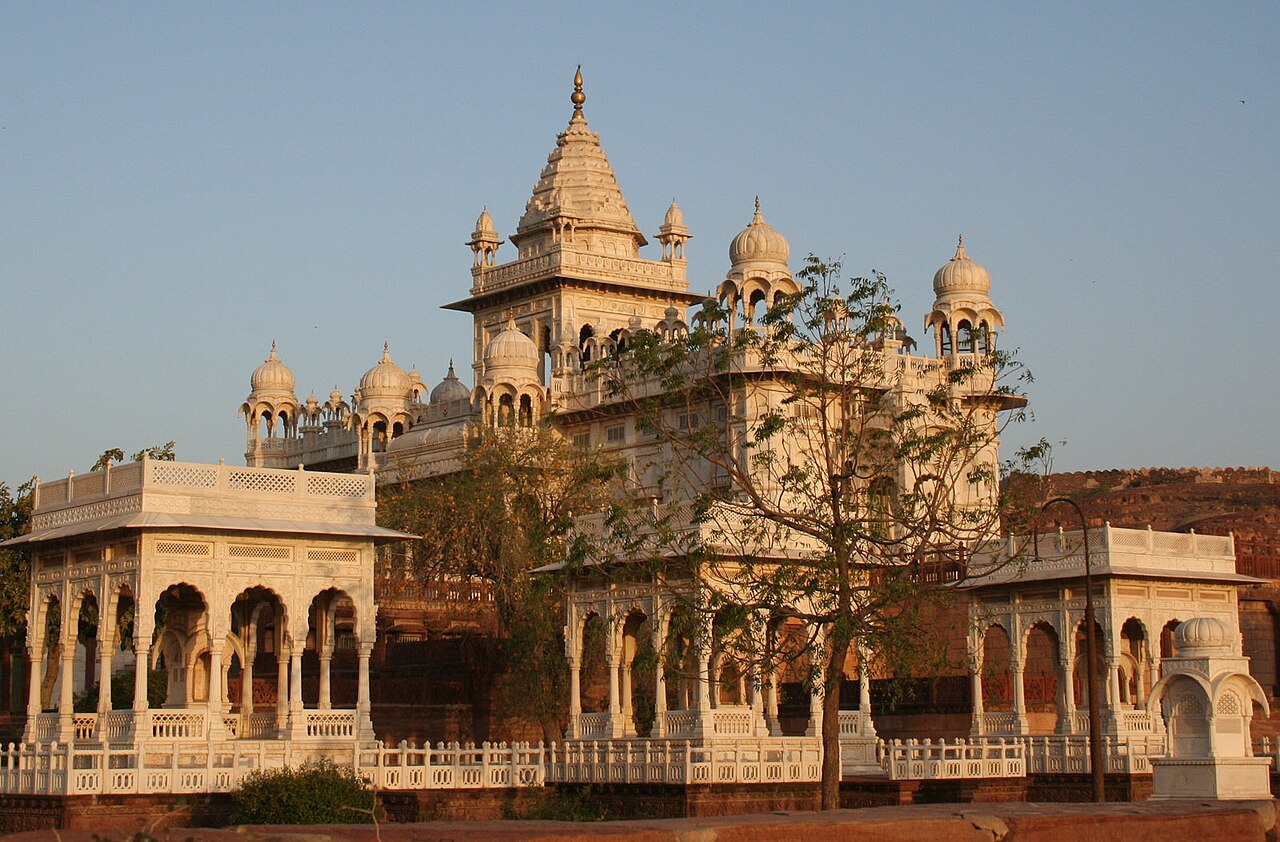
Jaswant Thada
Memorial · 6 km · about 15 min by road
 #7 in Jodhpur
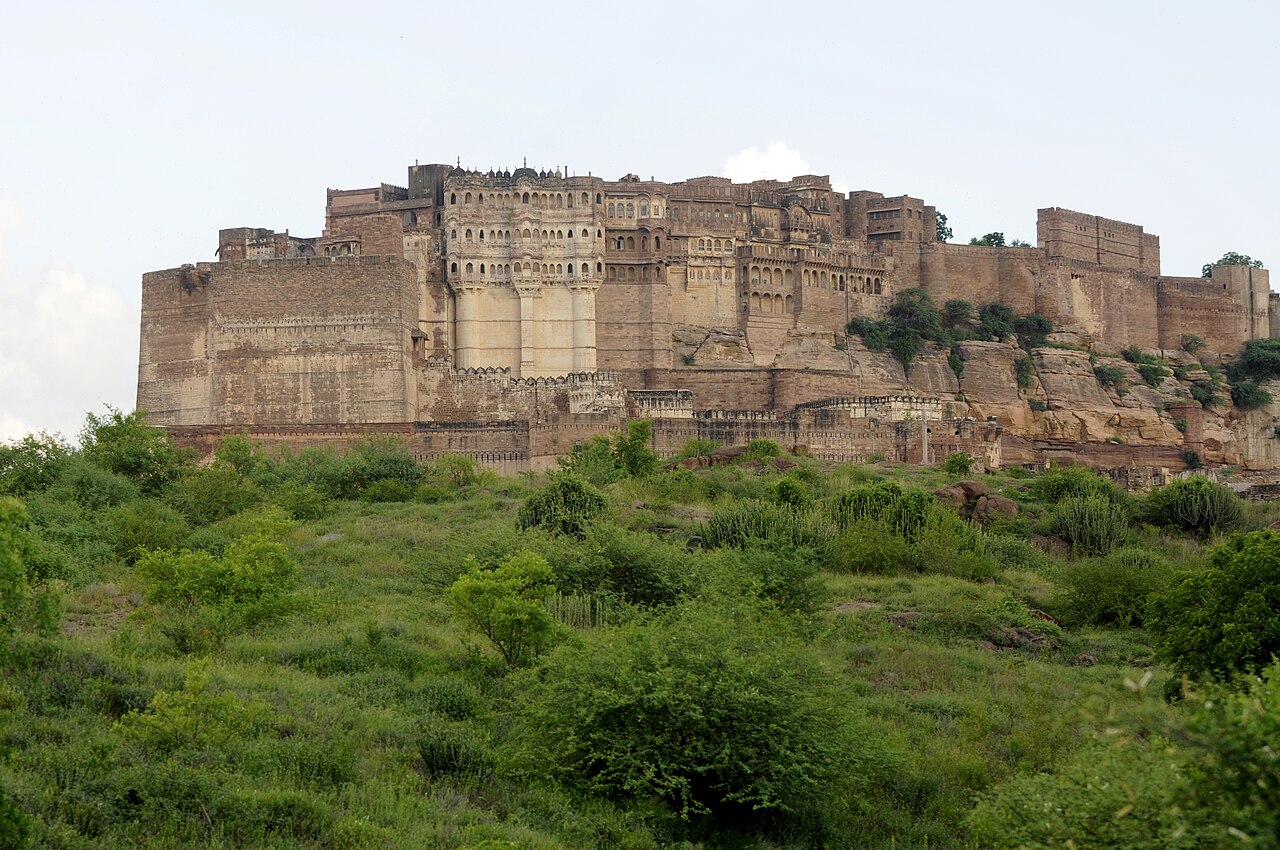
Rao Jodha Desert Rock Park
Nature · 6 km · about 20 min by road
 #1 in Jodhpur
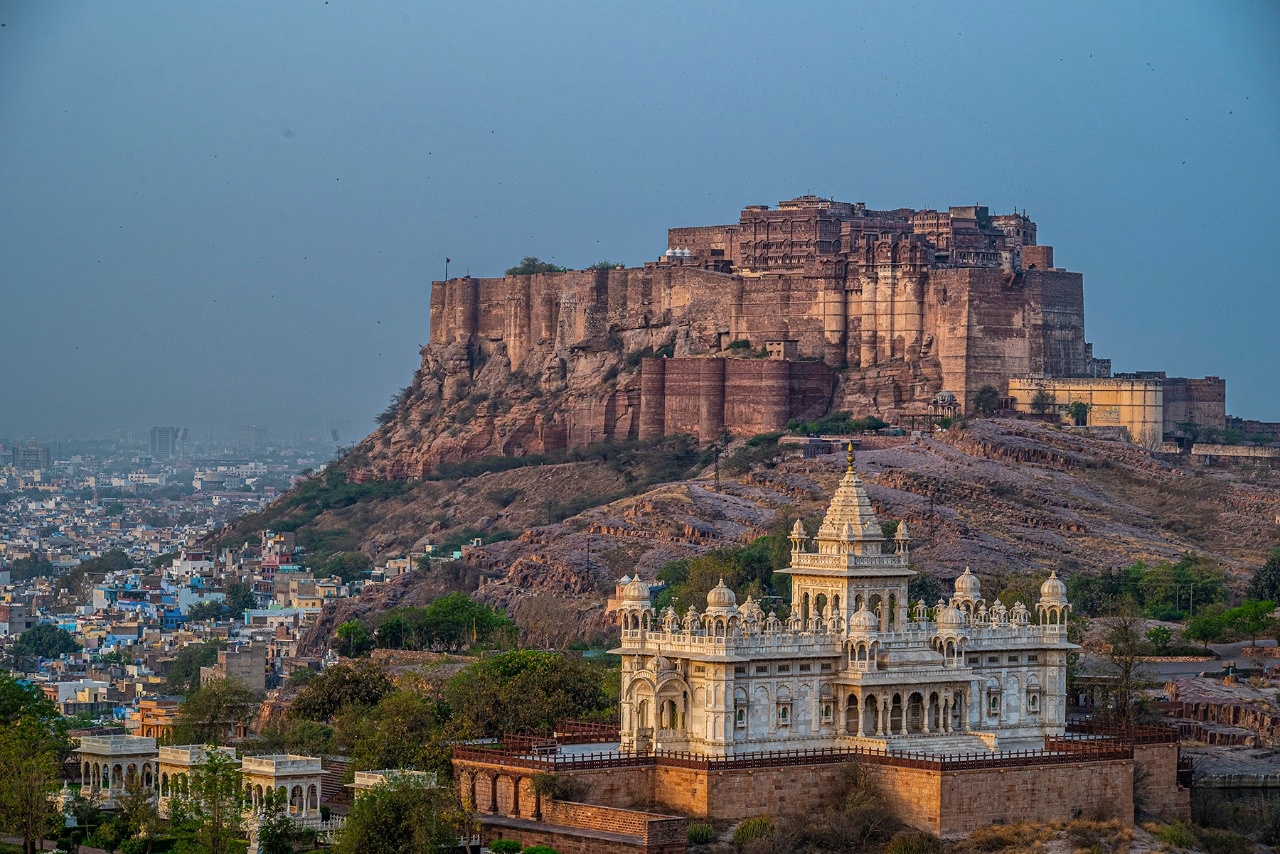
Mehrangarh Fort
Fort · 6 km · about 20 min by road
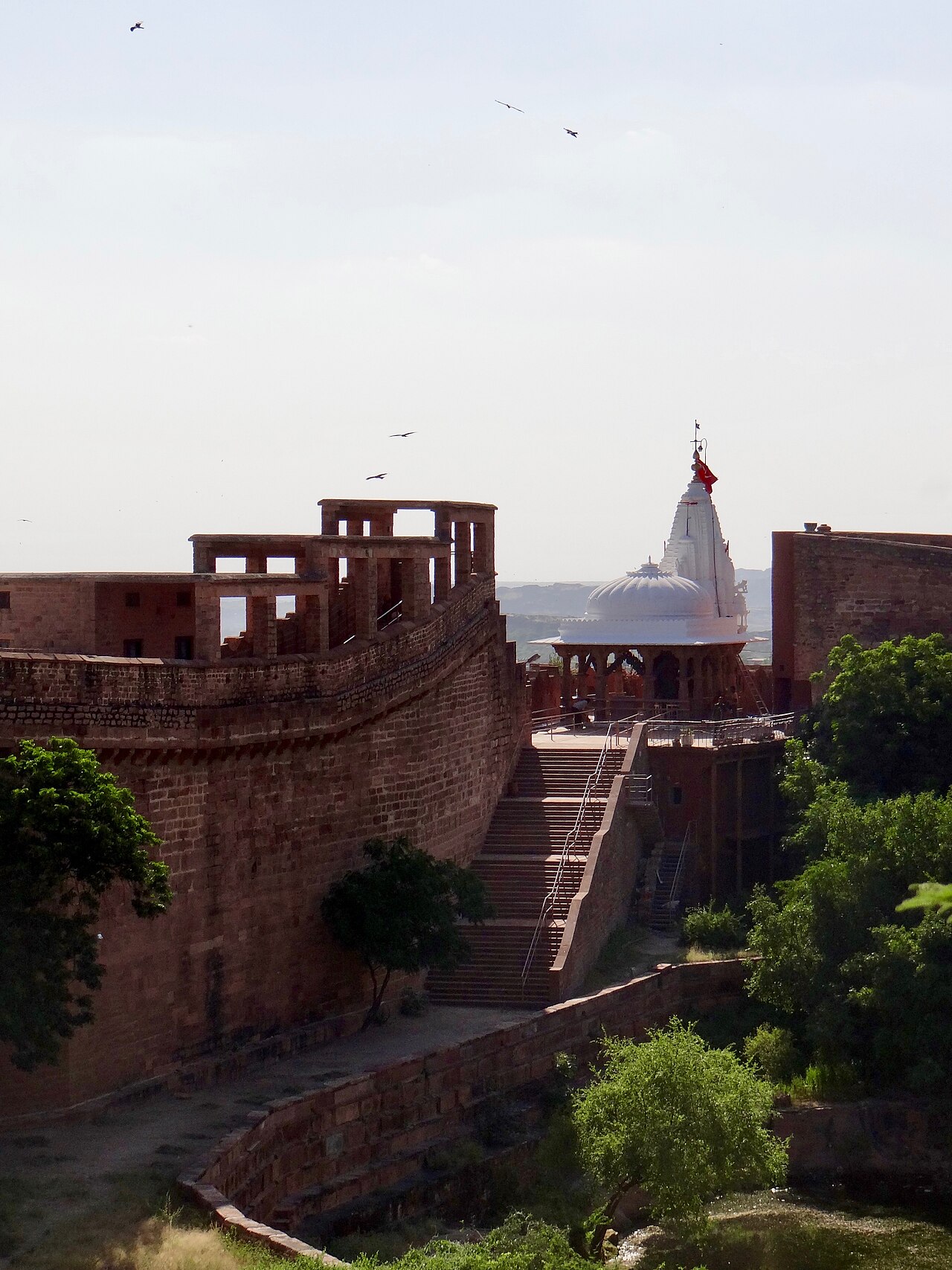 #8 in JodhpurFree entry
Chamunda Mata Temple
Temple · 6 km · about 20 min by road