
Umaid Bhawan Palace
#3of 9 places to visit in JodhpurJodhpur, Rajasthan
Also known as Chittar Palace
Quick answer
Opening hours: 09:00–17:00. Entry: ₹100 Indian · ₹400 foreign. Allow 1.5 hrs. Best time: 09:00 – 11:00.
Updated · Compiled by Traveliac, AI-assisted · 6 min read
- Opening hours
- 09:00–17:00
- 09:00 – 17:00 daily (last museum entry 16:30)
- Entry fee
- ₹100 Indian
- Ticket from
- Time needed
- 1.5 hrs
- Best time of day
- 09:00 – 11:00
- Best months
- Oct – Mar
- Address
- Circuit House Road, Cantt Area, Jodhpur, Rajasthan 342006
About Umaid Bhawan Palace
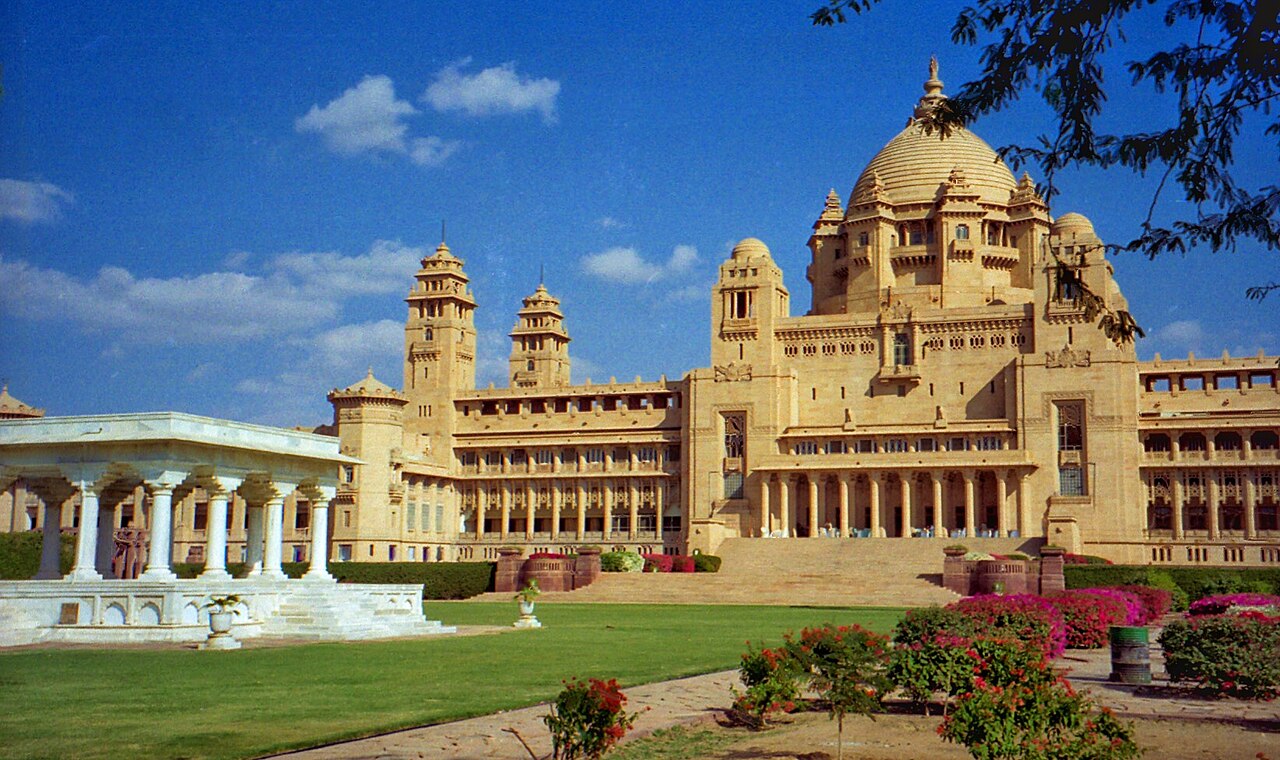
Umaid Bhawan Palace was built as an unemployment relief project during a prolonged drought, which is not the origin story its marble corridors and Art Deco chandeliers advertise. Maharaja Umaid Singh commissioned the palace in 1929 specifically to give paid work to famine-struck farmers and labourers around Jodhpur, and construction ran for fourteen years, finishing in 1943, employing an average of 3,000 workers a day at its peak. The building itself is a study in structural restraint: 100 rooms across 26 acres, built without a single sack of cement or drop of mortar. Every block of golden-hued Chittar sandstone, quarried locally, and imported Makrana marble was dressed and interlocked using ashlar construction, in which precisely cut stone faces are set so tightly against one another that friction and weight alone hold the structure up. The architect was Henry Vaughan Lanchester, a British planner who had earlier worked on Delhi's urban design and who gave Umaid Bhawan an exterior that reads as a fusion of Beaux-Arts massing with a central Indo-Saracenic dome. The interiors tell a different, more surprising story: much of the palace's original decorative scheme was executed by Stefan Norblin, a Polish artist who fled to India during the Second World War and produced murals, furniture, and full room schemes in a distinctly European Art Deco idiom that has almost no equivalent inside any other Rajput palace.
Best time of day: 09:00 – 11:00. Before the midday heat makes the long walk from the car park to the museum entrance uncomfortable, and before hotel-guest traffic through the shared driveway peaks.
Photography
₹100 camera fee
Umaid Bhawan Palace timings
Umaid Bhawan Palace opens at 09:00 and closes at 17:00. It keeps the same hours on Saturday and Sunday.
- Opening hours
- 09:00–17:00
Mon–Sun 09:00–17:00 - 09:00 – 17:00 daily (last museum entry 16:30)
- Closed on
- Open every day
Opening hours compiled from tajhotels.com and public records, last updated . They change without notice — confirm before you travel. How we write these guides
Umaid Bhawan Palace ticket price
| Ticket | Price |
|---|---|
| Indian visitors | ₹100 |
| Foreign visitors | ₹400 |
| Children | Free |
| Camera | ₹100 |
The museum wing entry fee is for the eastern portion of the palace only, covering the vintage car collection, royal memorabilia, and clock and armoury galleries — the residential and hotel wings, run separately by Taj Hotels, are inaccessible to non-guests beyond the lobby. Video camera fee is charged at ₹200; drone use anywhere on the grounds is prohibited without written clearance from both the Marwar royal household and local aviation authorities, and is not realistically obtainable for casual visitors.
Prices compiled from tajhotels.com and public records, last updated . They change without notice — confirm before you travel. How we write these guides
Best time to visit Umaid Bhawan Palace
- Quiet
- Moderate
09:00 – 11:00
Morning OpeningBest time to go
Museum wing opens with light footfall. Car collection and clock gallery are easiest to view without crowding around display cases.
Quiet11:00 – 13:30
Midday Peak
Day-tour visitors from the old city arrive after covering Mehrangarh and Jaswant Thada earlier in the morning. Still comfortably walkable given the museum wing's limited footprint.
Moderate13:30 – 16:00
Afternoon Lull
Footfall drops as most visitors have moved on. A good window for the high-tea lawn experience if booked in advance.
Quiet16:00 – 17:00
Late Afternoon
Final visitors before last entry at 16:30; hotel check-in traffic through the shared driveway increases toward evening.
Moderate
History of Umaid Bhawan Palace
The drought that prompted Umaid Singh's building project lasted from roughly 1923 through the end of the decade, and contemporary accounts describe a state treasury under pressure to provide relief without simply distributing cash, which colonial and princely administrations of the period generally regarded as fostering dependency. A large construction project offering wages for labour was the preferred instrument, and Umaid Bhawan — then referred to simply as the new palace, or later Chittar Palace after the stone — became Marwar's largest such undertaking. Court records held by the Mehrangarh Museum Trust put average daily employment at 2,000 to 3,000 workers across masons, carvers, and general labourers throughout the fourteen-year build.
Henry Vaughan Lanchester won the commission after Umaid Singh's court solicited proposals from British architects with Indian government experience; Lanchester had already worked on plans for New Delhi and brought a similarly monumental, symmetrical sensibility to the brief. His design paired a central low dome — deliberately reminiscent of both Renaissance civic architecture and Mughal precedent — with long flanking wings, one for state functions and one for the royal family's private residence, a duality that persists today in the palace's three-way division between museum, private residence, and hotel.
Stefan Norblin arrived in India in 1941 as a refugee after the German and Soviet invasions of Poland, and Umaid Singh, aware of his reputation from pre-war European commissions, engaged him to design murals and interiors for the palace's grander public rooms. Norblin's Art Deco murals — mythological and hunting scenes rendered in a flat, geometric, jewel-toned style entirely unlike traditional Rajput miniature painting — remain in the palace's Throne Room and several halls, restored in phases since the 1990s. Umaid Singh died in 1947, months before Independence, and did not see the newly sovereign India that his palace's completion had anticipated.
Rules & etiquette at Umaid Bhawan Palace
The museum wing entrance is separate from the hotel's guest driveway and porte-cochère; visitors arriving by taxi should confirm with the driver that they are being dropped at the public museum gate, since taxis unfamiliar with the property sometimes default to the hotel entrance, where non-guests are politely redirected. Formal dress is not mandated for the museum wing, but the hotel lobby and restaurant areas enforce a smart-casual standard, and beachwear, vests, or flip-flops will draw a request to cover up if a visitor strays toward the hotel side.
Drone photography is prohibited across the entire property without prior written clearance, a restriction enforced more strictly here than almost anywhere else in Jodhpur given the palace's status as both a working hotel and an active royal residence. Standard camera use inside the museum galleries carries the ₹100 fee; video recording is a separate ₹200 charge, and staff periodically check for compliance near the vintage car gallery.
The residential wing, still home to the Marwar royal family, and roughly two-thirds of the hotel rooms are entirely off-limits to museum visitors — the visible circuit covers perhaps a third of the palace's actual 100 rooms. Visitors expecting a full-palace experience akin to Mehrangarh's open ramparts are sometimes disappointed by how contained the public route is; treating the museum wing as a focused 60–90 minute visit rather than a half-day palace tour sets the right expectation.
Tips for visiting Umaid Bhawan Palace
- 1
The vintage and classic car collection in the palace's converted garage wing is worth lingering over even for visitors with no particular interest in automobiles — the fleet includes Rolls-Royces and other marques maintained in running condition by the family for decades, a level of preservation rarely seen outside dedicated automotive museums. The clock gallery and the armoury, smaller and quieter than Mehrangarh's equivalent displays, tend to be overlooked by visitors moving quickly through the circuit but reward five extra minutes each.
- 2
High tea on the palace lawns, bookable by non-hotel-guests through the Taj Hotels reservation desk, is the most accessible way to experience more of the grounds than the museum ticket alone permits, and is worth the premium price for the view back toward the domed roofline from the garden level rather than the street-facing approach. Booking a day or two ahead during the October–March season is advisable since seating is limited and the hotel prioritises its own guests.
- 3
The palace sits on raised ground in the Cantonment area, distinct from the old walled city, and the drive there from Mehrangarh or the clock tower area takes visitors through Jodhpur's newer, more spread-out cantonment district — a useful contrast if the rest of the day has been spent in the dense old-city lanes.
How to reach Umaid Bhawan Palace
The red star is Umaid Bhawan Palace; the numbered pins are the 8 nearest places in our guides, each showing its rank in its city. Tap a pin for details.
Circuit House Road, Cantt Area, Jodhpur, Rajasthan 342006Directions in Google Maps
From Jodhpur Airport (JDH)
₹180–₹2505 km · 12–15 min
Prepaid cab or app-based OLA/Uber).
From Jodhpur Junction (JU)
₹180–₹2606 km · 18–20 min
Auto, negotiated); ₹250–₹350 (cab).
From Clock Tower / Sardar Market
₹150–₹2205 km · 15–20 min
Auto).
Nearest airport
From Jodhpur Airport (JDH)
5 km, approximately 12–15 minutes.
Nearest railway station
From Jodhpur Junction (JU)
6 km, approximately 18–20 minutes.
Umaid Bhawan Palace FAQs
Can non-hotel-guests visit Umaid Bhawan Palace, and what exactly do they see?
Yes, the eastern museum wing is open to the public for a separate entry fee, covering the vintage car collection, royal memorabilia, clock gallery, and armoury. The residential wing (still occupied by the Marwar royal family) and most of the hotel rooms are off-limits to museum visitors; the accessible circuit is a focused 60–90 minute visit rather than a full palace tour.
Why was Umaid Bhawan Palace built without cement or mortar?
The palace uses ashlar construction, in which precisely cut blocks of Chittar sandstone and Makrana marble are interlocked so tightly that friction and weight hold the structure together without bonding material. This was both a traditional Rajasthani building technique and, in this case, well suited to a project designed to maximise skilled and unskilled labour employment during the 1929–1943 construction period.
Who designed the Art Deco interiors, and are they still visible today?
Polish artist Stefan Norblin, a refugee who arrived in India in 1941 after fleeing German and Soviet-occupied Poland, designed murals and interior schemes for several of the palace's grand rooms, including the Throne Room. His flat, geometric, jewel-toned Art Deco style is visible today in restored sections viewable as part of the museum circuit and in select hotel public areas.
Is drone photography allowed at Umaid Bhawan Palace?
No. Drone use anywhere on the property is prohibited without prior written clearance from both the Marwar royal household and aviation authorities, a permission that is not practically obtainable for casual visitors. Standard camera and video use inside the museum galleries is permitted for a fee.
Compiled with AI assistance from official sources and public records, and published only after the checks in How we write these guides. Nobody from Traveliac has visited this place. Last updated . How we rank and check places
Places to visit near Umaid Bhawan Palace
Straight-line distances from our map; times are estimates.
 #4 in JodhpurFree entry
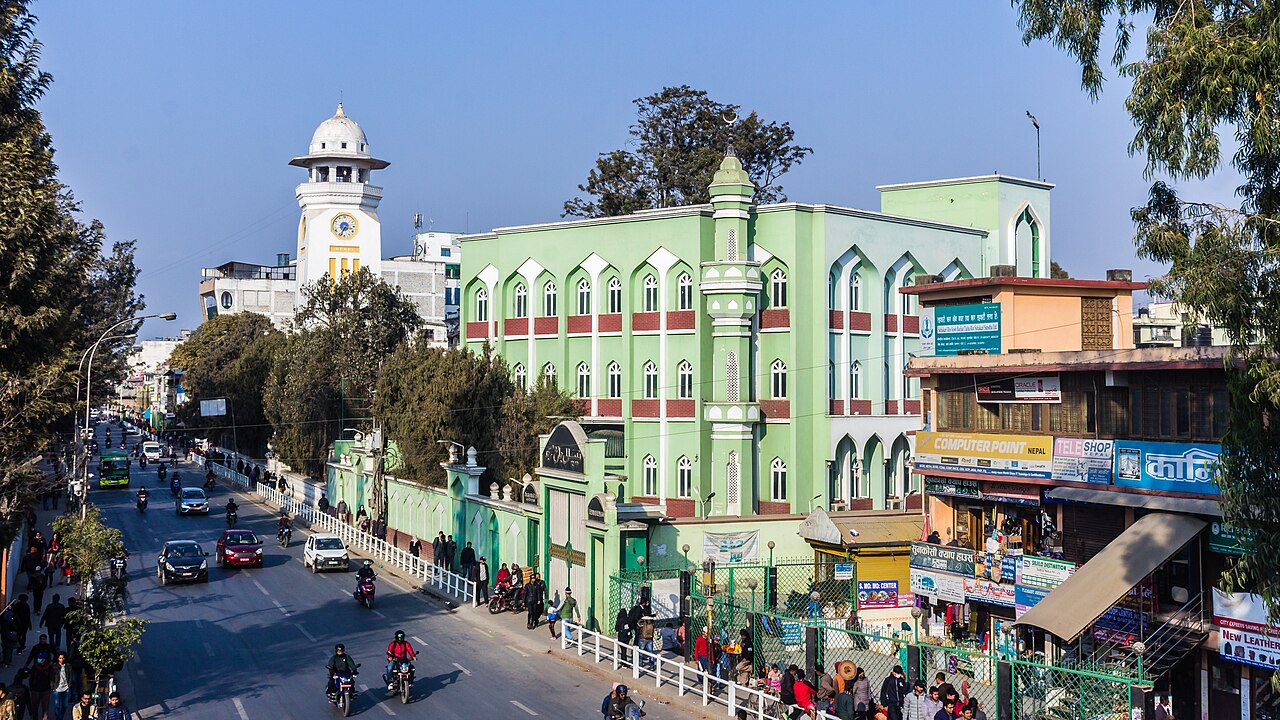
Ghanta Ghar Clock Tower & Sardar Market
Market · 3 km · about 10 min by road
 #5 in JodhpurFree entry
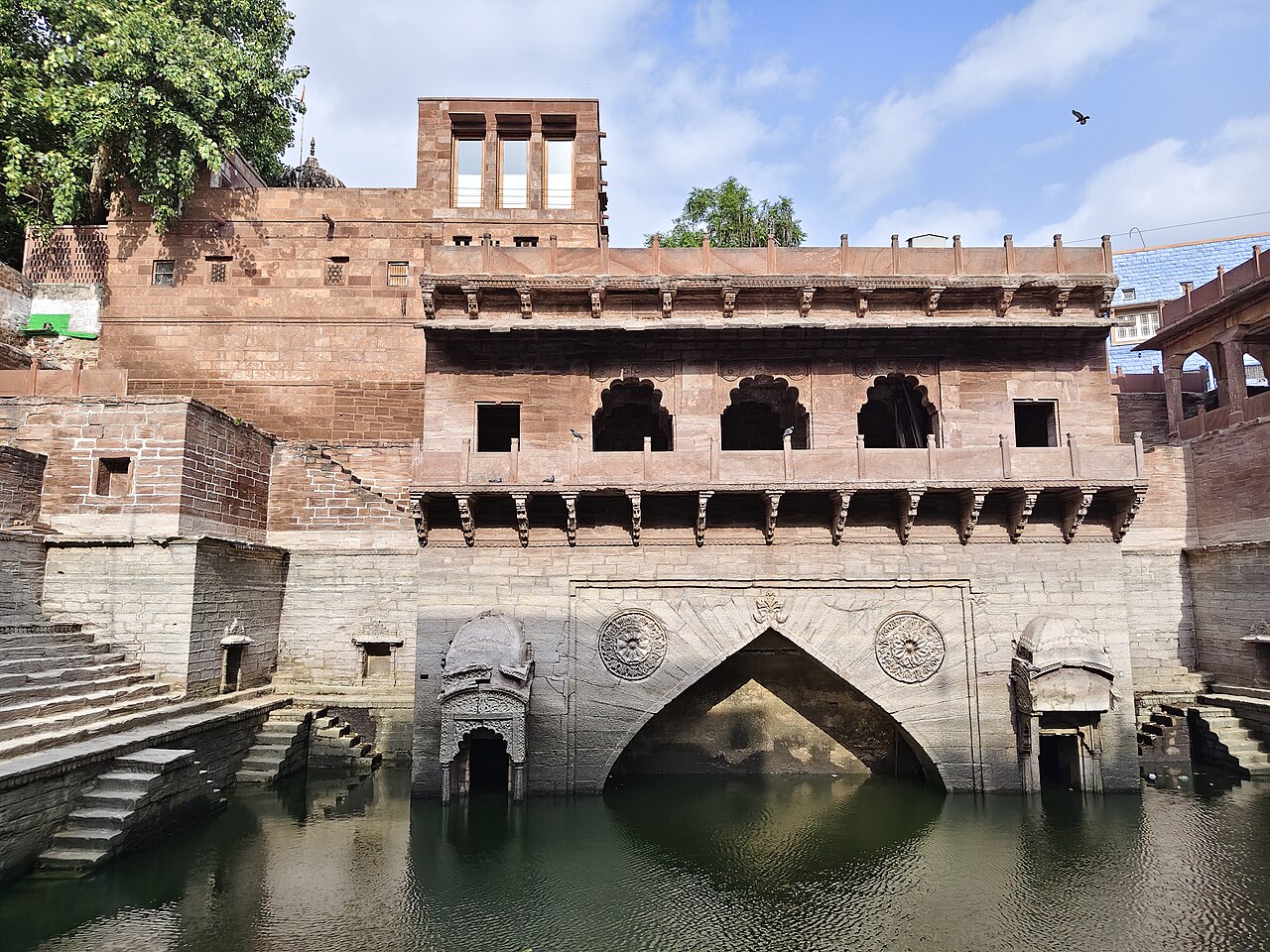
Toorji Ka Jhalra
Heritage · 3 km · about 10 min by road
 #2 in Jodhpur
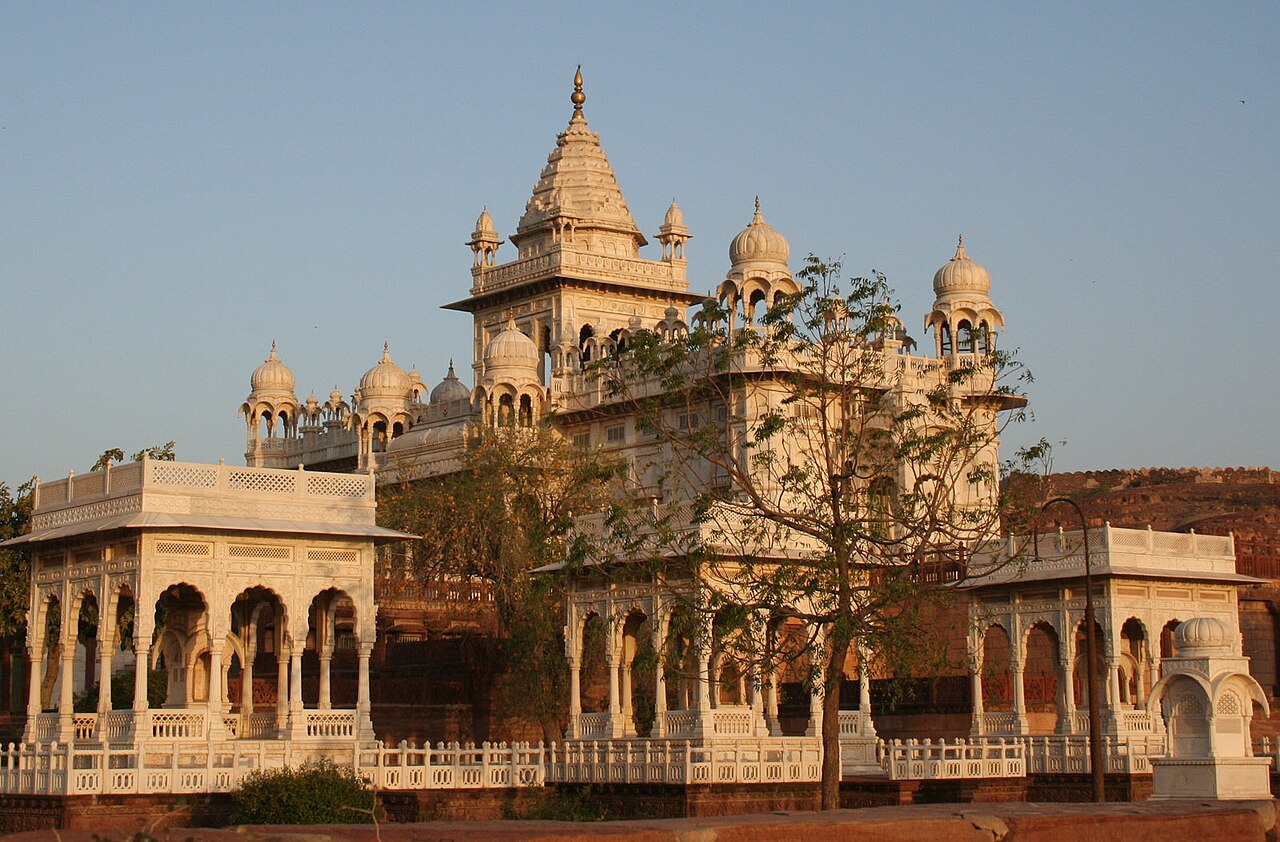
Jaswant Thada
Memorial · 3 km · about 10 min by road
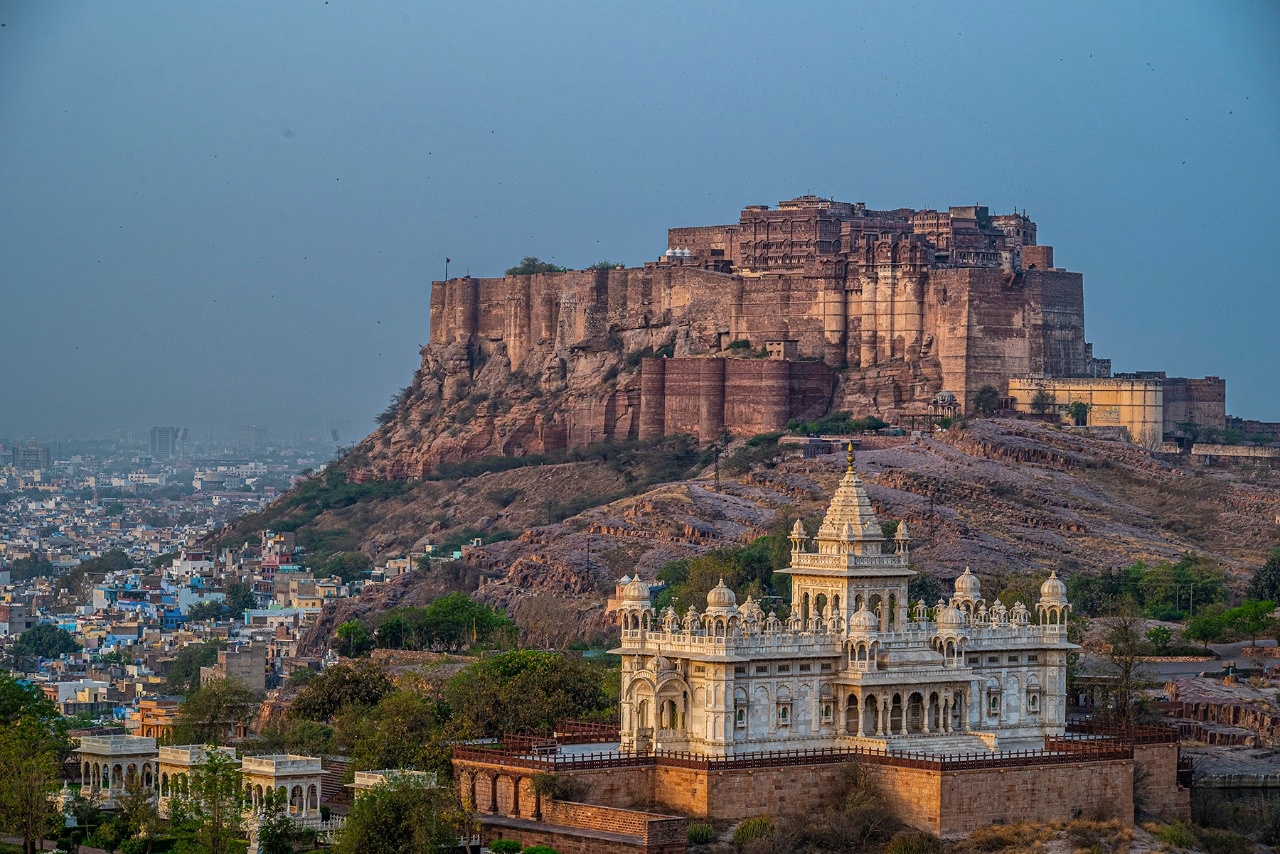 #1 in Jodhpur
Mehrangarh Fort
Fort · 3 km · about 10 min by road