
Mehrangarh Fort
#1of 9 places to visit in JodhpurJodhpur, Rajasthan
Also known as Mehran Fort · Fort of the Sun
Quick answer
Opening hours: 09:00–17:00, last entry 16:00. Entry: ₹200 Indian · ₹700 foreign. Allow 3 hrs. Best time: 09:00 – 11:00.
Updated · Compiled by Traveliac, AI-assisted · 6 min read
- Opening hours
- 09:00–17:00
- Entry fee
- ₹200 Indian
- Ticket from
- Time needed
- 3 hrs
- Best time of day
- 09:00 – 11:00
- Best months
- Oct – Mar
- Address
- Fort Road, Old City, Jodhpur, Rajasthan 342006, near Jaswant Thada
About Mehrangarh Fort
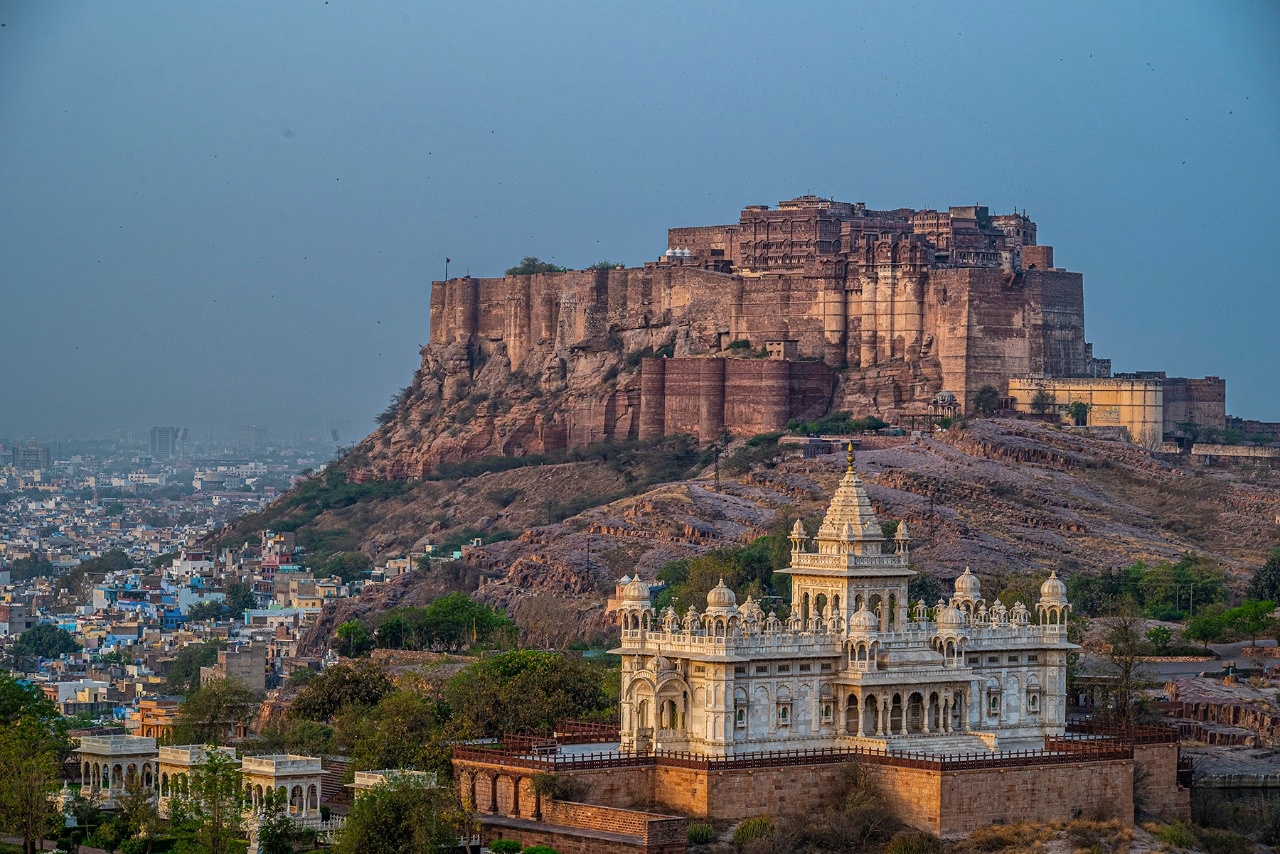
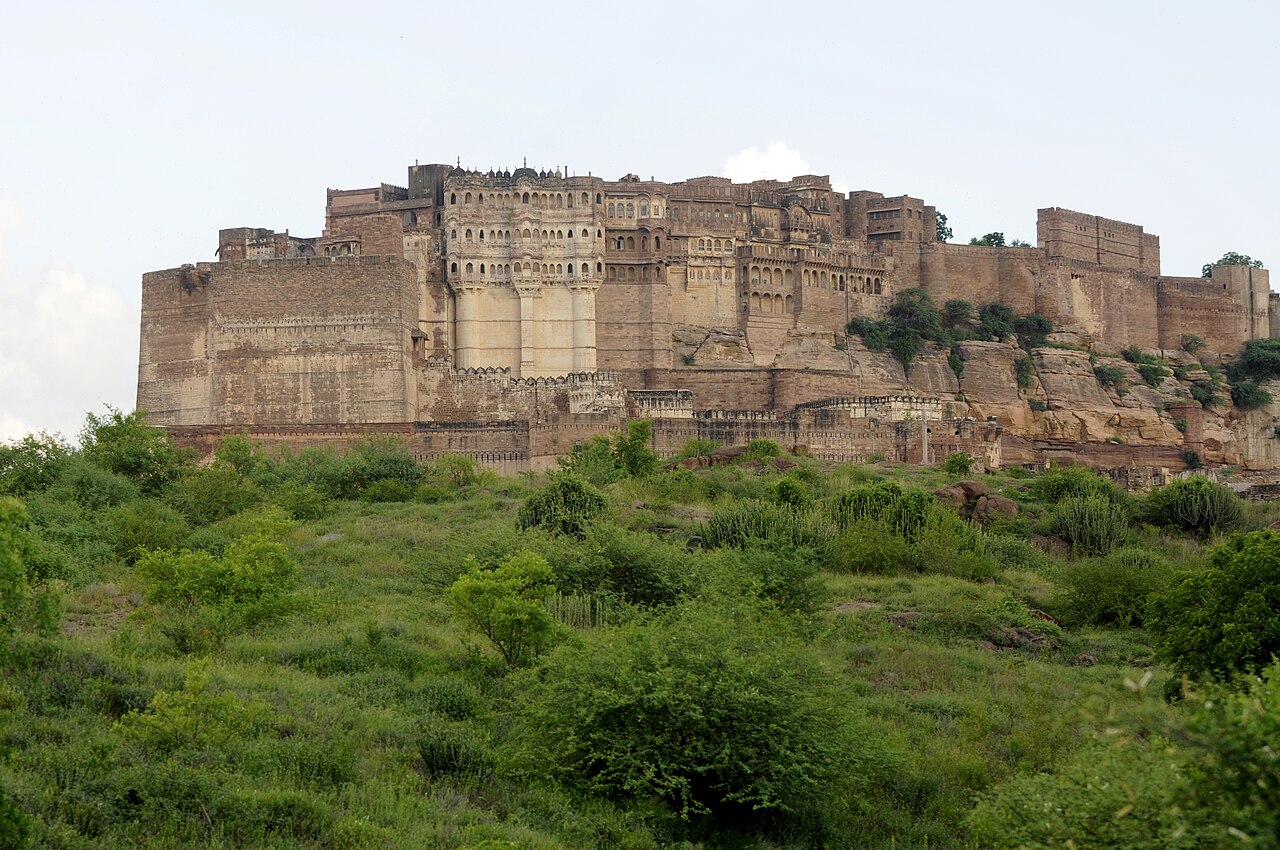
Mehrangarh sits on Bhaurcheeria, a sheer outcrop of rock rising 125 metres above the surrounding plain, its ramparts built from a red sandstone that was quarried from the very hill it stands on — masons cut blocks from the base and hauled them upward, so the fort is in a literal sense carved out of its own foundation. Rao Jodha, the fifteenth Rathore ruler of Marwar, broke ground here in 1459 after abandoning the older capital at Mandore, eight kilometres to the north, in search of a more defensible seat. What he began was expanded over five centuries by his successors, most visibly Maharaja Jaswant Singh I and Maharaja Ajit Singh in the 17th and 18th centuries, whose additions of the ornately latticed Moti Mahal, Phool Mahal, and Sheesh Mahal turned a military strongpoint into a residence that could also receive Mughal envoys. The scale registers before any single detail does. Seven gates punctuate the approach road as it switches back up the rock face, each commemorating a victory or marking a threshold — the last of them, Loha Pol, still bears the small handprints (sati marks) of royal widows who committed self-immolation on the funeral pyres of their husbands, pressed into the stone before they walked to the cremation ground. The museum inside occupies the old royal apartments and displays a collection built around function rather than spectacle: palanquins used to carry queens in purdah, a howdah gifted by Emperor Shah Jahan, and an armoury of curved khanda swords and matchlock muskets that saw actual use in Rathore campaigns rather than ceremonial ones.
Best time of day: 09:00 – 11:00. For the clearest light on the red sandstone ramparts and the shortest queue at the audio-guide counter; the fort is at its most photogenic in the final hour before closing, when low sun turns the stone a deeper rust over the Blue City below.
Photography
₹100 camera fee
Mehrangarh Fort timings
Mehrangarh Fort opens at 09:00 and closes at 17:00. The weekend is no different: Saturday and Sunday follow the same times.
- Opening hours
- 09:00–17:00
Mon–Sun 09:00–17:00 - Closed on
- Open every day
Good to know: Flying Fox zip-line operations pause during high winds and for approximately two weeks around the monsoon's heaviest spell in July–August.
Opening hours compiled from mehrangarh.org and public records, last updated . They change without notice — confirm before you travel. How we write these guides
Mehrangarh Fort ticket price
| Ticket | Price |
|---|---|
| Indian visitors | ₹200 |
| Foreign visitors | ₹700 |
| Children | Free |
| Camera | ₹100 |
Fee includes an audio guide (available in 11 languages, ID or credit card required as deposit at the counter) and covers the fort museum, ramparts, and Chokelao Bagh garden. Children under 5 feet or roughly 15 years enter free with a guardian. Video camera fee is charged separately at ₹100; the ₹100 photography surcharge applies to still cameras with detachable lenses, not to phone photography, which is unrestricted. The Zip Line 'Flying Fox' course is ticketed separately at approximately ₹2,000–₹2,500 per person and must be booked in advance through Flying Fox Mehrangarh's own counter near Chokelao Bagh.
Prices compiled from mehrangarh.org and public records, last updated . They change without notice — confirm before you travel. How we write these guides
Best time to visit Mehrangarh Fort
- Quiet
- Moderate
- Busy
- Very busy
09:00 – 10:30
Morning OpeningBest time to go
Ticket counter opens at 09:00; audio-guide pickup is fastest in this window. Ramparts and museum galleries are walkable without queuing behind tour groups.
Quiet10:30 – 13:00
Coach Tour Peak
Domestic and international tour coaches from the old city arrive together. Sheesh Mahal and Phool Mahal doorways bottleneck; audio-guide return queue lengthens.
Very busy13:00 – 15:30
Midday Lull
Many tour groups move on to Jaswant Thada or lunch. Chokelao Bagh café is a good midday stop; ramparts are comfortably walkable.
Moderate15:30 – 17:00
Golden Hour
Photographers and independent travellers concentrate on the northwestern ramparts for sunset light over the Blue City. Last entry 16:00; galleries begin closing sequentially before 17:00.
Busy
History of Mehrangarh Fort
Local legend holds that Rao Jodha's chosen site displaced a hermit named Cheeria Nathji, whose curse of drought could only be lifted by burying a man alive in the new foundations; a volunteer named Raja Ram Meghwal reportedly accepted the fate in exchange for his family's permanent upkeep, and his descendants are still said to hold land near the fort under that old arrangement. Whatever the truth of the story, the fort's construction did coincide with a documented population shift — Jodha resettled his capital and renamed it Jodhpur after himself, and the city grew in the shadow of the rock rather than the other way around.
Successive Rathore rulers treated Mehrangarh less as a finished monument than a running project. Maharaja Jaswant Singh I, who ruled through much of the mid-17th century, added the Moti Mahal (Pearl Palace), its walls finished in a mirror-and-shell shell-lime plaster called araish that still reflects lamplight without electricity. Maharaja Ajit Singh, who took the throne after a long and violent succession dispute following Aurangzeb's death, built the Phool Mahal in the early 18th century as a pleasure palace, its ceiling covered in gold leaf applied over a lacquer base using a technique local craftsmen still call meenakari on wood. The fort held out against Mughal siege attempts and changed hands only through negotiation, never through storming — a claim few Rajasthan forts can make, and one the Mehrangarh Museum Trust states plainly in its own literature rather than treating it as folklore.
Rules & etiquette at Mehrangarh Fort
The ticket and audio-guide counter is just past Jai Pol gate; queues build fastest between 10:30 and 13:00 when tour coaches from the old city arrive together, so buying online through the fort's own website in advance saves 20–30 minutes on weekends and during the October–March season. The audio guide requires a passport, driving licence, or credit card as deposit — carrying a spare photo ID specifically for this purpose avoids an awkward stand-off at the counter if a passport is being held elsewhere.
Most of the fort is flat-floored and wheelchair-accessible from Jai Pol onward, but the final stretch up to the ramparts and Chamunda Mata Temple bastion involves uneven stone steps with no rail on some sections. Photography is unrestricted with a phone; a still camera with an interchangeable lens draws the ₹100 surcharge, checked informally by museum staff near the entrance to the Sheesh Mahal. Video cameras and tripods require the same declared fee and staff do occasionally ask visitors to put large cameras away inside the more fragile mirror-work rooms.
The Flying Fox zip-line course, which runs six lines across the fort's western ramparts and moat, is a separate operator with its own safety briefing, weight limit (game operates roughly 35–120 kg), and closed-shoe requirement — flip-flops are turned away at the harness stage. Same-day walk-in slots exist but fill by early afternoon in peak season; booking a morning slot the day before is the safer option.
Tips for visiting Mehrangarh Fort
- 1
Set aside a minimum of three hours — the museum galleries alone (armoury, palanquin hall, textile gallery, and the Sheesh Mahal) reward unhurried viewing, and the audio guide's default route runs close to 90 minutes before the ramparts and Chokelao Bagh garden are added on. The garden, a restored Mughal-style char bagh laid out under Maharaja Ajit Singh, is one of the few genuinely quiet corners of the fort and has a small café serving Rajasthani thali and kadak chai with unbroken views down onto Jaswant Thada's white dome.
- 2
The ramparts along the northwestern face give the single best vantage point over the Blue City below — the indigo-washed havelis of the old Brahmin quarter photograph best in the hour after sunrise or the hour before sunset, when the low sun deepens the wash colour rather than bleaching it out. Cannons still sit mounted along this stretch, some cast locally and others captured from Mughal or Maratha forces, and are worth the short detour even for visitors skipping the museum interior.
- 3
Guides can be hired at the ticket counter for roughly ₹400–₹600 for a two-hour circuit; unlike at Jaipur's forts, touts are a minor issue here since the trust runs the guide desk directly, though hawkers selling puppets and mirror-work bags do cluster near the exit at Fateh Pol.
How to reach Mehrangarh Fort
The red star is Mehrangarh Fort; the numbered pins are the 8 nearest places in our guides, each showing its rank in its city. Tap a pin for details.
Fort Road, Old City, Jodhpur, Rajasthan 342006, near Jaswant ThadaDirections in Google Maps
From Jodhpur Airport (JDH)
₹200–₹3006 km · 18–25 min
Prepaid cab or app-based OLA/Uber). Auto-rickshaws negotiate to ₹250–₹350.
From Jodhpur Junction (JU)
₹120–₹1803.5 km · 12–15 min
Auto, negotiated). Shared autos along the Sojati Gate–Fort Road corridor run for ₹20–₹30 per seat but require a short walk up from the drop point.
From Sardar Market / Clock Tower
₹80–₹1202 km · 8–12 min
Auto). Walkable in 25–30 minutes uphill through the old city lanes for travellers who don't mind the climb.
Nearest airport
From Jodhpur Airport (JDH)
6 km, approximately 20 minutes by road.
Nearest railway station
From Jodhpur Junction (JU)
3.5 km, approximately 12–15 minutes via the winding old-city lanes below the fort.
Mehrangarh Fort FAQs
Is the audio guide really included, and what do I need to collect it?
Yes, the audio guide in 11 languages is bundled into the standard entry ticket. The counter requires a photo ID (passport, driving licence, or Aadhaar) or a credit card as a refundable deposit, returned when the device is handed back at the exit. Carrying a spare ID specifically for this purpose avoids delays if your passport is otherwise occupied, for instance at a hotel front desk.
How much time should I actually budget for Mehrangarh Fort?
A minimum of three hours for the museum galleries, ramparts, and Chokelao Bagh garden. The audio guide's standard route alone runs close to 90 minutes. Visitors adding the Flying Fox zip-line course should budget an additional 60–90 minutes including the safety briefing and queue.
Can I book the Flying Fox zip-line on the same day?
Same-day walk-in slots exist but sell out by early afternoon during the October–March peak season. Booking online or at the Flying Fox counter near Chokelao Bagh a day in advance is the more reliable option. Closed-toe shoes are mandatory; flip-flops and sandals are turned away at the harness stage.
What is the best viewpoint for photographing the Blue City from the fort?
The northwestern ramparts, reached via the walk past the old cannon emplacements, give the widest unobstructed view over the indigo-washed old city below. The hour after sunrise or before sunset deepens the blue wash on the havelis; midday light tends to flatten and bleach the colour.
Compiled with AI assistance from official sources and public records, and published only after the checks in How we write these guides. Nobody from Traveliac has visited this place. Last updated . How we rank and check places
Places to visit near Mehrangarh Fort
Straight-line distances from our map; times are estimates.
 #8 in JodhpurFree entry
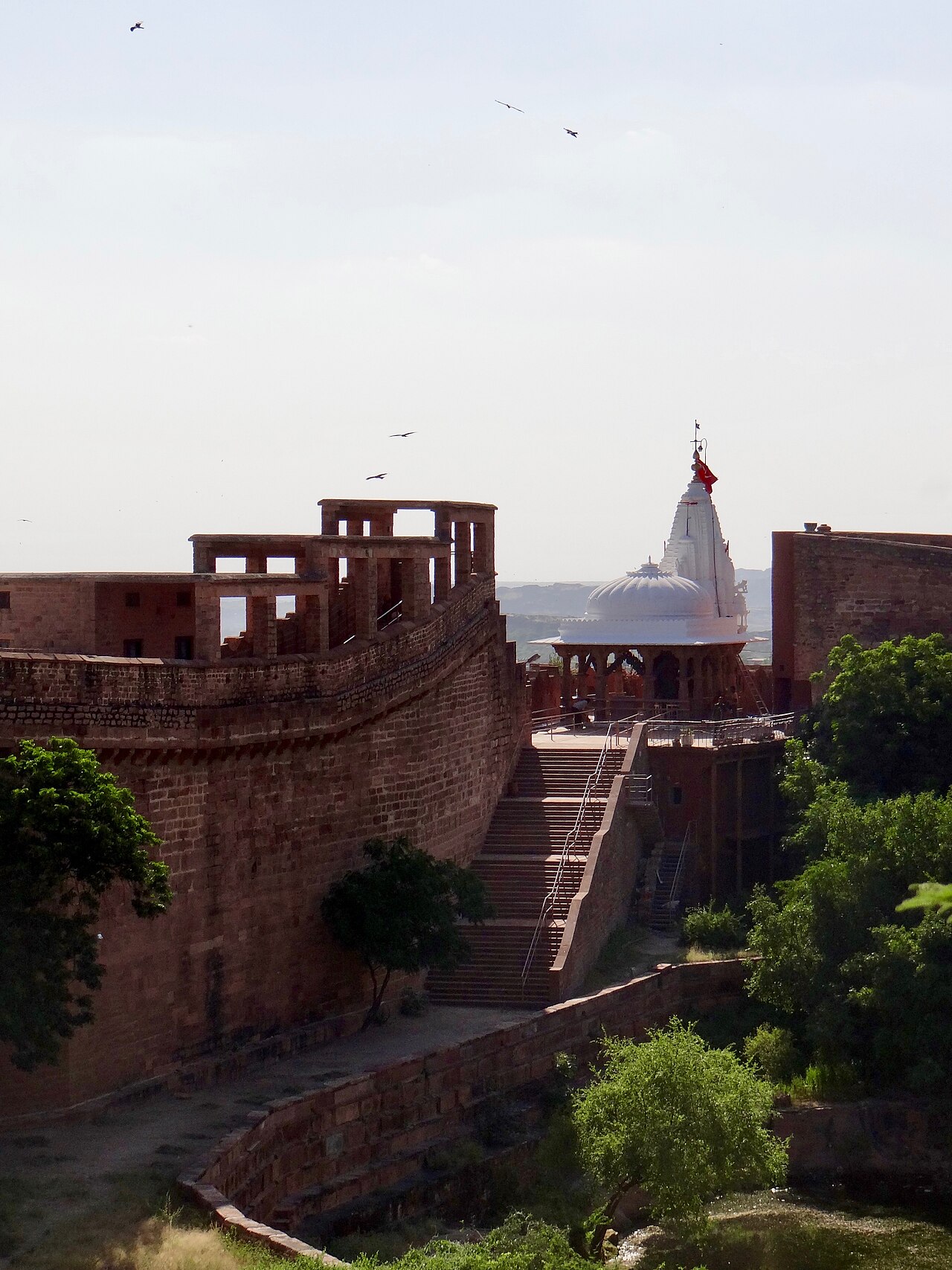
Chamunda Mata Temple
Temple · 50 m · about 2 min walk
 #5 in JodhpurFree entry
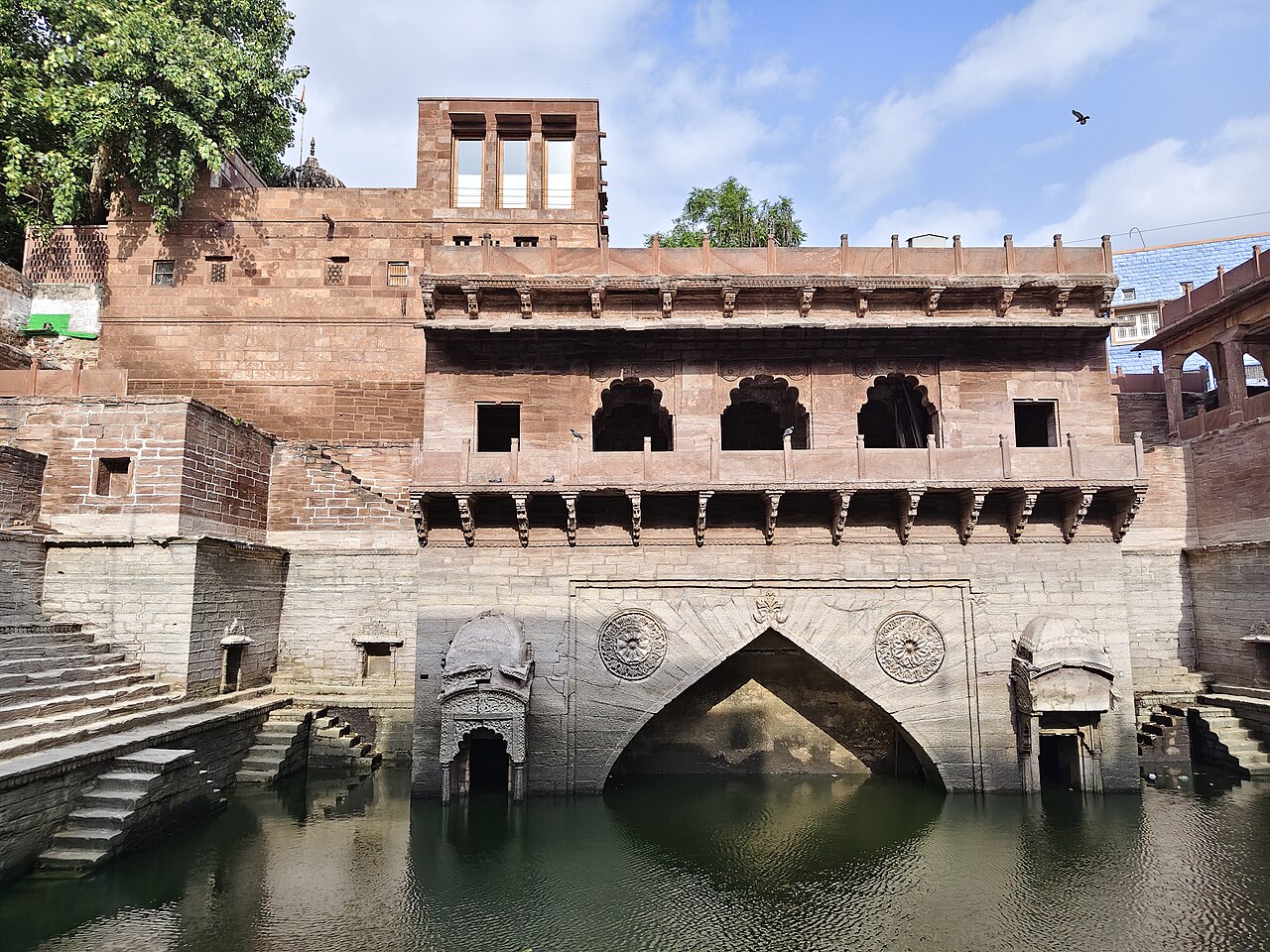
Toorji Ka Jhalra
Heritage · 450 m · about 7 min walk
 #4 in JodhpurFree entry
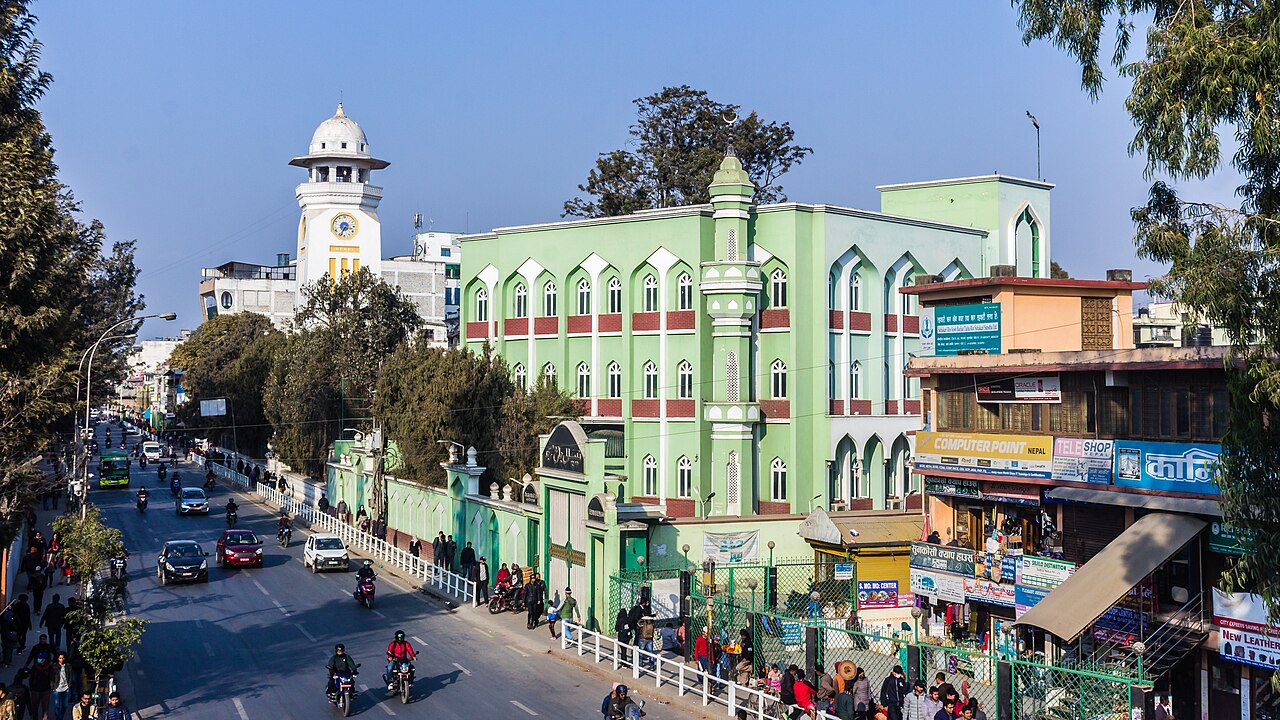
Ghanta Ghar Clock Tower & Sardar Market
Market · 600 m · about 10 min walk
 #7 in Jodhpur
Rao Jodha Desert Rock Park
Nature · 750 m · about 12 min walk