
India Gate
#5of 9 places to visit in New DelhiNew Delhi, Delhi
Also known as All India War Memorial · Kartavya Path War Memorial
Quick answer
Opening hours: 06:00–22:00. Entry is free. Allow 1 hr. Best time: 18:30 – 20:30.
Updated · Compiled by Traveliac, AI-assisted · 5 min read
- Opening hours
- 06:00–22:00
- Open 24 hours as a public monument; the lawns and canal-side walkways are most usable 06:00 – 22:00.
- Entry fee
- Free
- Time needed
- 1 hr
- Best time of day
- 18:30 – 20:30
- Best months
- Oct – Nov, Feb – Mar
- Address
- Rajpath, Kartavya Path, India Gate, New Delhi, Delhi 110001
About India Gate
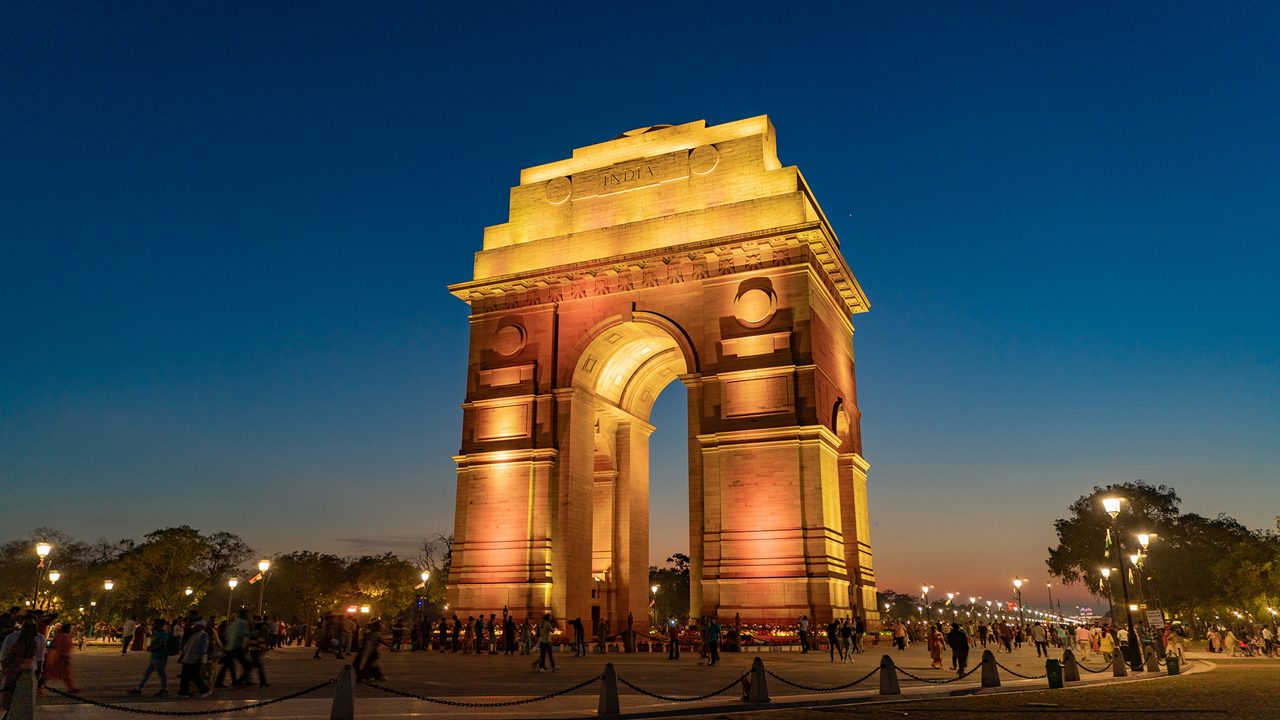
India Gate is a 42-metre sandstone and granite triumphal arch designed by Sir Edwin Lutyens, the same architect responsible for the broader New Delhi masterplan, and completed in 1931 as a memorial to some 74,000 Indian soldiers of the British Indian Army who died in the First World War and the Third Anglo-Afghan War of 1919. The names of over 13,300 of the dead are carved directly into the arch's stone. It anchors the eastern end of Kartavya Path (renamed from Rajpath in 2022), the ceremonial boulevard that runs past the Central Vista lawns toward Rashtrapati Bhavan, and it remains the site of the Republic Day parade each 26 January. Directly beneath the arch, an empty domed canopy — originally built to hold a statue of King George V, which was removed to Coronation Park in 1968 — stood vacant for over five decades until a statue of Subhas Chandra Bose was installed there in 2022, following the same Central Vista redevelopment that renamed Rajpath. The Amar Jawan Jyoti, an eternal flame lit beneath the arch in 1972 to honour soldiers of the 1971 Bangladesh Liberation War, was formally merged in 2022 into the flame at the National War Memorial half a kilometre away, consolidating two separate memorial flames into one.
Best time of day: 18:30 – 20:30. The sandstone arch is floodlit after sunset, the canal fountains run in the evening, and the daytime heat that makes the exposed lawns uncomfortable has passed.
India Gate timings
India Gate opens at 06:00 and closes at 22:00. Those hours hold on Saturday and Sunday too.
- Opening hours
- 06:00–22:00
Mon–Sun 06:00–22:00 - Open 24 hours as a public monument; the lawns and canal-side walkways are most usable 06:00 – 22:00.
- Closed on
- Open every day
Good to know: Access roads and lawns close intermittently in January for Republic Day parade rehearsals, and security is tightened for several weeks around 26 January.
Opening hours compiled from delhitourism.gov.in and public records, last updated . They change without notice — confirm before you travel. How we write these guides
India Gate ticket price
| Ticket | Price |
|---|---|
| Indian visitors | Free |
| Foreign visitors | Free |
| Children | Free |
| Camera | Free |
Free and open at all hours as a public monument. There is no ticketed entry to the memorial or the surrounding lawns. Boat rides on the flanking canal (roughly ₹100–₹150 per person, evening hours) and paid parking at the designated Kartavya Path lots are the only charges associated with a visit.
Prices compiled from delhitourism.gov.in and public records, last updated . They change without notice — confirm before you travel. How we write these guides
Best time to visit India Gate
- Quiet
- Moderate
- Very busy
06:00 – 09:00
Morning WalkersBest time to go
Local joggers and walkers use the lawns before the day's heat builds. The arch is clearly photographable without crowds in the frame.
Quiet12:00 – 16:00
Midday Heat
Exposed lawns and paved boulevard offer no shade; foot traffic drops to a minimum of tourists photographing from vehicles rather than walking the grounds.
Quiet18:00 – 20:00
Evening Peak
Families, vendors, and evening strollers fill the lawns once floodlighting comes on. Canal boat rides and food stalls are at their busiest; this is the single most crowded window of the day.
Very busy20:00 – 22:00
Late Evening Wind-Down
Crowds thin gradually. The floodlit arch remains fully lit and the atmosphere stays lively but less dense than the preceding two hours.
Moderate
History of India Gate
Lutyens designed India Gate as part of his and Herbert Baker's 1911–1931 plan for the new imperial capital, conceived explicitly as a war memorial in the tradition of the Cenotaph in London and the Menin Gate in Ypres, both of which Lutyens also worked on. Construction proceeded through the 1920s and the arch was formally dedicated in 1931, the same year New Delhi itself was inaugurated as the capital.
The canopy immediately west of the arch originally held a marble statue of King George V, unveiled in 1936; after independence, debates over the propriety of displaying a colonial monarch in independent India's ceremonial core led to the statue's removal in 1968 to Coronation Park in north Delhi, where several other Raj-era statues were relocated. The canopy then stood empty for 54 years, a frequently noted architectural oddity, until the government installed a granite statue of Subhas Chandra Bose there in September 2022 as part of the wider Central Vista Avenue redevelopment that also renamed Rajpath to Kartavya Path.
The Amar Jawan Jyoti was added beneath the arch in 1972 to commemorate soldiers killed in the 1971 India-Pakistan war, and it burned continuously for fifty years, tended by rotating service personnel, before being merged in January 2022 with the flame at the newly built National War Memorial nearby — a consolidation the government presented as unifying memorials to pre- and post-independence war dead under a single flame, though it drew criticism from some veterans' groups who saw the original site's history as distinct.
Rules & etiquette at India Gate
The lawns around India Gate function as one of Delhi's principal public gathering spaces, and evening crowds are dense, informal, and largely unpoliced beyond routine security patrols — keep bags zipped and phones in a front pocket given the pickpocket risk that comes with any large, loosely supervised crowd. Vendors sell roasted corn, ice cream, and balloons throughout the lawns; prices are unmarked and worth confirming before ordering.
Security is materially tighter than at a typical monument given the proximity to Rashtrapati Bhavan and Parliament: expect visible police presence, occasional barricading of specific approach roads, and closures of sections of Kartavya Path during VVIP movement, which happens with little public notice. January brings the most disruption, as Republic Day parade rehearsals close large stretches of the boulevard to public access for several weeks before 26 January.
The National War Memorial, immediately southwest of India Gate and easy to miss on a first visit, merits a stop in its own right — its circular design and the now-consolidated eternal flame commemorate over 25,000 Indian soldiers killed in conflicts since 1947.
Tips for visiting India Gate
- 1
Come at dusk rather than midday. The exposed lawns and paved boulevard offer no shade, and Delhi's summer sun makes a daytime visit largely about photographing the arch from a moving vehicle rather than walking the grounds; the evening floodlighting and canal fountains make the same walk considerably more rewarding after 18:30.
- 2
Boat rides on the flanking canal are a genuinely local activity rather than a tourist add-on — inexpensive, family-oriented, and running until around 22:00. Children's rides and a small carousel operate seasonally on the lawns' northern edge.
- 3
Parking near India Gate itself is limited and often informally managed; the Metro to Central Secretariat followed by a short walk or auto-rickshaw avoids the search for a legal parking spot entirely, particularly on weekend evenings when the lawns draw their largest crowds of the week.
How to reach India Gate
The red star is India Gate; the numbered pins are the 7 nearest places in our guides, each showing its rank in its city. Tap a pin for details.
Rajpath, Kartavya Path, India Gate, New Delhi, Delhi 110001Directions in Google Maps
From Indira Gandhi International Airport (DEL)
₹400–₹60016 km · 30–50 min
Prepaid taxi or app-based cab).
From Connaught Place
₹15–₹203 km · 10–15 min
Via Metro (Yellow Line to Central Secretariat, short auto onward); ₹80–₹120 by app-based cab.
From New Delhi Railway Station
₹100–₹1505 km · 15–25 min
Auto-rickshaw, negotiated); ₹130–₹200 by app-based cab.
Nearest airport
From Indira Gandhi International Airport (DEL)
approximately 16 km, 30–50 minutes by road.
Nearest railway station
From Central Secretariat Metro Station (Yellow Line / Violet Line interchange)
2.5 km, a 10-minute auto-rickshaw ride or a 30-minute walk down Kartavya Path.
India Gate FAQs
Why was the canopy beneath India Gate empty for so many decades?
The canopy originally held a statue of King George V, unveiled in 1936. It was removed in 1968 to Coronation Park in north Delhi as part of a broader relocation of Raj-era statues after independence, and the canopy stood empty for 54 years until a statue of Subhas Chandra Bose was installed there in September 2022.
Is the Amar Jawan Jyoti flame still burning at India Gate?
The original Amar Jawan Jyoti, lit in 1972 for soldiers killed in the 1971 war, was merged in January 2022 into the flame at the National War Memorial roughly half a kilometre away. The two separate memorial flames now burn as one at the National War Memorial site rather than under the India Gate arch itself.
Is there an entry fee for India Gate?
No. It is a free, unticketed public monument accessible at any hour. The only associated charges are for optional activities such as canal boat rides (roughly ₹100–₹150 per person) and paid parking at designated lots along Kartavya Path.
When is India Gate most disrupted for visitors?
January brings the heaviest disruption, as Republic Day parade rehearsals close large sections of Kartavya Path to public access for several weeks before 26 January. Outside that window, occasional short-notice closures occur during VVIP movement given the proximity to Rashtrapati Bhavan and Parliament.
Compiled with AI assistance from official sources and public records, and published only after the checks in How we write these guides. Nobody from Traveliac has visited this place. Last updated . How we rank and check places
Places to visit near India Gate
Straight-line distances from our map; times are estimates.
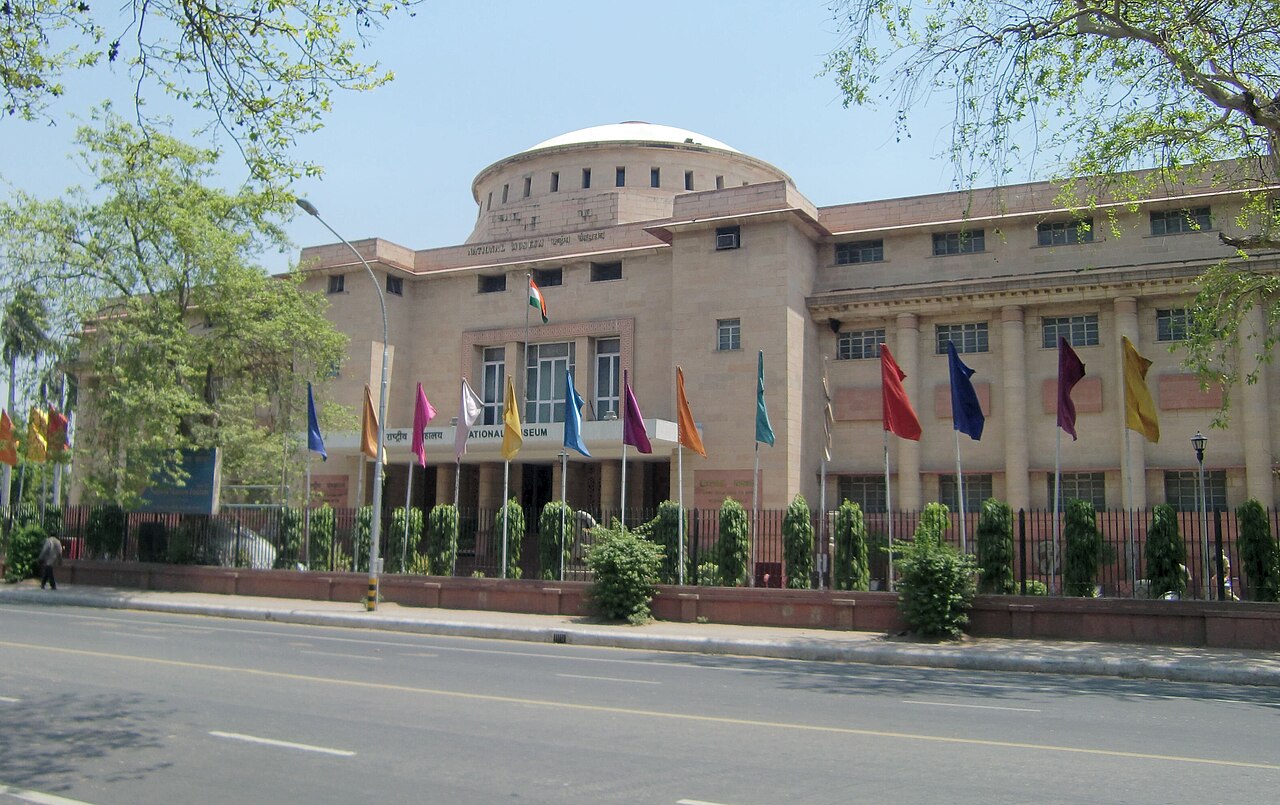 #8 in New Delhi
National Museum, Delhi
Museum · 1000 m · about 16 min walk
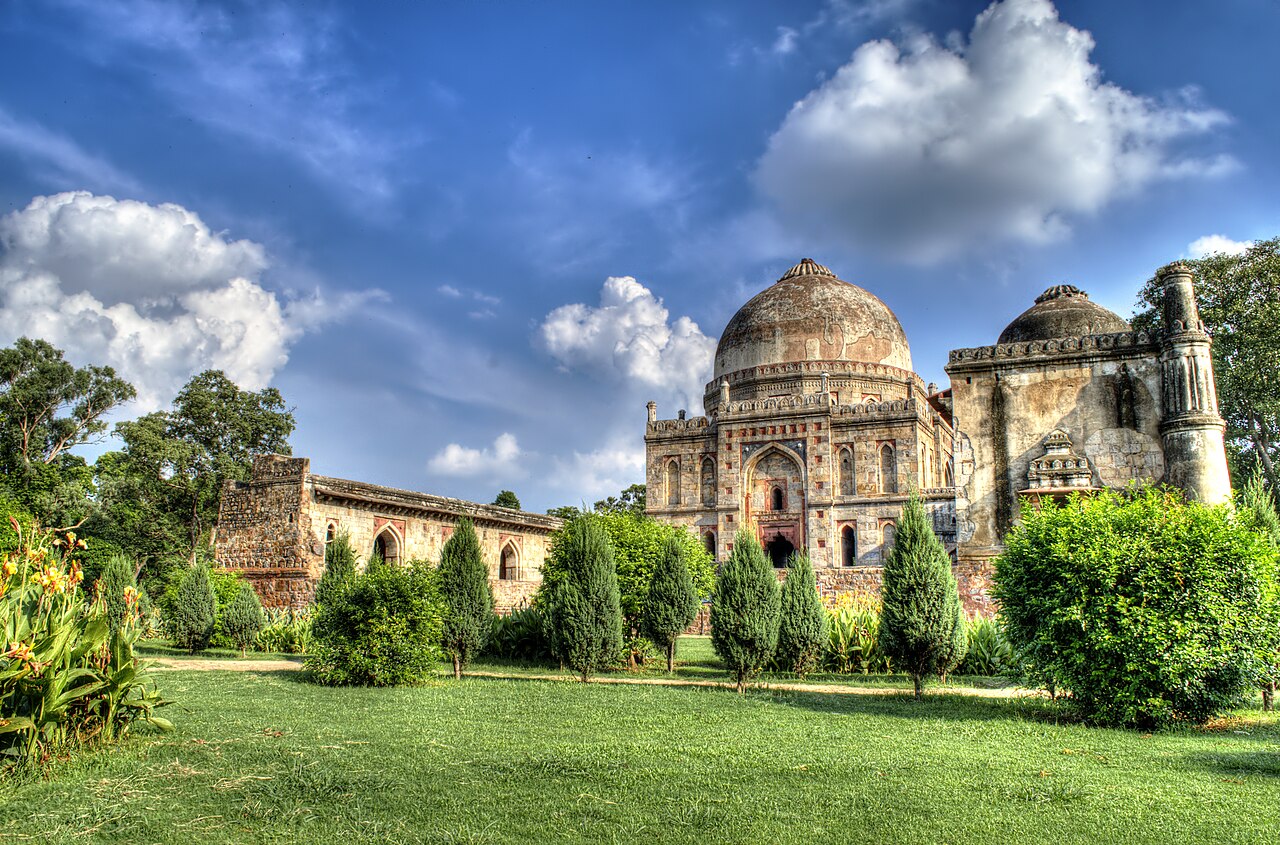 #9 in New DelhiFree entry
Lodhi Gardens
Garden · 2.4 km · about 39 min walk
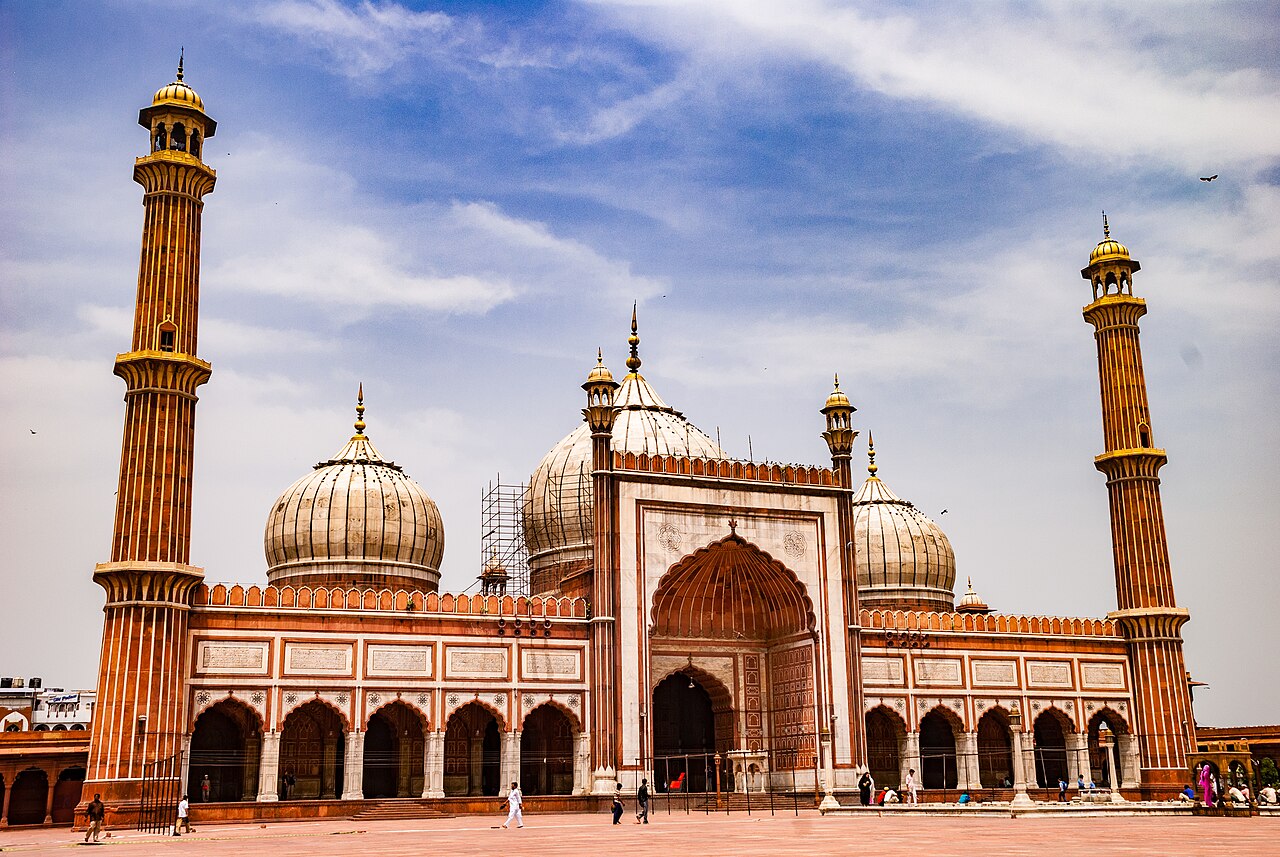 #3 in New DelhiFree entry
Jama Masjid
Mosque · 4 km · about 15 min by road
 #4 in New DelhiFree entry
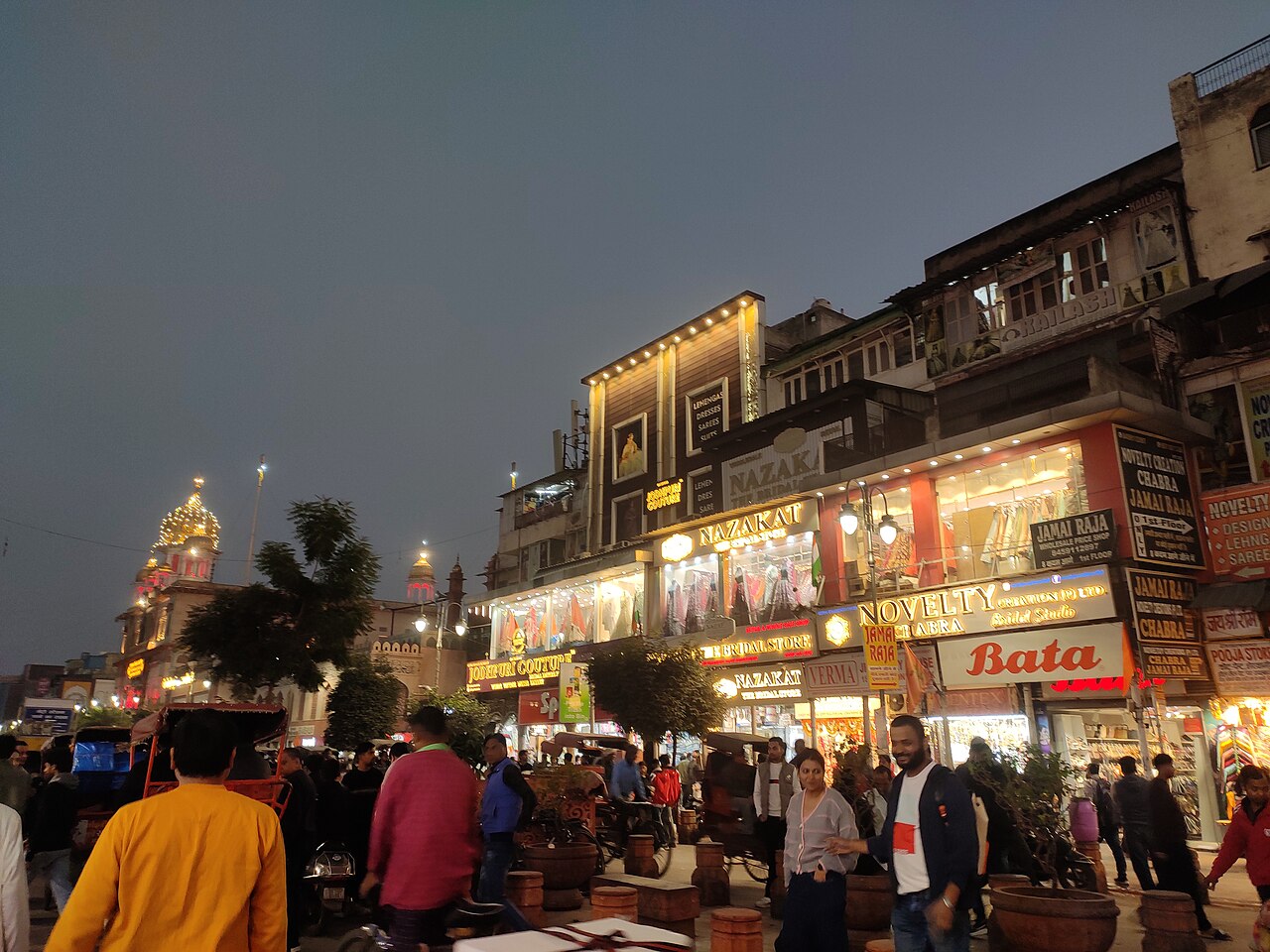
Chandni Chowk
Market · 5 km · about 15 min by road