
Jama Masjid
#3of 9 places to visit in New DelhiNew Delhi, Delhi
Also known as Masjid-i Jahan-Numa · Jama Masjid Delhi
Quick answer
Opening hours: 07:00–12:15 and 13:45–18:30. Entry is free. Allow 1 hr. Best time: 07:00 – 09:00.
Updated · Compiled by Traveliac, AI-assisted · 5 min read
- Opening hours
- 07:00–18:30
- 07:00 – 12:15 and 13:45 – 18:30 daily, with closures during each of the five daily prayer times, most disruptively around midday
- Entry fee
- Free
- Time needed
- 1 hr
- Best time of day
- 07:00 – 09:00
- Best months
- Oct – Nov, Feb – Mar
- Address
- Jama Masjid Road, Chandni Chowk, Old Delhi, Delhi 110006
About Jama Masjid
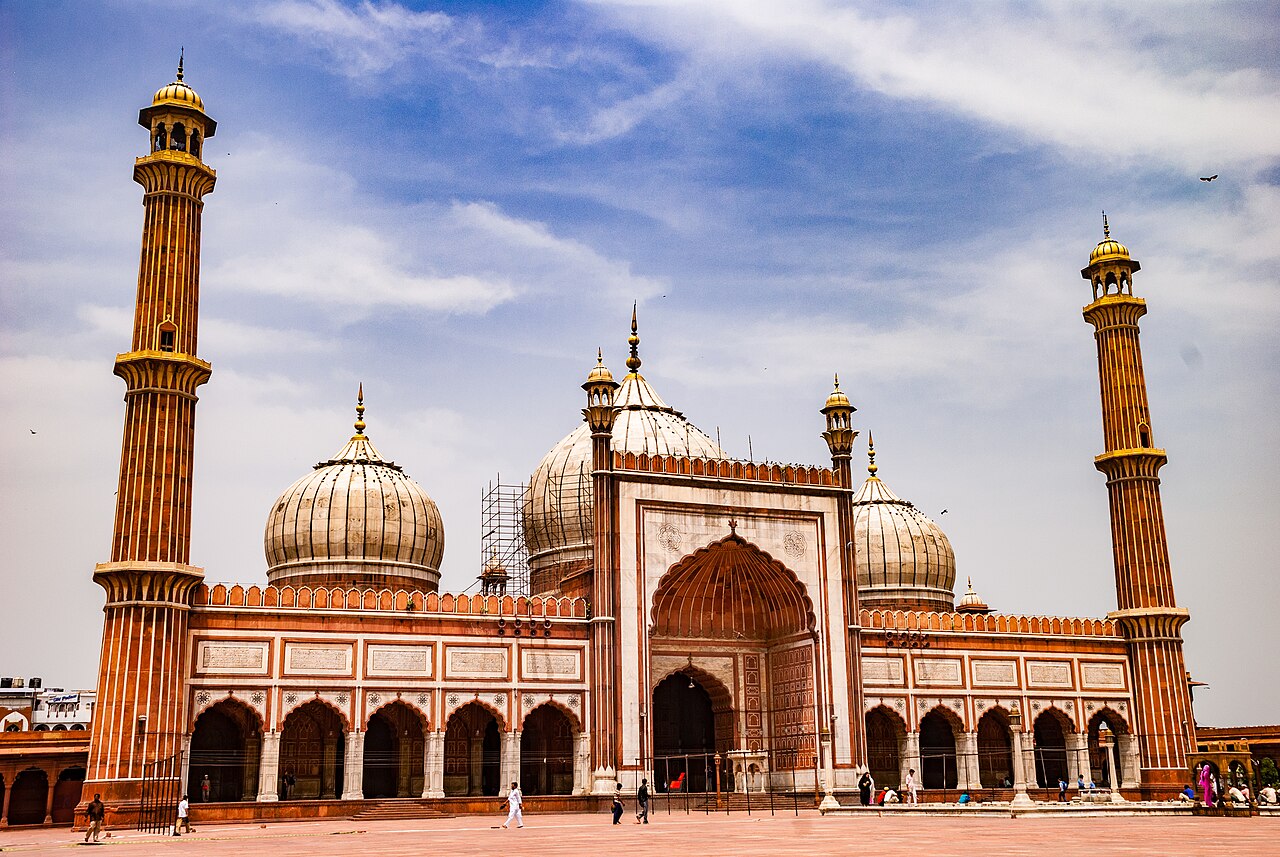
Jama Masjid was Shah Jahan's imperial mosque for Shahjahanabad, built between 1650 and 1656 in the same red sandstone and white marble register as the Red Fort a short walk north, and it remains India's largest mosque by historical scale, with a courtyard capable of holding an estimated 25,000 worshippers at once. Three monumental gateways and four corner towers frame the courtyard, and two minarets rise 40 metres at the eastern facade, alternating bands of red sandstone and white marble in a striped pattern that echoes across the building's domes and arches. A small chamber near the eastern entrance, tended by a caretaker rather than displayed as a formal museum exhibit, holds relics the mosque's custodians attribute to the Prophet Muhammad: a copy of the Quran said to be written on deerskin, a red-bearded hair relic, and an imprint said to be of his footprint in a marble slab. These are shown to visitors for a small voluntary donation rather than a fixed ticket, and the historical provenance of the relics themselves is a matter of religious tradition rather than independently verified documentation — worth knowing before parting with money expecting a formal exhibit.
Best time of day: 07:00 – 09:00. The courtyard is coolest and least crowded shortly after the dawn prayer window ends, and the marble underfoot has not yet heated in direct sun.
Photography
₹300 camera fee
Jama Masjid timings
Jama Masjid is open 07:00–12:15 and 13:45–18:30. The weekend is no different: Saturday and Sunday follow the same times.
- Opening hours
- 07:00–18:30
Mon–Sun 07:00–12:15 and 13:45–18:30 - 07:00 – 12:15 and 13:45 – 18:30 daily, with closures during each of the five daily prayer times, most disruptively around midday
- Closed on
- Open every day
Good to know: Non-worshippers are restricted from entry for a longer window around Friday (Jumu'ah) midday prayer, typically noon to 14:00, and access is further limited during Ramadan.
Opening hours compiled from delhitourism.gov.in and public records, last updated . They change without notice — confirm before you travel. How we write these guides
Jama Masjid ticket price
| Ticket | Price |
|---|---|
| Indian visitors | Free |
| Foreign visitors | Free |
| Children | Free |
| Camera | ₹300 |
Entry to the courtyard is free for all visitors, including non-Muslims, outside prayer times. A camera fee of approximately ₹300 is charged to anyone carrying a still or video camera (phone cameras are generally waved through informally but this varies by gatekeeper). Climbing the southern minaret costs roughly ₹100 per person, subject to intermittent closure without notice. Robes are provided free at the entrance for visitors in shorts or sleeveless clothing, though a small tip to the attendant is customary.
Prices compiled from delhitourism.gov.in and public records, last updated . They change without notice — confirm before you travel. How we write these guides
Best time to visit Jama Masjid
- Quiet
- Moderate
- Busy
07:00 – 09:00
Early MorningBest time to go
Quietest window of the day, shortly after dawn prayers conclude. Courtyard marble is still cool and the light is clean for photography of the eastern facade.
Quiet09:00 – 12:00
Late Morning Build-Up
Tour groups from nearby Red Fort visits arrive. Camera-fee queue at the eastern gate lengthens moderately.
Moderate12:00 – 14:00
Midday Prayer Closure
Non-worshippers are restricted from entry during this window; the closure runs longer on Fridays. Plan around this rather than arriving expecting entry.
Quiet16:00 – 18:00
Late Afternoon
Busiest tourist window of the day as visitors combine a Jama Masjid stop with Red Fort or Chandni Chowk itineraries. Minaret climb queue, when open, is longest here.
Busy
History of Jama Masjid
Shah Jahan commissioned Jama Masjid as the principal congregational mosque of his new capital, Shahjahanabad, in the same building campaign that produced the Red Fort. Construction ran from 1650 to 1656, reportedly costing one million rupees at the time and employing several thousand workers, with the emperor's supervision extending to the choice of red sandstone and white marble to match the fort's material palette a short distance north. The mosque's original name, Masjid-i Jahan-Numa, translates roughly as 'mosque commanding a view of the world,' a reference to its elevated plinth above the surrounding Old Delhi rooftops.
The mosque functioned as the Mughal court's principal site of Friday prayer through the remainder of the dynasty, and it played a direct role in the events of 1857: Bahadur Shah Zafar, the last Mughal emperor, was among those who took refuge in the wider Old Delhi area during the Indian Rebellion, and British forces briefly considered demolishing the mosque afterward as collective punishment before ultimately restoring it to worship under negotiated terms.
The mosque remains an active place of worship today, administered by the Shahi Imam — a hereditary religious office held by the same family lineage for multiple generations — under the broader oversight of the Delhi Waqf Board, the statutory body managing Islamic charitable endowments in the capital.
Rules & etiquette at Jama Masjid
Dress code is enforced at the entrance, not merely suggested: shoulders and legs must be covered for both men and women, and visitors in shorts, sleeveless tops, or short skirts are handed a robe — often a brightly patterned wrap-around gown — to wear over their clothing before being allowed in. The robes are free but attendants commonly expect a small tip, and the patterns are not subtle; be prepared for it as a normal part of the visit rather than a surprise.
Shoes must be removed at the entrance and left at a supervised rack for a small fee, typically a few rupees; sock feet on the marble courtyard get uncomfortably hot by midday in summer, so an early visit or carrying a pair of socks helps. Non-Muslims are asked to remain in designated areas of the courtyard and are not permitted inside the prayer hall itself during active worship.
The relic chamber's caretaker will present items for viewing in exchange for a donation that is not fixed and can escalate through informal negotiation — decide on an amount in advance if interested, or decline politely if not, since the presentation is framed as a favour rather than a ticketed exhibit. Photography of the courtyard and exterior is permitted with the camera fee paid at entry; photography inside the prayer hall itself is generally discouraged and should be avoided without explicit permission.
Tips for visiting Jama Masjid
- 1
Visit early morning to avoid both the heat on the marble courtyard and the midday prayer closure, which excludes non-worshippers for roughly two hours around noon and considerably longer on Fridays. Ramadan adds further restrictions on non-Muslim visiting hours and is worth checking specifically if travelling during that month.
- 2
Climbing the southern minaret, when open, delivers one of the more genuinely useful rooftop views over Old Delhi's dense rooftop sprawl toward the Red Fort — the staircase is narrow and steep, and the platform at the top has only a low parapet, so it is not well suited to those uncomfortable with heights or exposed edges.
- 3
The mosque sits at the centre of the Meena Bazaar and Matia Mahal lanes, which run some of Old Delhi's most reliable Mughlai food stalls — Karim's, a short walk from the southern gate, and the kebab stalls of Matia Mahal are worth the ten-minute detour after visiting, though the lanes themselves are as congested and pickpocket-prone as the rest of Chandni Chowk and deserve the same basic vigilance with bags and phones.
How to reach Jama Masjid
The red star is Jama Masjid; the numbered pins are the 7 nearest places in our guides, each showing its rank in its city. Tap a pin for details.
Jama Masjid Road, Chandni Chowk, Old Delhi, Delhi 110006Directions in Google Maps
From Indira Gandhi International Airport (DEL)
₹500–₹75024 km · 45–75 min
Prepaid taxi or app-based cab).
From New Delhi Railway Station
₹80–₹1503 km · 15–20 min
Auto-rickshaw, negotiated); Metro to Jama Masjid station via Yellow Line to Violet Line interchange, ₹20–₹30.
From Red Fort (Lal Qila)
1 km · 8–12 min
Walkable; cycle-rickshaw ₹30–₹50 through the Chandni Chowk side lanes if preferred over walking in heat.
Nearest airport
From Indira Gandhi International Airport (DEL)
approximately 24 km, 45–75 minutes by road.
Nearest railway station
From Jama Masjid Metro Station (Violet Line)
500 metres, a 6-minute walk through the surrounding Meena Bazaar lanes.
Jama Masjid FAQs
Is there a dress code enforced at Jama Masjid, and what happens if I am not dressed appropriately?
Yes, and it is actively enforced at the entrance rather than just posted as a guideline. Shoulders and legs must be covered; visitors in shorts, sleeveless tops, or short skirts are given a free robe to wear over their clothes, though attendants commonly expect a small tip for providing it.
Why is there a camera fee if entry itself is free?
The mosque charges roughly ₹300 for anyone carrying a still or video camera as a separate fee from general courtyard admission, which remains free. Phone cameras are often, but not always, waved through without the fee depending on the gatekeeper on duty.
Can non-Muslims visit Jama Masjid at any time?
Non-Muslims can enter the courtyard outside prayer times but are asked to stay in designated areas and are not permitted inside the prayer hall during worship. Access is restricted for roughly two hours around midday prayers, longer on Fridays, and further limited during Ramadan.
Are the relics said to belong to the Prophet Muhammad worth seeing?
A small chamber near the eastern gate displays items the mosque's caretakers attribute to the Prophet, including a Quran said to be written on deerskin and a hair relic, shown for a voluntary donation rather than a fixed ticket. Their historical provenance rests on religious tradition rather than independent verification, and the donation amount can be subject to informal negotiation, so decide on a figure in advance if interested.
Compiled with AI assistance from official sources and public records, and published only after the checks in How we write these guides. Nobody from Traveliac has visited this place. Last updated . How we rank and check places
Places to visit near Jama Masjid
Straight-line distances from our map; times are estimates.
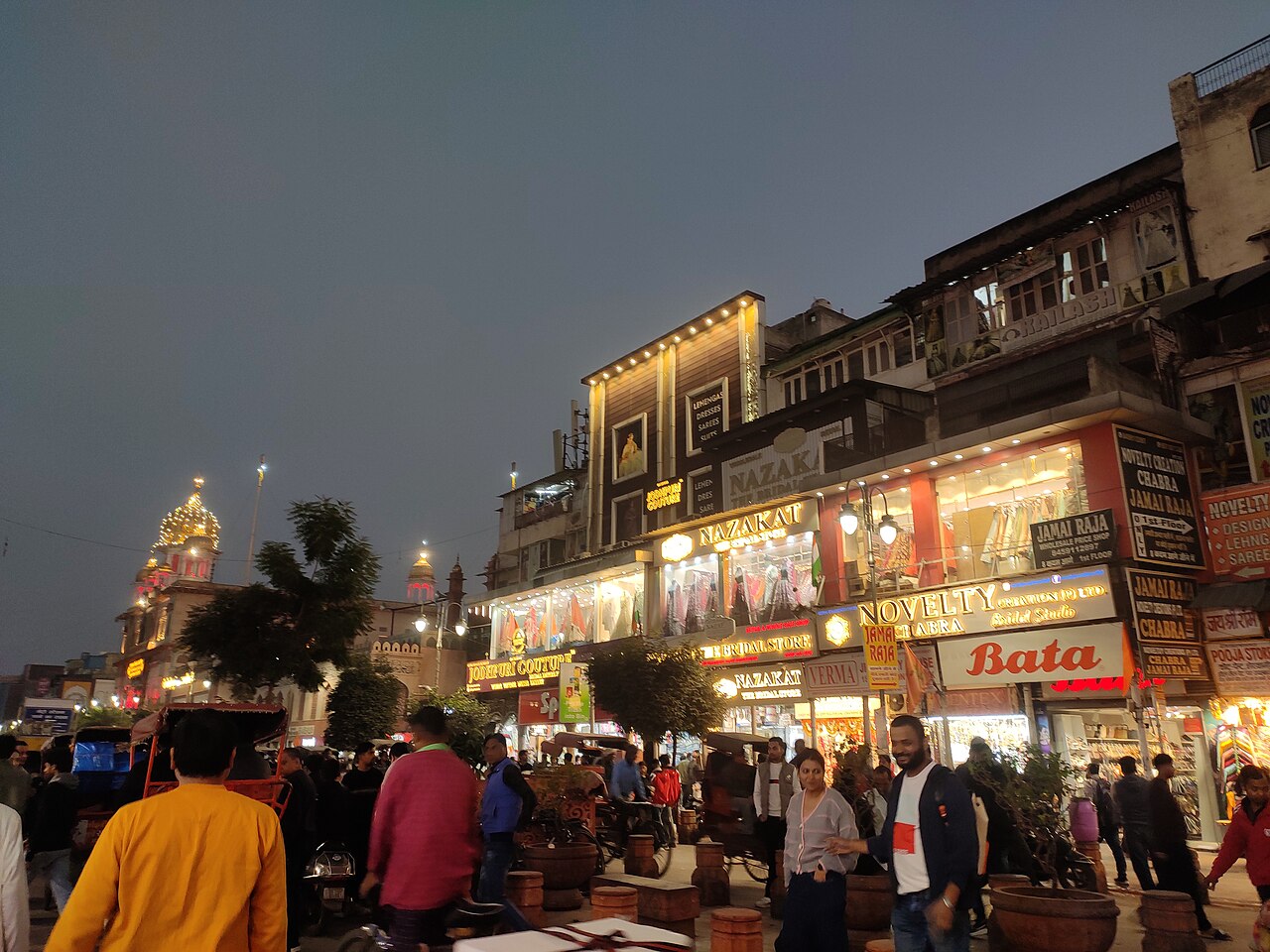 #4 in New DelhiFree entry
Chandni Chowk
Market · 650 m · about 10 min walk
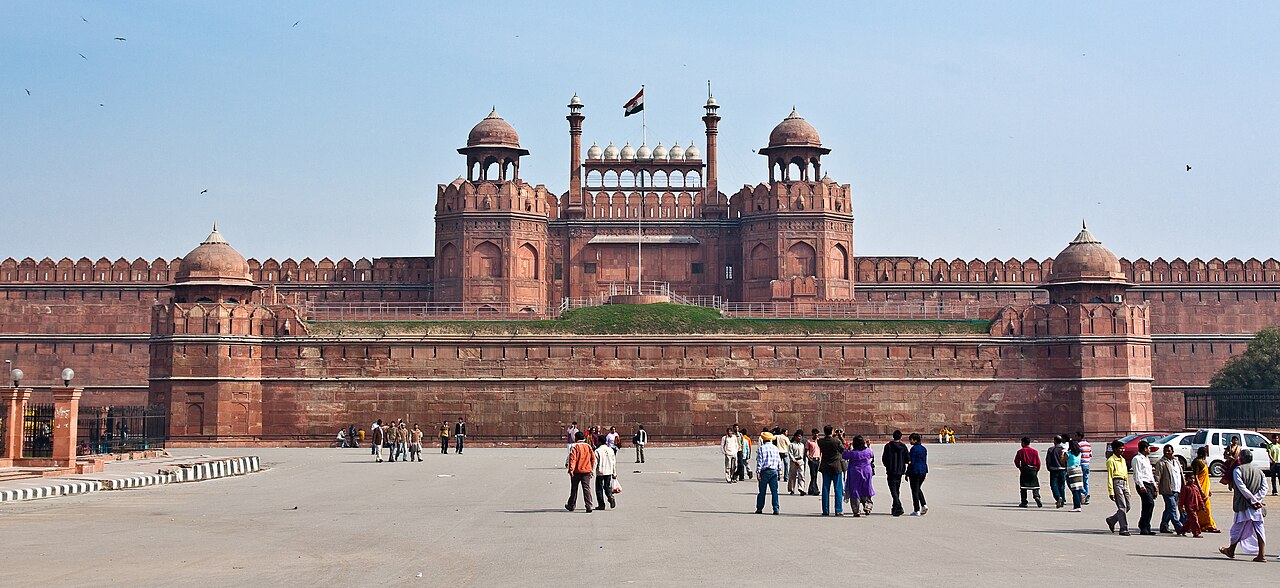 #1 in New Delhi
Red Fort
Fort · 900 m · about 15 min walk
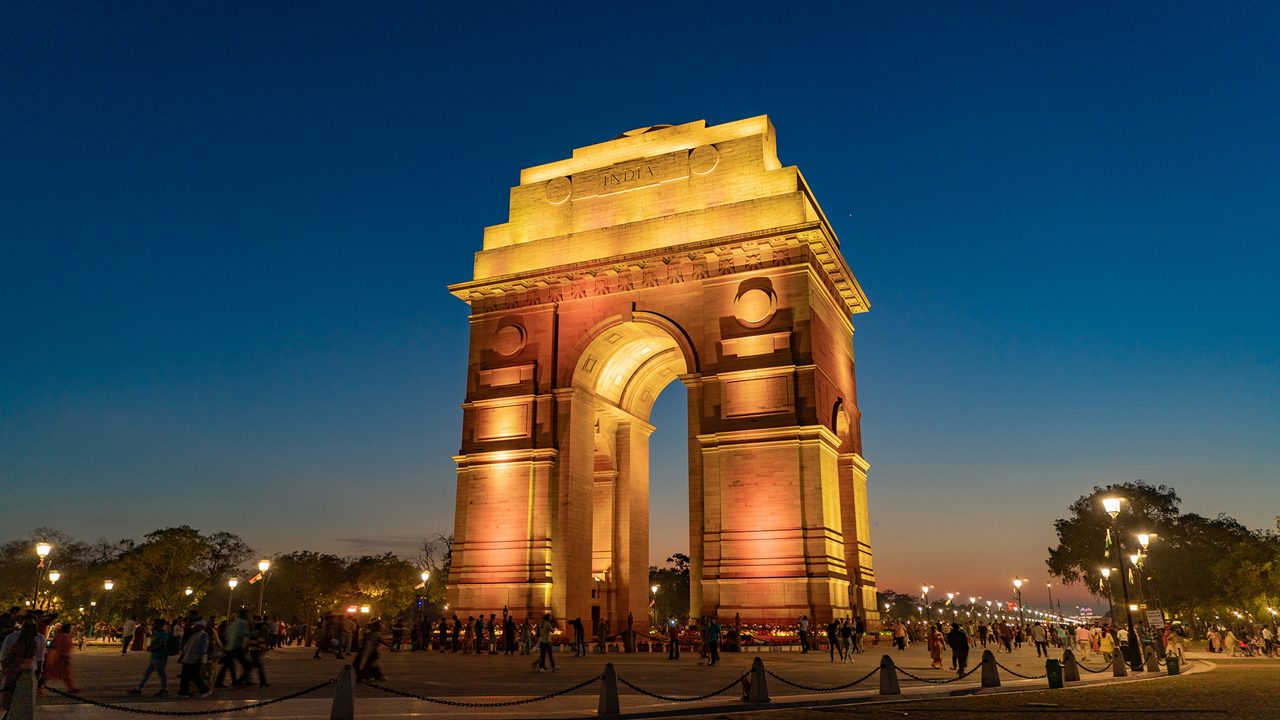 #5 in New DelhiFree entry
India Gate
Memorial · 4 km · about 15 min by road
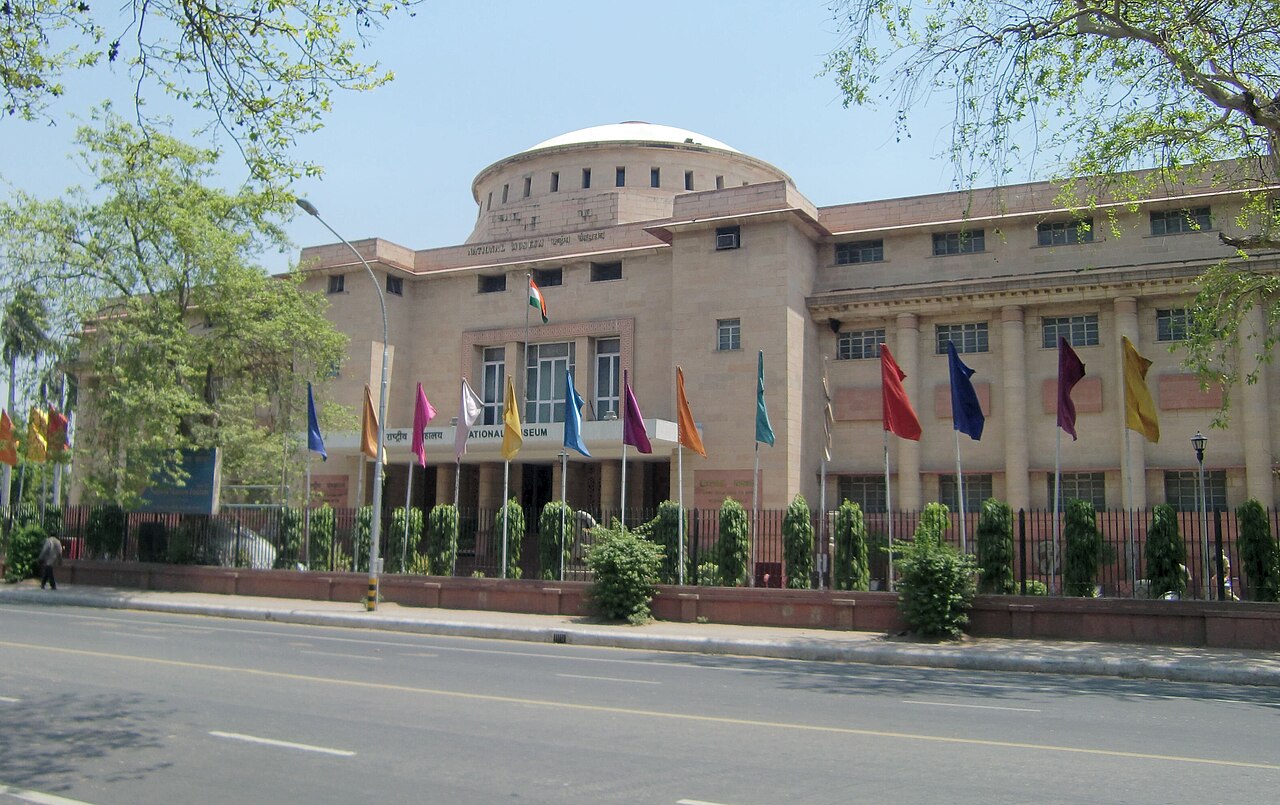 #8 in New Delhi
National Museum, Delhi
Museum · 5 km · about 15 min by road