
Achyutaraya Temple
#8of 10 places to visit in HampiHampi, Karnataka
Also known as Tiruvengalanatha Temple · Achyuta Raya's Temple
Quick answer
Opening hours: 06:00–18:00. Entry is free. Allow 45 min. Best time: 08:00 – 10:00 or 16:00 – 17:30.
Updated · Compiled by Traveliac, AI-assisted · 5 min read
- Opening hours
- 06:00–18:00
- 06:00 – 18:00 daily, informally enforced (no gate staff to check exact hours)
- Entry fee
- Free
- Time needed
- 45 min
- Best time of day
- 08:00 – 10:00 or 16:00 – 17:30
- Best months
- Oct – Feb
- Address
- Below Matanga Hill and Gandhamadana Hill, approximately 1 km southeast of Hampi Bazaar, Hampi, Vijayanagara District, Karnataka 583239
About Achyutaraya Temple
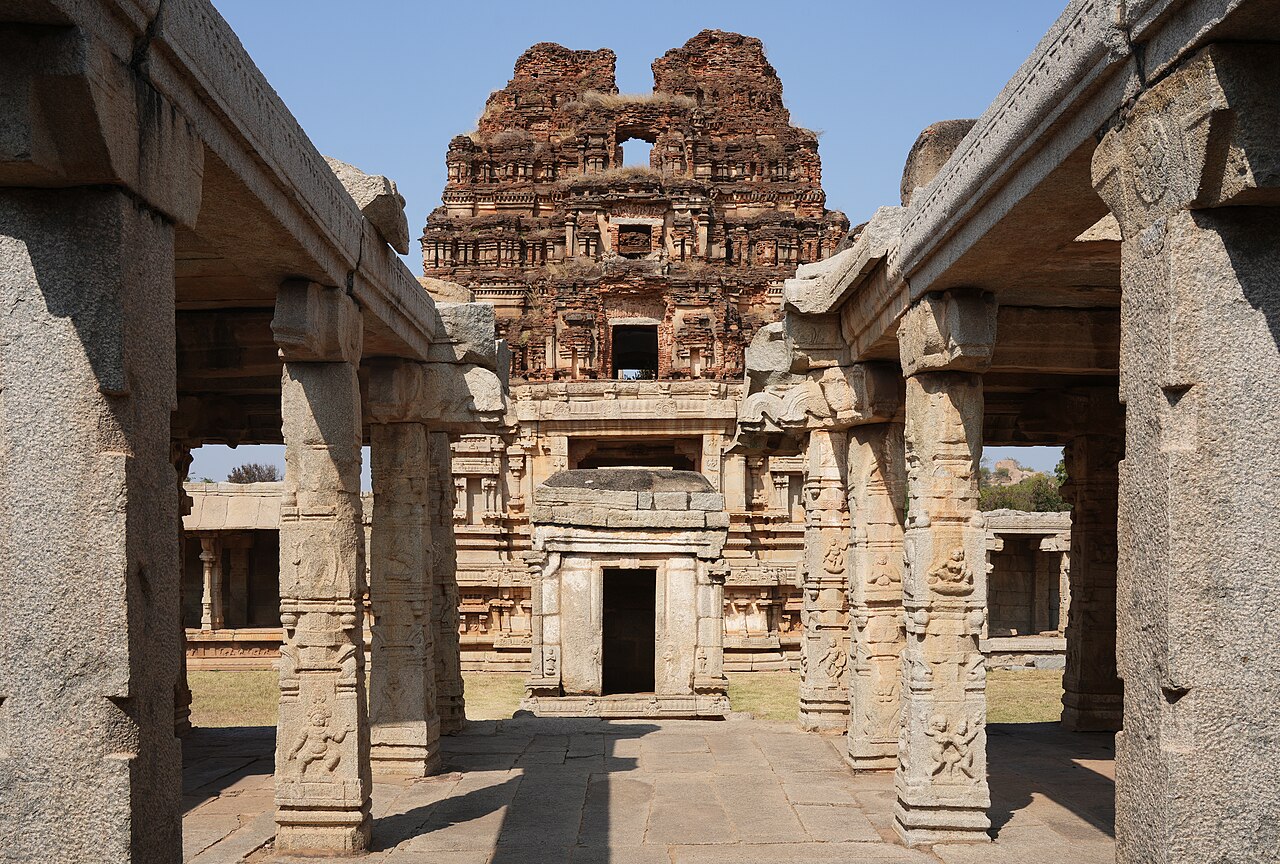
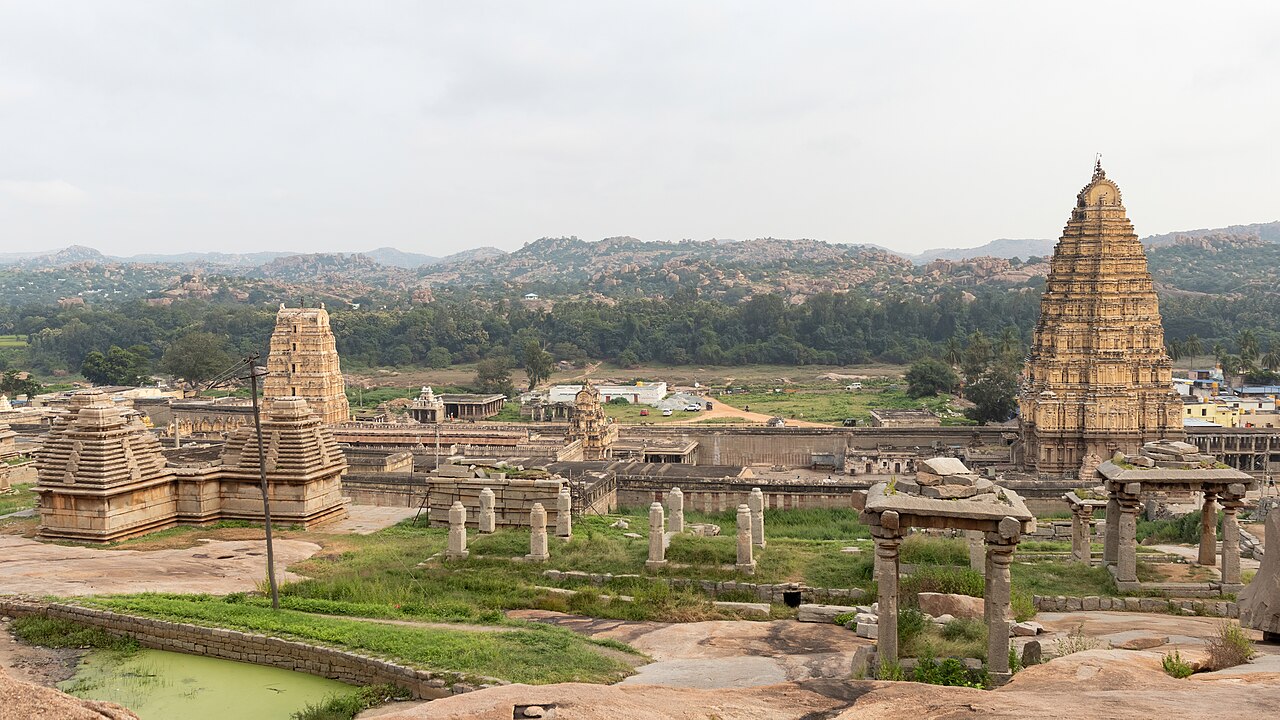
Achyutaraya Temple sits in a valley pocket between Matanga Hill and Gandhamadana Hill, close enough to Hampi Bazaar to reach on foot yet visited by a fraction of the travellers who queue at Virupaksha or Vittala the same morning — a genuine gap in the Hampi circuit's crowd distribution rather than any deficiency in the monument itself. Built in 1534 CE and dedicated to Tiruvengalanatha, a form of Vishnu, it is generally reckoned among the last major temples completed before the Battle of Talikota ended construction across the empire three decades later, and its twin gopurams and finely carved pillared mantapas show none of the abbreviation or haste you might expect from a project built on borrowed time. In front of the temple runs the ruined Soolai Bazaar, also called Courtesan Street — one of Vijayanagara's four documented market streets and, according to period accounts, the quarter occupied by the city's dancing girls, who traded in gems, pearls, and ivory and held a position of recognised wealth and social standing rather than the marginal status the modern label "courtesan" might suggest.
Best time of day: 08:00 – 10:00 or 16:00 – 17:30. When the site is at its quietest and the valley setting below Matanga and Gandhamadana hills is in soft directional light.
Achyutaraya Temple timings
Achyutaraya Temple opens at 06:00 and closes at 18:00. It keeps the same hours on Saturday and Sunday.
- Opening hours
- 06:00–18:00
Mon–Sun 06:00–18:00 - 06:00 – 18:00 daily, informally enforced (no gate staff to check exact hours)
- Closed on
- Open every day
Opening hours compiled from incredibleindia.gov.in and public records, last updated . They change without notice — confirm before you travel. How we write these guides
Achyutaraya Temple ticket price
| Ticket | Price |
|---|---|
| Indian visitors | Free |
| Foreign visitors | Free |
| Children | Free |
| Camera | Free |
Free entry; unlike Vittala Temple or the Zenana Enclosure, this site is not part of the composite ASI ticket and has no gate staff collecting fees. There is no ticket booth on site.
Prices compiled from incredibleindia.gov.in and public records, last updated . They change without notice — confirm before you travel. How we write these guides
Best time to visit Achyutaraya Temple
- Quiet
06:00 – 08:00
Early MorningBest time to go
Occasional early risers en route to Matanga Hill pass through; the temple itself is typically empty.
Quiet08:00 – 11:00
Late Morning
A small, steady trickle of independent travellers; still far below the crowd levels at Virupaksha or Vittala at the same hour.
Quiet11:00 – 15:00
Midday
Heat and lack of shade discourage most visitors; the site remains one of the quietest major monuments in Hampi at this hour.
Quiet15:00 – 18:00
Late Afternoon
A modest rise in visitors combining the temple with a Matanga Hill sunset climb, though numbers remain well below the bazaar-area sites.
Quiet
History of Achyutaraya Temple
The temple's construction is dated to 1534 CE by inscription, placing it within the reign of Achyuta Raya (r. 1529–1542), Krishnadevaraya's brother and successor, whose name it bears. Historical accounts identify a senior court official — a treasurer or high-ranking officer in Achyuta Raya's administration — as the temple's actual patron, a common pattern in Vijayanagara temple-building in which senior nobles and ministers commissioned major religious monuments in the reigning emperor's honour rather than the emperor commissioning them directly. The dedication to Tiruvengalanatha, a Vishnu form closely associated with Tirupati and South Indian Vaishnava devotion, reflects the empire's continued patronage of Vaishnavism alongside its equally strong Shaiva traditions embodied at Virupaksha.
Architecturally the temple follows the mature Vijayanagara Dravidian temple plan: twin gopurams on the northern approach, a sequence of pillared halls — the Maha Mantapa, Ranga Mantapa, Kalyana Mantapa, and the sukanasi leading to the garbhagriha — each carrying sculptural programmes of comparable quality to the better-known Vittala complex but considerably less visited and consequently less worn by tourist traffic. Because the temple was among the last major Vijayanagara constructions, some historians read its architecture as representative of the empire's late style at its most confident, immediately before the abrupt collapse of patronage after 1565.
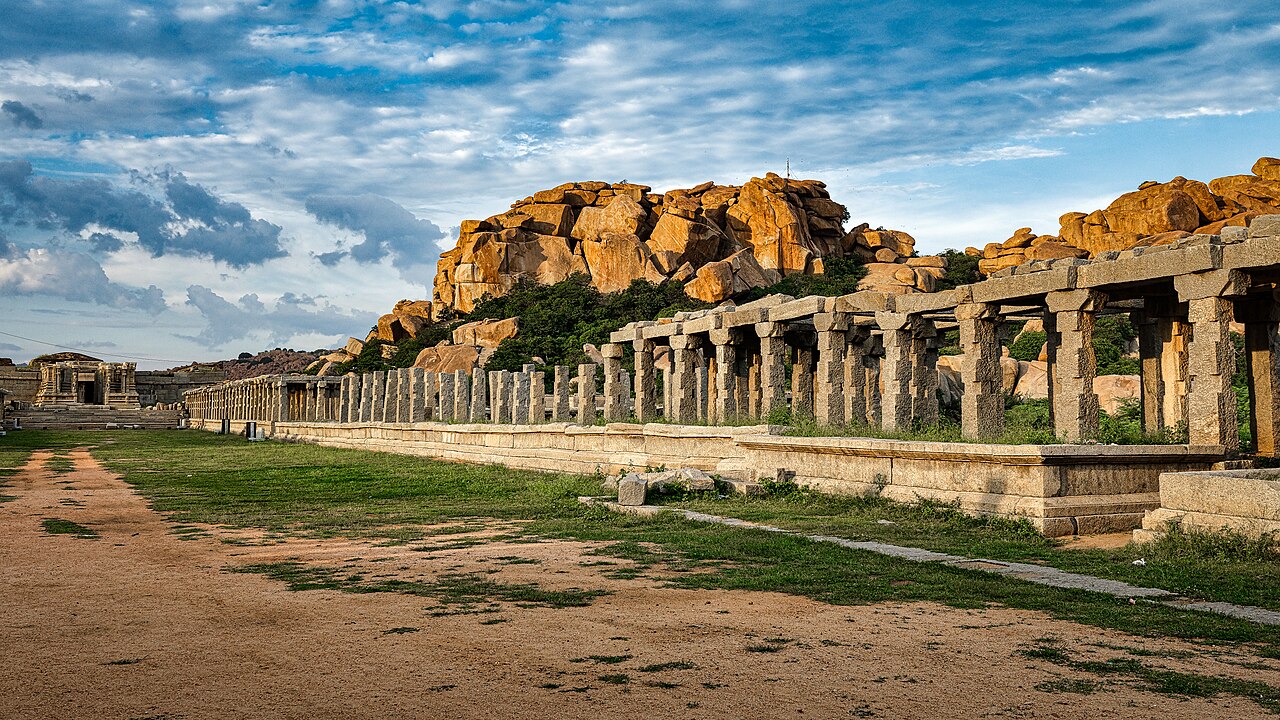
The adjoining Soolai Bazaar, or Sule Bazaar — "Courtesan Street" — ran along the temple's northwest approach and was one of four principal market streets recorded in Vijayanagara-era Hampi, alongside Hampi Bazaar itself. Historical accounts describe it as the quarter of the city's dancing girls and courtesans, a class of women who, unlike in many other historical contexts, held recognised wealth, social standing, and even ceremonial roles in temple festivals, and who conducted significant trade in gems, pearls, and ivory from stalls along this street. What remains today is a row of ruined stone platforms and colonnade foundations, considerably less legible than Hampi Bazaar's surviving structures but historically significant as one of the few physically identifiable "courtesan quarters" surviving from a medieval Indian capital.
Rules & etiquette at Achyutaraya Temple
There is no gate, ticket counter, or ASI staff routinely stationed at the entrance, which also means there is minimal on-site guidance or enforcement — behave with the same care around unprotected carvings and pillars that you would at a staffed monument. The site is genuinely quiet most of the day; if you are the only visitor present, resist any temptation to climb structures or pillars for photographs simply because no one is watching.
The approach path from Hampi Bazaar crosses open, uneven ground with loose stone from the ruined Soolai Bazaar; sturdy footwear is worth having here more than at the paved approaches to Vittala or Virupaksha. There is no shade cover directly around the temple courtyard.
Tips for visiting Achyutaraya Temple
- 1
Pair Achyutaraya Temple with the Matanga Hill climb, since the standard ascent route to the hill's summit begins almost directly behind the temple — visiting both in one outing, ideally starting here in cooler morning hours before the hill climb, makes efficient use of the walk out from Hampi Bazaar. The two sites together take under two hours including the climb, and the temple itself is a good place to rest and rehydrate in partial shade after descending.
- 2
Because the site sees so little tour-bus traffic compared with Vittala or Virupaksha, it is one of the more reliable places in Hampi to have a major monument's carved mantapas essentially to yourself, particularly in the mid-morning hours after the earliest visitors have moved on toward Matanga Hill and before any midday arrivals. Bring a guide or a good reference source if you want the sculptural programme explained — there is no on-site signage of any real depth, and the temple's relative obscurity means even some Hampi guidebooks give it only a paragraph despite its architectural quality.
How to reach Achyutaraya Temple
The red star is Achyutaraya Temple; the numbered pins are the 9 nearest places in our guides, each showing its rank in its city. Tap a pin for details.
Below Matanga Hill and Gandhamadana Hill, approximately 1 km southeast of Hampi Bazaar, Hampi, Vijayanagara District, Karnataka 583239Directions in Google Maps
From Hampi Bazaar (Virupaksha Temple)
1 km · 15–20 min
Free
From Hospet Junction (Vijayanagara Station)
₹150–20014 km · 25–30 min plus 15–20 min walk
Private auto to Hampi Bazaar, negotiated
From Matanga Hill base
0.3 km · 5 min
Free
Nearest airport
From Vidyanagar Airport (Toranagallu/Bellary)
approximately 65 km, limited scheduled services. Hubli Airport – approximately 165 km, with better connectivity to Bengaluru and Mumbai.
Nearest railway station
From Hospet Junction (Vijayanagara Station)
approximately 14 km, roughly 25–30 minutes by auto-rickshaw to Hampi Bazaar, plus a short walk or ride to the temple itself.
Achyutaraya Temple FAQs
Is there an entry fee for Achyutaraya Temple?
No. It is a free-entry ASI site with no ticket booth or gate staff, unlike the Vittala Temple or Zenana Enclosure, which require the composite ASI ticket.
What is the Soolai Bazaar next to Achyutaraya Temple?
Also called Sule Bazaar or Courtesan Street, it was one of Vijayanagara's four documented market streets, historically occupied by the city's dancing girls and courtesans, who traded in gems, pearls, and ivory and held recognised wealth and social standing. What survives today is a row of ruined stone platforms and colonnade foundations along the temple's northwest approach.
Why is Achyutaraya Temple less crowded than Virupaksha or Vittala?
It sits off the main bazaar-to-Vittala tourist corridor, in a valley behind Matanga Hill, and most coach tours do not include it. This makes it one of the quietest major Vijayanagara-period temples in Hampi despite its architectural quality being comparable to better-known sites.
Can I combine Achyutaraya Temple with the Matanga Hill climb?
Yes. The standard ascent route up Matanga Hill begins almost directly behind the temple, making the two a natural single outing from Hampi Bazaar, typically taking under two hours combined including the climb.
Compiled with AI assistance from official sources and public records, and published only after the checks in How we write these guides. Nobody from Traveliac has visited this place. Last updated . How we rank and check places
Places to visit near Achyutaraya Temple
Straight-line distances from our map; times are estimates.
 #10 in HampiFree entry
Hampi Bazaar
Market · 950 m · about 15 min walk
 #6 in HampiFree entry
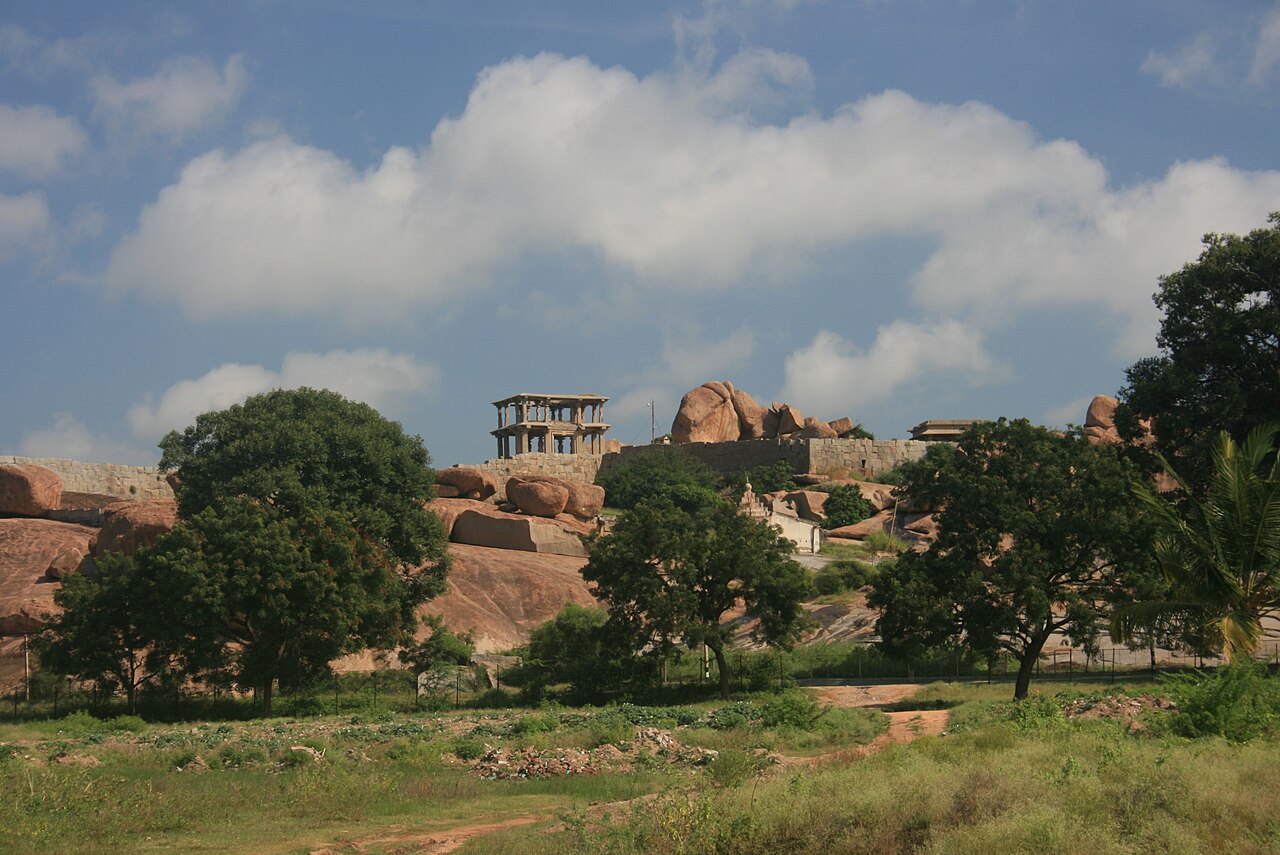
Hemakuta Hill
Viewpoint · 1.1 km · about 18 min walk
 #5 in Hampi
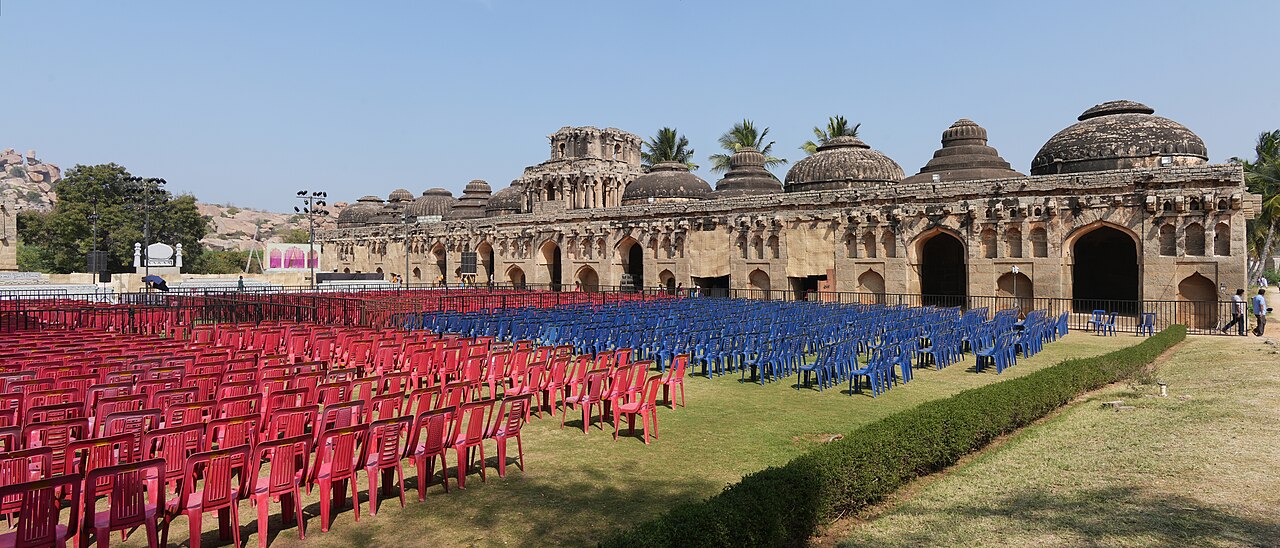
Elephant Stables
Heritage · 1.3 km · about 20 min walk
 #2 in HampiFree entry
Virupaksha Temple
Temple · 1.3 km · about 21 min walk