
Queen's Bath
#9of 10 places to visit in HampiHampi, Karnataka
Also known as Rani Snanagara
Quick answer
Opening hours: 08:30–17:30. Entry is free. Allow 30 min. Best time: 09:00 – 11:00 or 15:30 – 17:00.
Updated · Compiled by Traveliac, AI-assisted · 4 min read
- Opening hours
- 08:30–17:30
- Entry fee
- Free
- Time needed
- 30 min
- Best time of day
- 09:00 – 11:00 or 15:30 – 17:00
- Best months
- Oct – Feb
- Address
- Queen's Bath Road, near the Royal Enclosure, Hampi, Vijayanagara District, Karnataka 583239 (approximately 2.7 km south of Hampi Bazaar)
About Queen's Bath
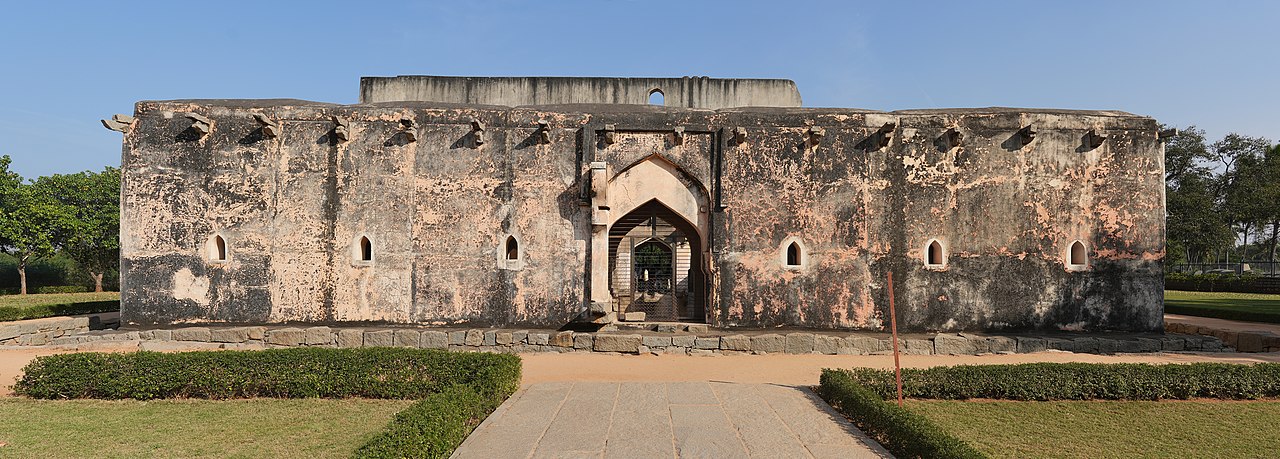
Queen's Bath announces almost nothing from the outside — a plain, unornamented rectangular exterior wall that gives no hint of what waits inside: a sunken pool nearly two metres deep, surrounded on all sides by projecting balconies and arched corridors carrying some of the most refined stucco ornamentation surviving anywhere in Hampi. The building's defining feature is a moat that once ran around its entire perimeter, crossed by a single bridge that has since disappeared, meaning the structure could be completely isolated from the surrounding grounds whenever it was in use — a design read almost universally as a deliberate privacy mechanism for royal women bathing inside, rather than a purely defensive feature. Water arrived via a dedicated aqueduct connected to the same canal network that fed the Royal Enclosure and Lotus Mahal, engineered so that the pool could be filled and drained independently of the moat's still water.
Best time of day: 09:00 – 11:00 or 15:30 – 17:00. When the arched corridors surrounding the sunken pool are in even, indirect light — the interior is dim year-round and direct overhead midday sun creates harsh contrast against the covered walkways.
Queen's Bath timings
Queen's Bath opens at 08:30 and closes at 17:30. The weekend is no different: Saturday and Sunday follow the same times.
- Opening hours
- 08:30–17:30
Mon–Sun 08:30–17:30 - Closed on
- Open every day
Opening hours compiled from incredibleindia.gov.in and public records, last updated . They change without notice — confirm before you travel. How we write these guides
Queen's Bath ticket price
| Ticket | Price |
|---|---|
| Indian visitors | Free |
| Foreign visitors | Free |
| Children | Free |
| Camera | Free |
Free entry; no ASI ticket booth on site. It is a standalone, unticketed structure separate from the Vittala Temple/Zenana Enclosure composite ticket.
Prices compiled from incredibleindia.gov.in and public records, last updated . They change without notice — confirm before you travel. How we write these guides
Best time to visit Queen's Bath
- Quiet
- Moderate
08:30 – 10:30
Morning OpeningBest time to go
A quiet stop for early Royal Enclosure visitors; good even light in the corridors for viewing the stucco vaulting.
Quiet10:30 – 13:30
Midday Add-on Stop
Groups passing between the Royal Enclosure and Zenana Enclosure stop briefly; the small footprint of the site means even moderate numbers feel busier here than at larger monuments.
Moderate13:30 – 15:30
Afternoon Lull
Fewer visitors; a good window for unhurried viewing of the ceiling detail.
Quiet15:30 – 17:30
Late Afternoon
A small final wave of visitors combining the site with late Royal Enclosure or Zenana Enclosure visits before the 17:30 close.
Quiet
History of Queen's Bath
Queen's Bath is generally attributed to the reign of Achyuta Raya (r. 1529–1542), Krishnadevaraya's successor, and built for the use of the women of the Vijayanagara royal household — a function consistent with its position near the Royal Enclosure and its architectural relationship to the more famous Zenana Enclosure structures a short distance away. Its Indo-Islamic architectural vocabulary — cusped arches, vaulted corridor ceilings, projecting jharokha-style balconies — places it firmly within the same stylistic family as Lotus Mahal, part of a broader pattern in which Vijayanagara's secular and recreational palace buildings drew heavily on Deccan Sultanate craft traditions even as the empire's temple architecture remained conservatively Dravidian.
The building's plain, almost fortress-like exterior contrasted deliberately with its ornate interior — a design logic that appears repeatedly in Vijayanagara royal architecture, where security and modesty faced outward while luxury and refinement were reserved for those granted access inside. The surrounding moat, now dry, is the clearest surviving evidence of how tightly access was controlled: with the connecting bridge removed or withdrawn, the bath became a fully isolated island, accessible to no one until a bridge was restored.
The stucco ornamentation on the vaulted ceilings and arch soffits, though weathered, retains enough of its original relief work to give a sense of the level of decorative investment applied to a building whose function was ultimately private and recreational rather than ceremonial or religious — a useful reminder that Vijayanagara's architectural ambition extended well beyond its temples and public monuments into spaces very few contemporaries would ever have seen.
Rules & etiquette at Queen's Bath
The pool itself is dry and fenced at the edge; visitors view it from the surrounding corridor rather than entering the basin. The vaulted corridors and balcony areas are open for walking, but the stucco ceiling ornamentation is fragile and should not be touched.
Lighting inside the corridors is dim, particularly on an overcast day, and there is no artificial lighting installed; a phone flashlight helps for examining the stucco detail closely on the ceiling vaults.
Tips for visiting Queen's Bath
- 1
Look up rather than down here — the architectural interest at Queen's Bath is almost entirely in the vaulted ceiling work and the balcony projections above eye level, and visitors moving quickly through at ground level often miss the detail that makes the site worth the stop. Spend time on the corridor's far side away from the main entrance, where the stucco vaulting tends to be better preserved and less worn by touch than the sections nearest the entry point.
- 2
The site is small and quick — 20–30 minutes is enough — making it an efficient add-on to a Royal Enclosure or Zenana Enclosure visit rather than a standalone destination. Its location roughly midway between the two makes it a natural stop if you are cycling or riding a moped between them rather than a detour requiring separate planning.
How to reach Queen's Bath
The red star is Queen's Bath; the numbered pins are the 9 nearest places in our guides, each showing its rank in its city. Tap a pin for details.
Queen's Bath Road, near the Royal Enclosure, Hampi, Vijayanagara District, Karnataka 583239 (approximately 2.7 km south of Hampi Bazaar)Directions in Google Maps
From Royal Enclosure / Mahanavami Dibba
0.8 km · 10–12 min
Free
From Hampi Bazaar (Virupaksha Temple)
₹100–1502.7 km · 15–20 min
/day bicycle or ₹300–400/day moped rental
From Hospet Junction (Vijayanagara Station)
₹200–25012 km · 20–25 min
Private auto, negotiated
Nearest airport
From Vidyanagar Airport (Toranagallu/Bellary)
approximately 65 km, limited scheduled services. Hubli Airport – approximately 165 km, with better connectivity to Bengaluru and Mumbai.
Nearest railway station
From Hospet Junction (Vijayanagara Station)
approximately 12 km, roughly 20–25 minutes by auto-rickshaw.
Queen's Bath FAQs
Why does Queen's Bath have a moat around it?
The moat, crossed originally by a single removable bridge, allowed the building to be fully isolated from the surrounding grounds while in use — read by most historians as a deliberate privacy mechanism for the royal women bathing inside rather than a defensive feature in the military sense.
Is there water in Queen's Bath today?
No, the pool is dry. Visitors view the sunken basin, arched corridors, and stucco-vaulted ceilings from the surrounding walkway rather than entering the basin itself.
Who built Queen's Bath and when?
It is generally attributed to the reign of Achyuta Raya (1529–1542), Krishnadevaraya's successor, and built for the women of the Vijayanagara royal household. Its Indo-Islamic arched and vaulted style closely parallels Lotus Mahal in the nearby Zenana Enclosure.
How long does it take to visit Queen's Bath?
20–30 minutes is sufficient. It is a small site best combined with a visit to the nearby Royal Enclosure or Zenana Enclosure rather than treated as a standalone stop.
Compiled with AI assistance from official sources and public records, and published only after the checks in How we write these guides. Nobody from Traveliac has visited this place. Last updated . How we rank and check places
Places to visit near Queen's Bath
Straight-line distances from our map; times are estimates.
 #3 in HampiFree entry
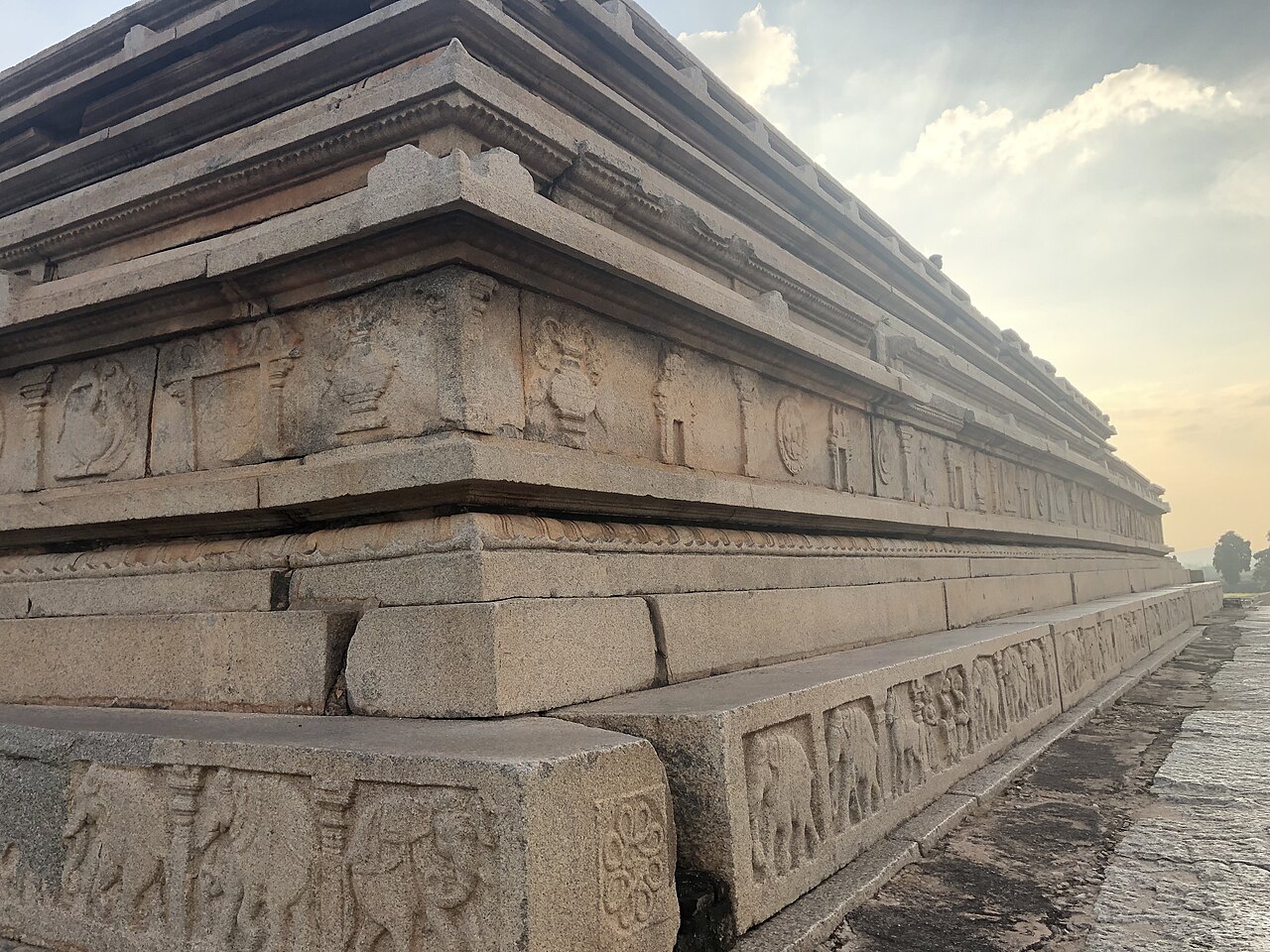
Royal Enclosure & Mahanavami Dibba
Heritage · 300 m · about 5 min walk
 #7 in HampiFree entry
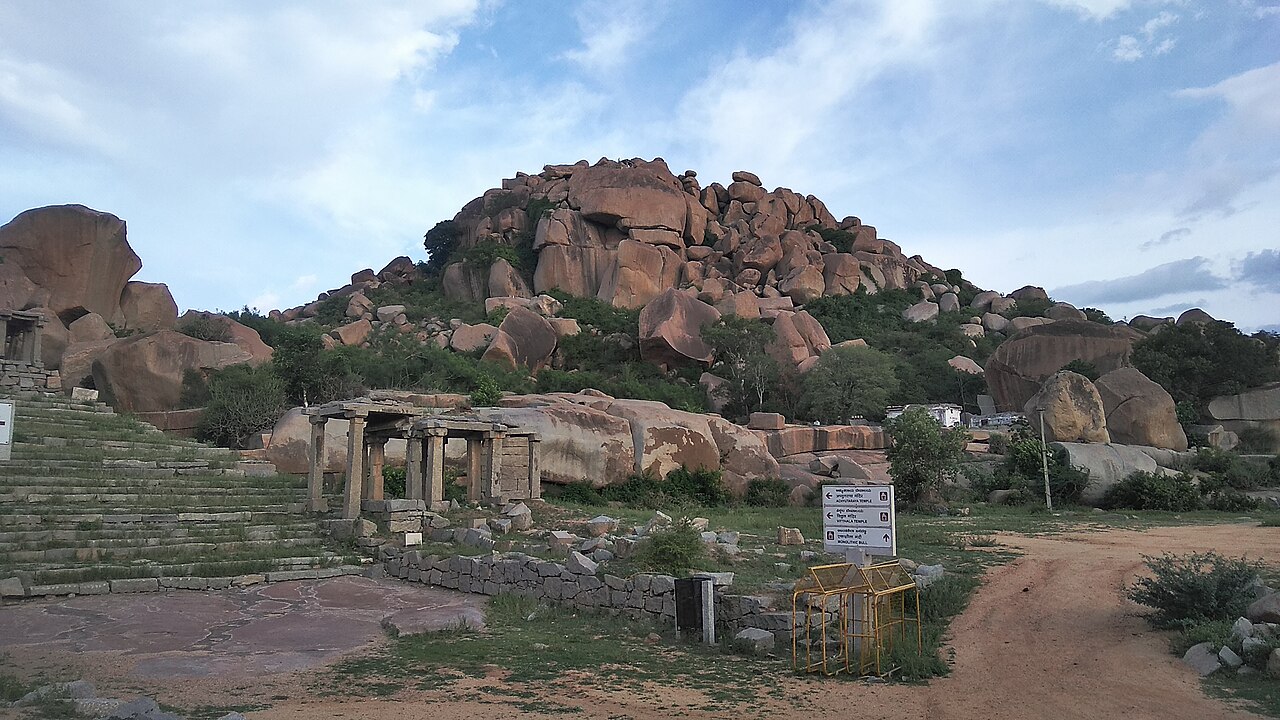
Matanga Hill
Viewpoint · 700 m · about 11 min walk
 #4 in Hampi
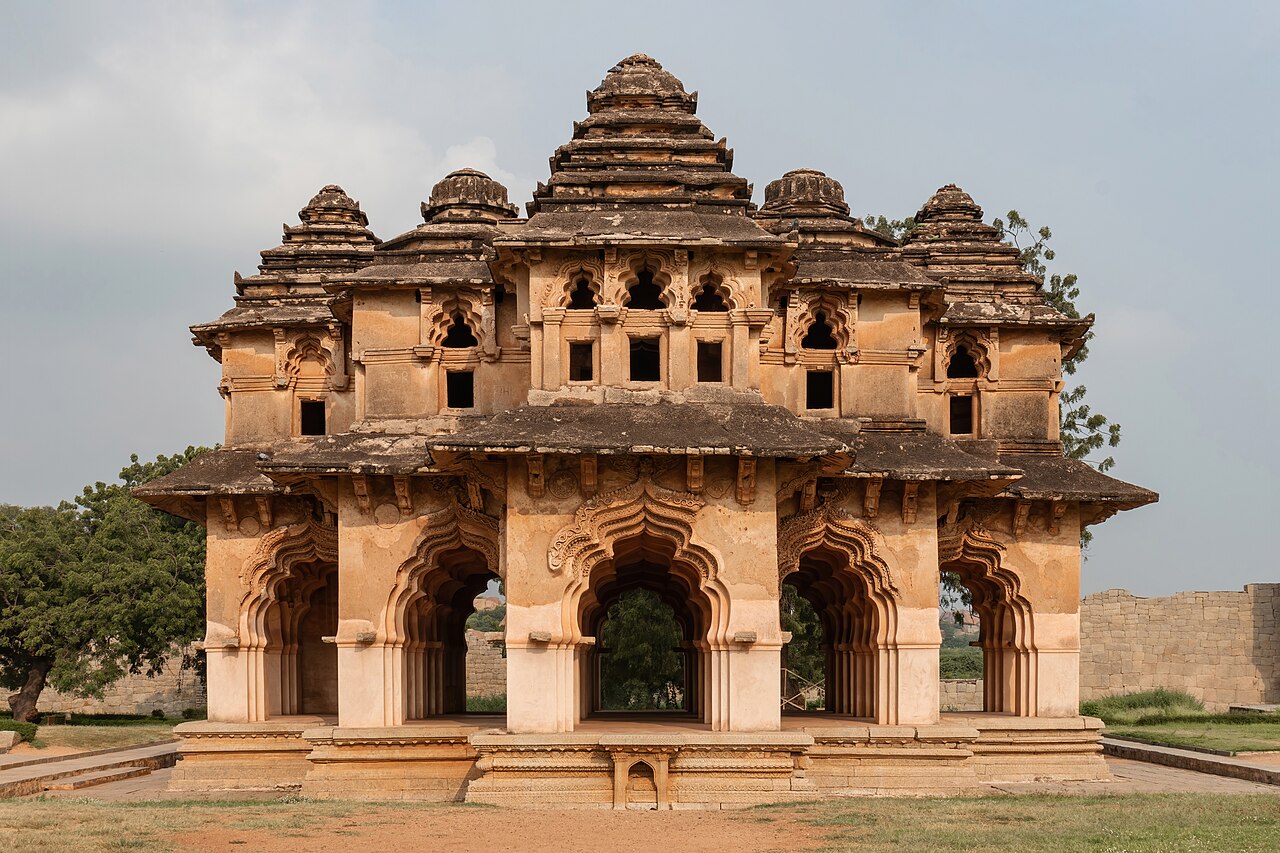
Lotus Mahal
Palace · 750 m · about 12 min walk
 #5 in Hampi
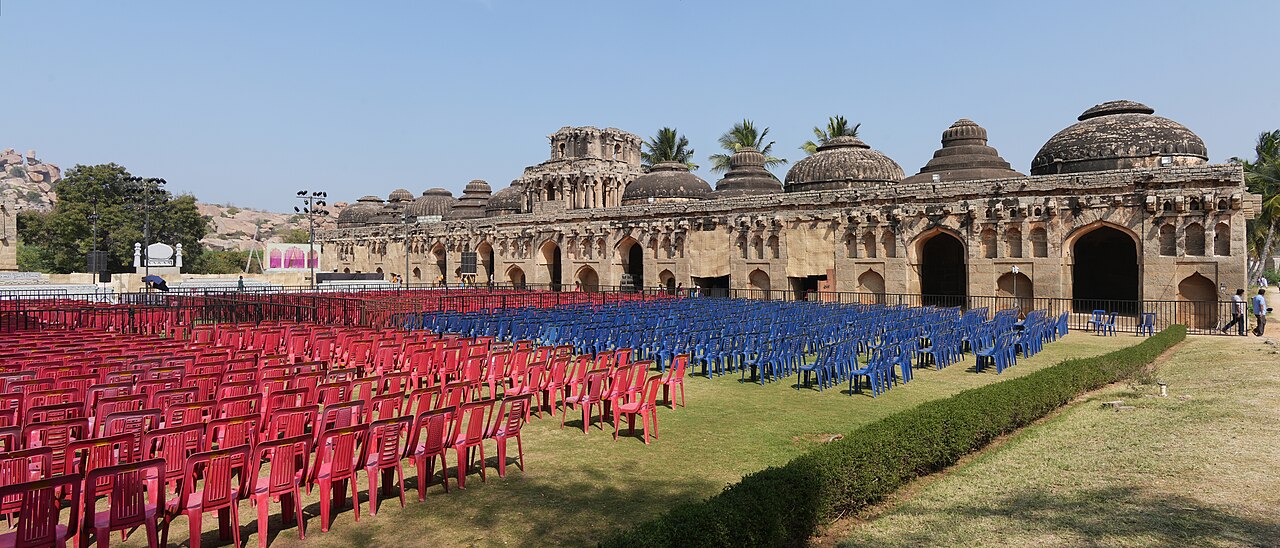
Elephant Stables
Heritage · 850 m · about 14 min walk