
Elephant Stables
#5of 10 places to visit in HampiHampi, Karnataka
Also known as Gajashala · Hathi Khana
Quick answer
Opening hours: 08:30–17:30, last entry 17:00. Entry: ₹40 Indian · ₹600 foreign. Allow 25 min. Best time: 08:30 – 10:00 or 15:30 – 17:00.
Updated · Compiled by Traveliac, AI-assisted · 5 min read
- Opening hours
- 08:30–17:30
- Entry fee
- ₹40 Indian
- Ticket from
- Time needed
- 25 min
- Best time of day
- 08:30 – 10:00 or 15:30 – 17:00
- Best months
- Oct – Feb
- Address
- Zenana Enclosure, adjacent to the Royal Enclosure area, Hampi, Vijayanagara District, Karnataka 583239 (approximately 4 km south of Hampi Bazaar, near Kamalapura)
About Elephant Stables
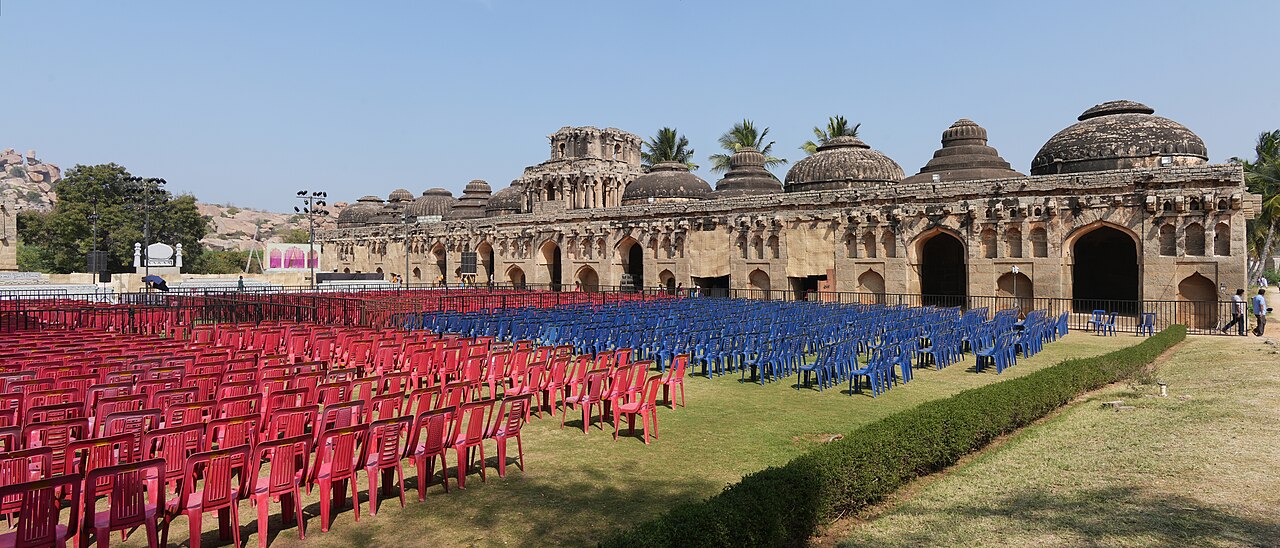
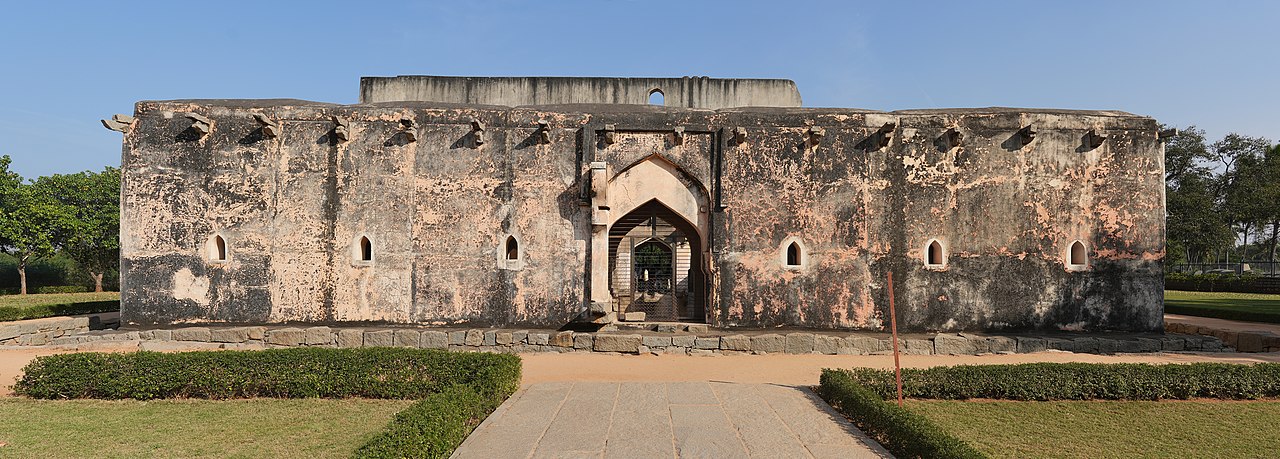
Eleven domed chambers, each roughly the size of a small room, stand in an unbroken row facing the Zenana Enclosure's open ground — a building whose function is stated so plainly in its plan that no inscription is needed to explain it. This is where the Vijayanagara Empire's war elephants were kept, and the architecture is doing structural and symbolic work simultaneously: the domes alternate between plain hemispherical, ribbed, and twelve-sided fluted profiles, arranged with enough deliberate variation that the building reads as a showcase of Indo-Islamic dome construction rather than a purely functional shed. A raised central chamber above the stable row, reached by an external stair, is generally identified as a platform for musicians or drummers who would have played to accompany royal processions — meaning the empire's most valuable military animals were housed in a building considered important enough to warrant its own bandstand.
Best time of day: 08:30 – 10:00 or 15:30 – 17:00. When the low sun rakes across the row of eleven domed chambers and throws the alternating dome and vault shapes into sharp relief.
Elephant Stables timings
Elephant Stables opens at 08:30 and closes at 17:30. The weekend is no different: Saturday and Sunday follow the same times.
- Opening hours
- 08:30–17:30
Mon–Sun 08:30–17:30 - Closed on
- Open every day
Opening hours compiled from incredibleindia.gov.in and public records, last updated . They change without notice — confirm before you travel. How we write these guides
Elephant Stables ticket price
| Ticket | Price |
|---|---|
| Indian visitors | ₹40 |
| Foreign visitors | ₹600 |
| Children | Free |
| Camera | Free |
Covered by the same composite ASI ticket as the Vittala Temple and Lotus Mahal (₹40 Indian/SAARC/BIMSTEC, ₹600 other foreign nationals, valid same day across the Zenana Enclosure group and Vittala Temple). No separate ticket is required if you have already purchased one at either gate that day.
Prices compiled from incredibleindia.gov.in and public records, last updated . They change without notice — confirm before you travel. How we write these guides
Best time to visit Elephant Stables
- Quiet
- Moderate
08:30 – 10:00
Morning OpeningBest time to go
Quiet viewing along the stable row; best light for photographing the alternating dome profiles from the east.
Quiet10:00 – 13:00
Midday Tour Groups
Groups visiting Lotus Mahal typically walk across to the stables as a quick add-on stop, creating brief clusters at the doorway of each chamber.
Moderate13:00 – 15:30
Afternoon Lull
Heat thins the crowd; the open stable-row area has little shade, discouraging lingering.
Quiet15:30 – 17:30
Late Afternoon Light
A smaller, photography-focused crowd returns for raking afternoon light on the dome row. Last entry 17:00.
Quiet
History of Elephant Stables
The Elephant Stables sit at the edge of the Zenana Enclosure, the fortified compound reserved for the Vijayanagara royal household's women, and its adjacency to that restricted quarter — rather than to the empire's military camps or its Royal Enclosure proper — is itself informative: war elephants were state assets of enormous value and prestige, ceremonial as much as martial, and keeping a stable of them close to the palace core reflects their symbolic weight in Vijayanagara court life as much as any practical convenience of access.
The building's construction is attributed to the same broad building period as Lotus Mahal and the rest of the Zenana Enclosure complex, generally placed in the 15th to early 16th century during the empire's peak under the Tuluva dynasty. Its eleven chambers are arranged symmetrically in two rows flanking the raised central pavilion, with alternating dome types — plain domes, ribbed domes, and twelve-sided fluted vaults — repeating in a pattern that suggests deliberate architectural variety rather than construction expediency. This alternation places the Elephant Stables, alongside Lotus Mahal, among the clearest surviving demonstrations of Deccan Sultanate-influenced dome technology absorbed into Vijayanagara secular architecture, evidence of the same cross-court craft exchange visible throughout the Zenana Enclosure.
Contemporary Portuguese travellers to Vijayanagara, including the chroniclers Domingo Paes and Fernão Nunes, describe the empire's war elephants in some detail as part of its military and ceremonial pageantry, though neither writer specifically identifies this building by name — its identification as the imperial elephant stables rests on its plan, scale, and proximity to the royal quarter rather than a named textual reference. A long colonnaded structure immediately adjacent, sometimes called the Guards' Quarters, is thought to have housed the mahouts and attendants responsible for the animals' care.
Rules & etiquette at Elephant Stables
The stables are accessed on the same ticket and through broadly the same compound as Lotus Mahal, a short walk across the Zenana Enclosure's open lawn. Visitors can walk the length of the building and view each chamber's interior from the doorway; the chambers themselves are not furnished or staffed and there is nothing inside beyond the bare domed ceiling, so the visit is architectural rather than experiential in the way a working stable might be.
Climbing onto the stable roofline or the raised central musicians' platform is not permitted; the structure is original fabric and unreinforced for foot traffic. As with the rest of the Zenana Enclosure, exposed stone surfaces heat up substantially by late morning, and there is minimal shade directly in front of the stable row.
Tips for visiting Elephant Stables
- 1
The alternating dome pattern is best appreciated by walking the full length of the row rather than photographing from one fixed point — stand at one end and look down the length of all eleven chambers to see the rhythm of plain, ribbed, and fluted domes repeat. Compare this directly with Lotus Mahal's arches a short walk away; together the two buildings make the clearest case in Hampi for how thoroughly Vijayanagara's secular architecture absorbed Deccan Sultanate craft traditions, in contrast to the more conservative Dravidian temple architecture at Virupaksha or Vittala.
- 2
Budget only 20–25 minutes here on its own — it is a small, quickly absorbed site — and pair it in the same outing with Lotus Mahal and the Zenana Enclosure watchtowers, all within the same walled compound. The adjacent colonnaded Guards' Quarters building is easy to miss but worth the extra five minutes; its long open hall gives a sense of scale for how many attendants the imperial elephant corps required.
How to reach Elephant Stables
The red star is Elephant Stables; the numbered pins are the 9 nearest places in our guides, each showing its rank in its city. Tap a pin for details.
Zenana Enclosure, adjacent to the Royal Enclosure area, Hampi, Vijayanagara District, Karnataka 583239 (approximately 4 km south of Hampi Bazaar, near Kamalapura)Directions in Google Maps
From Lotus Mahal (within Zenana Enclosure)
0.2 km · 3–5 min
Free
From Hampi Bazaar (Virupaksha Temple)
₹100–1504 km · 20–30 min
/day bicycle or ₹300–400/day moped rental
From Hospet Junction (Vijayanagara Station)
₹200–30012 km · 20–25 min
Private auto, negotiated
Nearest airport
From Vidyanagar Airport (Toranagallu/Bellary)
approximately 65 km, limited scheduled services. Hubli Airport – approximately 165 km, with better connectivity to Bengaluru and Mumbai.
Nearest railway station
From Hospet Junction (Vijayanagara Station)
approximately 12 km via Kamalapura, roughly 25 minutes by auto-rickshaw.
Elephant Stables FAQs
How many chambers make up the Elephant Stables and what were they used for?
Eleven domed chambers, arranged symmetrically around a raised central pavilion, were used to house the Vijayanagara Empire's war and ceremonial elephants. The central pavilion is generally identified as a platform for musicians who accompanied royal processions.
Is the Elephant Stables ticket separate from Lotus Mahal or Vittala Temple?
No. All three sites — Vittala Temple, Lotus Mahal, and the Elephant Stables — are covered under one composite ASI ticket (₹40 Indian/SAARC/BIMSTEC, ₹600 other foreign nationals) valid the same day across both the Zenana Enclosure gate and the Vittala Temple gate.
Why do the domes on the Elephant Stables look different from each other?
The eleven chambers alternate between plain hemispherical domes, ribbed domes, and twelve-sided fluted vaults, a deliberate architectural variation reflecting Deccan Sultanate dome-building techniques absorbed into Vijayanagara secular architecture during the empire's peak in the 15th–16th centuries.
How long do you need to visit the Elephant Stables?
20–25 minutes is sufficient for the building itself. Most visitors combine it with Lotus Mahal and the Zenana Enclosure watchtowers in the same compound, extending the total visit to roughly an hour.
Compiled with AI assistance from official sources and public records, and published only after the checks in How we write these guides. Nobody from Traveliac has visited this place. Last updated . How we rank and check places
Places to visit near Elephant Stables
Straight-line distances from our map; times are estimates.
 #4 in Hampi
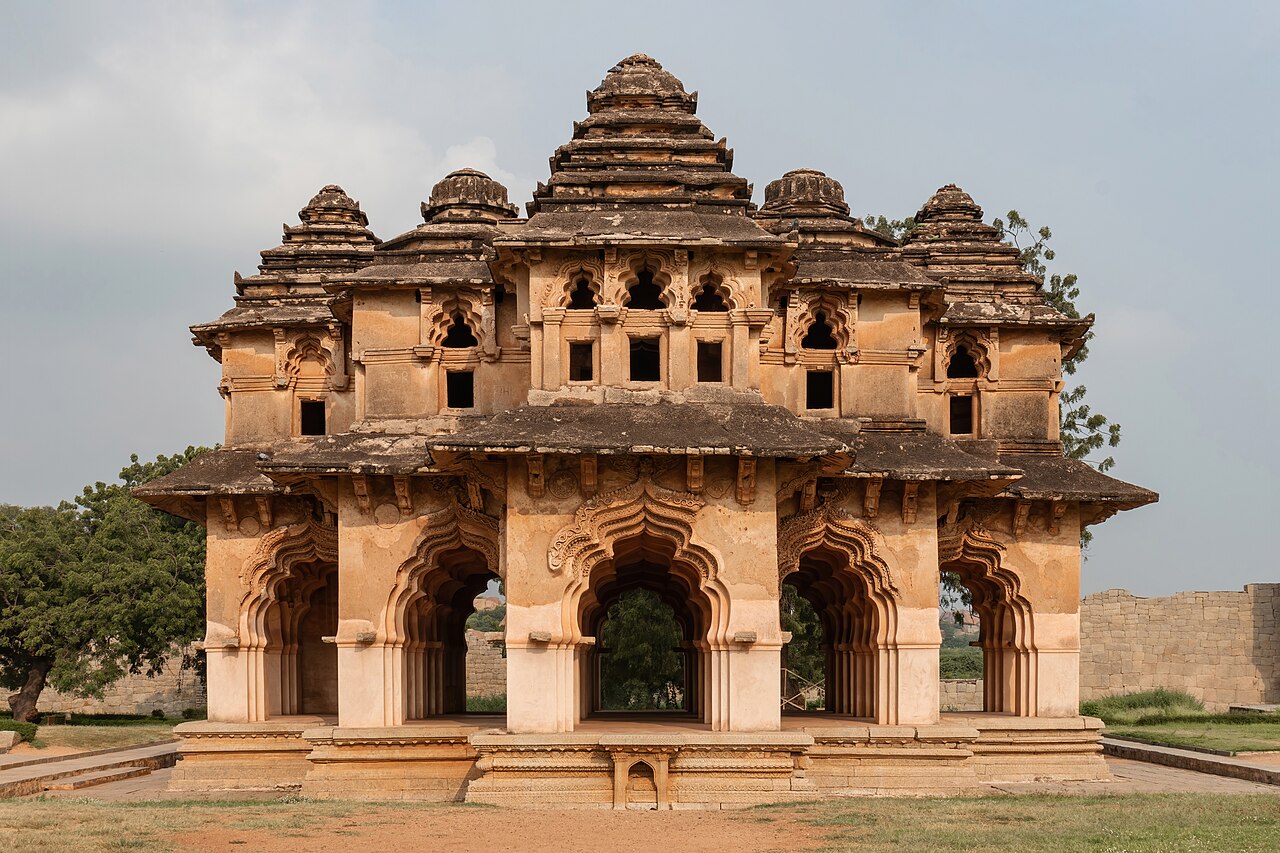
Lotus Mahal
Palace · 200 m · about 3 min walk
 #3 in HampiFree entry
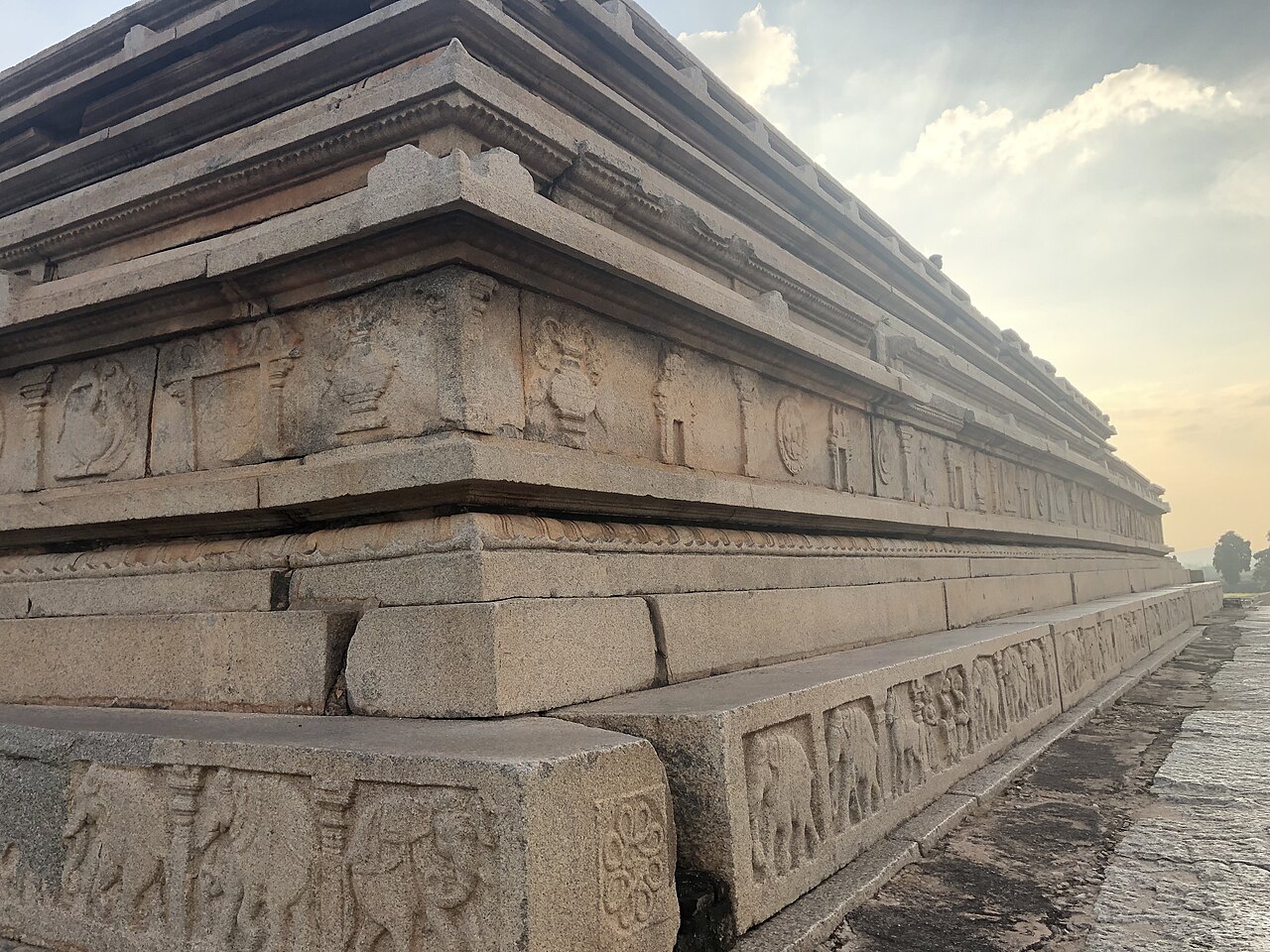
Royal Enclosure & Mahanavami Dibba
Heritage · 600 m · about 9 min walk
 #7 in HampiFree entry
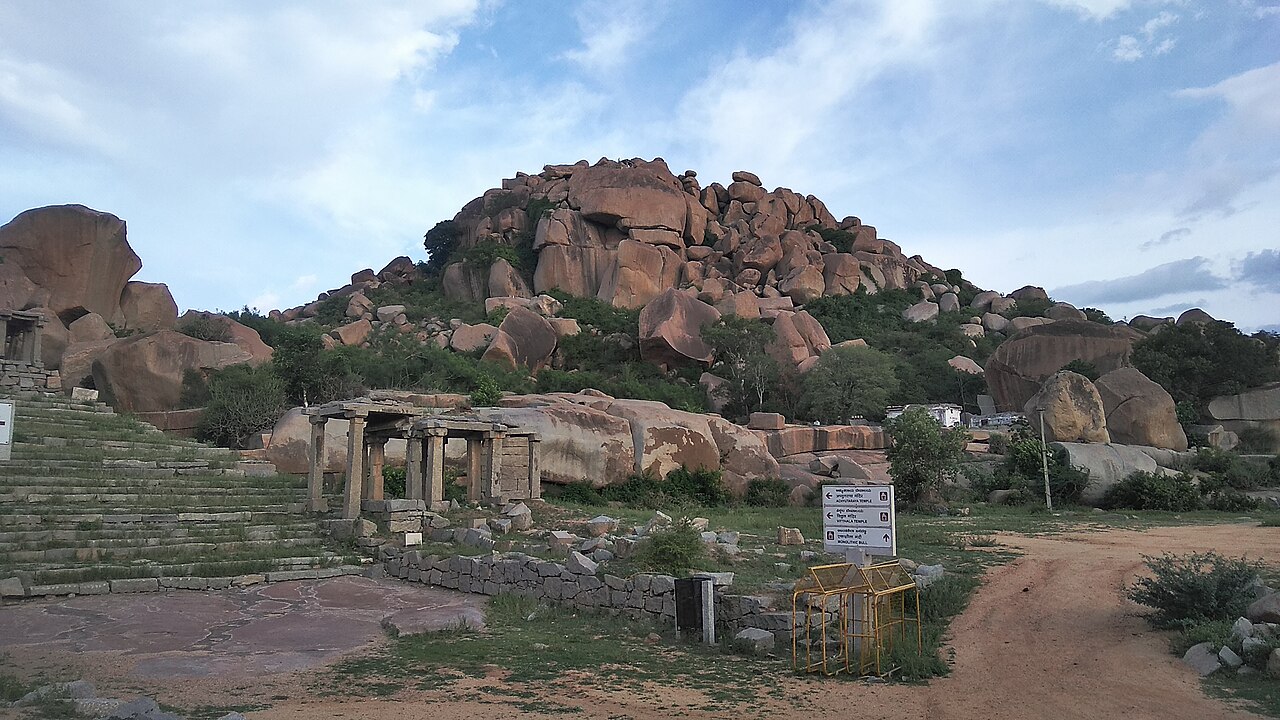
Matanga Hill
Viewpoint · 800 m · about 13 min walk
 #9 in HampiFree entry
Queen's Bath
Heritage · 850 m · about 14 min walk