Royal Enclosure & Mahanavami Dibba
#3of 10 places to visit in HampiHampi, Karnataka
Also known as Dasara Dibba · Dussehra Platform
Quick answer
Opening hours: 08:30–17:30. Entry is free. Allow 1.5 hrs. Best time: 08:30 – 10:30.
Updated · Compiled by Traveliac, AI-assisted · 5 min read
- Opening hours
- 08:30–17:30
- Entry fee
- Free
- Time needed
- 1.5 hrs
- Best time of day
- 08:30 – 10:30
- Best months
- Oct – Feb
- Address
- Royal Enclosure Road, near Kamalapura, Hampi, Vijayanagara District, Karnataka 583239 (approximately 3–3.5 km south of Hampi Bazaar)
About Royal Enclosure & Mahanavami Dibba
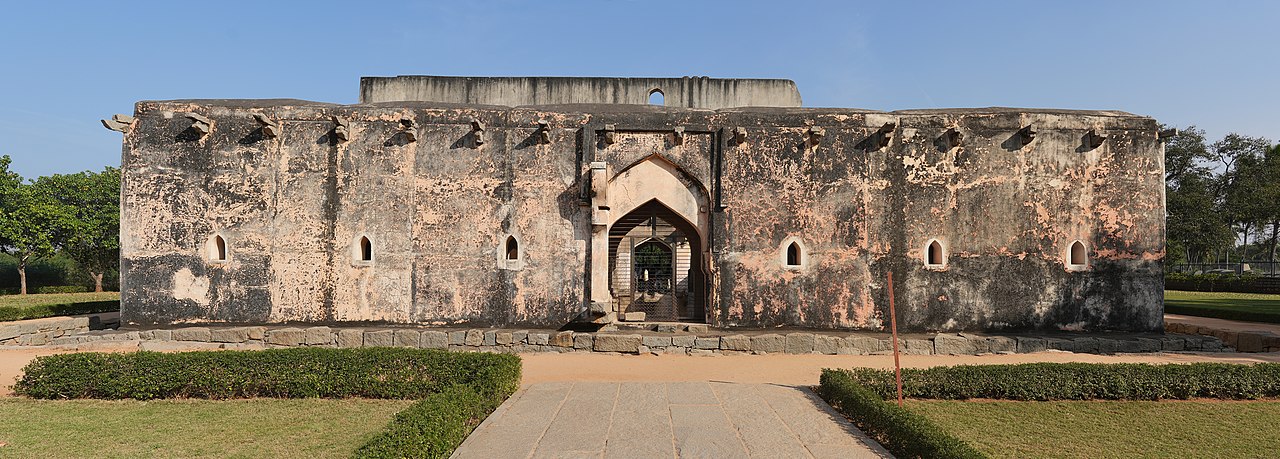
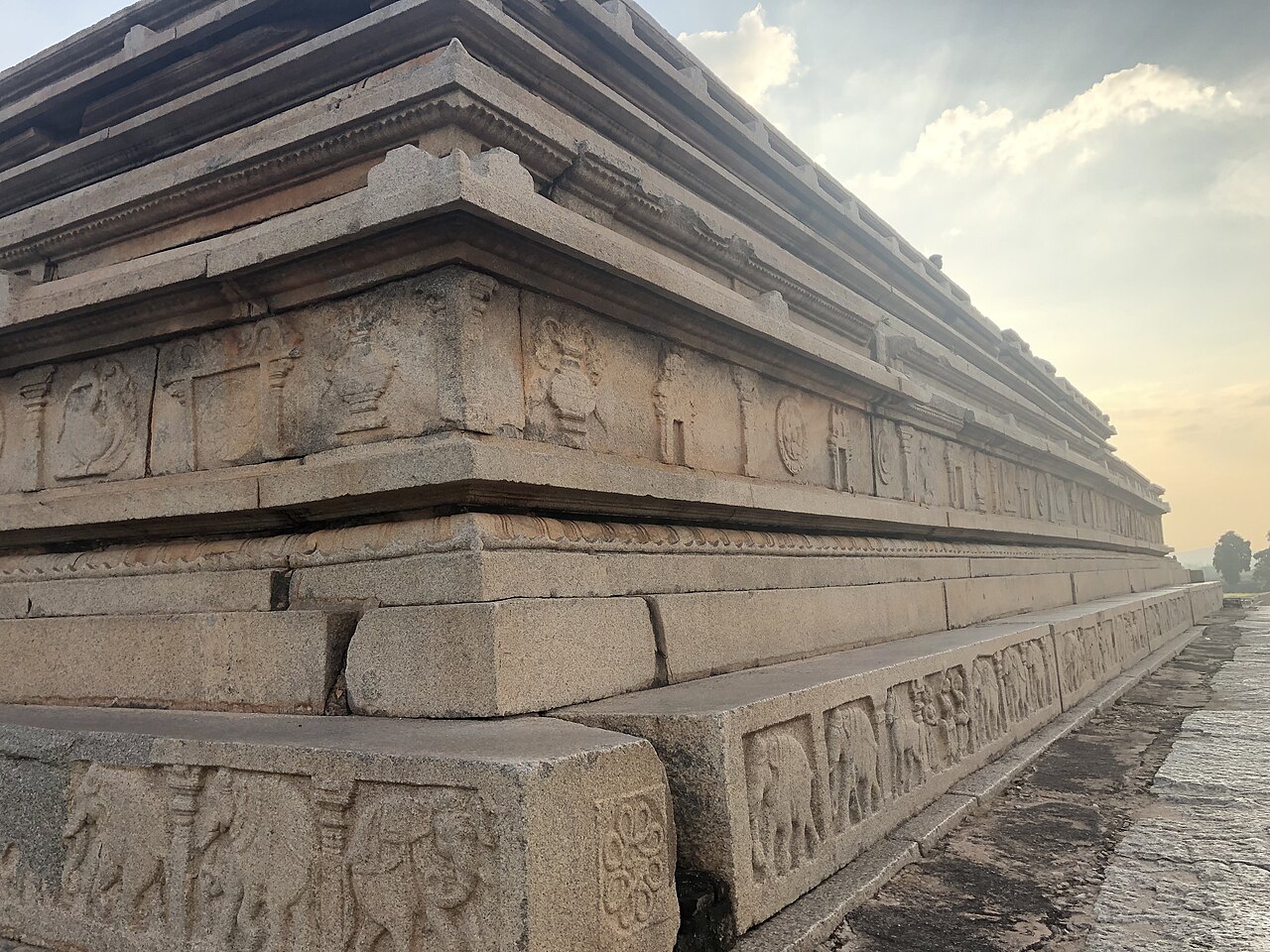
The Royal Enclosure was the political engine room of the Vijayanagara Empire, a fortified compound covering roughly six hectares near modern Kamalapura where kings held audience, reviewed armies, and staged the nine-day Mahanavami festival that gave the site's central structure its name. The Mahanavami Dibba is a three-tiered granite platform rising about eight metres, its retaining walls carved with continuous friezes of hunting scenes, dancers, horses, elephants, and processions that read almost like a stone newsreel of Vijayanagara court life — Portuguese visitors who witnessed the actual Mahanavami festivities described the emperor seated atop a comparable platform reviewing troops, tribute, and entertainments for days at a stretch. A short walk away, the Stepped Tank is the complex's other set-piece: a symmetrical five-tiered water tank sunk seven metres into the ground, built from finely dressed black schist unlike the local granite used everywhere else on site, and rediscovered only in 1980 when ASI excavations uncovered it more or less intact beneath accumulated soil.
Best time of day: 08:30 – 10:30. Before the day's heat builds across the open, largely shadeless enclosure, and before coach tours combining this site with the Zenana Enclosure arrive in volume.
Royal Enclosure & Mahanavami Dibba timings
Royal Enclosure & Mahanavami Dibba opens at 08:30 and closes at 17:30. Those hours hold on Saturday and Sunday too.
- Opening hours
- 08:30–17:30
Mon–Sun 08:30–17:30 - Closed on
- Open every day
Opening hours compiled from karnatakatourism.org and public records, last updated . They change without notice — confirm before you travel. How we write these guides
Royal Enclosure & Mahanavami Dibba ticket price
| Ticket | Price |
|---|---|
| Indian visitors | Free |
| Foreign visitors | Free |
| Children | Free |
| Camera | Free |
Free entry to the Royal Enclosure grounds, the Mahanavami Dibba platform, and the stepped tank. There is no ASI ticket booth at this site; it is a separate, unticketed complex from the Vittala Temple/Zenana Enclosure composite ticket.
Prices compiled from karnatakatourism.org and public records, last updated . They change without notice — confirm before you travel. How we write these guides
Best time to visit Royal Enclosure & Mahanavami Dibba
- Quiet
- Moderate
- Busy
08:30 – 10:30
Morning OpeningBest time to go
Independent travellers and photographers arrive first; the Mahanavami Dibba's friezes are viewable without competing for space at the base of the platform.
Quiet10:30 – 14:00
Coach Tour Peak
Groups combining the Royal Enclosure with the Zenana Enclosure arrive in volume; the Dibba's viewing path and the Stepped Tank perimeter both see sustained foot traffic.
Busy14:00 – 16:00
Afternoon Lull
Heat across the open, shadeless enclosure discourages lingering; numbers drop from the midday peak.
Moderate16:00 – 17:30
Late Afternoon
A second smaller wave arrives for cooler conditions and softer light on the Dibba's carved tiers before the 17:30 closing.
Moderate
History of Royal Enclosure & Mahanavami Dibba
The Royal Enclosure functioned as the administrative and ceremonial core of Vijayanagara from at least the reign of the Sangama dynasty founders in the mid-14th century through to the empire's collapse in 1565, with successive rulers expanding and rebuilding its structures across two centuries. Portuguese chroniclers Domingo Paes and Fernão Nunes, who visited the capital in the early 16th century during Krishnadevaraya's reign, left detailed eyewitness accounts of the Mahanavami festival held here — nine nights of ceremony, military review, wrestling matches, dance performances, and fireworks, culminating in rituals tied to the goddess Durga's Dasara celebration, with the emperor presiding from an elevated platform before assembled nobility, foreign envoys, and the general population.
The Mahanavami Dibba's carved friezes, arranged in horizontal bands around its retaining walls, depict this ceremonial world directly: hunting parties, horses, elephants in procession, dancers, and — more unusually — figures in what appear to be Persian or Central Asian dress, suggesting the platform's carvers deliberately recorded the cosmopolitan character of the Vijayanagara court, which maintained active diplomatic and trade contact with Persia, Portugal, and other Deccan Sultanates simultaneously.
The Stepped Tank nearby remained completely buried and unknown until ASI excavations in 1980 uncovered it largely intact — an unusual case of a major Vijayanagara structure surviving the empire's 1565 destruction not through defensive luck but simply because subsequent centuries of soil accumulation hid it from both looters and later builders. Its construction from finely dressed black schist, quarried and transported from outside the immediate Hampi area rather than cut from the local granite outcrops, indicates the resources the empire was willing to commit to a purely ceremonial water feature within the palace core. The Royal Enclosure complex, along with the rest of Hampi's monument zone, was inscribed as a UNESCO World Heritage Site in 1986.
Also within the enclosure's broader footprint are the foundations of the King's Audience Hall (sometimes called the Hundred-Pillared Hall, though only its column bases survive), and a partially underground Shiva temple whose sanctum floods seasonally depending on groundwater levels, making it accessible only in drier months.
Rules & etiquette at Royal Enclosure & Mahanavami Dibba
Climbing onto the Mahanavami Dibba's carved tiers is not permitted; view the friezes from ground level or the designated walkway around its base. The platform's stone is original fabric with no reinforcement for foot traffic, and ASI signage around the structure reflects specific concern about surface erosion from visitor contact — a concern shared across most of Hampi's more delicate carved structures.
The Stepped Tank is fenced at a short distance and cannot be entered or waded into; view it from the surrounding path. The underground Shiva temple, when accessible, has low ceilings and can have standing water on the floor even outside monsoon season — footwear that can get wet is worth having if you plan to go down.
The enclosure covers a substantial open area with very little shade; there is no reliable water or food vendor inside the compound itself, so carry what you need before entering.
Tips for visiting Royal Enclosure & Mahanavami Dibba
- 1
Budget at least 90 minutes to see the Mahanavami Dibba, the Stepped Tank, the Audience Hall foundations, and the underground Shiva temple without rushing — the enclosure's structures are spread across a wider area than they first appear from the entrance, and it is easy to see only the Dibba and assume you have covered the site. The stepped tank in particular rewards a slow circuit: walk its full perimeter to appreciate the precision of its symmetrical five-tier construction, a level of stonework finish distinct from the rougher granite dressing used in most of Hampi's other structures.
- 2
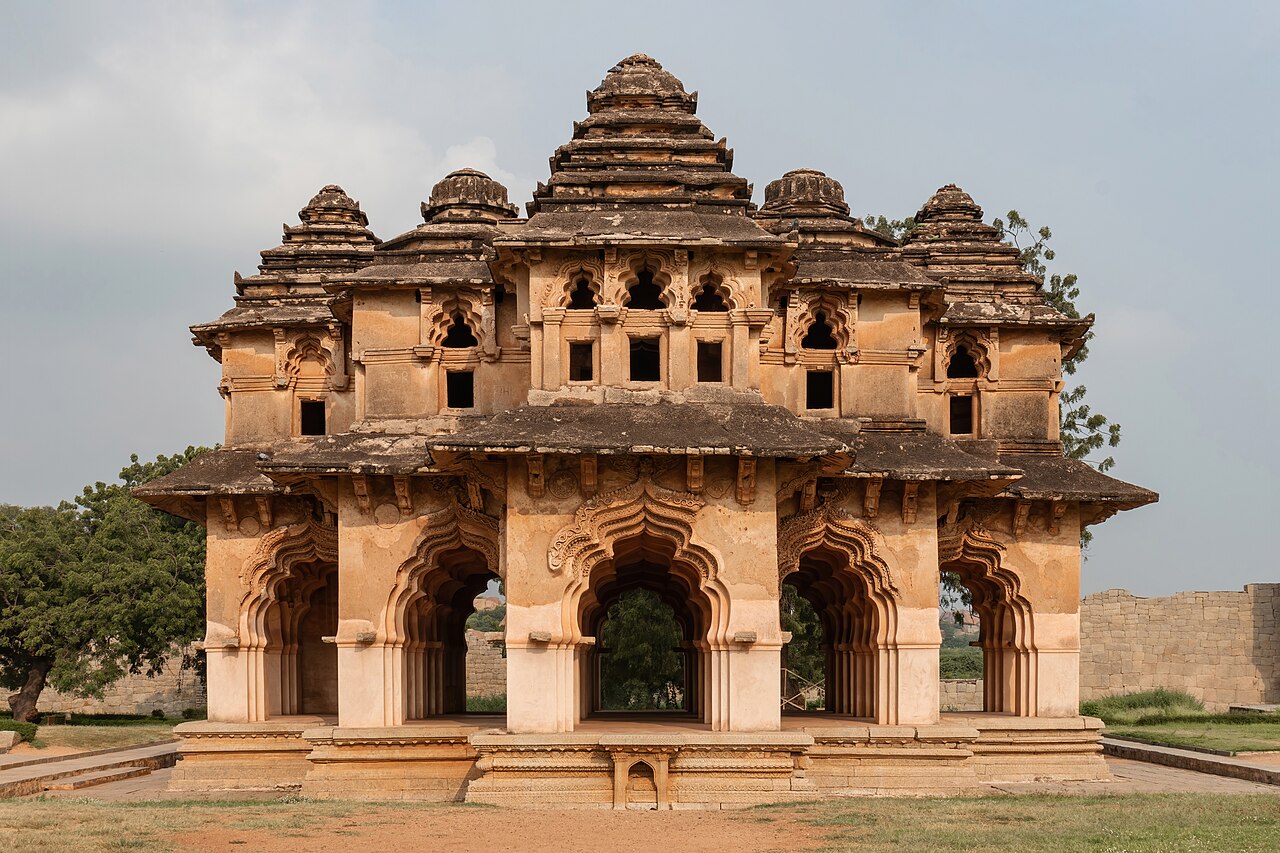
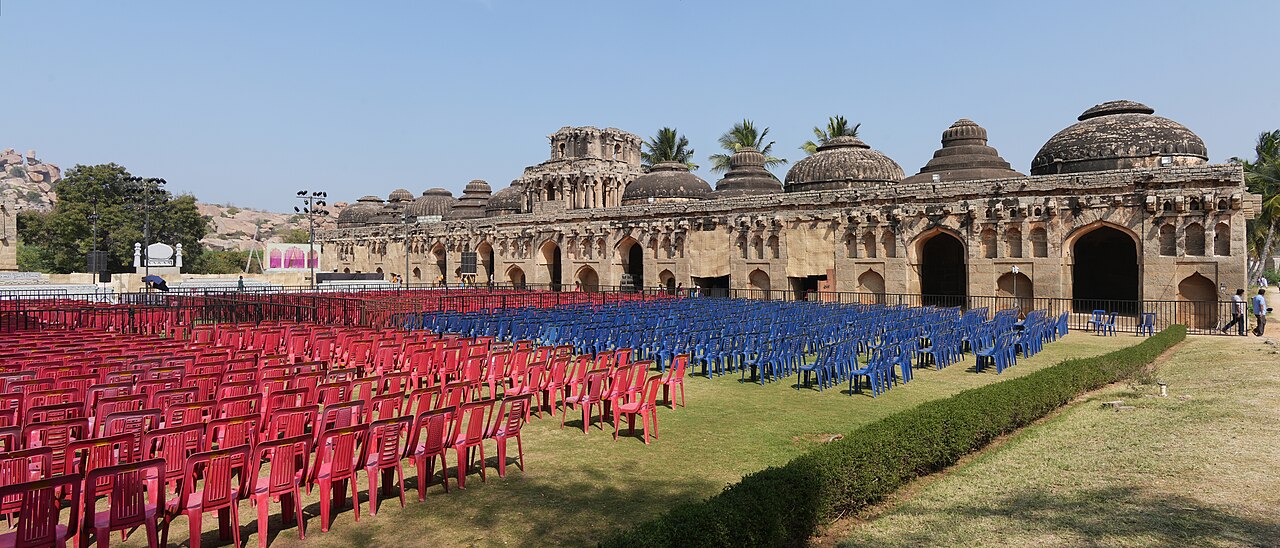
Combine this visit with the neighbouring Zenana Enclosure (Lotus Mahal and Elephant Stables), which sits within easy walking or short cycling distance and is covered by its own separate ticket — the two complexes together form the core of what most half-day "Royal Centre" tours of Hampi actually cover. A rented bicycle or moped is strongly advisable for this leg of a Hampi day, since the Royal Enclosure sits roughly 3–4 kilometres from both Hampi Bazaar and the Vittala Temple, and the exposed, shadeless walk between all three in a single day under Deccan sun is a genuine test of endurance rather than a pleasant option.
- 3
Early morning visits also give you the best chance of having the Mahanavami Dibba's friezes to yourself for close inspection — the carved bands are at their most legible in raking early light, and the crowds that arrive with the mid-morning coach tours make unhurried viewing of the lower, more detailed friezes difficult.
How to reach Royal Enclosure & Mahanavami Dibba
The red star is Royal Enclosure & Mahanavami Dibba; the numbered pins are the 9 nearest places in our guides, each showing its rank in its city. Tap a pin for details.
Royal Enclosure Road, near Kamalapura, Hampi, Vijayanagara District, Karnataka 583239 (approximately 3–3.5 km south of Hampi Bazaar)Directions in Google Maps
From Hampi Bazaar (Virupaksha Temple)
₹100–1503.5 km · 20–25 min
/day bicycle or ₹300–400/day moped rental
From Hospet Junction (Vijayanagara Station)
₹200–25011 km · 20 min
Private auto, negotiated
From Zenana Enclosure (Lotus Mahal / Elephant Stables)
1 km · 12–15 min
Free
Nearest airport
From Vidyanagar Airport (Toranagallu/Bellary)
approximately 65 km, limited scheduled services. Hubli Airport – approximately 165 km, with better connectivity to Bengaluru and Mumbai.
Nearest railway station
From Hospet Junction (Vijayanagara Station)
approximately 11 km via Kamalapura, roughly 20 minutes by auto-rickshaw.
Royal Enclosure & Mahanavami Dibba FAQs
Is there an entry fee for the Royal Enclosure and Mahanavami Dibba?
No. Entry is free and there is no ASI ticket booth at this site, unlike the Vittala Temple or Zenana Enclosure, which require a composite ticket.
What was the Mahanavami Dibba used for?
It was a three-tiered ceremonial platform, roughly eight metres tall, from which Vijayanagara emperors presided over the nine-day Mahanavami (Dasara) festival — reviewing troops, tribute, dance performances, and processions. Its retaining walls are carved with friezes depicting hunting scenes, horses, elephants, and dancers.
When was the Stepped Tank in the Royal Enclosure discovered?
It was fully buried and unknown until Archaeological Survey of India excavations uncovered it in 1980. The five-tiered tank, sunk about seven metres deep, is built from finely dressed black schist rather than the local granite used elsewhere at Hampi.
Can I climb the Mahanavami Dibba platform?
No. Climbing onto the carved tiers is not permitted to protect the original stone friezes from wear. Visitors view the structure from ground level or the surrounding walkway.
Compiled with AI assistance from official sources and public records, and published only after the checks in How we write these guides. Nobody from Traveliac has visited this place. Last updated . How we rank and check places
Places to visit near Royal Enclosure & Mahanavami Dibba
Straight-line distances from our map; times are estimates.