
Virupaksha Temple
#2of 10 places to visit in HampiHampi, Karnataka
Also known as Pampapathi Temple · Virupaksha Swami Temple
Quick answer
Opening hours: 06:00–13:00 and 17:00–21:00. Entry is free. Allow 1 hr. Best time: 06:00–08:00 or 17:30–19:00.
Updated · Compiled by Traveliac, AI-assisted · 6 min read
- Opening hours
- 06:00–21:00
- Entry fee
- Free
- Time needed
- 1 hr
- Best time of day
- 06:00–08:00 or 17:30–19:00
- Best months
- Oct – Feb
- Address
- Hampi Bazaar, Hampi, Vijayanagara District, Karnataka 583239
About Virupaksha Temple
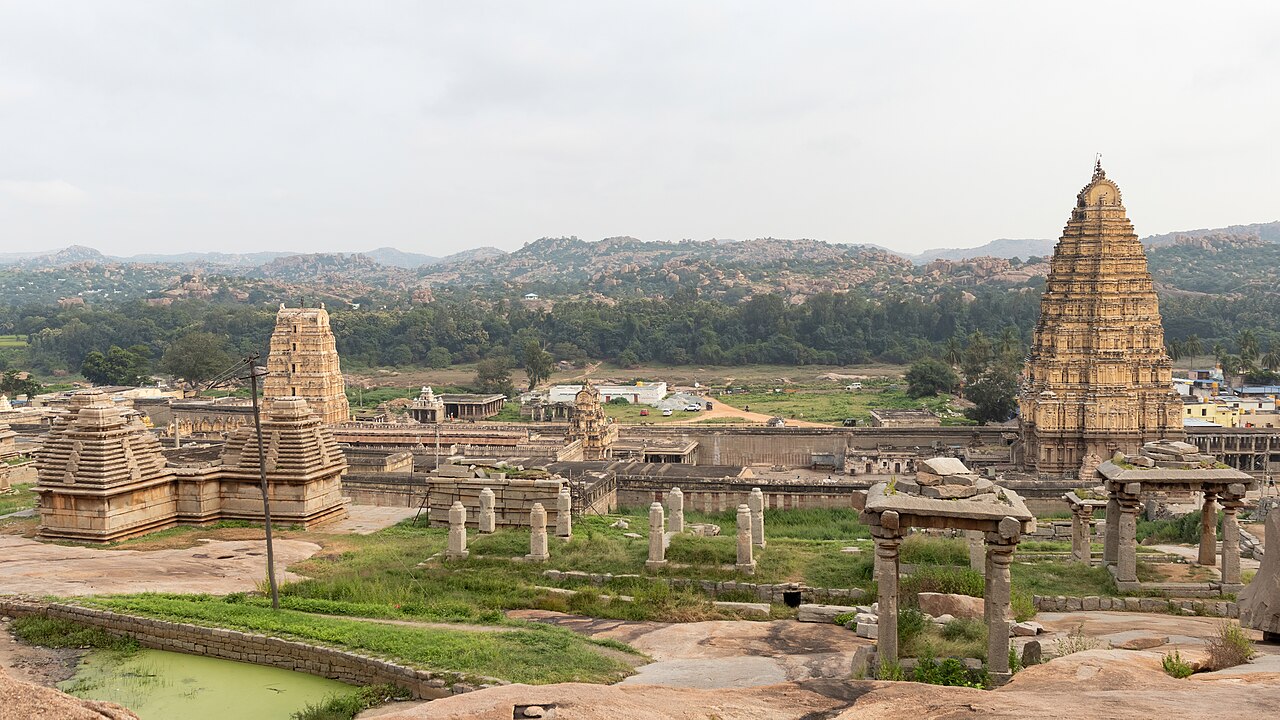
The Virupaksha Temple's eastern gopuram rises fifty metres from the bazaar street of Hampi village, a tower of darkened granite that has been the reference point for this valley since at least the seventh century CE and the absolute centre of Vijayanagara civilisation since 1336. Every other monument in Hampi — the Vittala complex to the northeast, the royal enclosures to the south, the Queen's Bath and the Lotus Mahal — was built in relation to this tower. The Vijayanagara emperors considered themselves vassals of Virupaksha (a form of Shiva worshipped here since before the empire existed), and conducted their coronations, military departures, and major administrative ceremonies in the temple's presence. The empire collapsed in 1565. The temple continued — it has been in unbroken active worship longer than most European cities have existed — and it continues now, with the elephant Lakshmi accepting bananas and offering blessings at the outer gate every morning.
Best time of day: 06:00–08:00 or 17:30–19:00. At dawn when the eastern gopuram is lit by the rising sun and the early puja is underway in the inner sanctum; 17:30–19:00 for the evening aarti and the tower lit by the setting sun from the west.
Virupaksha Temple timings
Virupaksha Temple is open 06:00–13:00 and 17:00–21:00. Those hours hold on Saturday and Sunday too.
- Opening hours
- 06:00–21:00
Mon–Sun 06:00–13:00 and 17:00–21:00 - Closed on
- Open every day
Good to know: The temple operates year-round, including during the monsoon. During the Virupaksha Car Festival (typically March–April, dates vary by lunar calendar), the complex becomes extremely crowded and the access roads are closed to vehicles. The festival involves a large wooden chariot procession on the main bazaar street.
Opening hours compiled from public records; this place lists no official website, last updated . They change without notice — confirm before you travel. How we write these guides
Virupaksha Temple ticket price
| Ticket | Price |
|---|---|
| Indian visitors | Free |
| Foreign visitors | Free |
| Children | Free |
| Camera | Free |
Entry to the temple complex is free. The main tower (gopuram) and outer courtyards are open to all visitors. The innermost sanctum sanctorum is accessible to Hindus; non-Hindu visitors are generally permitted in the outer mandapas but may be asked not to proceed beyond the main hall by the temple priests — follow instructions without argument. Photography within the inner sanctum is prohibited. Camera use in the outer halls and courtyards is generally tolerated but not officially sanctioned — ask a priest or ASI representative before setting up. The temple elephant, Lakshmi, is available for a blessing (she places her trunk on your head) in exchange for ₹10–20.
Prices compiled from public records; this place lists no official website, last updated . They change without notice — confirm before you travel. How we write these guides
Best time to visit Virupaksha Temple
- Quiet
- Moderate
- Busy
06:00–08:00
Early puja windowBest time to go
Local devotees, a few early-rising travellers from Hampi Bazaar guesthouses. The morning puja smoke drifts through the outer mandapa. Lakshmi the elephant is at the gate. Best photographic and experiential window of the day.
Quiet08:00–11:00
Morning visitor flow
Independent travellers and small group tours begin arriving. The bazaar street fills. Manageable and the light is still good on the gopuram from the east.
Moderate11:00–14:00
Midday peak
Tour buses from Hospet and Bengaluru arrive. The outer courtyard is congested. The inner sanctum closes for midday puja at 12:00. Heat on the exposed stone courtyard is significant.
Busy14:00–17:00
Afternoon lull
Many visitors are resting during the midday close period. The outer complex is accessible and relatively quiet. Good time for the ceiling paintings and the western river approach.
Quiet17:00–21:00
Evening reopening
Temple reopens at 17:00 for the evening session. Local devotees outnumber tourists. The aarti at approximately 19:00 is the day's most atmospheric ceremony and worth attending.
Moderate
History of Virupaksha Temple
The Virupaksha Temple belongs to the pre-Vijayanagara religious landscape of the Tungabhadra valley. Epigraphic evidence — inscriptions on the temple walls — records devotional activity here from at least the seventh century CE under the Chalukyas, and the site's association with Pampa (a local form of the goddess Parvati, from whom the river Pampa, now the Tungabhadra, takes its name) is recorded in the Mahabharata's Aranyaka Parva, suggesting a much older sacred geography.
The Vijayanagara kings adopted the site as the dynastic shrine of their empire. The Sangama brothers — Harihara I and Bukka Raya I, who founded the empire in 1336 — consolidated their legitimacy partly through lavish patronage of this already-ancient temple. The great outer gopuram, the most recognisable element of the current complex, was added by Krishnadevaraya in 1510 CE, following his victory in the battle of Udayagiri. The smaller, older inner gopuram predates the empire and represents the original Chalukya-period structure.
The temple's plan follows the canonical Dravidian model: a series of concentric rectangular enclosures (prakaras) with gateway towers (gopurams) on the cardinal axes, the innermost enclosure containing the garbhagriha (sanctum) where the Shivalinga is installed. The outer courtyard, measuring roughly 150 by 90 metres, contains the main pillared mandapa, smaller shrines to Pampa Devi (Virupaksha's consort) and Bhuvaneshvari, and the restored pavilion where the temple's processional chariot is housed between festivals.
The ceiling paintings in the main mandapa are remarkable and underappreciated: executed on a lime-plaster ground in a palette of red, yellow ochre, and black, they depict the Mahabharata narrative, court scenes from the Vijayanagara period, and the Dashavatara (ten avatars of Vishnu). The quality of the line work is comparable to the better-known paintings at Lepakshi, executed by the same regional school of artists in the sixteenth century. The paintings are in fragile condition — bat droppings, humidity, and visitor proximity have caused deterioration — and the light in the ceiling paintings area is low, requiring patience and eye adjustment.
Krishnadevaraya, who reigned from 1509 to 1529 and is considered the Vijayanagara empire's greatest ruler by both his contemporaries and subsequent historians, is recorded as having built a second gopuram and renovated the mandapa. He also commissioned the Hazara Rama Temple in the royal enclosure and the Vittala Temple complex — all three date from approximately the same decade and represent the apogee of Vijayanagara stoneworking.
Rules & etiquette at Virupaksha Temple
Footwear must be removed before entering the main temple complex gate — a shoe rack is maintained to the left of the entrance and is reliable. The stone floor inside the outer courtyard can be intensely hot in the late morning and afternoon from October to March; socks or quick-dry sandals that can be tucked in are worth considering.
Dress modestly: shoulders and knees should be covered for both men and women inside the complex. Lungis or wraps are sometimes available for hire at the entrance for ₹20–30, though the supply is unreliable. This is a functioning place of worship with active pujas at fixed hours — 06:00, 12:00, and 19:00 are the main abhisheka times, during which the inner sanctum is closed to all non-officiating visitors. Do not attempt to enter the garbhagriha during these ceremonies.
The temple elephant Lakshmi is a significant draw — she has been resident here for decades and her daily routine (blessing visitors at the outer gate in the morning, bathing in the Tungabhadra by mid-morning) is part of local life. She is a working temple elephant under the temple authority's care; offer fruit if you wish to interact, and do not crowd her or make sudden movements. The mahout is always present.
The main bazaar street leading to the temple's east gopuram is lined with souvenir stalls and small eateries. The stall operators are persistent but generally not aggressive. Fixed-price fruit shops near the temple gate sell bananas for Lakshmi at ₹5–10 per bunch.
Tips for visiting Virupaksha Temple
- 1
The pinhole camera effect in the outer mandapa's forecourt — where an inverted image of the eastern gopuram is projected onto the interior floor by a small circular opening — is one of the more extraordinary optical phenomena associated with any Indian monument and is rarely mentioned in mainstream guides. Ask a temple priest or a knowledgeable local guide to show you the spot; it requires the right light angle and is most reliable in the mid-morning.
- 2
For the ceiling paintings: carry a small torch or use your phone's flashlight; the natural light in the ceiling paintings hall is insufficient without assistance, and the ASI lighting is minimal. Move slowly and let your eyes adjust upward — the paintings repay close attention and most visitors miss them entirely because they are looking at the columns.
- 3
The temple's western entrance, facing the Tungabhadra River, is less used and less photographed than the great eastern gopuram. The river ghats directly behind the temple — where locals do laundry and priests perform ablutions at dawn — provide a context for the temple's relationship with the water that the bazaar approach does not convey. Approach from the river side at least once.
- 4
For the auto-rickshaw from Hospet: the fixed sharing rate from Hospet bus stand to Hampi Bazaar is typically ₹30–40 per seat on a shared auto; a private auto is ₹150–200. Negotiate before boarding and confirm whether the fare is per person or per vehicle. The journey takes 25 minutes on the main road.
How to reach Virupaksha Temple
The red star is Virupaksha Temple; the numbered pins are the 9 nearest places in our guides, each showing its rank in its city. Tap a pin for details.
Hampi Bazaar, Hampi, Vijayanagara District, Karnataka 583239Directions in Google Maps
From Hospet Junction Railway Station (Vijayanagara Station)
₹150–20013 km · 25–30 min
Negotiate before boarding
From Hospet Bus Stand
₹30–4013 km · 30–40 min
Per seat
From Hampi Bazaar (within village)
0.1 km · 2–5 min
Free
Nearest airport
From Vidyanagar Airport (Toranagallu/Bellary), approximately 60 km
limited services. Hubli Airport, approximately 160 km, has better connectivity to Bengaluru and Mumbai.
Nearest railway station
From Hospet Junction (now Vijayanagara Station)
13 km, approximately 25 minutes by auto-rickshaw (₹150–200 for the full ride).
Virupaksha Temple FAQs
Is Virupaksha Temple free to enter?
Yes, there is no entry fee. The temple is a living Hindu place of worship and entry is free. Photography within the inner sanctum is not permitted.
Can non-Hindus enter the Virupaksha Temple?
Non-Hindu visitors are permitted in the outer courtyards and the main mandapa. Access to the innermost sanctum (garbhagriha) is typically restricted to Hindu devotees. Follow any guidance from the priests and do not attempt to enter the sanctum during active puja ceremonies.
What is the best time to see the temple elephant Lakshmi?
Lakshmi is at the outer gate for blessings in the morning, typically from 06:30 to 09:00. She is taken for her daily bath in the Tungabhadra River by 09:30–10:00. Visiting early gives you the best chance to see her at the temple.
How far is Virupaksha Temple from the Vittala Temple?
Approximately 2.5 kilometres along the ancient market street (Hampi Bazaar road) to the northeast. The walk takes 35–45 minutes. Tuk-tuks charge ₹50–80 per person for the shared ride on this route.
Compiled with AI assistance from official sources and public records, and published only after the checks in How we write these guides. Nobody from Traveliac has visited this place. Last updated . How we rank and check places
Places to visit near Virupaksha Temple
Straight-line distances from our map; times are estimates.
 #6 in HampiFree entry
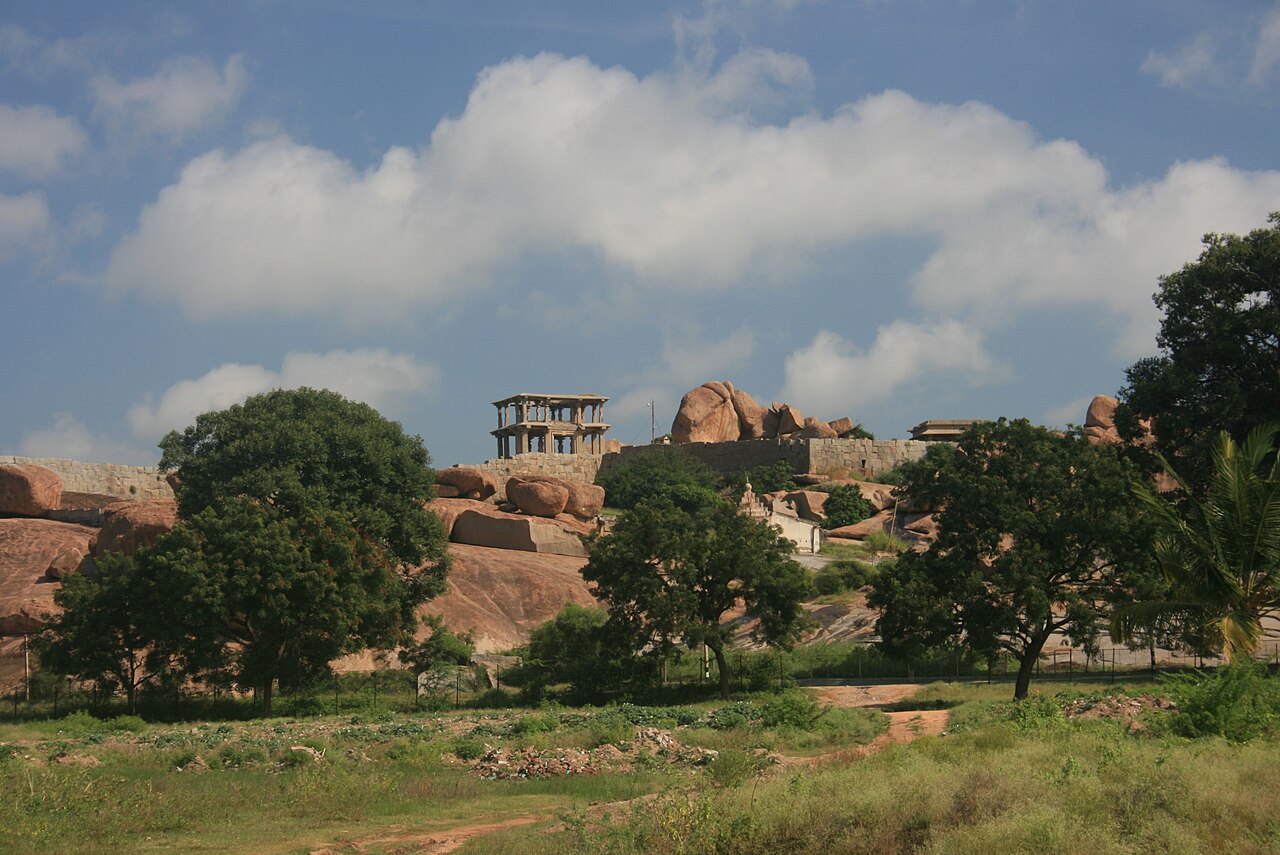
Hemakuta Hill
Viewpoint · 150 m · about 3 min walk
 #10 in HampiFree entry
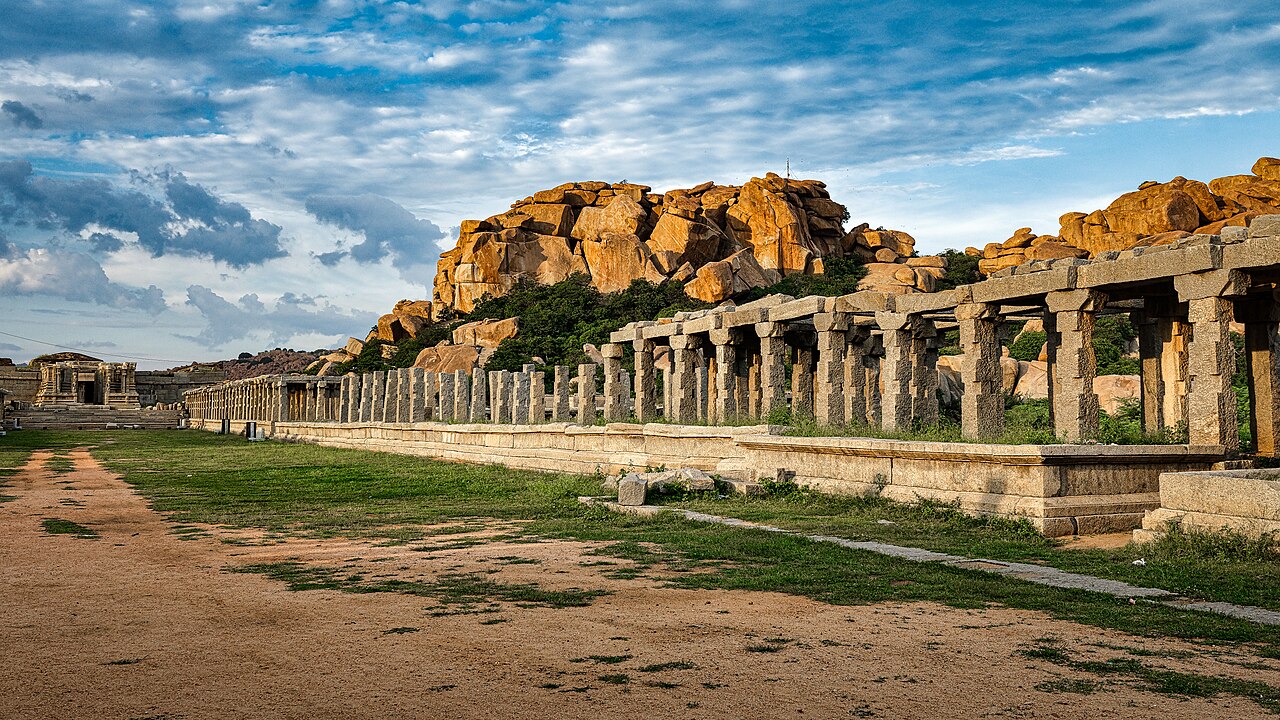
Hampi Bazaar
Market · 350 m · about 6 min walk
 #8 in HampiFree entry
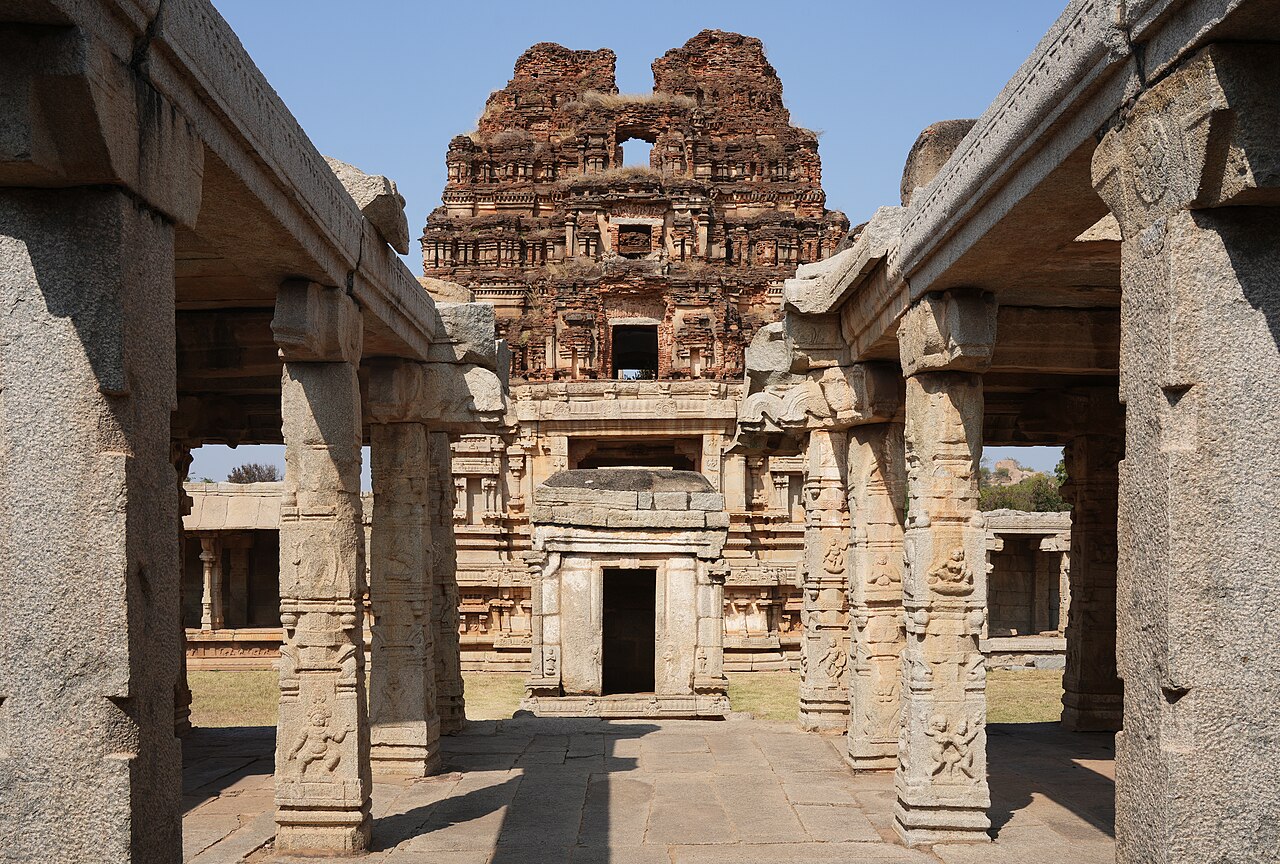
Achyutaraya Temple
Temple · 1.3 km · about 21 min walk
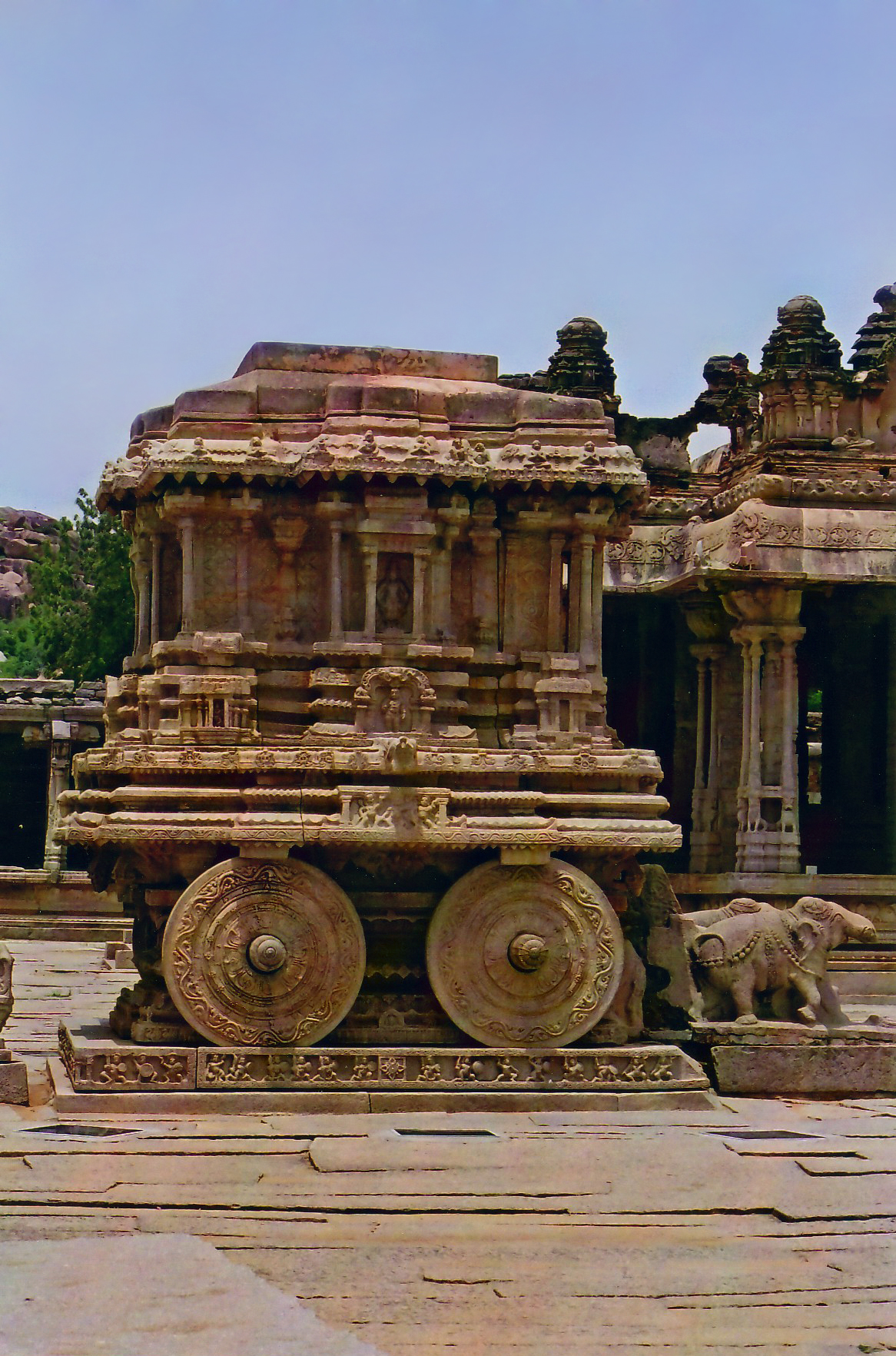 #1 in Hampi
Vittala Temple
Temple · 2.0 km · about 32 min walk