
Matanga Hill
#7of 10 places to visit in HampiHampi, Karnataka
Also known as Matanga Parvata
Quick answer
Opening hours: No fixed opening hours. Entry is free. Allow 1.5 hrs. Best time: 05:00 – 06:30 or 17:00 – 18:30.
Updated · Compiled by Traveliac, AI-assisted · 5 min read
- Opening hours
- No fixed hours
- Open at all hours; there is no gate. In practice the climb is only safe and useful between approximately 05:00 and 19:00.
- Entry fee
- Free
- Time needed
- 1.5 hrs
- Best time of day
- 05:00 – 06:30 or 17:00 – 18:30
- Best months
- Oct – Feb
- Address
- Behind Hampi Bazaar, accessed via the path near Achyutaraya Temple, Hampi, Vijayanagara District, Karnataka 583239
About Matanga Hill
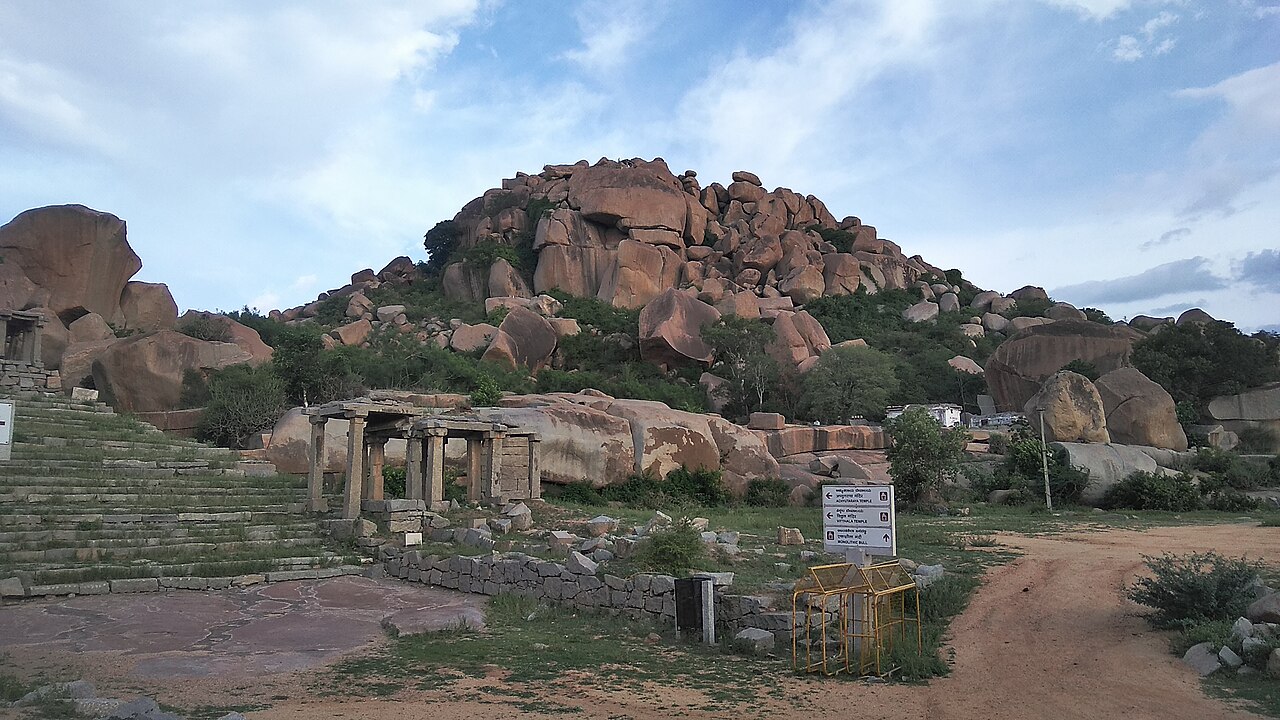
Matanga Hill is the highest point inside the Hampi ruins, and the climb to its summit is the one activity nearly every visitor attempts and a meaningful fraction abandon halfway. There is no staircase in the built sense — the route is a sequence of rock-cut steps interrupted by stretches of bare granite boulder where the steps have eroded away or were never carved in the first place, and there are no railings anywhere on the ascent. What you get for the effort is unmatched: a 360-degree view over the Tungabhadra's boulder-strewn banks, the Achyutaraya Temple's twin gopurams directly below, the Vittala complex's rooftops to the northeast, and Hampi Bazaar's colonnaded street running straight toward Virupaksha Temple's tower to the west. The hill's name and its associated Veerabhadra shrine at the summit tie it into the Ramayana's Kishkindha Kanda, in which this landscape is identified as the forest kingdom of the monkey chieftains Sugriva and Vali — a literary geography that, unusually for India's epic sites, corresponds to a specific, climbable, physically verifiable hill rather than a symbolic or contested location.
Best time of day: 05:00 – 06:30 or 17:00 – 18:30. For sunrise, climbing in the dark with a torch to be seated at the summit before first light; alternatively 17:00 – 18:30 for sunset, though the descent then requires a torch for the final stretch.
Matanga Hill timings
- Opening hours
- No fixed hours
Mon–Sun No fixed hours - Open at all hours; there is no gate. In practice the climb is only safe and useful between approximately 05:00 and 19:00.
- Closed on
- Open every day
Good to know: The granite steps become genuinely hazardous in wet weather; avoid the climb entirely during or immediately after rain.
Opening hours compiled from karnatakatourism.org and public records, last updated . They change without notice — confirm before you travel. How we write these guides
Matanga Hill ticket price
| Ticket | Price |
|---|---|
| Indian visitors | Free |
| Foreign visitors | Free |
| Children | Free |
| Camera | Free |
No entry fee or ticket gate; the hill is an open granite outcrop with a small active Veerabhadra shrine at the summit. There is no formal ASI checkpoint, and no camera fee is charged anywhere on the climb.
Prices compiled from karnatakatourism.org and public records, last updated . They change without notice — confirm before you travel. How we write these guides
Best time to visit Matanga Hill
- Quiet
- Moderate
- Busy
05:00 – 06:30
Sunrise Climb
A steady stream of travellers climb in the dark with torches; the summit fills to a few dozen people just before sunrise, then thins quickly within 30 minutes of daybreak.
Moderate06:30 – 11:00
Morning QuietBest time to go
Most sunrise climbers have descended; the heat has not yet built. A comfortable window for a less crowded ascent with good visibility.
Quiet11:00 – 16:00
Midday Heat
Very few climbers attempt the ascent during peak heat; exposed granite surfaces and no shade on the route make this the least advisable window.
Quiet16:00 – 18:30
Sunset Climb
The second-busiest window of the day; the summit is crowded in the final 30 minutes before sunset, with descent traffic on the narrower sections requiring patience.
Busy
History of Matanga Hill
Matanga Hill takes its name from the sage Matanga of the Ramayana, whose hermitage in the Kishkindha Kanda is identified by tradition with this specific outcrop above the Pampa (Tungabhadra) river valley. In the epic, the monkey king Vali is cursed never to set foot on Matanga's hill, which is why his brother Sugriva is able to take refuge here safely during his exile — a detail Hampi's guides invoke often, since the hill is one of the more geographically specific settings in the entire Kishkindha narrative and long predates the Vijayanagara Empire's arrival in the valley.
The Vijayanagara-era builders integrated the hill into the sacred landscape without heavily building on its steep upper slopes, in contrast to their treatment of Hemakuta Hill to the west, which they covered with dozens of shrines. Matanga's summit carries a single active shrine to Veerabhadra, a fierce form of Shiva, along with the remains of a few smaller structures further down the slope — modest interventions that leave the hill's granite bulk largely as the empire's engineers and priests found it. Its strategic value was primarily as an observation point: the summit commands sightlines across nearly the entire sacred centre of Vijayanagara, from the Tungabhadra's northern bank to the Royal Enclosure in the south, and it is reasonable to assume the empire's military planners used it for exactly that purpose, even if no inscription confirms it explicitly.
Rules & etiquette at Matanga Hill
There is no ticket gate and no fixed opening hours, which also means there is no staff presence to assist if you are injured or disoriented partway up. Wear closed shoes with real grip — sandals and flip-flops are a common cause of slips on the smoother boulder sections. Carry a torch or a phone flashlight if attempting the climb before sunrise or after sunset; several sections have no ambient light at all and the difference between the marked path and a dead-end ledge is not always obvious in the dark.
Going with at least one companion is the standard local advice for both the pre-dawn and post-dusk climbs, less because of any specific recent incident than because the hill is unlit, largely unsupervised, and the terrain genuinely punishes a bad step. Long-tailed macaques are present on and around the hill and are habituated to tourists carrying food; keep snacks zipped away and do not offer food by hand, since bag-snatching by monkeys is a routine occurrence here as at most Hampi viewpoints.
There is a small active shrine at the summit — remove footwear if you approach it directly, and be conservative with photography if worshippers are present.
Tips for visiting Matanga Hill
- 1
The standard approach begins near Hampi Bazaar, passing behind the Kadalekalu Ganesha area and skirting the base near Achyutaraya Temple before the climb proper starts; ask at your guesthouse for the current start point, since informal trail markers shift and a wrong turn here simply means retracing your steps rather than any real danger. Budget 30–40 minutes for the ascent at a careful pace and expect to use your hands on some sections — this is a scramble, not a walk.
- 2
For sunrise, arrive at the base with enough margin to climb slowly in torchlight and be seated at the summit at least 15 minutes before the scheduled sunrise time; the eastern light over the boulder field is at its best in the first ten minutes and fades quickly into flat midday brightness. For sunset, the light on Hampi Bazaar and the Virupaksha gopuram to the west is the more rewarding direction to face, but plan your descent timing carefully — the last stretch down is unlit and should not be attempted after the light is fully gone without a strong torch.
- 3
Combine the climb with Achyutaraya Temple, which sits almost directly at the base of the standard ascent route and makes a natural bookend to the outing — quiet, rarely crowded, and a good place to rehydrate in the shade of its mantapas before or after the exertion of the hill.
How to reach Matanga Hill
The red star is Matanga Hill; the numbered pins are the 9 nearest places in our guides, each showing its rank in its city. Tap a pin for details.
Behind Hampi Bazaar, accessed via the path near Achyutaraya Temple, Hampi, Vijayanagara District, Karnataka 583239Directions in Google Maps
From Hampi Bazaar (Virupaksha Temple)
1 km · 15–20 min walk to base, plus 30–40 min climb
Free
From Hospet Junction (Vijayanagara Station)
₹150–20013 km · 25–30 min
Private auto, negotiated
From Virupapura Gadde (river's north bank)
₹50–1001.5 km · 20–25 min
Coracle crossing per person, then free walking
Nearest airport
From Vidyanagar Airport (Toranagallu/Bellary)
approximately 65 km, limited scheduled services. Hubli Airport – approximately 165 km, with better connectivity to Bengaluru and Mumbai.
Nearest railway station
From Hospet Junction (Vijayanagara Station)
approximately 13 km to Hampi Bazaar, then a 15–20 minute walk to the base of the climb.
Matanga Hill FAQs
Is Matanga Hill safe to climb alone before sunrise?
The climb has no lighting, no railings, and sections with eroded or missing steps, so most guesthouses and guides recommend climbing with at least one companion rather than solo, particularly in the dark. The main risks are physical — slips on smooth granite and disorientation on unmarked sections — rather than any specific security concern, but a torch and sturdy footwear are essential either way.
How difficult is the Matanga Hill climb and how long does it take?
It is a scramble over rock-cut steps and bare granite boulders rather than a maintained staircase, requiring moderate fitness and occasional use of hands. Most visitors take 30–40 minutes to reach the summit at a careful pace, with a similar time for the descent.
What can you see from the top of Matanga Hill?
A 360-degree view of the Hampi ruins: the Tungabhadra River and its boulder-strewn north bank, the Achyutaraya Temple directly below, the Vittala Temple complex to the northeast, and Hampi Bazaar's colonnaded street running toward the Virupaksha Temple gopuram to the west.
Is there an entry fee for Matanga Hill?
No. There is no ticket gate or ASI checkpoint; the hill is freely accessible at any hour, though the climb is only practical and reasonably safe between roughly 05:00 and 19:00.
Compiled with AI assistance from official sources and public records, and published only after the checks in How we write these guides. Nobody from Traveliac has visited this place. Last updated . How we rank and check places
Places to visit near Matanga Hill
Straight-line distances from our map; times are estimates.
 #3 in HampiFree entry
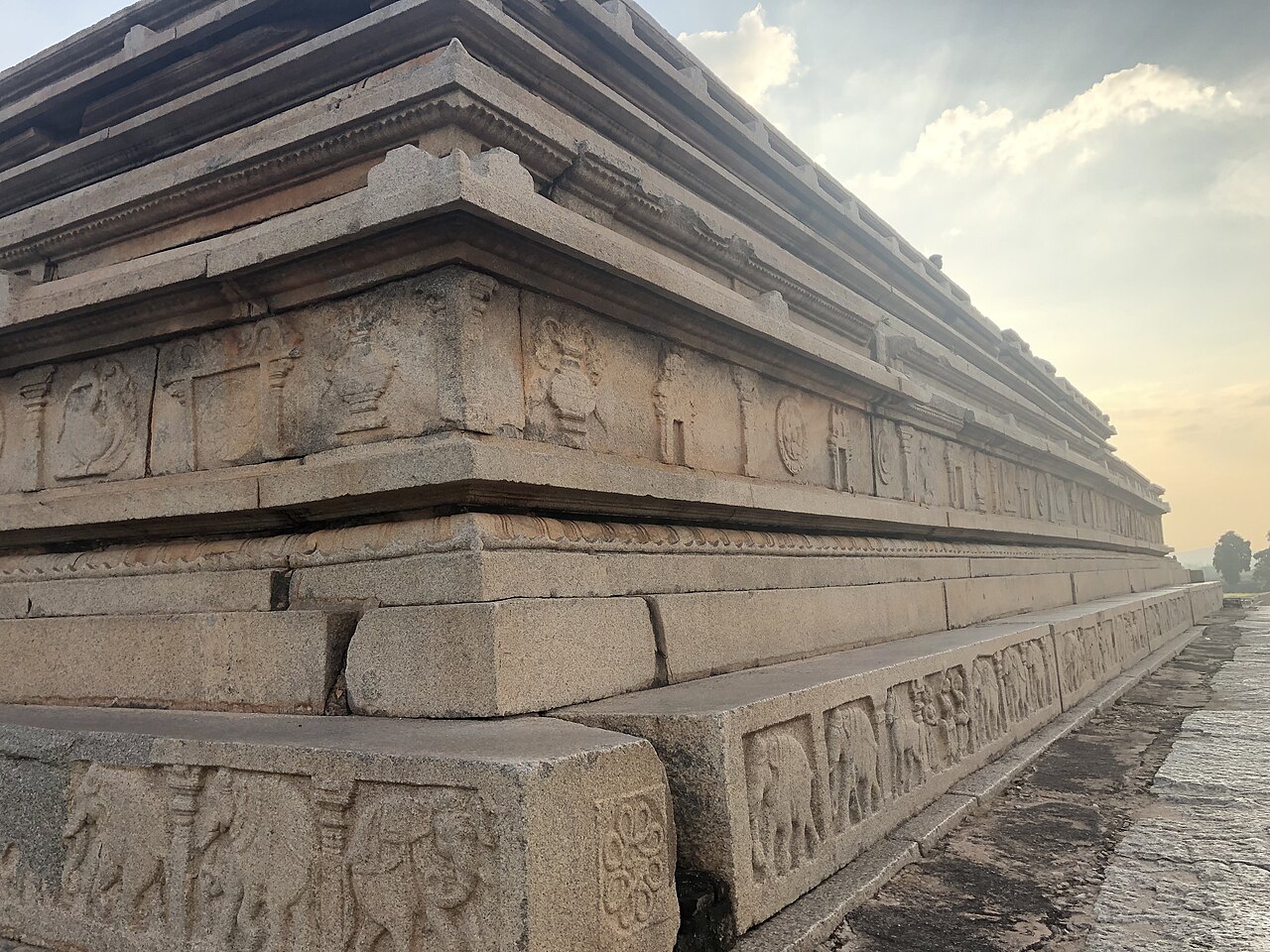
Royal Enclosure & Mahanavami Dibba
Heritage · 450 m · about 8 min walk
 #4 in Hampi
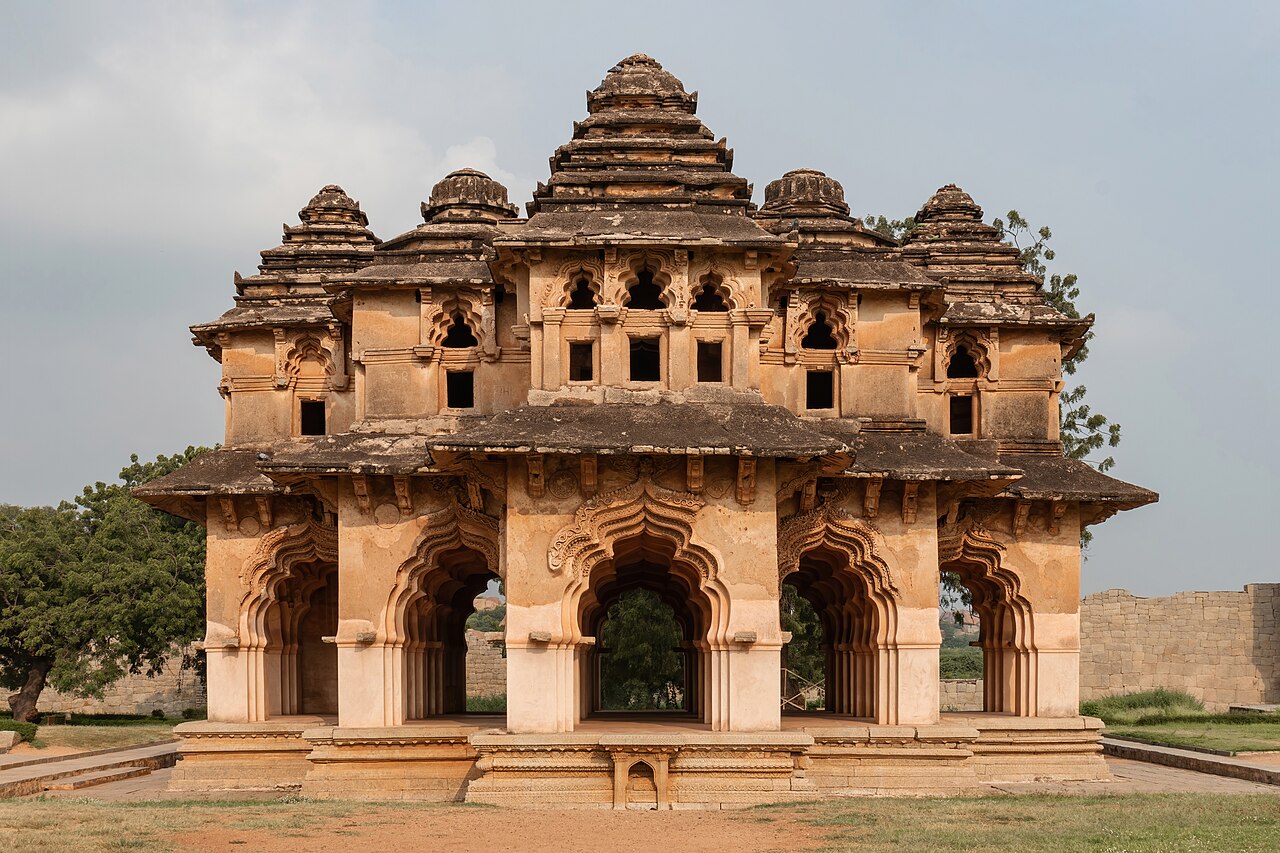
Lotus Mahal
Palace · 650 m · about 10 min walk
 #9 in HampiFree entry
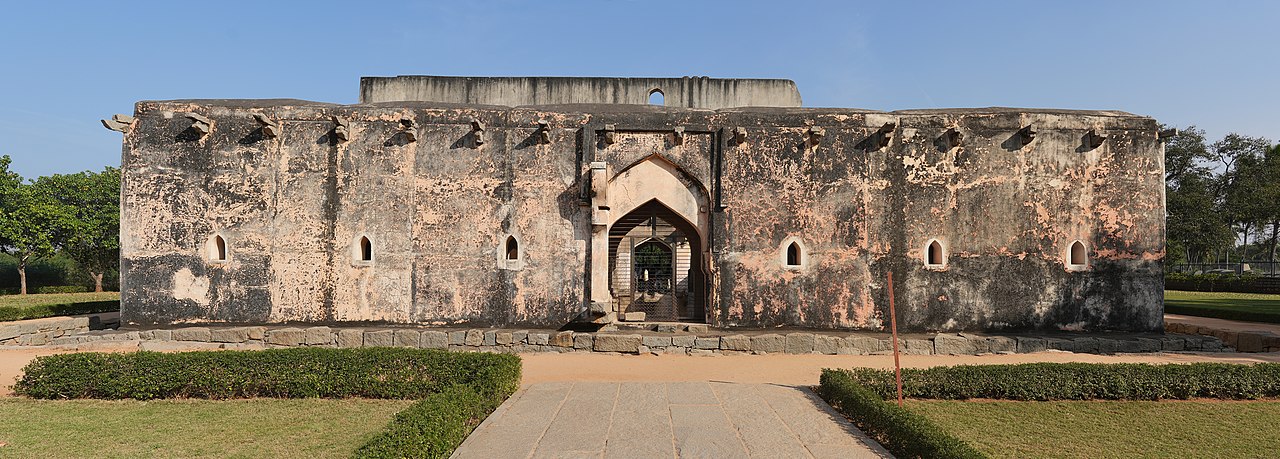
Queen's Bath
Heritage · 700 m · about 11 min walk
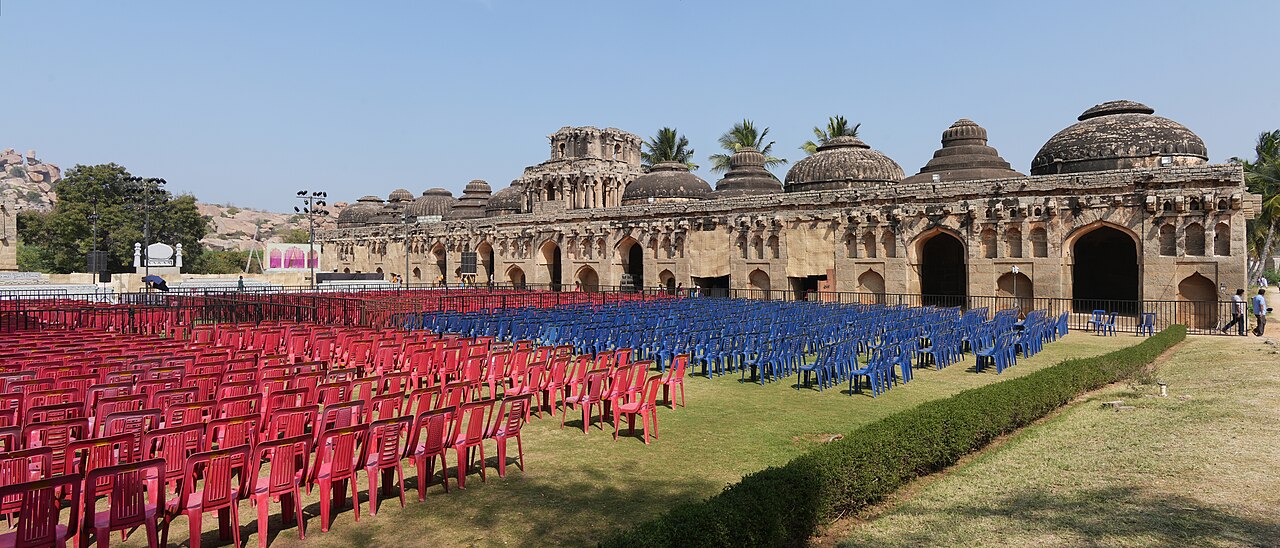 #5 in Hampi
Elephant Stables
Heritage · 800 m · about 13 min walk