
Hampi Bazaar
#10of 10 places to visit in HampiHampi, Karnataka
Also known as Virupaksha Bazaar · Pampapatha Bazaar
Quick answer
Opening hours: 07:00–22:00. Entry is free. Allow 1 hr. Best time: 07:00 – 09:00 or 17:30 – 19:00.
Updated · Compiled by Traveliac, AI-assisted · 6 min read
- Opening hours
- 07:00–22:00
- Open at all hours as a public thoroughfare; individual shops and cafés generally operate roughly 07:00 – 22:00.
- Entry fee
- Free
- Time needed
- 1 hr
- Best time of day
- 07:00 – 09:00 or 17:30 – 19:00
- Best months
- Oct – Feb
- Address
- Hampi Bazaar Road, running east from Virupaksha Temple's east gopuram toward the base of Matanga Hill, Hampi, Vijayanagara District, Karnataka 583239
About Hampi Bazaar
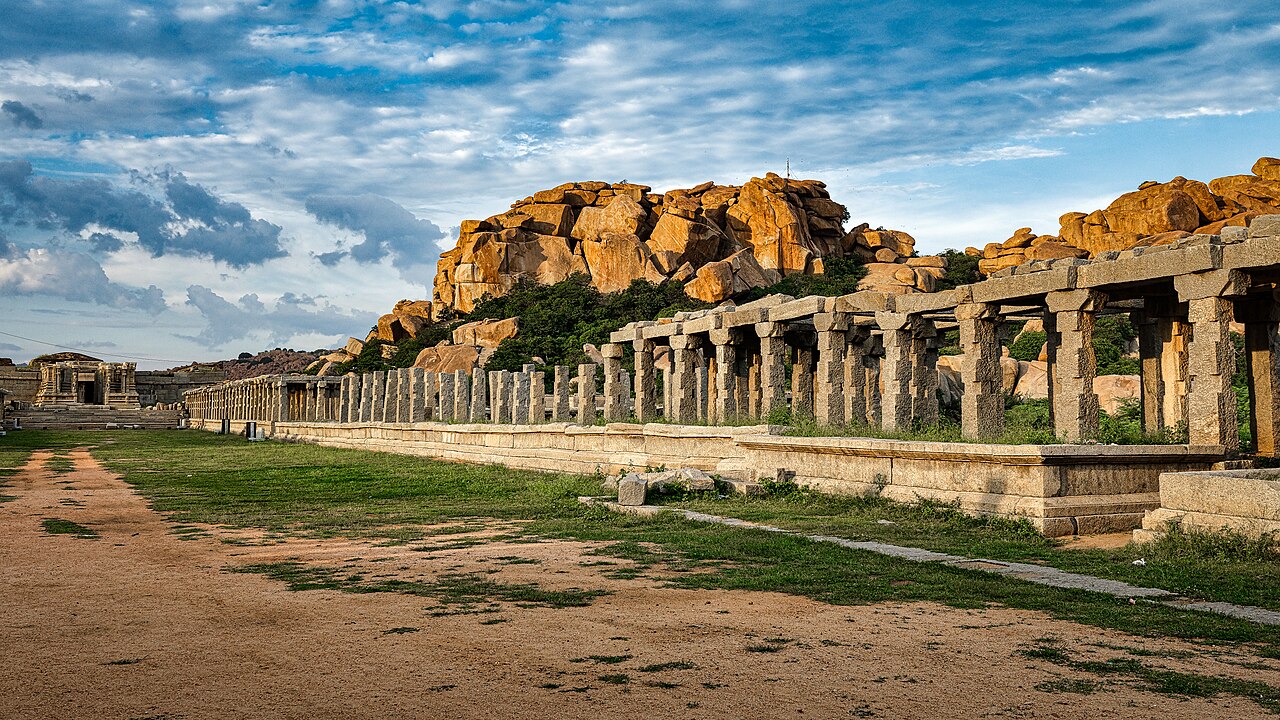
Hampi Bazaar is a straight, roughly kilometre-long stone-paved corridor running east from Virupaksha Temple's towering gopuram to a monolithic Nandi shrine at the foot of Matanga Hill, flanked on both sides by the ruined double-storeyed stone colonnades that once housed one of the wealthiest market streets in the medieval world. Sixteenth-century Portuguese travellers who saw it functioning wrote of gem merchants selling diamonds and pearls by the basketful and horse traders bringing Arabian and Persian stock overland for the Vijayanagara cavalry — accounts that read as exaggeration until you stand in the street and count the number of shopfronts still legible in the broken stone. What you walk through today is a fraction of that commerce: modern guesthouses, thali restaurants, and souvenir stalls now occupy some of the same colonnaded bays, an arrangement that itself has a fraught recent history, since Karnataka authorities demolished a significant number of shops and homes along this street in 2011 in a disputed conservation-driven clearance that displaced residents, some of whose families had lived within the mandapas for generations.
Best time of day: 07:00 – 09:00 or 17:30 – 19:00. For the quietest walk with good directional light on the ruined colonnades, or 17:30 – 19:00 to combine the walk with Virupaksha Temple's evening aarti at the street's western end.
Hampi Bazaar timings
Hampi Bazaar opens at 07:00 and closes at 22:00. It keeps the same hours on Saturday and Sunday.
- Opening hours
- 07:00–22:00
Mon–Sun 07:00–22:00 - Open at all hours as a public thoroughfare; individual shops and cafés generally operate roughly 07:00 – 22:00.
- Closed on
- Open every day
Opening hours compiled from karnatakatourism.org and public records, last updated . They change without notice — confirm before you travel. How we write these guides
Hampi Bazaar ticket price
| Ticket | Price |
|---|---|
| Indian visitors | Free |
| Foreign visitors | Free |
| Children | Free |
| Camera | Free |
No entry fee; it is a public street. Individual shops, guesthouses, and rooftop cafés along the bazaar charge their own prices for food, souvenirs, and rentals. Bicycle rental averages ₹100–150/day and moped rental ₹300–400/day from stalls near the temple end of the street.
Prices compiled from karnatakatourism.org and public records, last updated . They change without notice — confirm before you travel. How we write these guides
Best time to visit Hampi Bazaar
- Quiet
- Moderate
- Busy
07:00 – 09:00
Early MorningBest time to go
Shops are still opening; the street is used mainly by locals and early temple-goers. Best light and quietest photography window on the colonnades.
Quiet09:00 – 12:00
Morning Peak
Day-trippers arriving via Virupaksha Temple fill the western half of the street; bicycle and moped rental stalls see their busiest trade.
Busy12:00 – 16:00
Midday Heat
Foot traffic thins in the open sun; rooftop cafés along the street fill with visitors escaping the heat between monument visits.
Moderate17:30 – 21:00
Evening
The street fills again around Virupaksha Temple's evening aarti; restaurants and cafés reach capacity through dinner hours.
Busy
History of Hampi Bazaar
The bazaar's origins date to the height of Vijayanagara's imperial economy under Krishnadevaraya and his immediate predecessors and successors in the early to mid-16th century, when the empire controlled trade routes reaching from the Arabian Sea ports to the Coromandel coast and functioned as a hub for the diamond trade out of the Golconda mines and the horse trade bringing Arabian and Central Asian bloodstock overland and by sea through Goa. Contemporary chroniclers — the Portuguese travellers Domingo Paes and Fernão Nunes among the most quoted — described a city market of extraordinary wealth, with streets broad enough for elephants and processions and shopfronts selling silk, pearls, and precious stones in quantities that struck European visitors as almost implausible.
The street runs on an axis directly tied to Virupaksha Temple, terminating at its eastern gopuram, and this was not incidental: Vijayanagara's major bazaars were typically laid out as temple approach streets, combining religious procession routes with commercial function, so that the annual car festival (rathotsava) and everyday trade shared the same physical space. A monolithic Nandi shrine at the street's eastern end, near the base of Matanga Hill, marks the opposite terminus of this axis.
After the empire's fall in 1565 and the systematic destruction that followed the Battle of Talikota, the bazaar's original shopfronts fell into ruin along with most of the city, and the street's colonnades survived structurally intact enough that later inhabitants — the modern village of Hampi Bazaar — settled directly within the ancient mandapas over subsequent centuries, using the original stone bays as shop and residential fronts. This continuity became the subject of serious controversy once Hampi's UNESCO status brought conservation authorities into direct conflict with the living village: in 2011, the Karnataka administration, citing court-ordered clearance of what it classified as illegal encroachments, demolished a large number of homes, shops, and hotels along the bazaar with minimal notice, displacing an estimated several hundred residents, some with multi-generational tenure. The episode remains a documented flashpoint in the broader debate over how UNESCO heritage status is enforced against communities living inside a monument zone.
Rules & etiquette at Hampi Bazaar
As a public street, there are no formal rules of entry, but the bazaar functions as the immediate approach to a working Hindu temple, and dress and behaviour standards appropriate to that context are worth observing as you approach the western, temple end. Vehicles including rented mopeds are permitted along the street but ASI and local authorities periodically restrict motorised traffic on the section closest to the temple gopuram during festival periods; follow posted signage or local guidance on the day.
Bargaining is standard practice at the souvenir and craft stalls; prices are not fixed, and an initial asking price 30–50% above what a shop will accept is typical. Photography of the ruined colonnades and shopfronts is unrestricted, though photographing residents or shopkeepers directly without asking is poor practice, as with anywhere people live and work.
Tips for visiting Hampi Bazaar
- 1
Walk the full length of the bazaar at least once in each direction rather than treating it purely as the approach to Virupaksha Temple: the eastern end, near the Nandi shrine and the base of Matanga Hill, is far less commercialised and gives a clearer sense of the original colonnade's scale without modern shopfronts crowding the view. The contrast between the two ends of the same street — one thick with guesthouses and cafés, the other comparatively bare stone — is itself a useful illustration of how unevenly the ruins have been reoccupied since the 2011 clearance.
- 2
Rooftop cafés along the bazaar, several of them built directly into the old colonnade's upper storey, offer some of the best unobstructed views of the Virupaksha gopuram anywhere in Hampi and are a reasonable place to wait out the midday heat between monument visits — but treat any "photography fee" quoted by cafe owners for rooftop access as negotiable rather than fixed.
- 3
This is also the most practical place in Hampi to rent a bicycle or moped for the day, and doing so is close to essential: the site's monuments are spread across several kilometres of shadeless granite terrain, and covering Vittala Temple, the Royal Enclosure, and the Zenana Enclosure on foot in a single day is not realistic for most visitors. Rental stalls cluster at the western end near the temple; agree on the return time and inspect the vehicle's condition before riding off, since disputes over pre-existing damage are a common source of friction at day's end.
How to reach Hampi Bazaar
The red star is Hampi Bazaar; the numbered pins are the 9 nearest places in our guides, each showing its rank in its city. Tap a pin for details.
Hampi Bazaar Road, running east from Virupaksha Temple's east gopuram toward the base of Matanga Hill, Hampi, Vijayanagara District, Karnataka 583239Directions in Google Maps
From Virupaksha Temple east gopuram
0 km · 0 min
Free (starting point)
From Hospet Junction (Vijayanagara Station)
₹150–20013 km · 25–30 min
Private auto) or ₹30–40 per seat (shared auto
From Virupapura Gadde (river's north bank)
₹50–1000.3 km · 5–10 min
Per person, informally priced by boatmen
Nearest airport
From Vidyanagar Airport (Toranagallu/Bellary)
approximately 65 km, limited scheduled services. Hubli Airport – approximately 165 km, with better connectivity to Bengaluru and Mumbai.
Nearest railway station
From Hospet Junction (Vijayanagara Station)
approximately 13 km, 25–30 minutes by auto-rickshaw.
Hampi Bazaar FAQs
Is there an entry fee to walk through Hampi Bazaar?
No. It is a public street with no ticket gate. Individual businesses along it — restaurants, guesthouses, rental stalls, souvenir shops — set their own prices.
What happened to the shops and homes in Hampi Bazaar in 2011?
In July 2011, Karnataka authorities demolished a large number of shops, homes, and small hotels along the bazaar, citing a conservation-driven clearance of structures classified as illegal encroachments on the protected monument zone. The action displaced an estimated several hundred residents, some with multi-generational tenure, and remains a documented point of controversy in how Hampi's UNESCO status has been enforced.
Where does Hampi Bazaar street start and end?
It runs roughly a kilometre from Virupaksha Temple's east gopuram to a monolithic Nandi shrine near the base of Matanga Hill, following the same axis used historically for both temple processions and market trade.
Is it a good idea to rent a bicycle or moped in Hampi Bazaar?
Yes, and for most itineraries close to necessary. Hampi's monuments are spread across several kilometres of shadeless terrain, and Hampi Bazaar's western end is where most rental stalls cluster, charging roughly ₹100–150/day for a bicycle or ₹300–400/day for a moped.
Compiled with AI assistance from official sources and public records, and published only after the checks in How we write these guides. Nobody from Traveliac has visited this place. Last updated . How we rank and check places
Places to visit near Hampi Bazaar
Straight-line distances from our map; times are estimates.
 #6 in HampiFree entry
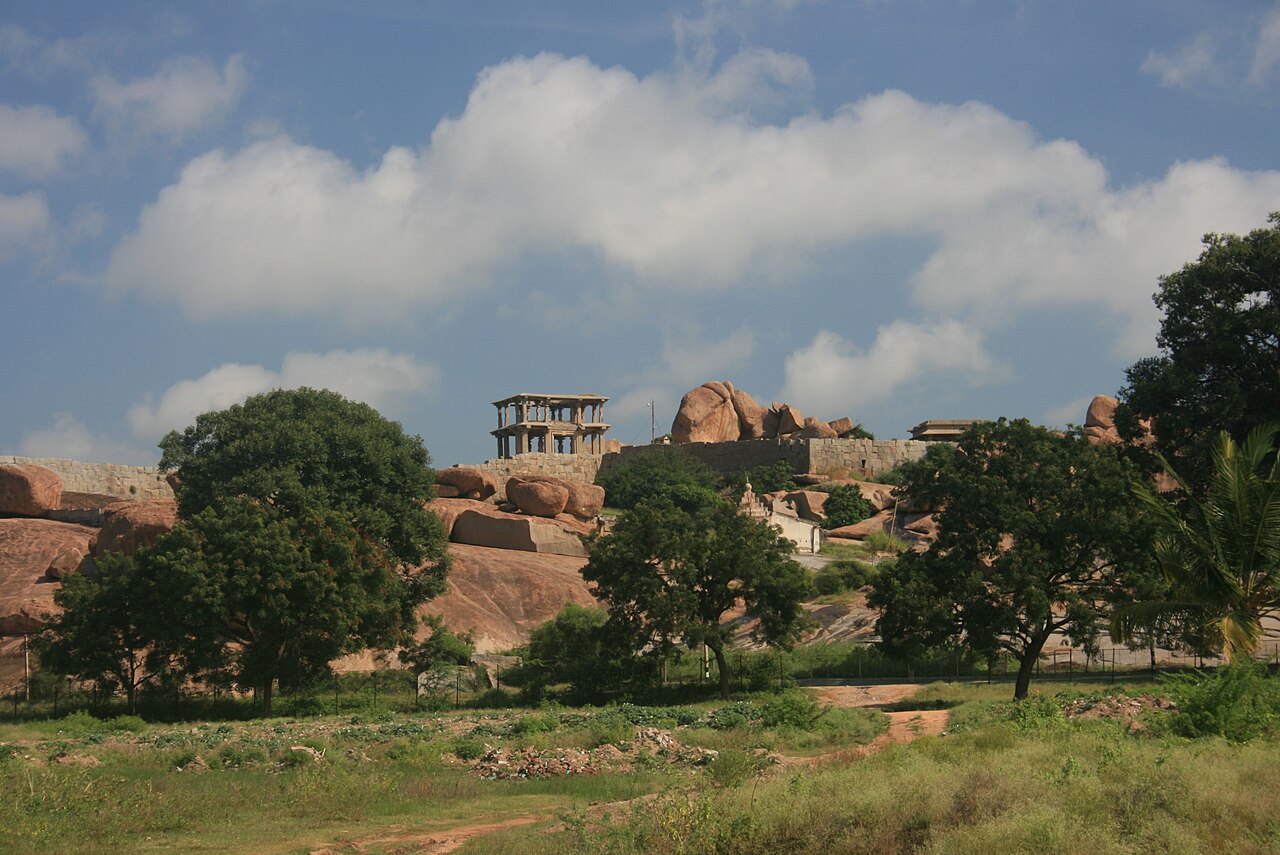
Hemakuta Hill
Viewpoint · 250 m · about 4 min walk
 #2 in HampiFree entry
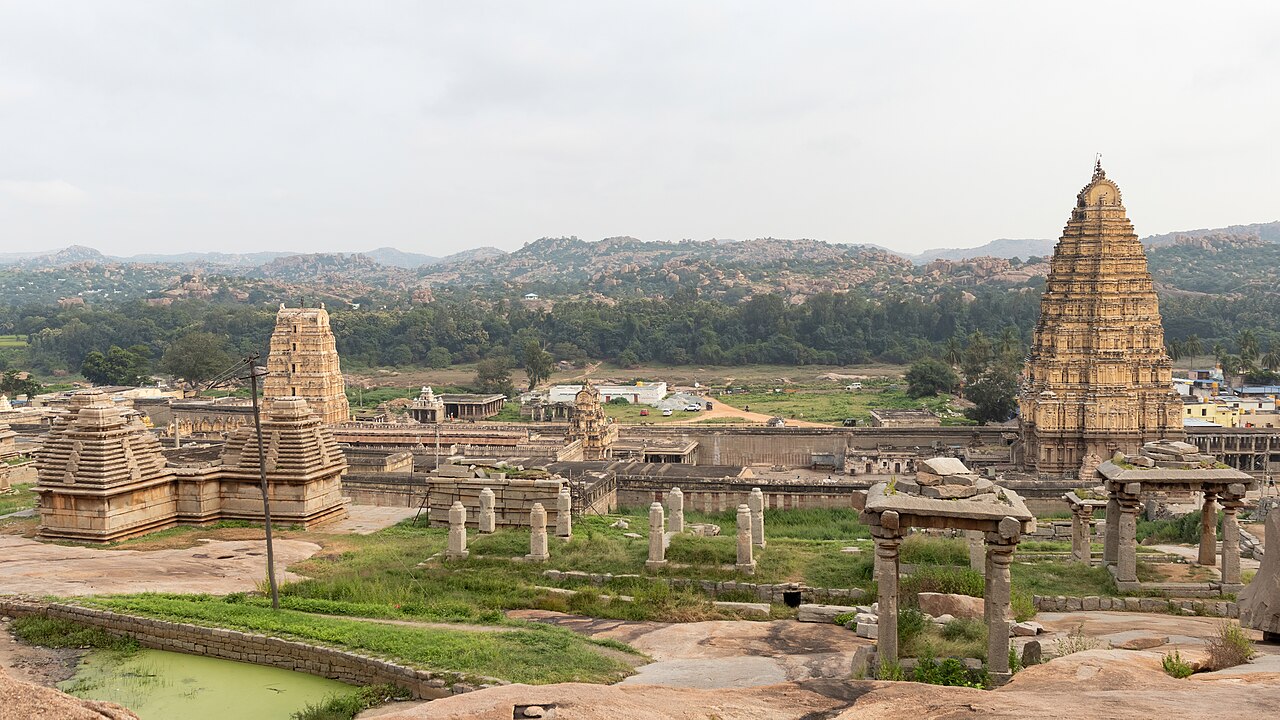
Virupaksha Temple
Temple · 350 m · about 6 min walk
 #8 in HampiFree entry
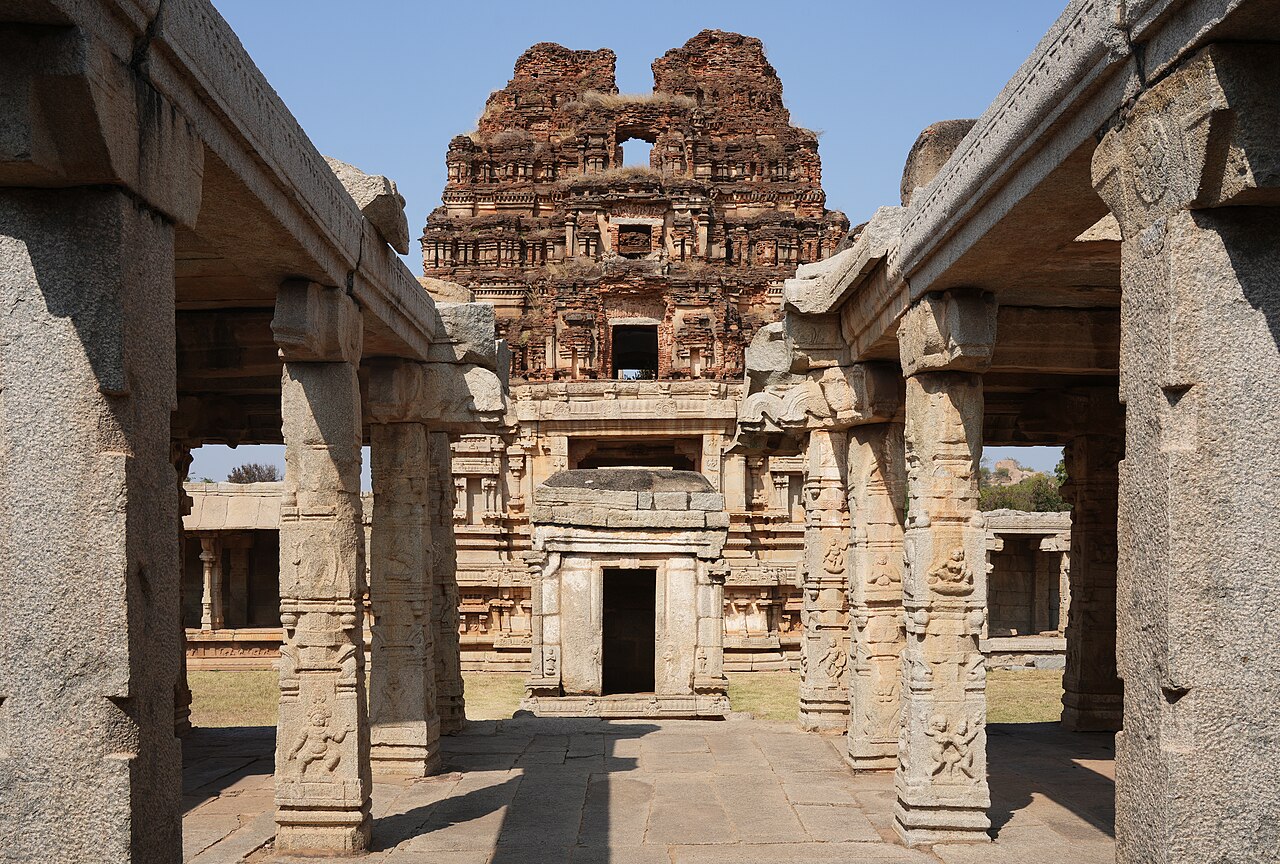
Achyutaraya Temple
Temple · 950 m · about 15 min walk
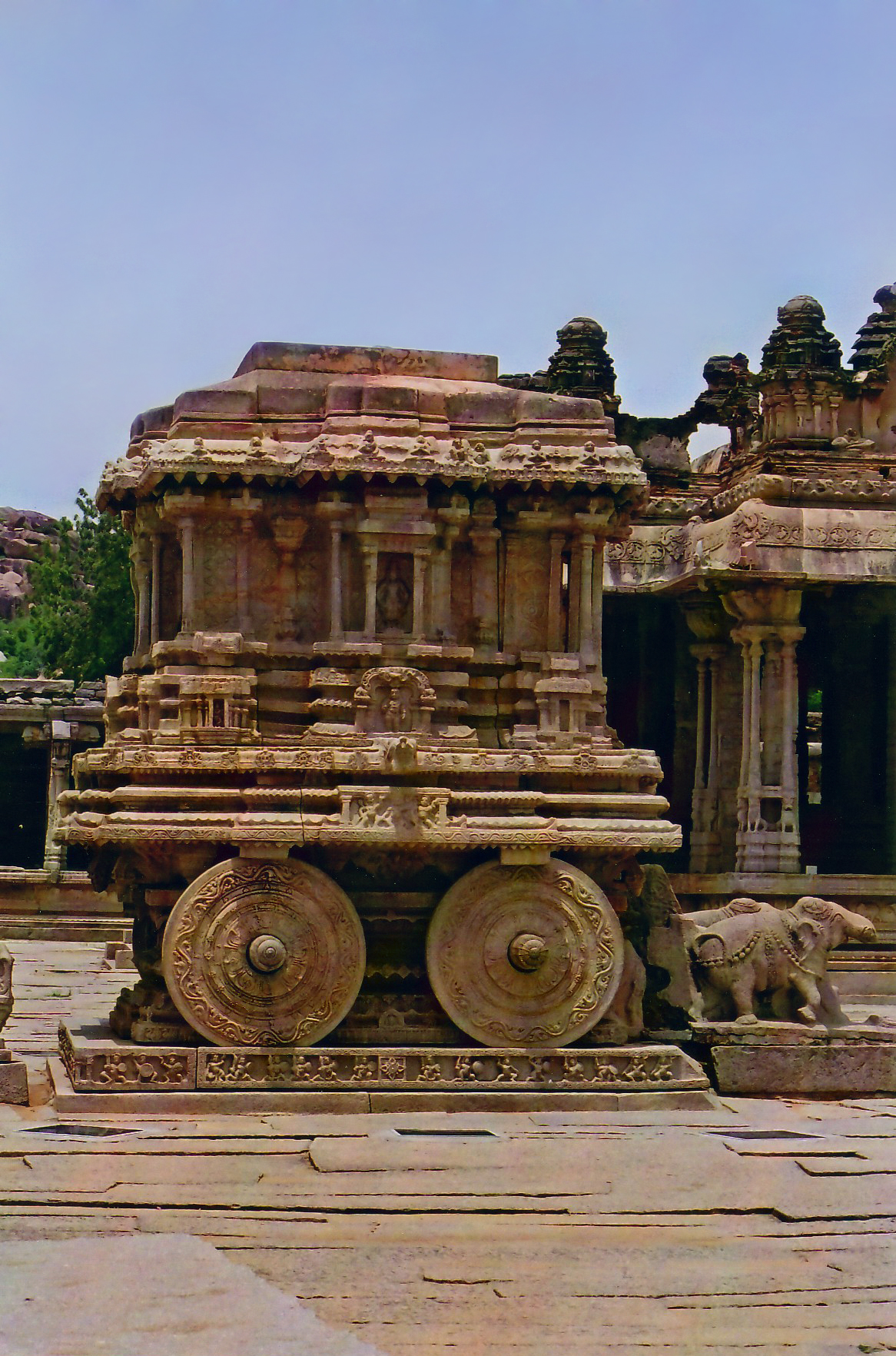 #1 in Hampi
Vittala Temple
Temple · 1.6 km · about 27 min walk