
Lotus Mahal
#4of 10 places to visit in HampiHampi, Karnataka
Also known as Kamal Mahal · Chitrangini Mahal
Quick answer
Opening hours: 08:30–17:30, last entry 17:00. Entry: ₹40 Indian · ₹600 foreign. Allow 30 min. Best time: 16:00 – 17:00.
Updated · Compiled by Traveliac, AI-assisted · 5 min read
- Opening hours
- 08:30–17:30
- Entry fee
- ₹40 Indian
- Ticket from
- Time needed
- 30 min
- Best time of day
- 16:00 – 17:00
- Best months
- Oct – Feb
- Address
- Zenana Enclosure, Royal Enclosure area, Hampi, Vijayanagara District, Karnataka 583239 (approximately 4 km south of Hampi Bazaar, near Kamalapura)
About Lotus Mahal
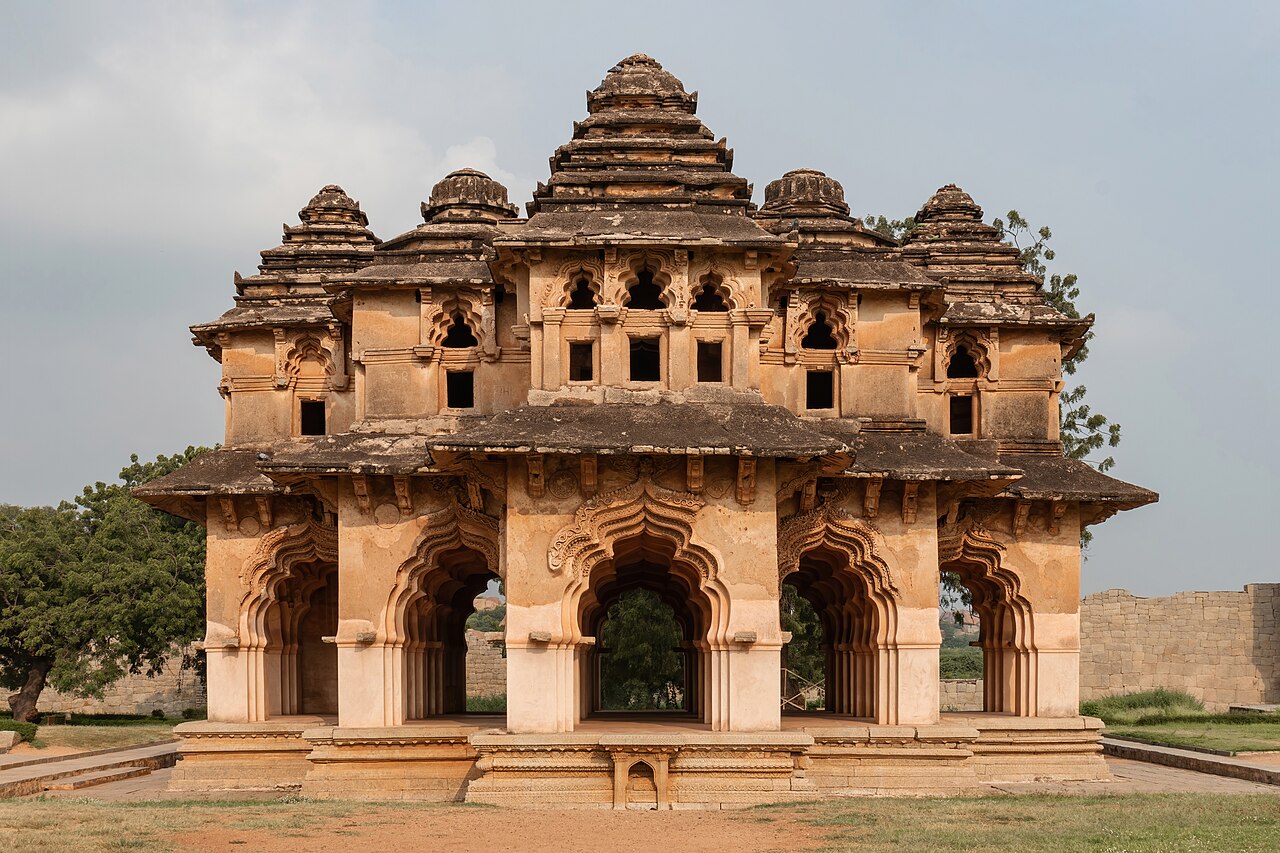
Lotus Mahal is the one building in Hampi that visibly refuses to be granite. Almost everything else across the site's forty square kilometres is cut from the local boulder stone, but this two-storeyed pavilion inside the fortified Zenana Enclosure is built of brick and lime mortar, finished in stucco — a lighter, more workable material that let its builders carve a symmetrical façade of lobed, multi-cusped arches unlike anything else in the Vijayanagara repertoire. The arch shape, repeated across twenty-four openings on the ground floor alone, borrows directly from Indo-Islamic Deccan Sultanate architecture even as the building sits inside the harem quarter of a Hindu empire that spent much of its history at war with those same sultanates — a detail that tells you more about Vijayanagara's court culture than any battle account does. The name comes from the domed roofline, which from certain angles resembles an unopened lotus bud sitting atop the pyramidal tiers below, and from the recessed niches that echo lotus petals across the upper storey.
Best time of day: 16:00 – 17:00. When low afternoon light rakes across the lobed stucco arches and the building's pale surface takes on a warm gold tone distinct from the grey granite of most other Hampi monuments.
Lotus Mahal timings
Lotus Mahal opens at 08:30 and closes at 17:30. Those hours hold on Saturday and Sunday too.
- Opening hours
- 08:30–17:30
Mon–Sun 08:30–17:30 - Closed on
- Open every day
Opening hours compiled from karnatakatourism.org and public records, last updated . They change without notice — confirm before you travel. How we write these guides
Lotus Mahal ticket price
| Ticket | Price |
|---|---|
| Indian visitors | ₹40 |
| Foreign visitors | ₹600 |
| Children | Free |
| Camera | Free |
Covered by the same composite ASI ticket as the Vittala Temple (₹40 Indian/SAARC/BIMSTEC, ₹600 other foreign nationals, valid same day for both the Zenana Enclosure group — Lotus Mahal, Elephant Stables, watch towers — and Vittala Temple). Tickets are sold at the Zenana Enclosure gate as well as at Vittala; either counter's ticket is valid at both sites the same day. Photography of the exterior arches is unrestricted; interior access is limited to the ground floor viewing area.
Prices compiled from karnatakatourism.org and public records, last updated . They change without notice — confirm before you travel. How we write these guides
Best time to visit Lotus Mahal
- Quiet
- Moderate
- Busy
08:30 – 10:30
Morning OpeningBest time to go
Early arrivals from Hampi Bazaar and Kamalapura; the compound lawn and arches are quiet, good for unobstructed photography.
Quiet10:30 – 13:30
Midday Tour Groups
Coach tours combining the Royal Enclosure and Zenana Enclosure in one stop arrive; the ground-floor viewing area gets congested for 10–15 minutes at a time as groups cycle through.
Busy13:30 – 16:00
Afternoon Lull
Heat discourages some visitors; the shaded lawn areas around the pavilion remain a reasonable rest stop.
Moderate16:00 – 17:30
Late Afternoon Light
Photographers arrive specifically for the warm light on the stucco arches. Last entry 17:00; the compound closes fully at 17:30.
Moderate
History of Lotus Mahal
Lotus Mahal stood inside the Zenana Enclosure, the fortified and closely guarded compound reserved for the women of the Vijayanagara royal household, and its precise original function is documented only through architectural inference rather than surviving court records — most historians describe it as a recreational or council pavilion for the queens and their attendants rather than a residence in the ordinary sense, since it has no bedchambers or private quarters in its plan. Its construction is generally placed in the early to mid-16th century, contemporary with the height of Krishnadevaraya's reign and the broader building programme that also produced the Vittala Temple and the Hazara Rama Temple, though unlike those two structures Lotus Mahal carries no dedicatory inscription that fixes an exact date or patron.
The building's hybrid style — Hindu pyramidal tiered towers combined with Islamic cusped arches and stucco vaulting — reflects a broader pattern across Vijayanagara secular architecture, in which the empire's rulers, despite their religious and military rivalry with the Deccan Sultanates, freely adopted Sultanate craftsmanship and decorative vocabulary for palace buildings while reserving a more conservative Dravidian idiom for temple construction. Diplomatic and mercenary exchange with Bijapur, Golconda, and other neighbouring courts brought Persian and Central Asian craftsmen into Vijayanagara's employ, and Lotus Mahal is frequently cited as the clearest surviving example of that cross-pollination.
The building's structural material — brick and lime rather than dressed granite — has made it more vulnerable to erosion and past neglect than the stone monuments around it, and its current stabilised condition reflects a sustained ASI conservation effort through the 20th century. It was included, along with the rest of the Zenana Enclosure and Royal Enclosure complex, in Hampi's 1986 UNESCO World Heritage inscription.
Rules & etiquette at Lotus Mahal
Entry to the Zenana Enclosure compound is through a single gated checkpoint where your Vittala/Zenana composite ticket is checked; there is no separate ticket sold at this gate alone if you have not already purchased one. Visitors are permitted into the ground floor interior but staircases to the upper storey are closed to general public access to limit structural load and wear on the brick fabric — expect to view the upper floor from below rather than to climb it.
Do not lean on or climb the lobed arch openings for photographs; the stucco surface is more fragile than the granite you will have grown used to elsewhere in Hampi, and ASI signage around the building reflects specific concern about surface abrasion from visitor contact. The surrounding lawn is maintained and generally open for sitting, making the enclosure one of the more comfortable rest stops in the wider Royal Enclosure circuit.
Tips for visiting Lotus Mahal
- 1
Visit Lotus Mahal as part of a single loop with the Elephant Stables and the Zenana Enclosure's watchtowers — all three sit within the same walled compound and the combined visit takes under an hour on foot. Because the compound is roughly 4 kilometres from Hampi Bazaar and a similar distance from the Vittala Temple, doing this leg on a rented bicycle or moped rather than on foot is close to essential if you are also covering Vittala and the Royal Enclosure in the same day.
- 2
The building's cooling system is a genuinely interesting detail that most visitors miss entirely: terracotta pipes embedded in the walls once connected to a rooftop water tank, allowing water to circulate through the structure and lower the interior temperature — an early passive-cooling technique roughly analogous to the evaporative systems used in Rajasthani palaces of the same era. Ask a guide to point out the pipe outlets near the base of the walls if you want to see the physical evidence rather than take the claim on faith.
- 3
Late afternoon light is markedly better here than midday: the stucco surface, which reads as a flat off-white under overhead sun, picks up warm tones from roughly 16:00 onward that make the arch-work far more photogenic and considerably easier to distinguish from the granite monuments nearby in photographs.
How to reach Lotus Mahal
The red star is Lotus Mahal; the numbered pins are the 9 nearest places in our guides, each showing its rank in its city. Tap a pin for details.
Zenana Enclosure, Royal Enclosure area, Hampi, Vijayanagara District, Karnataka 583239 (approximately 4 km south of Hampi Bazaar, near Kamalapura)Directions in Google Maps
From Hampi Bazaar (Virupaksha Temple)
4 km · 20–30 min
Free walking not practical at this distance; ₹100–150/day bicycle or ₹300–400/day moped rental
From Hospet Junction (Vijayanagara Station)
₹200–30012 km · 20–25 min
Private auto, negotiated
From Royal Enclosure / Mahanavami Dibba
1 km · 12–15 min
Free
Nearest airport
From Vidyanagar Airport (Toranagallu/Bellary)
approximately 65 km, limited scheduled services. Hubli Airport – approximately 165 km, with better connectivity to Bengaluru and Mumbai.
Nearest railway station
From Hospet Junction (Vijayanagara Station)
approximately 12 km via Kamalapura, roughly 25 minutes by auto-rickshaw.
Lotus Mahal FAQs
Why is Lotus Mahal built differently from the other stone monuments in Hampi?
Lotus Mahal is constructed from brick and lime mortar finished in stucco rather than the dressed granite used almost everywhere else in Hampi. This lighter material allowed its builders to carve the lobed, multi-cusped arches that define the building's Indo-Islamic style — a technique impractical in the harder local granite.
Can visitors go up to the second floor of Lotus Mahal?
No. Public access is restricted to the ground floor viewing area. The staircases to the upper storey are closed to protect the brick structure from additional load and wear.
Is the Lotus Mahal ticket the same as the Vittala Temple ticket?
Yes. Both sites are covered by the same composite ASI ticket (₹40 Indian/SAARC/BIMSTEC, ₹600 other foreign nationals), valid the same day at both the Zenana Enclosure gate (Lotus Mahal, Elephant Stables) and the Vittala Temple gate.
How far is Lotus Mahal from Hampi Bazaar and how should I get there?
It is approximately 4 kilometres south of Hampi Bazaar, near Kamalapura. A rented bicycle or moped is the practical option, since the distance combined with the neighbouring Royal Enclosure and Vittala Temple makes covering everything on foot in one day unrealistic.
Compiled with AI assistance from official sources and public records, and published only after the checks in How we write these guides. Nobody from Traveliac has visited this place. Last updated . How we rank and check places
Places to visit near Lotus Mahal
Straight-line distances from our map; times are estimates.
 #5 in Hampi
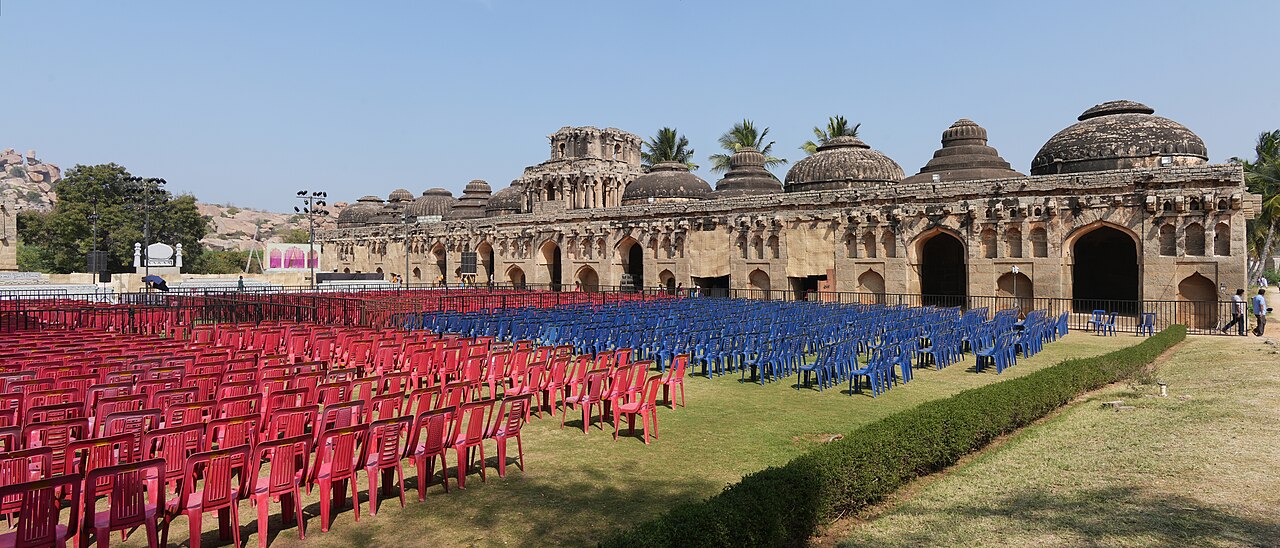
Elephant Stables
Heritage · 200 m · about 3 min walk
 #3 in HampiFree entry
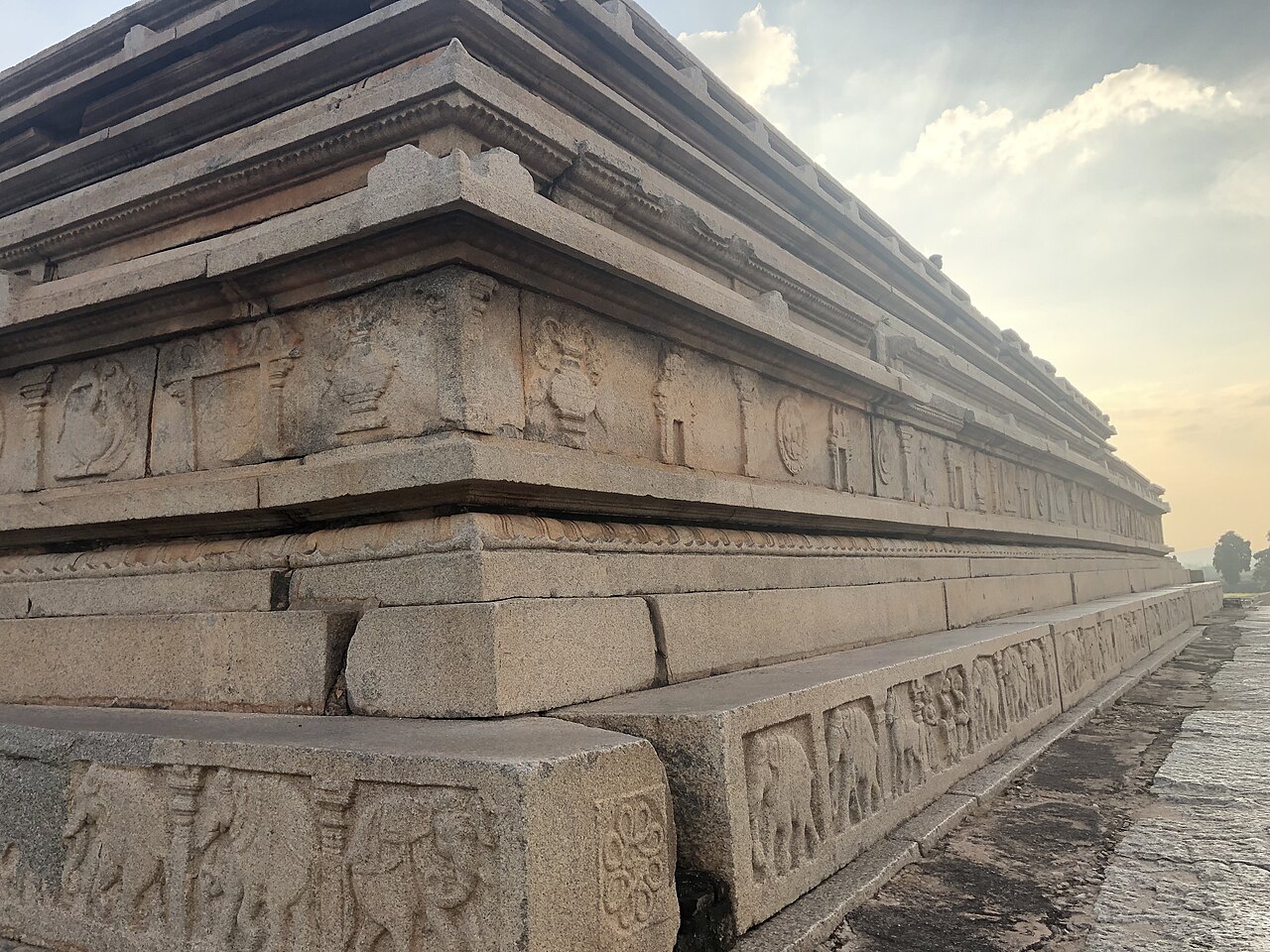
Royal Enclosure & Mahanavami Dibba
Heritage · 450 m · about 7 min walk
 #7 in HampiFree entry
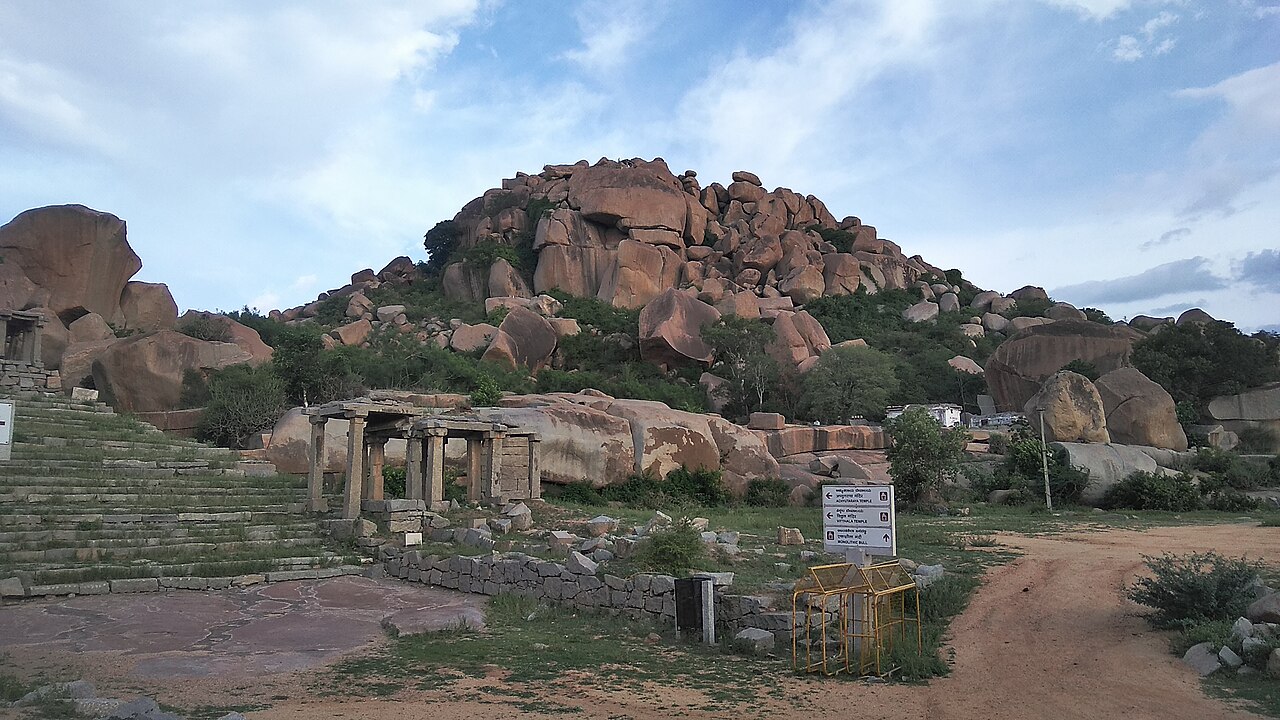
Matanga Hill
Viewpoint · 650 m · about 10 min walk
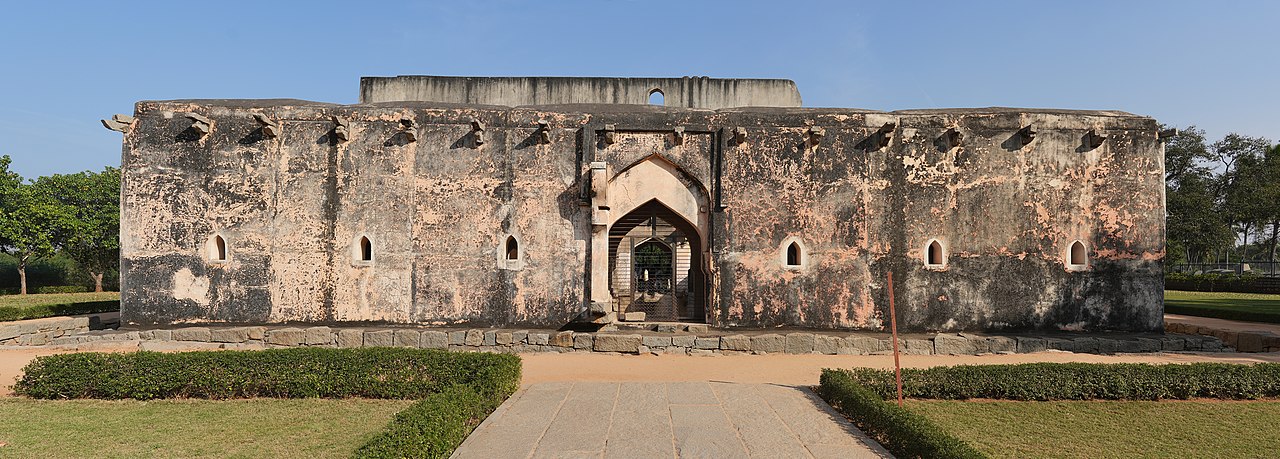 #9 in HampiFree entry
Queen's Bath
Heritage · 750 m · about 12 min walk