
Vittala Temple
#1of 10 places to visit in HampiHampi, Karnataka
Also known as Vijaya Vittala Temple · Vitthala Temple Complex
Quick answer
Opening hours: 08:30–17:30, last entry 17:00. Entry: ₹40 Indian · ₹600 foreign. Allow 2 hrs. Best time: 08:30 – 10:00.
Updated · Compiled by Traveliac, AI-assisted · 7 min read
- Opening hours
- 08:30–17:30
- Entry fee
- ₹40 Indian
- Ticket from
- Time needed
- 2 hrs
- Best time of day
- 08:30 – 10:00
- Best months
- Oct – Feb
- Address
- Vittala Temple Road, Hampi, Vijayanagara District, Karnataka 583239
About Vittala Temple
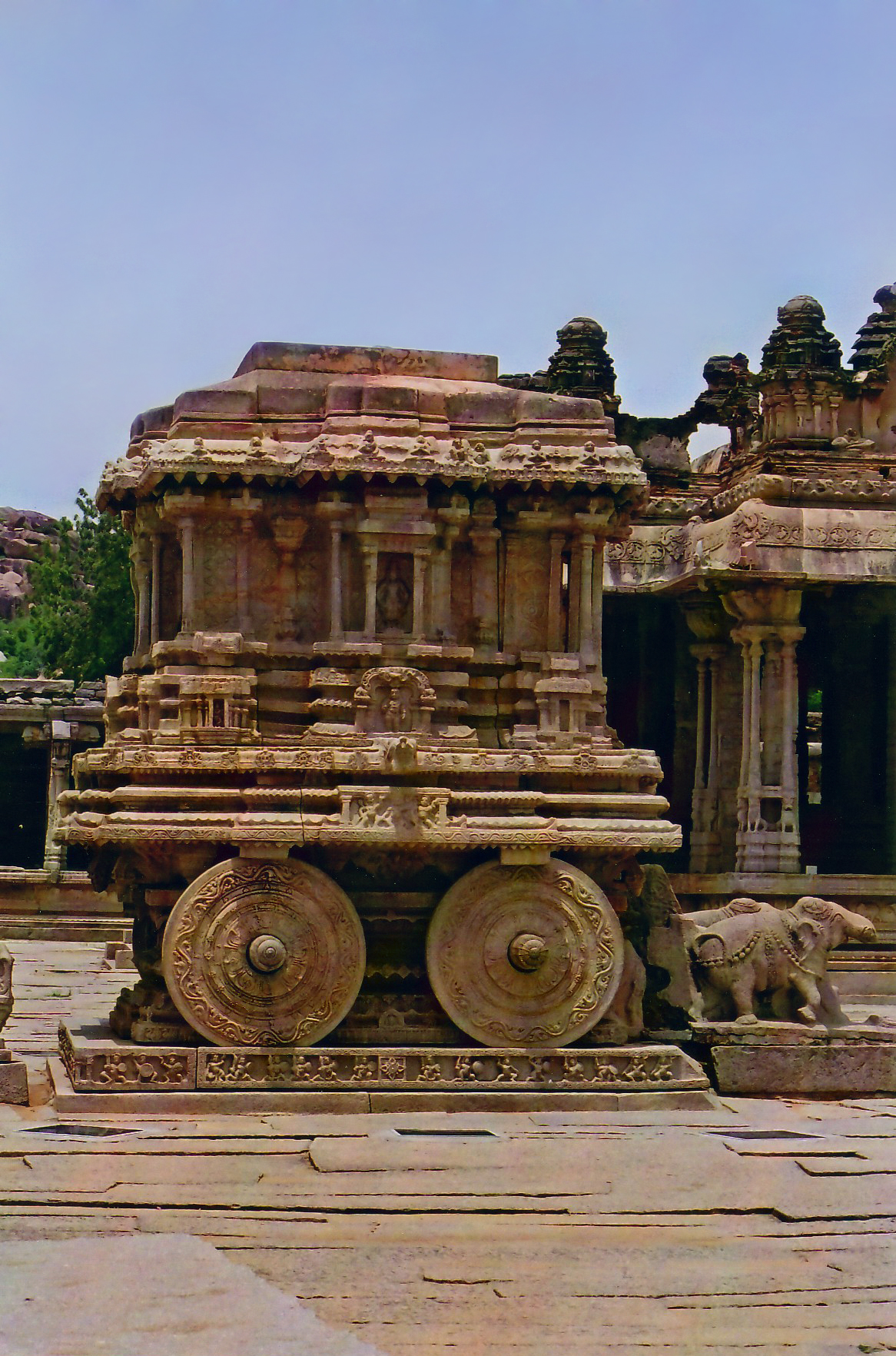
The stone chariot in the Vittala Temple's outer courtyard is precise enough that it appears on the reverse of the Indian ₹50 note, and precise enough that most visitors assume it is the temple's only reason to come. It is not. The chariot — a shrine to Garuda carved to resemble a wheeled temple car, its stone wheels once capable of turning on their axles before conservators fixed them in place to stop further wear — sits in front of the Ranga Mantapa, a pillared hall whose 56 outer columns are cut thin enough to ring like struck metal when tapped, each pillar tuned to a different note across a range said to approximate 81 traditional instruments. Colonial-era engineers, trying to locate the hollow chambers producing the sound, cut into at least two of the pillars; the scars are still visible, and the damage is the reason the ASI now keeps visitors at a rope's distance and prohibits tapping the stone at all. Reaching the complex is itself a small expedition: private vehicles are barred within a kilometre of the temple to limit vibration and pollution damage to the carving, so the walk in from the parking lot — past the Gejjala Mantapa and the ruined Vittala Bazaar street — is now part of the visit whether you plan for it or not.
Best time of day: 08:30 – 10:00. Immediately after opening, when the Ranga Mantapa's musical pillars and the stone chariot are lit by low, raking east light and tour groups from Hospet have not yet arrived.
Vittala Temple timings
Vittala Temple opens at 08:30 and closes at 17:30. The weekend is no different: Saturday and Sunday follow the same times.
- Opening hours
- 08:30–17:30
Mon–Sun 08:30–17:30 - Closed on
- Open every day
Good to know: No seasonal closures, but the unshaded 1-kilometre approach walk from the parking lot becomes punishing after 11:00 from March through May.
Opening hours compiled from incredibleindia.gov.in and public records, last updated . They change without notice — confirm before you travel. How we write these guides
Vittala Temple ticket price
| Ticket | Price |
|---|---|
| Indian visitors | ₹40 |
| Foreign visitors | ₹600 |
| Children | Free |
| Camera | Free |
A single ASI-issued composite ticket (₹40 Indian/SAARC/BIMSTEC, ₹600 other foreign nationals, children under 15 free) covers same-day entry to both the Vittala Temple and the Zenana Enclosure group (Lotus Mahal, Elephant Stables, watch towers). Keep the ticket — it is checked again at the Zenana Enclosure gate. Tickets are sold at the Talarigatta Gate counter near the parking lot, not at the temple itself. Photography is free throughout the open courtyards; tripods require no separate permit for personal use.
Prices compiled from incredibleindia.gov.in and public records, last updated . They change without notice — confirm before you travel. How we write these guides
Best time to visit Vittala Temple
- Quiet
- Moderate
- Very busy
08:30 – 10:00
Morning OpeningBest time to go
First buggy loads from the parking lot arrive; the Ranga Mantapa and stone chariot courtyard are photographable without crowds in frame. Best light of the day on the east-facing chariot shrine.
Quiet10:00 – 13:00
Tour Group Peak
Coach groups from Hospet and Bengaluru converge; the Ranga Mantapa's musical pillar demonstration area becomes congested and guides talk over each other. Queues form at the stone chariot for photographs.
Very busy13:00 – 15:30
Midday Heat
Granite courtyard surface temperatures peak; many visitors retreat toward the parking lot's shaded stalls. A workable window for unhurried viewing if you can tolerate the heat.
Moderate15:30 – 17:00
Late Afternoon
A second, smaller wave of visitors arrives for softer light on the chariot's west-facing side. Last entry is 17:00; buggy service to the parking lot continues until closing.
Moderate
History of Vittala Temple
The Vittala Temple is dedicated to Vittala, a form of Vishnu worshipped in the Pandharpur tradition of Maharashtra, and its presence at Hampi signals how far Vijayanagara's devotional network extended beyond the Tungabhadra basin. Construction is generally dated to the reign of Krishnadevaraya (1509–1529), the empire's most celebrated emperor, with subsequent additions credited to his successors through the 1550s — making it, alongside the Hazara Rama Temple, one of the last major building campaigns completed before the empire's fall. Unlike Virupaksha, Vittala was never consecrated for active worship in the conventional sense and there is no evidence the main sanctum was ever fully finished; some architectural historians read the complex as a showpiece commissioned explicitly to demonstrate the empire's wealth and craftsmanship to visiting dignitaries and trading partners, rather than as a functioning devotional centre.
The Ranga Mantapa's musical pillars are built on a well-documented acoustic principle: each column is carved as a cluster of thinner colonnettes bundled around a solid core, and the differing lengths and cross-sections of the colonnettes produce different resonant frequencies when struck, in the manner of a stone lithophone. Portuguese and Persian visitors to Vijayanagara-era Hampi wrote of the city's dancers, musicians, and courtly performances in some detail, and the Ranga Mantapa ("hall of colours" or "performance hall") is presumed to have hosted temple dance and music recitals judged by the standards of a wealthy royal patron. The stone chariot, meanwhile, is a permanent architectural translation of the wooden temple chariots (rathas) still hauled through South Indian temple towns during festival processions — a monument built to freeze a moving ritual object in stone.
The Battle of Talikota in January 1565 ended construction abruptly. The Deccan Sultanate armies who sacked Vijayanagara over the following months targeted temple complexes systematically, and Vittala's exposed, freestanding position at the edge of the sacred centre left it particularly vulnerable; large sections of the outer gopurams and subsidiary shrines were destroyed and never rebuilt. Hampi was inscribed as a UNESCO World Heritage Site in 1986, and the Vittala complex, more than any single monument in the group, has become the visual shorthand for the entire designation.
Rules & etiquette at Vittala Temple
Vehicles — including bicycles and mopeds rented in Hampi Bazaar — must be parked at the Talarigatta lot roughly 1 kilometre from the temple entrance; ASI staff enforce this at a barrier checkpoint. From the lot you can walk the distance in 15–20 minutes along a paved but shadeless road, passing the ruined Vittala Bazaar colonnades and the Gejjala Mantapa, or take the shared electric buggy that runs continuously for approximately ₹10–20 per person each way. Ticket checks happen at both the outer gate and again inside the Zenana Enclosure if you visit both on the same ticket, so do not discard your stub.
The musical pillars are barricaded with a low rope and clearly signed; do not reach over to tap them regardless of what a tour guide or fellow visitor suggests — ASI staff patrol the Ranga Mantapa specifically to enforce this, and previous damage from unregulated tapping (including deliberate cutting by colonial officials searching for hidden cavities) is the entire reason for the restriction. The stone chariot's wheels are similarly fixed and should not be pushed or climbed on for photographs. Footwear is not required to be removed anywhere in the complex since it functions as a monument rather than an active shrine, but the granite courtyard surface is exposed and can reach uncomfortable temperatures by late morning.
Licensed guides cluster near the Talarigatta ticket counter and charge roughly ₹500–800 for an hour covering both Vittala and the walk back through the bazaar ruins; agree on the route and price before starting, since guides sometimes assume you also want the Royal Enclosure included at an inflated combined rate.
Tips for visiting Vittala Temple
- 1
Walk in via the old market street at least once rather than taking the buggy both ways: the 2.5-kilometre route from Hampi Bazaar to Vittala passes the monolithic Sasivekalu and Kadalekalu Ganesha statues, the ruined Vittala Bazaar's double-storeyed stone colonnades, and several small unlabelled shrines that most guidebooks skip entirely because they're not fenced or ticketed. Renting a bicycle (₹100–150/day) or a moped (₹300–400/day) from Hampi Bazaar is close to essential for a full day covering Vittala, the Royal Enclosure, and the Zenana Enclosure together — the total distance between these three clusters exceeds 6 kilometres of shadeless granite terrain, and walking all of it in a single day in Deccan heat is not realistic for most visitors.
- 2
Go early. The temple opens at 08:30 and the first hour delivers both the best light for the stone chariot's east-facing courtyard and a genuine chance to hear a guide's tuning-fork demonstration of the pillar acoustics on a nearby unrestricted sample pillar without a crowd talking over it (ASI staff or licensed guides occasionally demonstrate the principle on a designated non-heritage replica pillar rather than the protected originals — ask rather than assume).
- 3
Carry more water than feels necessary. There is no shade between the Talarigatta parking lot and the temple entrance, and the return walk in early afternoon sun is where most heat-related discomfort during a Hampi day trip actually happens. The nearest reliable food and cold-drink stalls are back at the parking lot, not at the temple itself.
How to reach Vittala Temple
The red star is Vittala Temple; the numbered pins are the 9 nearest places in our guides, each showing its rank in its city. Tap a pin for details.
Vittala Temple Road, Hampi, Vijayanagara District, Karnataka 583239Directions in Google Maps
From Hampi Bazaar (Virupaksha Temple)
2.5 km · 35–45 min
Free on foot; ₹100–150/day bicycle rental or ₹300–400/day moped rental in Hampi Bazaar
From Hospet Junction (Vijayanagara Station)
₹250–35016 km · 30–35 min
Private auto, negotiated
From Talarigatta parking lot
₹10–201 km · 5 min
Per person one-way (round-trip options available
Nearest airport
From Vidyanagar Airport (Toranagallu/Bellary)
approximately 65 km, limited scheduled services. Hubli Airport – approximately 165 km, with better connectivity to Bengaluru and Mumbai.
Nearest railway station
From Hospet Junction (Vijayanagara Station)
approximately 16 km, 30–35 minutes by auto-rickshaw to the Talarigatta parking lot, plus the onward walk or battery-cart ride to the temple.
Vittala Temple FAQs
Can I still touch or tap the musical pillars at Vittala Temple?
No. The Archaeological Survey of India prohibits touching the 56 musical pillars in the Ranga Mantapa after years of tapping — including deliberate cutting by colonial-era officials searching for hidden cavities — damaged several columns. Visitors view them from behind a barrier rope; ask a licensed guide about acoustic demonstrations on designated non-protected replicas instead.
Why can't I drive or take an auto right up to the Vittala Temple entrance?
Private vehicles, bicycles, and mopeds are barred within roughly a kilometre of the temple to reduce vibration and pollution damage to the fragile carved stone. Park at the Talarigatta lot and either walk 15–20 minutes along the paved approach road or take the electric buggy shuttle (₹10–20 per person).
Does the Vittala Temple ticket also cover other Hampi monuments?
Yes. The ₹40 Indian / ₹600 foreign composite ticket is valid the same day for both the Vittala Temple and the Zenana Enclosure group (Lotus Mahal, Elephant Stables, and the watch towers). Keep your ticket stub, as it is checked again at the Zenana Enclosure gate. The Royal Enclosure and Mahanavami Dibba are separate, free-entry sites not covered by this ticket.
Is the stone chariot at Vittala Temple the same one shown on the ₹50 note?
Yes. The Garuda shrine, carved in the form of a wheeled temple chariot, is the design reproduced on the reverse of the Indian ₹50 currency note, making it one of the most widely reproduced images of any Indian monument.
Compiled with AI assistance from official sources and public records, and published only after the checks in How we write these guides. Nobody from Traveliac has visited this place. Last updated . How we rank and check places
Places to visit near Vittala Temple
Straight-line distances from our map; times are estimates.
 #8 in HampiFree entry
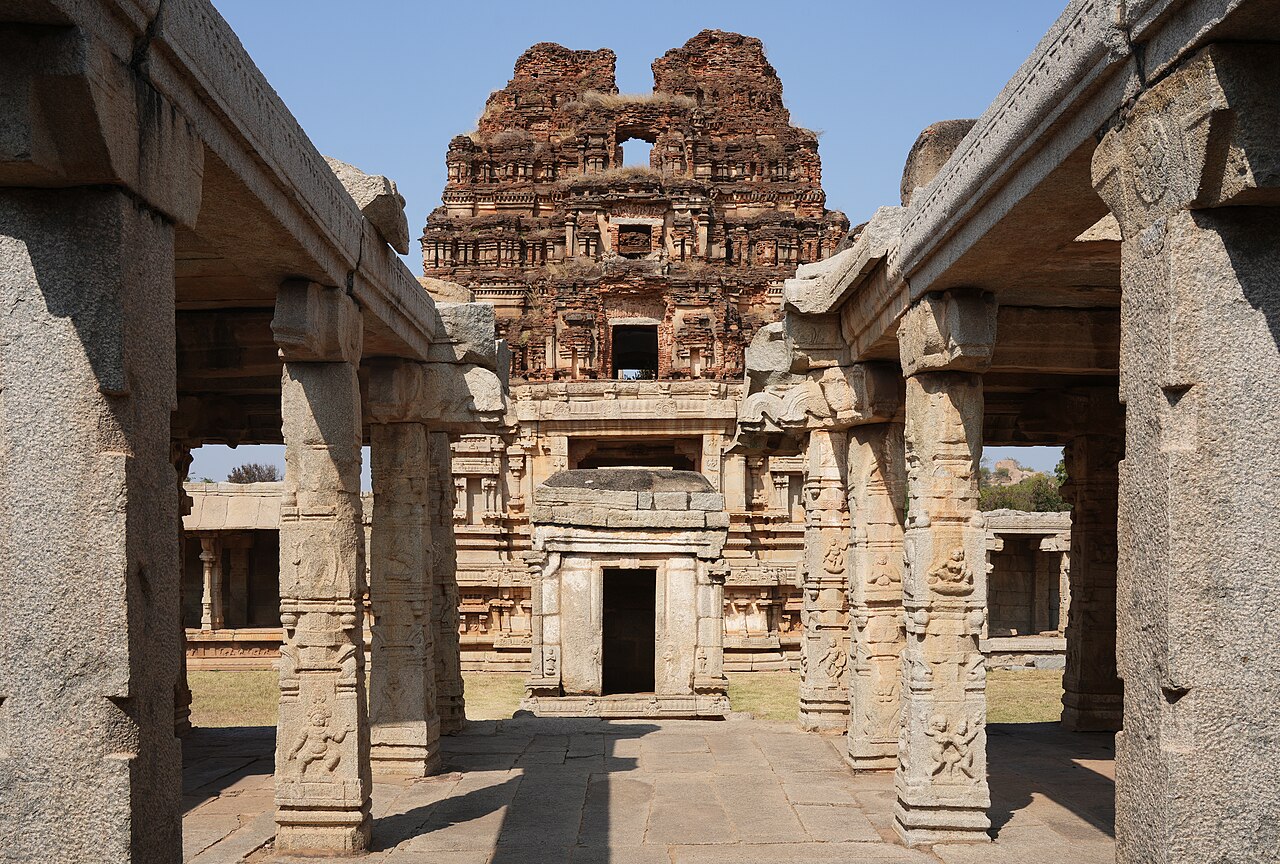
Achyutaraya Temple
Temple · 1.3 km · about 21 min walk
 #10 in HampiFree entry
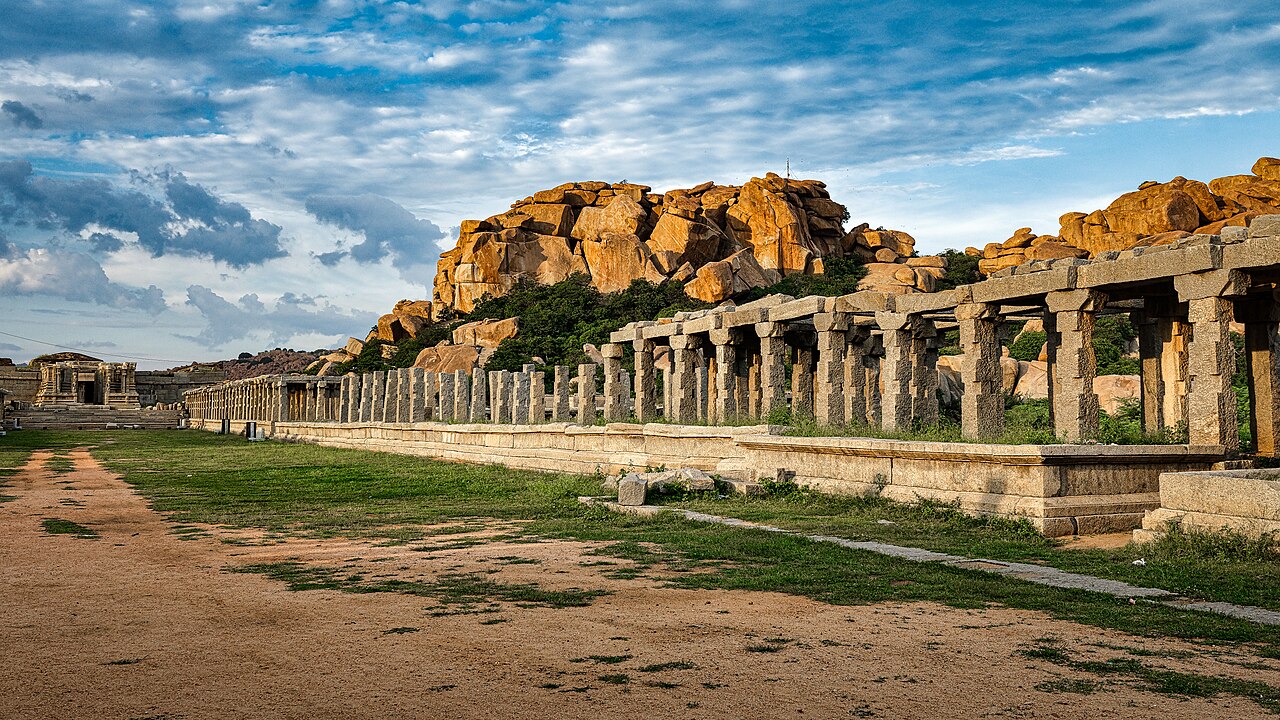
Hampi Bazaar
Market · 1.6 km · about 27 min walk
 #6 in HampiFree entry
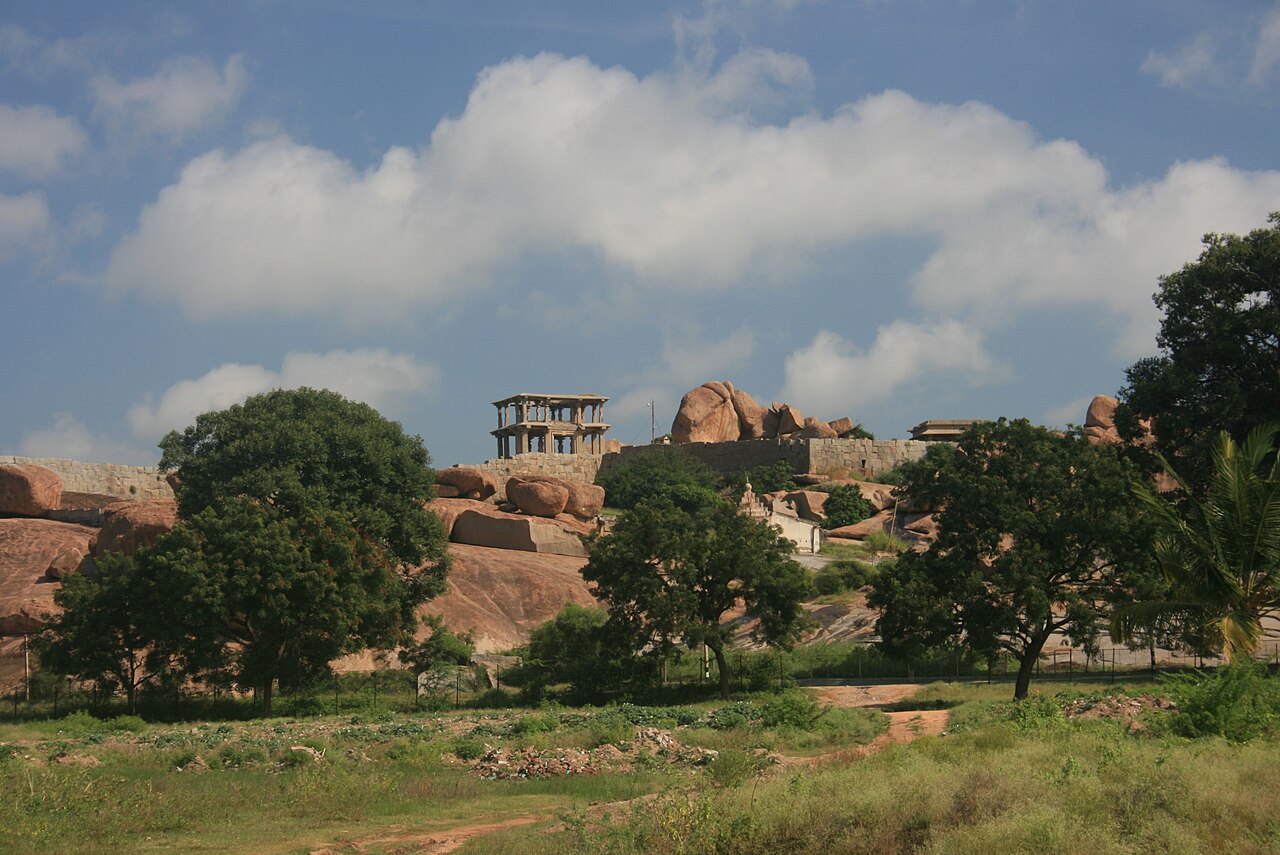
Hemakuta Hill
Viewpoint · 1.9 km · about 31 min walk
 #2 in HampiFree entry
Virupaksha Temple
Temple · 2.0 km · about 32 min walk