
Sisodia Rani Ka Bagh & Palace
#12of 12 places to visit in JaipurJaipur, Rajasthan
Also known as Sisodia Rani Garden · Sisodia Rani Ka Mahal
Quick answer
Opening hours: 08:00–18:00. Entry: ₹50 Indian · ₹100 foreign. Allow 1 hr. Best time: 08:00 – 10:00.
Updated · Compiled by Traveliac, AI-assisted · 4 min read
- Opening hours
- 08:00–18:00
- Entry fee
- ₹50 Indian
- Ticket from
- Time needed
- 1 hr
- Best time of day
- 08:00 – 10:00
- Best months
- Oct – Mar
- Address
- Agra Road, near Ghat ki Guni, Jaipur, Rajasthan 302029
About Sisodia Rani Ka Bagh & Palace
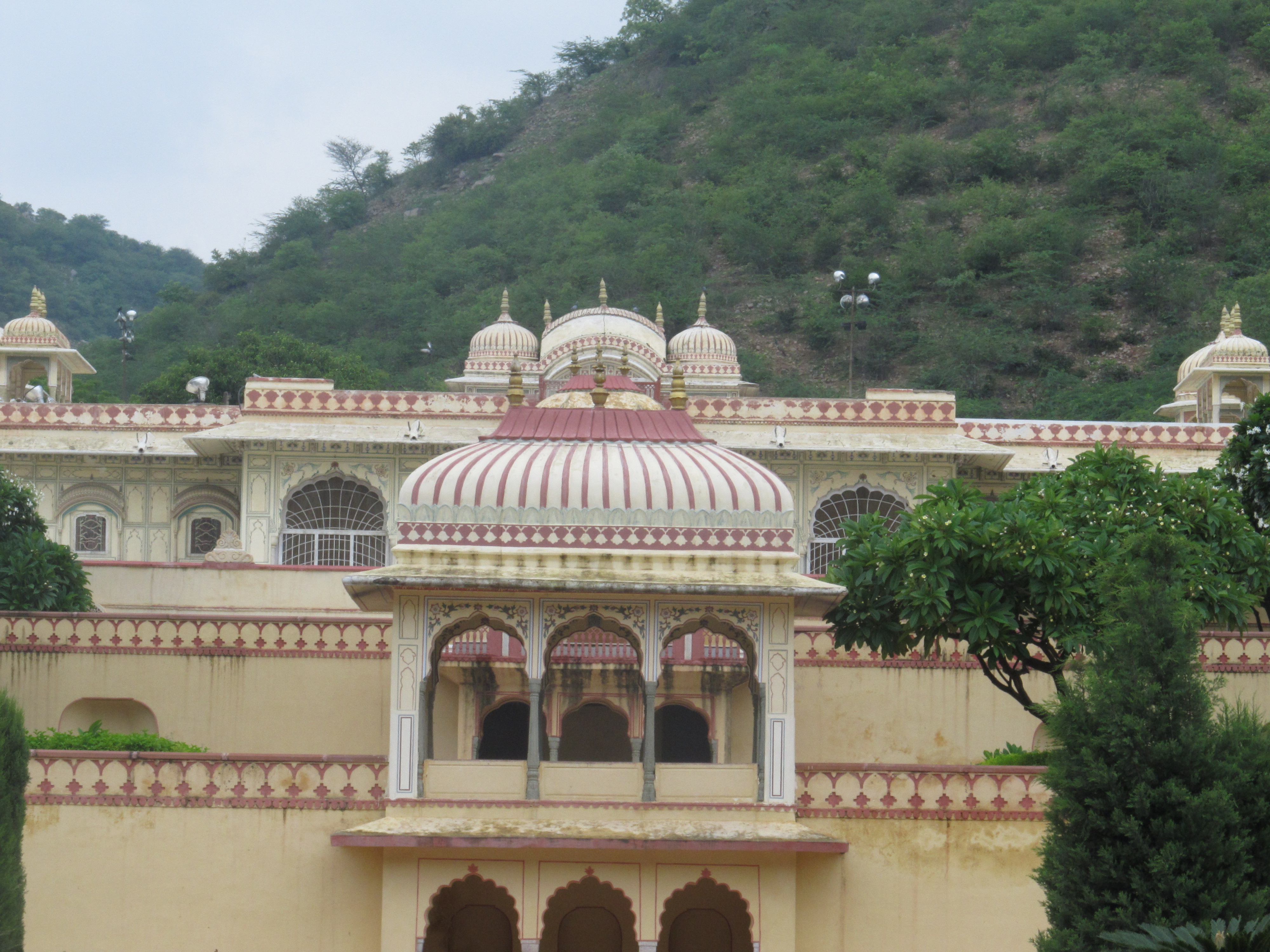
Sisodia Rani Ka Bagh terraces down a hillside on the Agra Road in a strict Mughal Char Bagh layout — four quartered garden beds around a central water channel, repeated across multiple descending levels connected by stone steps, with fountains (now intermittently operational depending on water supply) positioned at each terrace intersection. The small double-storey pleasure palace at the garden's upper end is modest by Jaipur palace standards, its real interest confined to a set of interior wall niches painted with scenes from the Radha-Krishna Raas Leela cycle in a Rajasthani miniature style, rendered directly onto lime plaster rather than as portable artworks. The planting scheme still follows a formal historic pattern of mango and citrus trees along the terrace edges, though the garden's maintenance level varies with seasonal budget allocation, and visitors expecting Mughal-garden-level manicuring at Delhi or Agra's standard should adjust expectations toward a quieter, less-funded but still structurally intact heritage garden.
Best time of day: 08:00 – 10:00. Before the day's heat and before any scheduled private events restrict access to the upper terraces.
Sisodia Rani Ka Bagh & Palace timings
Sisodia Rani Ka Bagh & Palace opens at 08:00 and closes at 18:00. It keeps the same hours on Saturday and Sunday.
- Opening hours
- 08:00–18:00
Mon–Sun 08:00–18:00 - Closed on
- Open every day
Opening hours compiled from rajasthantourism.gov.in and public records, last updated . They change without notice — confirm before you travel. How we write these guides
Sisodia Rani Ka Bagh & Palace ticket price
| Ticket | Price |
|---|---|
| Indian visitors | ₹50 |
| Foreign visitors | ₹100 |
| Children | Free |
| Camera | Free |
Not part of the Rajasthan Composite Ticket; a standalone entry fee is collected at the garden gate. Video camera fee is ₹70. The garden occasionally hosts private wedding and event bookings, which can restrict general public access on specific dates — no public advance notice system exists, so a same-day check is advisable if this is a dedicated destination rather than a stop en route.
Prices compiled from rajasthantourism.gov.in and public records, last updated . They change without notice — confirm before you travel. How we write these guides
Best time to visit Sisodia Rani Ka Bagh & Palace
- Quiet
- Moderate
08:00 – 10:00
Morning OpeningBest time to go
Near-empty terraces; best light on the fountains and stepped garden levels.
Quiet10:00 – 14:00
Midday
Consistently quiet even at peak hours relative to central Jaipur monuments, given the site's location off the main tourist circuit.
Quiet14:00 – 16:00
Afternoon Heat
Shaded terrace seating under mango trees offers a comfortable rest stop; visitor numbers remain minimal.
Quiet16:00 – 18:00
Late Afternoon
Local families and occasional pre-wedding photography sessions use the garden for its terraced backdrop before closing.
Moderate
History of Sisodia Rani Ka Bagh & Palace
Maharaja Sawai Jai Singh II commissioned the garden and palace in 1728 for his second queen, a princess of the Sisodia clan of Mewar (Udaipur) married to him as part of a marital alliance between the Kachwaha and Sisodia Rajput houses — a politically significant match given the historic rivalry and periodic conflict between the two clans over precedence in Rajput society.
The marriage agreement reportedly carried a specific condition, per court tradition: that any son born of the Sisodia queen would receive precedence in succession, a stipulation that added long-term political weight to what might otherwise have been a purely ceremonial garden-building gesture. The garden's Char Bagh design, while broadly Mughal in template, was executed by Jaipur court craftsmen and reflects the same Vidyadhar Bhattacharya-influenced proportional planning used across Jai Singh II's other commissions in the same period.
The site saw periodic royal use as a retreat and picnic garden through the 18th and 19th centuries, positioned conveniently on the Agra road for day excursions from the City Palace, and passed into state archaeological management following independence and the broader transfer of royal properties to Rajasthan's heritage administration.
Rules & etiquette at Sisodia Rani Ka Bagh & Palace
Footwear may be worn throughout; this is a secular garden and palace, not an active shrine. The upper palace pavilion's painted niche galleries are fragile lime-plaster surfaces — touching the painted wall panels is prohibited and monitored, since finger oils accelerate pigment degradation on unsealed plaster.
Given the site's occasional use as a private wedding and event venue, visitors arriving on a date with a booked private function may find upper terraces or the palace pavilion temporarily closed to general ticket-holders — this is not separately advertised, so confirming by phone with the ticket office ahead of a dedicated visit is worthwhile if flexibility in your itinerary is limited.
Drones require prior written clearance from the Archaeology Department due to the site's proximity to Ghat ki Guni's other heritage structures.
Tips for visiting Sisodia Rani Ka Bagh & Palace
- 1
This is a low-crowd, high-value stop specifically because it sits outside the main walled-city tourist circuit — most visitors doing a standard Jaipur itinerary skip it entirely, which makes it one of the few sites in the city where you can photograph a fully intact formal garden terrace without other tourists in frame.
- 2
Combine it with a stop at the nearby Vidyadhar Ka Bagh, a smaller, similarly Mughal-style garden a short distance further along the Agra Road, dedicated to Jai Singh II's chief architect — the two gardens make a logical pairing for anyone interested in Jaipur's less-visited 18th-century garden architecture beyond the fort-and-palace circuit.
- 3
The painted Raas Leela niches inside the small palace are easy to miss if rushing through — allocate at least 15 minutes specifically indoors rather than treating this purely as an outdoor garden stop, since the interior artwork is the site's most distinctive feature relative to Jaipur's other gardens.
How to reach Sisodia Rani Ka Bagh & Palace
The red star is Sisodia Rani Ka Bagh & Palace; the numbered pins are the 10 nearest places in our guides, each showing its rank in its city. Tap a pin for details.
Agra Road, near Ghat ki Guni, Jaipur, Rajasthan 302029Directions in Google Maps
From Jaipur International Airport (JAI)
₹350–₹50015 km · 35–45 min
OLA/Uber).
From Jaipur Junction Railway Station (JP)
₹200–₹28010 km · 25–35 min
Auto).
From City Palace
₹150–₹2209 km · 20–30 min
Auto), often combined as a return-route stop toward Agra Road day trips.
Nearest airport
From Jaipur International Airport (JAI)
15 km, 35–45 minutes.
Nearest railway station
From Jaipur Junction (JP)
10 km, 25–35 minutes.
Sisodia Rani Ka Bagh & Palace FAQs
Is Sisodia Rani Ka Bagh included in the Rajasthan Composite Ticket?
No, it is a standalone site with its own entry fee (₹50 Indian / ₹100 foreign) collected at the garden gate, separate from the main composite ticket covering Amber, Hawa Mahal, Jantar Mantar, Nahargarh, and Albert Hall.
Why was this garden built for a Sisodia queen specifically?
Maharaja Sawai Jai Singh II built it in 1728 for his second wife, a princess from the Sisodia clan of Mewar, a politically significant marriage between two historically rival Rajput houses — the garden and palace were a dedicated retreat commissioned for her.
Can the garden be closed for private events on the day I visit?
Yes, occasionally. The site hosts private wedding and event bookings without public advance notice, which can restrict access to upper terraces or the palace pavilion. Calling the ticket office ahead is worthwhile if a visit is time-constrained.
What is the single most distinctive feature inside the small palace?
A set of wall niches painted directly onto lime plaster depicting the Radha-Krishna Raas Leela cycle in Rajasthani miniature style — allocate at least 15 minutes indoors specifically to see these rather than treating the visit purely as an outdoor garden stop.
Compiled with AI assistance from official sources and public records, and published only after the checks in How we write these guides. Nobody from Traveliac has visited this place. Last updated . How we rank and check places
Places to visit near Sisodia Rani Ka Bagh & Palace
Straight-line distances from our map; times are estimates.
 #10 in JaipurFree entry
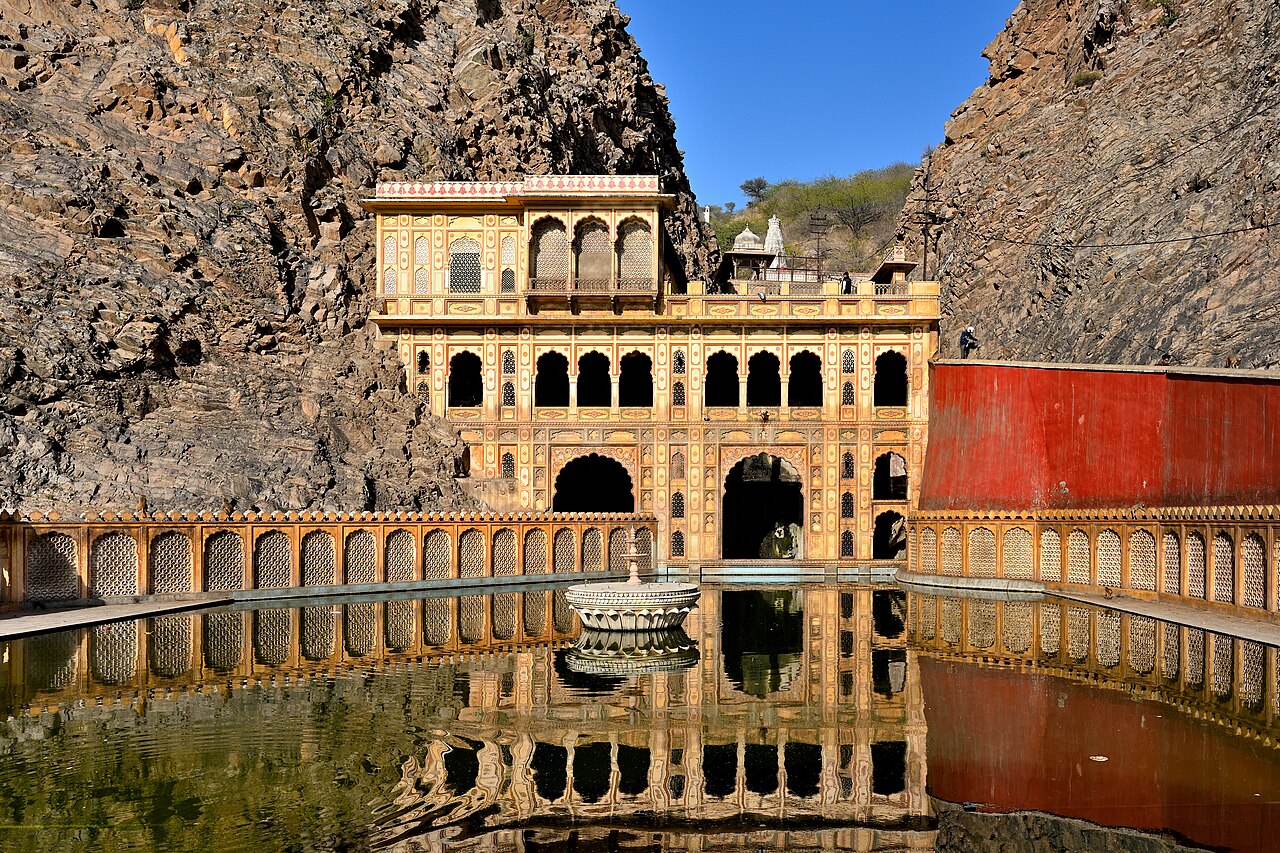
Galta Ji (Monkey Temple & Sun Temple)
Temple · 3 km · about 10 min by road
 #11 in JaipurFree entry
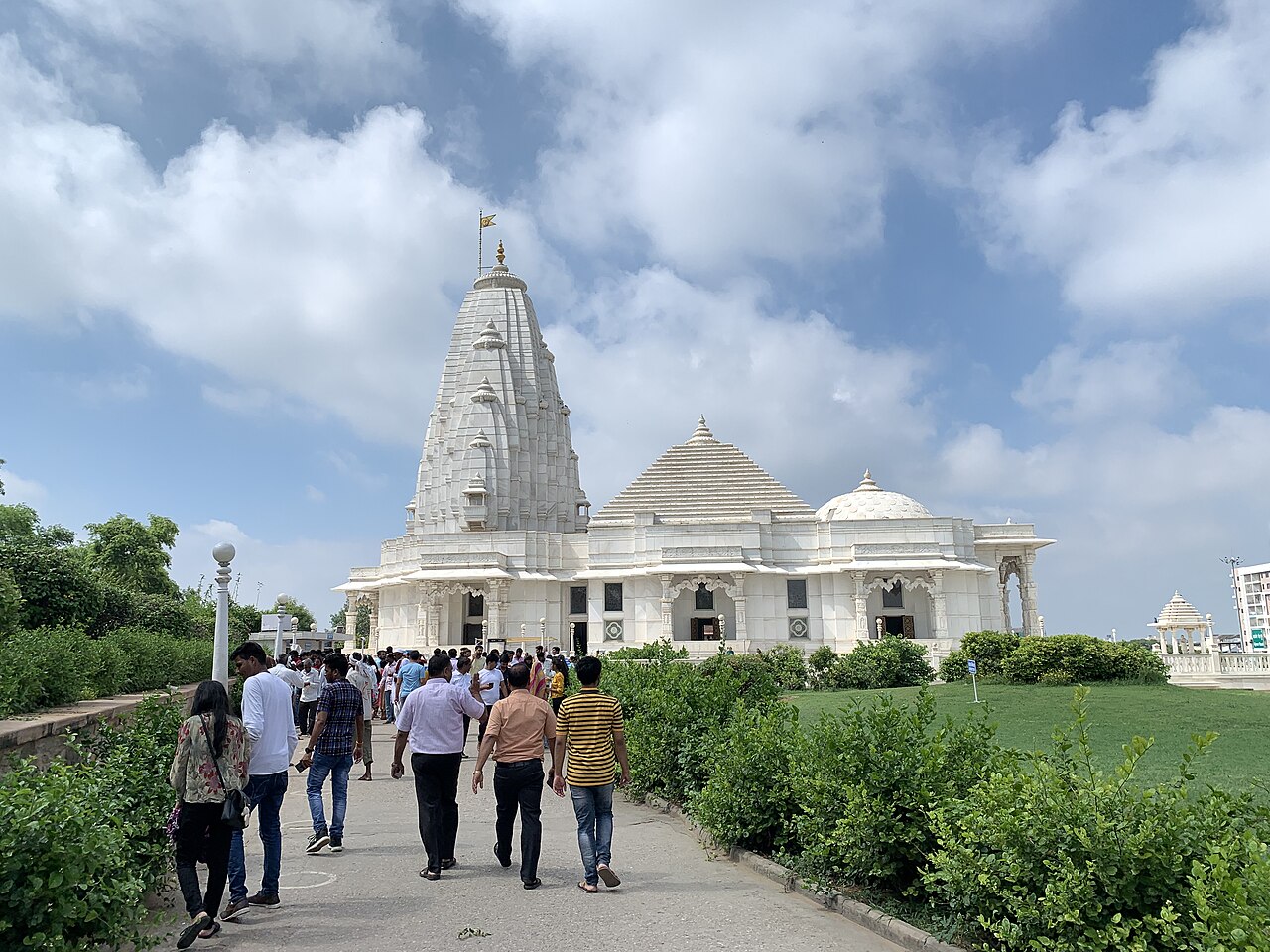
Birla Mandir (Laxmi Narayan Temple)
Temple · 4 km · about 15 min by road
 #6 in Jaipur
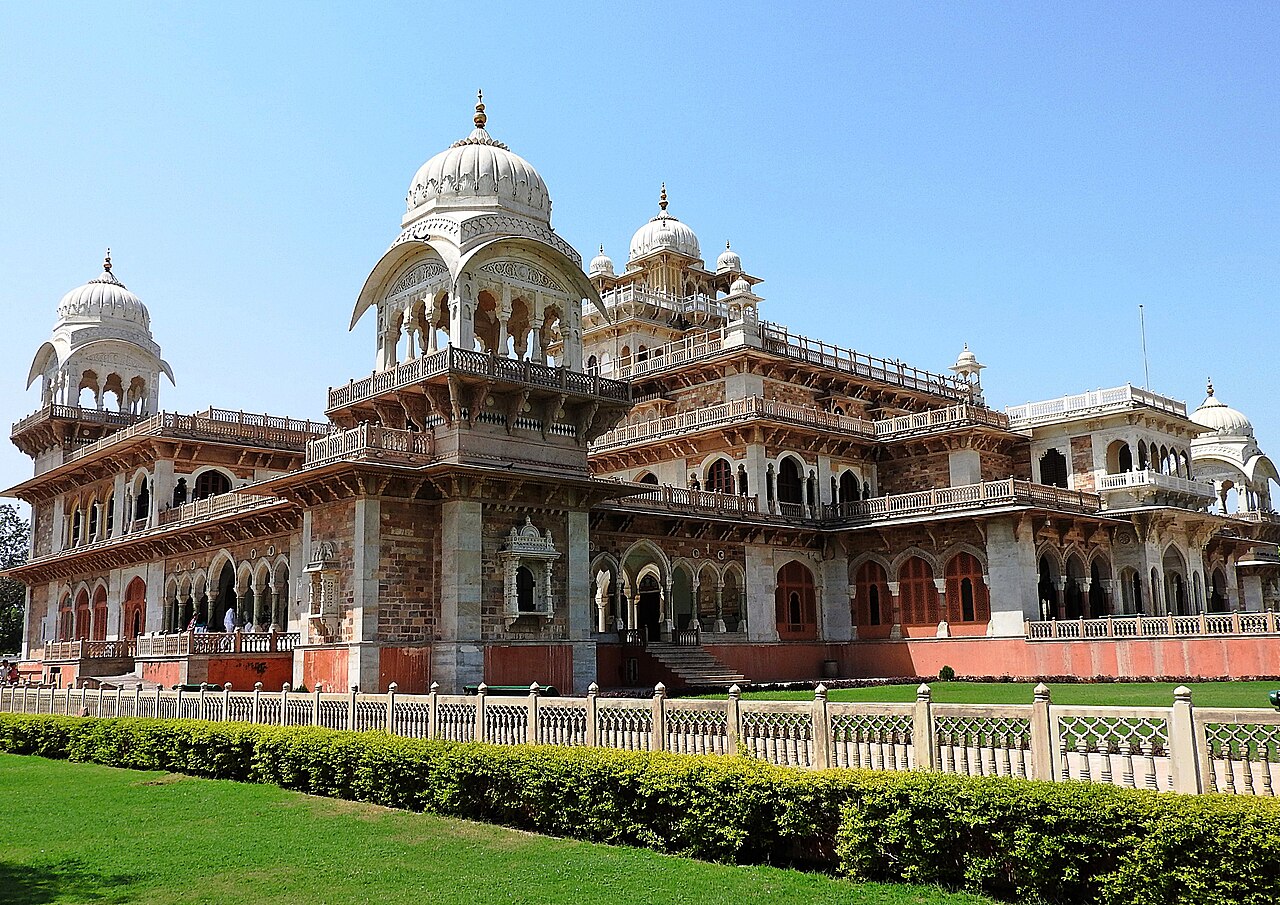
Albert Hall Museum
Museum · 4 km · about 15 min by road
 #3 in Jaipur
Hawa Mahal
Palace · 5 km · about 15 min by road