
Dashashwamedh Ghat
#2of 10 places to visit in VaranasiVaranasi, Uttar Pradesh
Also known as Dasaswamedh Ghat · Main Ghat
Quick answer
Opening hours: No fixed opening hours. Entry is free. Allow 1.5 hrs. Best time: 17:00 – 17:30 or 18:00–19:00.
Updated · Compiled by Traveliac, AI-assisted · 5 min read
- Opening hours
- No fixed hours
- Open 24 hours as a public ghat; the Ganga Aarti begins at 19:00 April–September and 18:00 October–March, running approximately 45 minutes.
- Entry fee
- Free
- Time needed
- 1.5 hrs
- Best time of day
- 17:00 – 17:30 or 18:00–19:00
- Best months
- Oct – Mar
- Address
- Dashashwamedh Ghat Road, Godaulia, Varanasi, Uttar Pradesh 221001
About Dashashwamedh Ghat
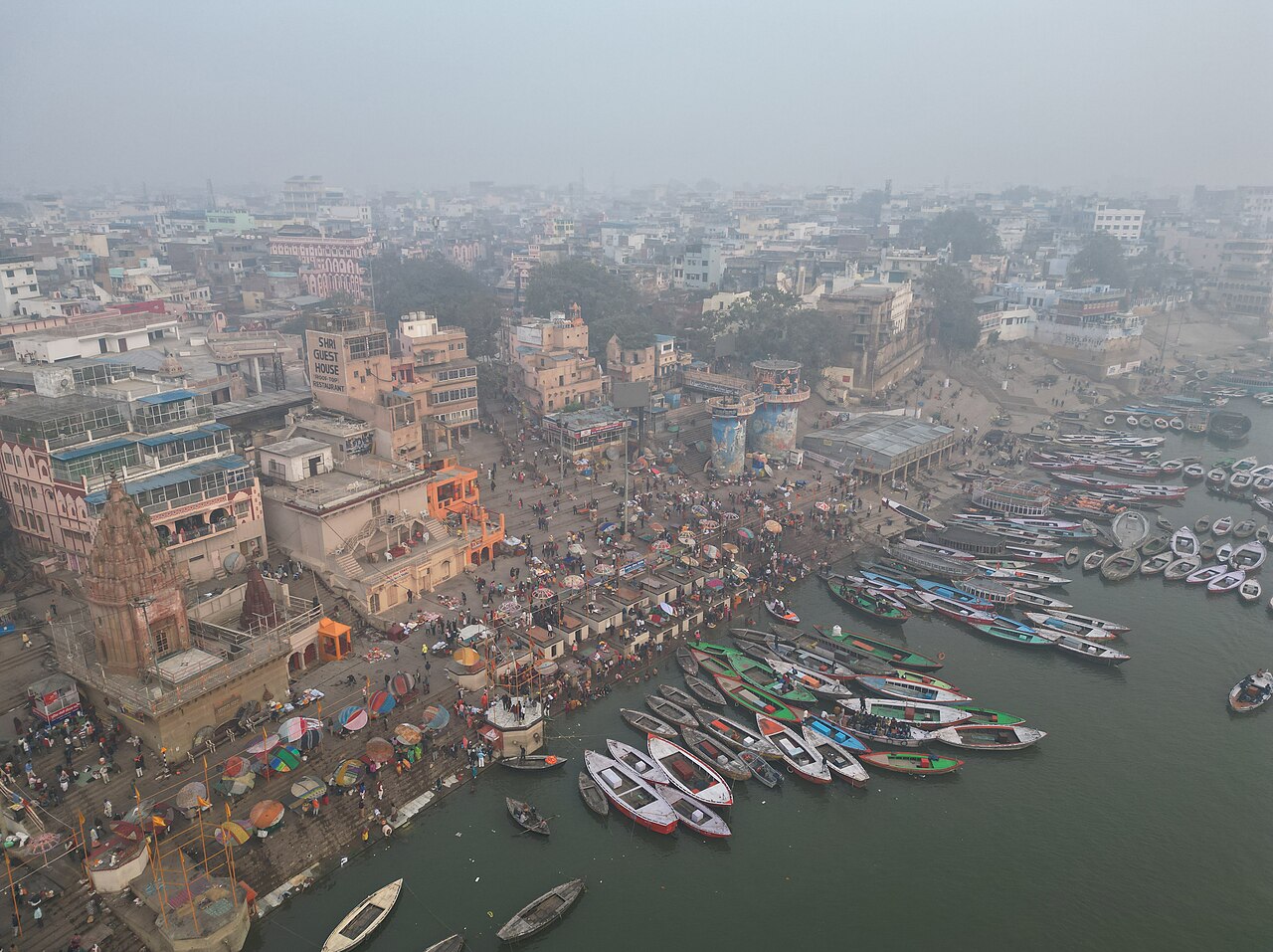
Dashashwamedh Ghat hosts the nightly Ganga Aarti performed by seven priests on raised wooden platforms, drawing crowds of several thousand every evening as of 2026. The name combines Sanskrit dash (ten) and ashwamedh (horse sacrifice), referring to a legend that Brahma performed a ten-horse sacrifice here to welcome Shiva to Kashi — a founding story the ghat shares with no other site on the river. Stone steps descend roughly 20 metres from Dashashwamedh Ghat Road to the waterline, rebuilt in their current form by the Peshwa Balaji Baji Rao in 1748 and again by Ahilyabai Holkar in 1774, though the site's ritual use is recorded far earlier. The ghat sits at the midpoint of Varanasi's roughly 6.8-kilometre riverfront and functions as the city's principal gathering point, connecting directly to Kashi Vishwanath Temple by a 400-metre lane. Vendors, boatmen, flower sellers, and the seven aarti platforms compress into a stone plaza that measures barely 50 metres across at its widest — the density itself is part of what visitors come to witness.
Best time of day: 17:00 – 17:30 or 18:00–19:00. To claim ghat-step seating before the 18:00–19:00 aarti; boats should be booked by 16:30 in peak season (October–March).
Dashashwamedh Ghat timings
- Opening hours
- No fixed hours
Mon–Sun No fixed hours - Open 24 hours as a public ghat; the Ganga Aarti begins at 19:00 April–September and 18:00 October–March, running approximately 45 minutes.
- Closed on
- Open every day
Good to know: Aarti start time shifts roughly 15 minutes earlier or later around the equinox months; confirm the same-day time board posted at the ghat, since it is adjusted for sunset.
Opening hours compiled from kashi.gov.in and public records, last updated . They change without notice — confirm before you travel. How we write these guides
Dashashwamedh Ghat ticket price
| Ticket | Price |
|---|---|
| Indian visitors | Free |
| Foreign visitors | Free |
| Children | Free |
| Camera | Free |
Standing on the ghat steps to watch the Ganga Aarti costs nothing as of 2026. Private operators sell front-row plastic chairs for ₹200–₹350 and boat viewing for ₹300–₹500 per person on a shared boat, but no official ticket exists for the ceremony itself — as of 2026, treat any 'VIP pass' sold as a fixed government rate with suspicion and verify at the ghat.
Prices compiled from kashi.gov.in and public records, last updated . They change without notice — confirm before you travel. How we write these guides
Best time to visit Dashashwamedh Ghat
- Quiet
- Moderate
- Busy
- Very busy
06:00 – 08:00
Morning Bathing and Boats
Local residents perform morning puja and bathing rituals; boatmen offer sunrise river trips at their lowest rates of the day. Comparatively few tourists present.
Moderate12:00 – 16:00
Midday LullBest time to go
Heat keeps foot traffic thin. Vendors set up for the evening; a good window to walk the ghat steps and photograph the architecture without crowds.
Quiet17:00 – 18:00
Pre-Aarti Build-Up
Seating positions fill on the steps and platforms; boatmen actively solicit river viewing. Vendors of flowers, snacks, and prayer items peak in activity.
Busy18:00 – 20:00
Ganga Aarti
The seven-priest ceremony draws several thousand spectators on the steps and hundreds of boats on the water; movement through the plaza becomes very slow.
Very busy
History of Dashashwamedh Ghat
Dashashwamedh Ghat's mythology predates its stonework by centuries. The Puranas describe Brahma performing the Dasa-Ashwamedha Yajna, a sacrifice of ten horses, at this spot to invite Shiva to reside permanently in Kashi, and Hindu tradition treats this as the ghat's founding narrative rather than verified history — a legend, not a documented event. A second, overlapping legend holds that King Divodasa performed the same ten-horse sacrifice here, and Varanasi's ancient name Rudravasa is tied to this account by some local pandits.
The masonry steps visible today owe less to myth and more to 18th-century Maratha patronage. Peshwa Balaji Baji Rao funded a major rebuilding in 1748, and Ahilyabai Holkar, the same Maratha queen who rebuilt Kashi Vishwanath Temple, commissioned further reconstruction in 1774 — the two projects were part of a broader Maratha investment in Varanasi's religious infrastructure during a period when Mughal authority in the region had weakened. The ghat has hosted the organised Ganga Aarti in its present seven-priest, multi-platform format since 1991, when the Ganga Seva Nidhi Trust formalised what had previously been smaller, individual evening rituals into a single choreographed ceremony.
Rules & etiquette at Dashashwamedh Ghat
Dashashwamedh Ghat has no admission gate, but the crowd density during the 18:00–19:00 aarti window means latecomers after 18:15 typically stand 30–40 metres back from the platforms with a partial view only. Claiming ghat-step seating requires arriving by 17:00–17:30 and holding the spot through the pre-aarti crowd build.
Boatmen approach visitors continuously along the steps offering aarti viewing from the water; agree a fixed price before boarding; ₹300–₹500 per person is standard for a shared boat, and solo hire runs ₹1,500–₹2,500 for the full ceremony. Refuse any boatman who wants payment only after departure, since renegotiation mid-river is a known pressure tactic here.
Pickpocketing risk rises with crowd density during the ceremony itself; keep valuables in a front pocket or money belt rather than a bag, which is difficult to monitor in the standing crush. Flower-and-diya (leaf boat with candle) sellers charge ₹20–₹50; agreeing the price before taking the item avoids the more aggressive after-the-fact demands some vendors use.
Tips for visiting Dashashwamedh Ghat
- 1
Dashashwamedh Ghat is best watched from the water rather than the steps if crowd density is a concern; a shared boat departing 30 minutes before the ceremony gives an unobstructed view of all seven platforms simultaneously, which the ghat-level crowd rarely affords. Boats moor roughly 15–20 metres offshore, close enough to hear the bells and conch shells clearly.
- 2
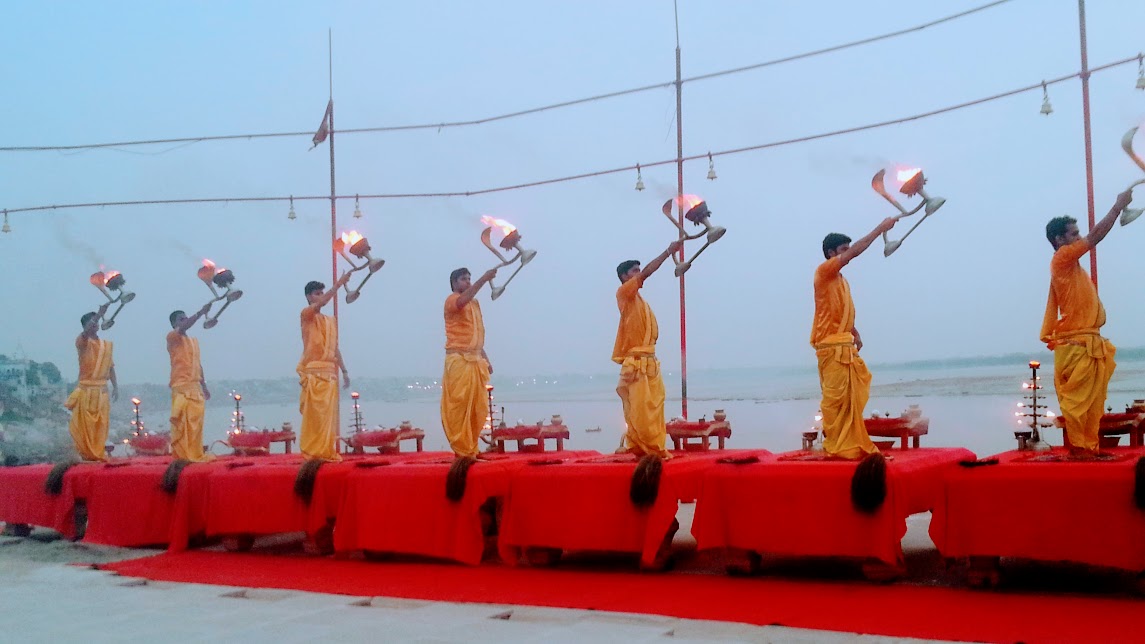
The ceremony's photographic peak comes in the final ten minutes, when all seven priests raise the multi-tiered brass lamps (arti diyas) in unison; arrive with a boat or platform position secured well before this point rather than attempting to reposition during it. A monsoon-season alternative exists at nearby Assi Ghat, which runs a comparable but smaller-scale aarti with markedly thinner crowds.
- 3
Morning visits (06:00–08:00) show an entirely different ghat: boatmen offering sunrise river trips, bathers performing puja, and none of the evening's crowd. Pairing a dawn boat ride with the evening aarti, a full 12-hour bracket, gives the most complete sense of how the ghat is actually used by residents rather than only as a nightly spectacle.
How to reach Dashashwamedh Ghat
The red star is Dashashwamedh Ghat; the numbered pins are the 9 nearest places in our guides, each showing its rank in its city. Tap a pin for details.
Dashashwamedh Ghat Road, Godaulia, Varanasi, Uttar Pradesh 221001Directions in Google Maps
From Lal Bahadur Shastri International Airport (VNS)
₹650–₹95026 km · 50–80 min
Prepaid taxi/OLA/Uber).
From Varanasi Junction Railway Station (BSB)
₹100–₹1804.5 km · 15–25 min to Godowlia, plus 5 min-minute walk
Auto-rickshaw to Godowlia crossing, negotiated).
From Kashi Vishwanath Temple
0.4 km · 8–10 min walk
Free — a direct pedestrian lane connects the temple corridor to the ghat.
Nearest airport
From Lal Bahadur Shastri International Airport (VNS), Babatpur
approximately 26 km, 50–80 minutes by road.
Nearest railway station
From Varanasi Junction (BSB)
approximately 4.5 km, 15–25 minutes by auto-rickshaw to Godowlia, plus a 5-minute walk.
Dashashwamedh Ghat FAQs
Is there an entry fee for the Ganga Aarti at Dashashwamedh Ghat?
No. Watching from the ghat steps is free as of 2026. Paid options exist only for better positioning — front-row chairs (₹200–₹350) or boat viewing (₹300–₹500 per person, shared) sold by private operators, not the government.
What time does the Ganga Aarti start at Dashashwamedh Ghat?
The ceremony begins at 19:00 from April to September and 18:00 from October to March, timed to sunset, and runs approximately 45 minutes. A posted time board at the ghat confirms the exact start each evening.
Is it better to watch the Ganga Aarti from the ghat steps or from a boat?
A boat gives an unobstructed view of all seven priest platforms at once and avoids the standing crush on the steps, for ₹300–₹500 per person shared. The steps are free but require arriving by 17:00–17:30 for a clear sightline, since the crowd blocks the view within 15 minutes of the ceremony starting.
What does the name Dashashwamedh Ghat mean?
The name combines Sanskrit dash (ten) and ashwamedh (horse sacrifice), referring to a legend — not verified history — that the god Brahma performed a ten-horse sacrifice at this spot to welcome Shiva to Kashi.
Compiled with AI assistance from official sources and public records, and published only after the checks in How we write these guides. Nobody from Traveliac has visited this place. Last updated . How we rank and check places
Places to visit near Dashashwamedh Ghat
Straight-line distances from our map; times are estimates.
 #1 in VaranasiFree entry
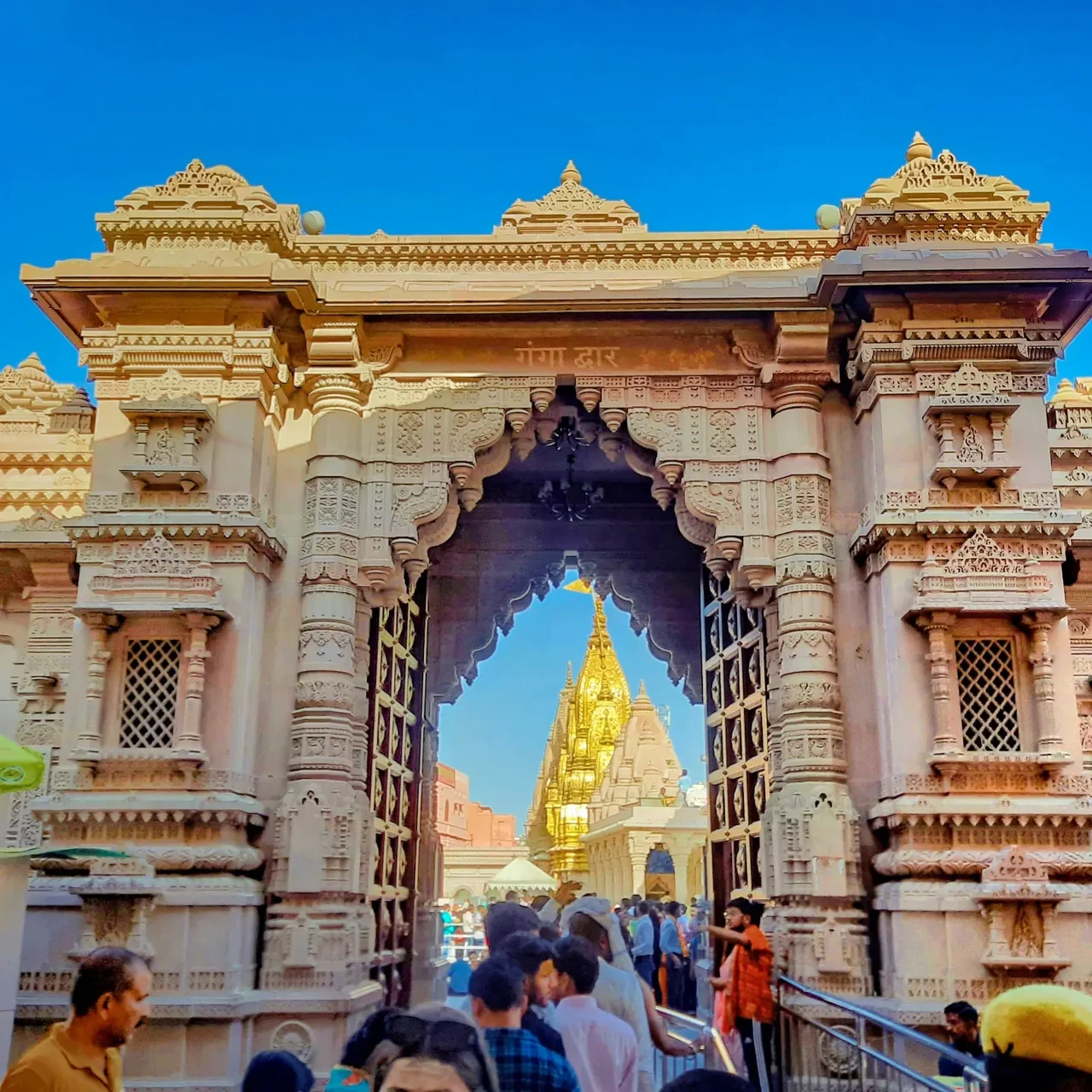
Kashi Vishwanath Temple
Temple · 400 m · about 7 min walk
 #3 in VaranasiFree entry
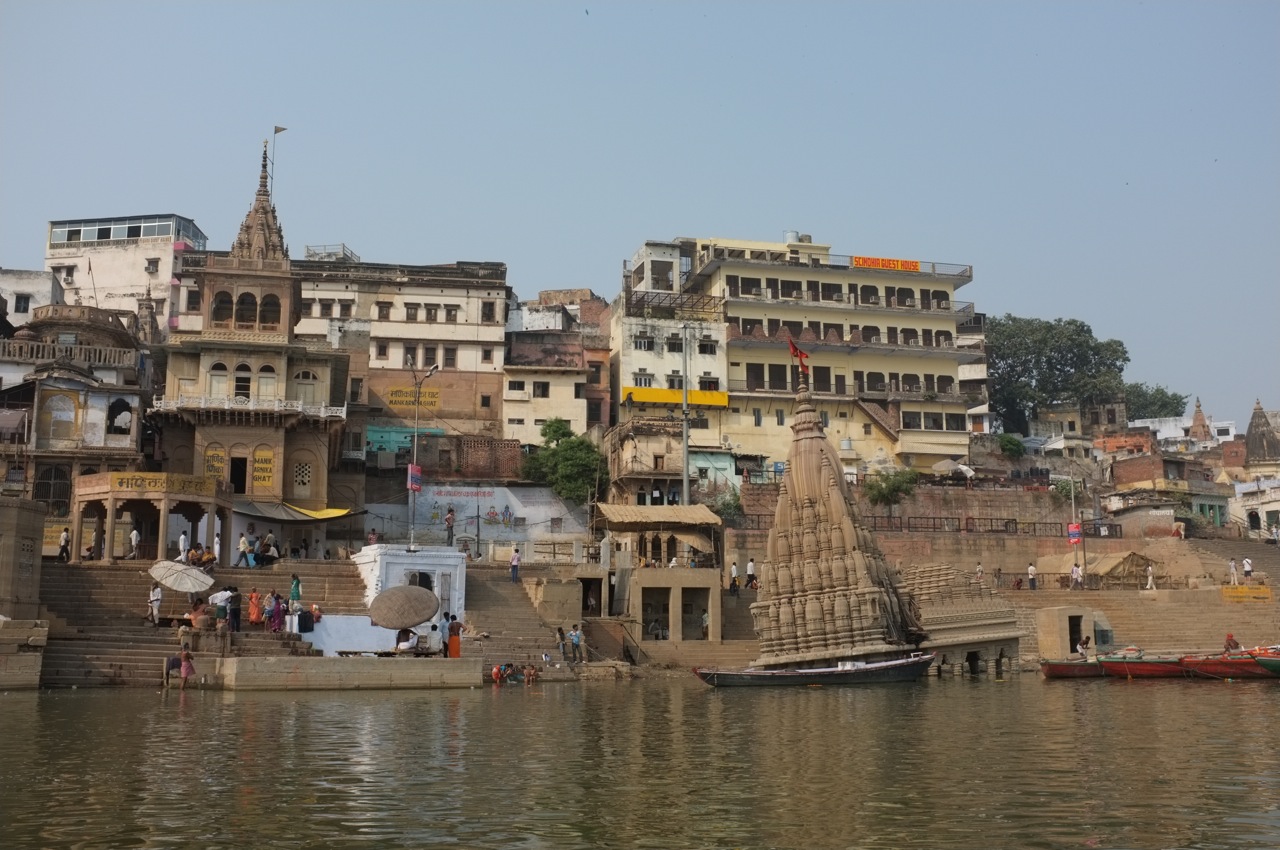
Manikarnika Ghat
Temple · 550 m · about 9 min walk
 #7 in VaranasiFree entry
Assi Ghat
Temple · 2.1 km · about 34 min walk
 #4 in VaranasiFree entry
Durga Temple
Temple · 2.3 km · about 38 min walk