
Sarnath
#10of 10 places to visit in VaranasiVaranasi, Uttar Pradesh
Also known as Isipatana · Rishipattana · Deer Park
Quick answer
Opening hours: 09:00–17:00, closed Fridays. Entry: ₹25 Indian · ₹300 foreign. Allow 2.5 hrs. Best time: 07:00 – 09:00.
Updated · Compiled by Traveliac, AI-assisted · 5 min read
- Opening hours
- 09:00–17:00
- Closed Fridays
- Entry fee
- ₹25 Indian
- Ticket from
- Time needed
- 2.5 hrs
- Best time of day
- 07:00 – 09:00
- Best months
- Oct – Mar
- Address
- Archaeological Survey of India, Sarnath Circle, Sarnath, Varanasi, Uttar Pradesh 221007
About Sarnath
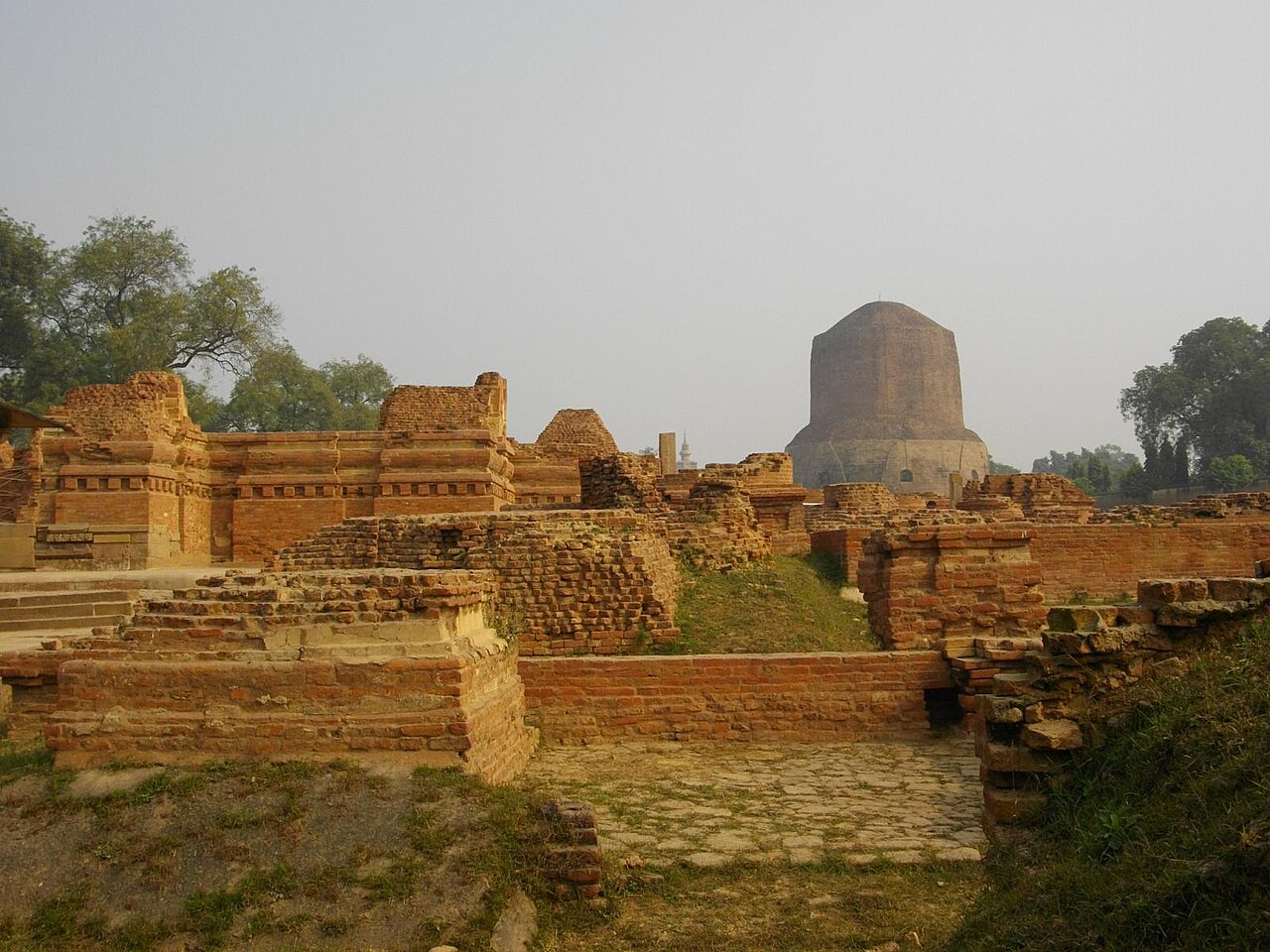
Sarnath marks the site where the Buddha delivered his first sermon around 528 BCE, setting in motion what Buddhist tradition calls the Dharmachakra Pravartana, the turning of the wheel of law. The excavated site charges ₹25 for Indian visitors and ₹300 for foreign visitors as of 2026, with the adjoining museum requiring a separate ₹5 ticket. The Dhamek Stupa, a solid cylindrical structure 43.6 metres tall and 28 metres in diameter at its base, dominates the site — its lower courses are dressed stone carved with geometric and floral bands, while the upper brick portion, added later, remains plain, a visible seam between two construction phases roughly a thousand years apart. Adjacent ruins include the foundations of monasteries (viharas), stupas, and an Ashokan pillar, of which only the fractured lower shaft stands in situ; the pillar's four-lion capital, carved from a single block of Chunar sandstone around 250 BCE, survives intact in the site museum and was adopted as independent India's national emblem in 1950.
Best time of day: 07:00 – 09:00. Before tour buses arrive and while the Dhamek Stupa's brickwork catches low morning light.
Sarnath timings
Sarnath opens at 09:00 and closes at 17:00. Those hours hold on Saturday and Sunday too.
- Opening hours
- 09:00–17:00
Mon–Thu 09:00–17:00 Friday Closed Sat–Sun 09:00–17:00 - Excavated site: sunrise to sunset daily. Archaeological Museum: 09:00 – 17:00, closed Fridays.
- Closed on
- Friday (museum only; the excavated site remains open)
Opening hours compiled from asisarnathcircle.in and public records, last updated . They change without notice — confirm before you travel. How we write these guides
Sarnath ticket price
| Ticket | Price |
|---|---|
| Indian visitors | ₹25 |
| Foreign visitors | ₹300 |
| Children | Free |
| Camera | Free |
Excavated site (Dhamek Stupa and monastery ruins) costs ₹25 Indian / ₹300 foreign as of 2026, cash at the counter, or ₹20 / ₹250 booked online or by card. The adjoining Sarnath Archaeological Museum charges a separate ₹5 ticket for all visitors, with children under 15 free. Photography is unrestricted outdoors but prohibited inside the museum galleries — as of 2026, verify at the counter since ASI fee schedules are revised periodically.
Prices compiled from asisarnathcircle.in and public records, last updated . They change without notice — confirm before you travel. How we write these guides
Best time to visit Sarnath
- Quiet
- Moderate
- Busy
07:00 – 09:30
Early Morning CalmBest time to go
Site opens at sunrise; Buddhist pilgrim groups often begin circumambulation early. Fewer domestic tour buses have arrived.
Quiet09:30 – 13:00
Tour Group Peak
Domestic tour buses and school groups arrive in volume; museum galleries become congested, particularly around the Ashoka Lion Capital display.
Busy13:00 – 16:00
Midday Lull
Heat thins the outdoor crowd; the museum (when open) remains comparatively busy as an air-conditioned respite.
Moderate16:00 – 18:00
Late Afternoon
Light softens for photography of the Dhamek Stupa's brickwork; site closes at sunset, so timing the exit matters more than at gated monuments.
Quiet
History of Sarnath
Sarnath's Buddhist history begins with the Buddha's arrival at what was then a deer park (Mrigadava) outside Varanasi, where he preached to five ascetics who had earlier abandoned him — this sermon, recorded as the Dhammacakkappavattana Sutta, is treated by Buddhist tradition as the founding moment of the Sangha, the monastic community. The site grew into a major monastic centre over the following centuries, reaching its architectural peak under Emperor Ashoka in the 3rd century BCE, who erected the pillar bearing his edicts and the four-lion capital later adopted as India's national emblem.
Sarnath continued as an active Buddhist centre through the Gupta period, when much of the surviving sculpture, including a celebrated seated Buddha in the teaching posture now in the site museum, was carved. Decline set in after repeated raids, most destructively under Turkic invasions in the late 12th century, and the site fell into ruin for over six centuries. Systematic excavation began under British archaeologist Alexander Cunningham in 1835 and continued under subsequent ASI directors, uncovering the monastery foundations, stupas, and pillar fragments visible today. The Archaeological Museum opened in 1904 as the oldest site museum maintained by the ASI.
Rules & etiquette at Sarnath
Sarnath's excavated site and museum sell separate tickets at separate counters roughly 200 metres apart; buying both before starting avoids a return trip across the site. The museum's Friday closure catches many visitors unaware, since the outdoor ruins remain open that day — plan a Friday visit around the stupa and monastery foundations only.
Monks and lay Buddhist pilgrims from Sri Lanka, Thailand, Myanmar, and Tibet visit in organised groups, often circumambulating the Dhamek Stupa clockwise while chanting; visitors should keep pace with, rather than cut across, an active circumambulation. Photography is unrestricted across the outdoor ruins but strictly prohibited inside the Archaeological Museum, where the Ashoka Lion Capital and Gupta-period Buddha sculptures are displayed — bag checks at the entrance are routine.
Shoes need not be removed anywhere at Sarnath, since the site functions as an archaeological monument rather than a working shrine, though the Mulagandha Kuti Vihara temple adjacent to the ruins does require shoe removal at its own threshold.
Tips for visiting Sarnath
- 1
Sarnath rewards at least two and a half hours, not the rushed 45-minute stop many Varanasi itineraries allocate, given the distance between the museum, the excavated site, and the modern Mulagandha Kuti Vihara temple with its Japanese-donated bell and murals depicting the Buddha's life. Combining all three is far more efficient than a return trip.
- 2
A Bodhi tree sapling grown from the original Bodh Gaya tree stands within the modern temple complex, planted in 1931 by Anagarika Dharmapala, the Sri Lankan Buddhist revivalist who led Sarnath's 20th-century revival as a living pilgrimage site rather than only a ruin — a detail frequently missed by visitors treating Sarnath purely as archaeology.
- 3
Auto-rickshaws and taxis from central Varanasi take 25–40 minutes depending on traffic; negotiating a return trip with waiting time built in (typically ₹600–₹900 for a half-day round trip) is more economical than hiring two separate one-way rides, since return transport directly outside the site is limited.
How to reach Sarnath
The red star is Sarnath; the numbered pins are the 9 nearest places in our guides, each showing its rank in its city. Tap a pin for details.
Archaeological Survey of India, Sarnath Circle, Sarnath, Varanasi, Uttar Pradesh 221007Directions in Google Maps
From Lal Bahadur Shastri International Airport (VNS)
₹500–₹75020 km · 35–55 min
Prepaid taxi/OLA/Uber).
From Varanasi Junction Railway Station (BSB)
₹250–₹40010 km · 25–35 min
Auto-rickshaw, negotiated); shared tempo travellers to Sarnath crossing, ₹30–₹50 per seat.
From Kashi Vishwanath Temple
₹350–₹50012 km · 35–50 min
Auto-rickshaw or taxi, negotiated).
Nearest airport
From Lal Bahadur Shastri International Airport (VNS), Babatpur
approximately 20 km, 35–55 minutes by road.
Nearest railway station
From Varanasi Junction (BSB)
approximately 10 km, 25–35 minutes by auto-rickshaw or taxi.
Sarnath FAQs
What happened at Sarnath in Buddhist history?
Sarnath is where the Buddha delivered his first sermon, around 528 BCE, to five ascetics in what was then a deer park outside Varanasi. Buddhist tradition treats this event as the founding moment of the Sangha, the Buddhist monastic community.
Is the original Ashoka Pillar still standing at Sarnath?
No, only the lower, fractured section of the shaft remains in situ at the excavated site. The pillar's four-lion capital, carved around 250 BCE, survives intact and is displayed in the Sarnath Archaeological Museum, and was adopted as India's national emblem in 1950.
Is the Sarnath museum open every day?
No, the Archaeological Museum is closed on Fridays, though the excavated outdoor site, including the Dhamek Stupa, remains open every day from sunrise to sunset. Plan a Friday visit around the outdoor ruins only.
How much does it cost to visit Sarnath?
The excavated site costs ₹25 for Indian visitors and ₹300 for foreign visitors as of 2026, paid in cash at the counter, with a small discount for online or card payment. The museum requires a separate ₹5 ticket, with children under 15 free.
Compiled with AI assistance from official sources and public records, and published only after the checks in How we write these guides. Nobody from Traveliac has visited this place. Last updated . How we rank and check places
Places to visit near Sarnath
Straight-line distances from our map; times are estimates.
 #3 in VaranasiFree entry
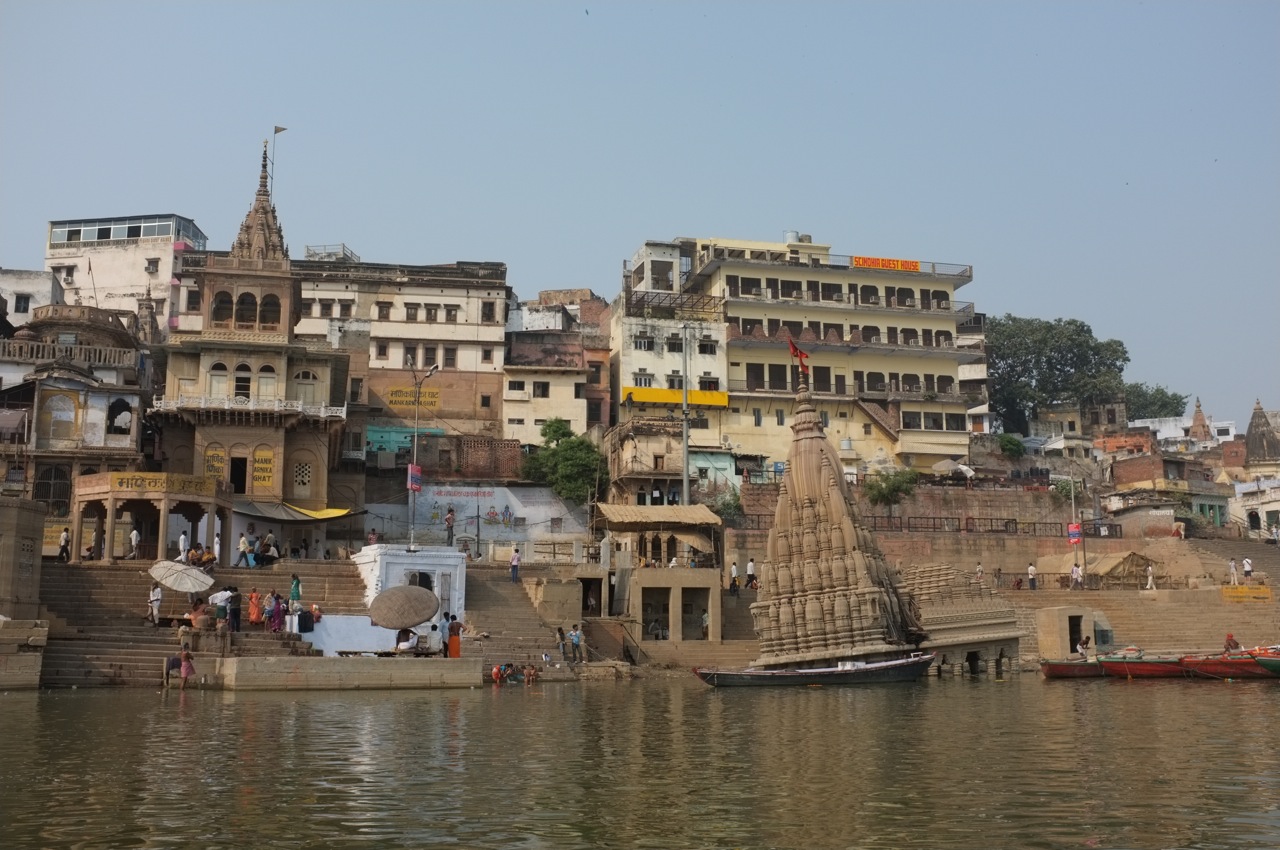
Manikarnika Ghat
Temple · 8 km · about 25 min by road
 #1 in VaranasiFree entry
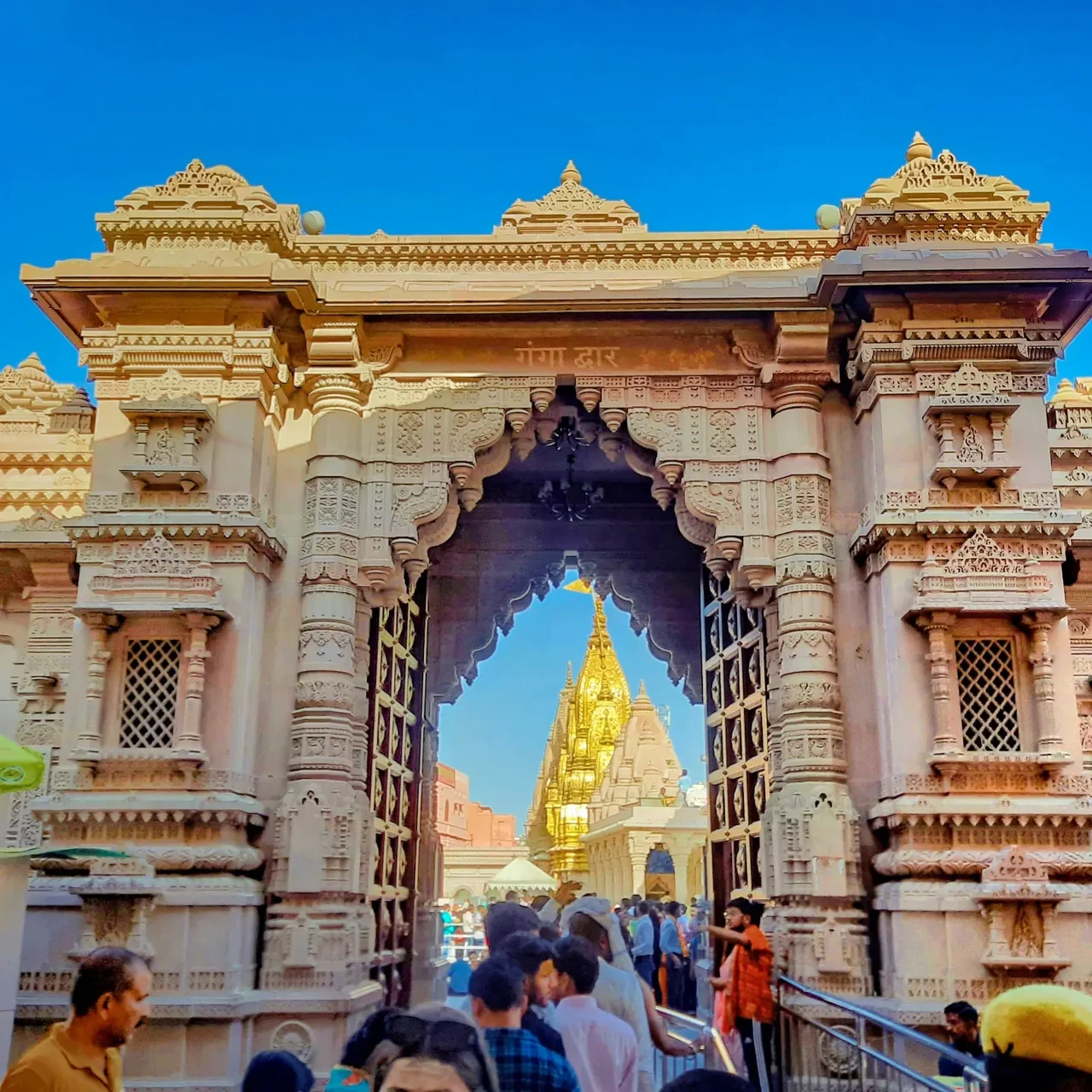
Kashi Vishwanath Temple
Temple · 8 km · about 25 min by road
 #2 in VaranasiFree entry
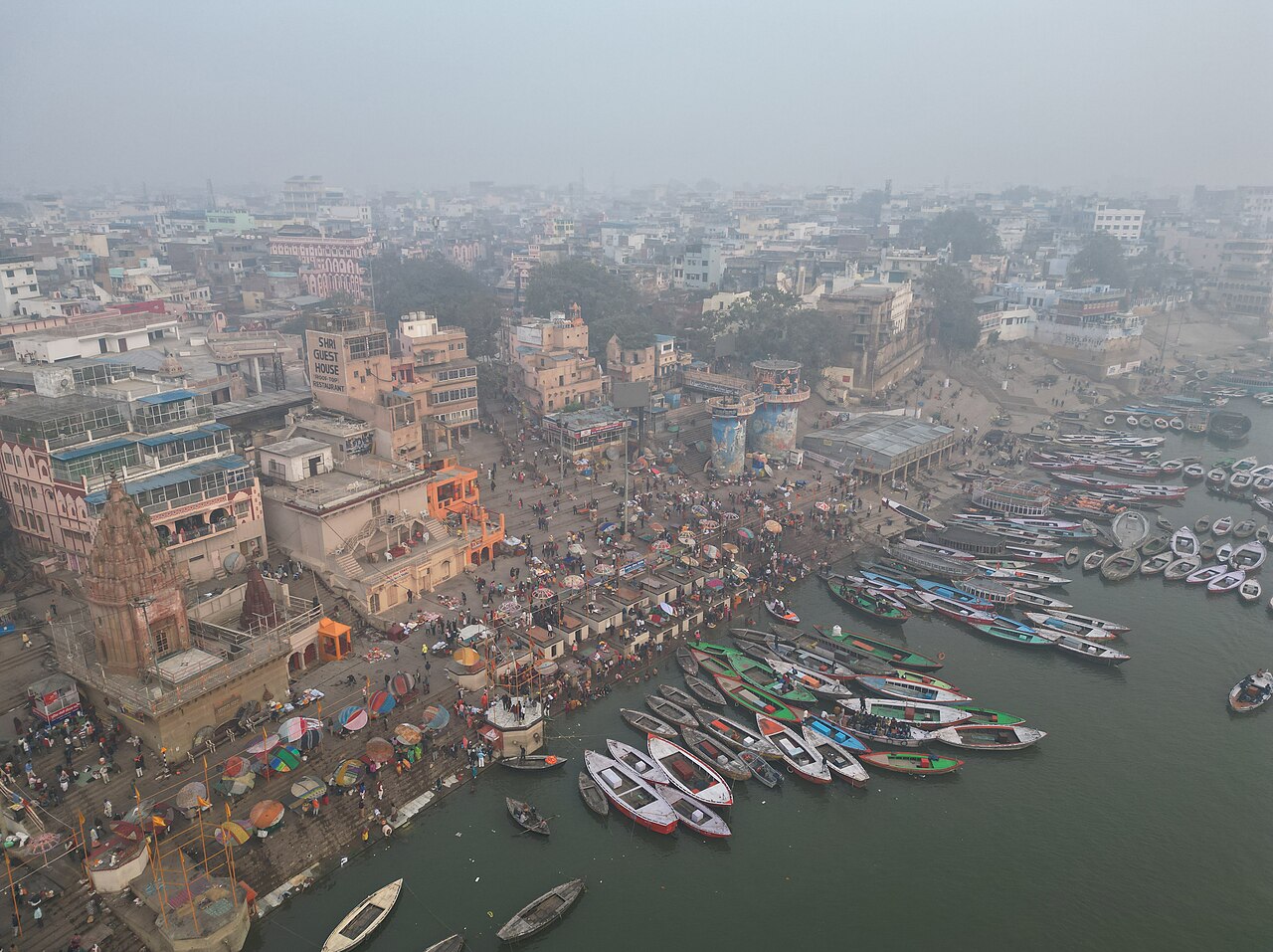
Dashashwamedh Ghat
Temple · 8 km · about 25 min by road
 #7 in VaranasiFree entry
Assi Ghat
Temple · 10 km · about 30 min by road