
Kashi Vishwanath Temple
#1of 10 places to visit in VaranasiVaranasi, Uttar Pradesh
Also known as Shri Kashi Vishwanath Mandir · Vishweshwar Temple · Golden Temple of Varanasi
Quick answer
Opening hours: 03:00–23:00 and 11:15–12:20. Entry is free. Allow 1 hr. Best time: 04:00 – 06:00.
Updated · Compiled by Traveliac, AI-assisted · 5 min read
- Opening hours
- 03:00–12:20
- 03:00 – 23:00 daily, with the sanctum closed to general darshan from 11:15 to 12:20 for Bhog Aarti
- Entry fee
- Free
- Time needed
- 1 hr
- Best time of day
- 04:00 – 06:00
- Best months
- Oct – Mar
- Address
- Lahori Tola, Vishwanath Gali, Varanasi, Uttar Pradesh 221001
About Kashi Vishwanath Temple
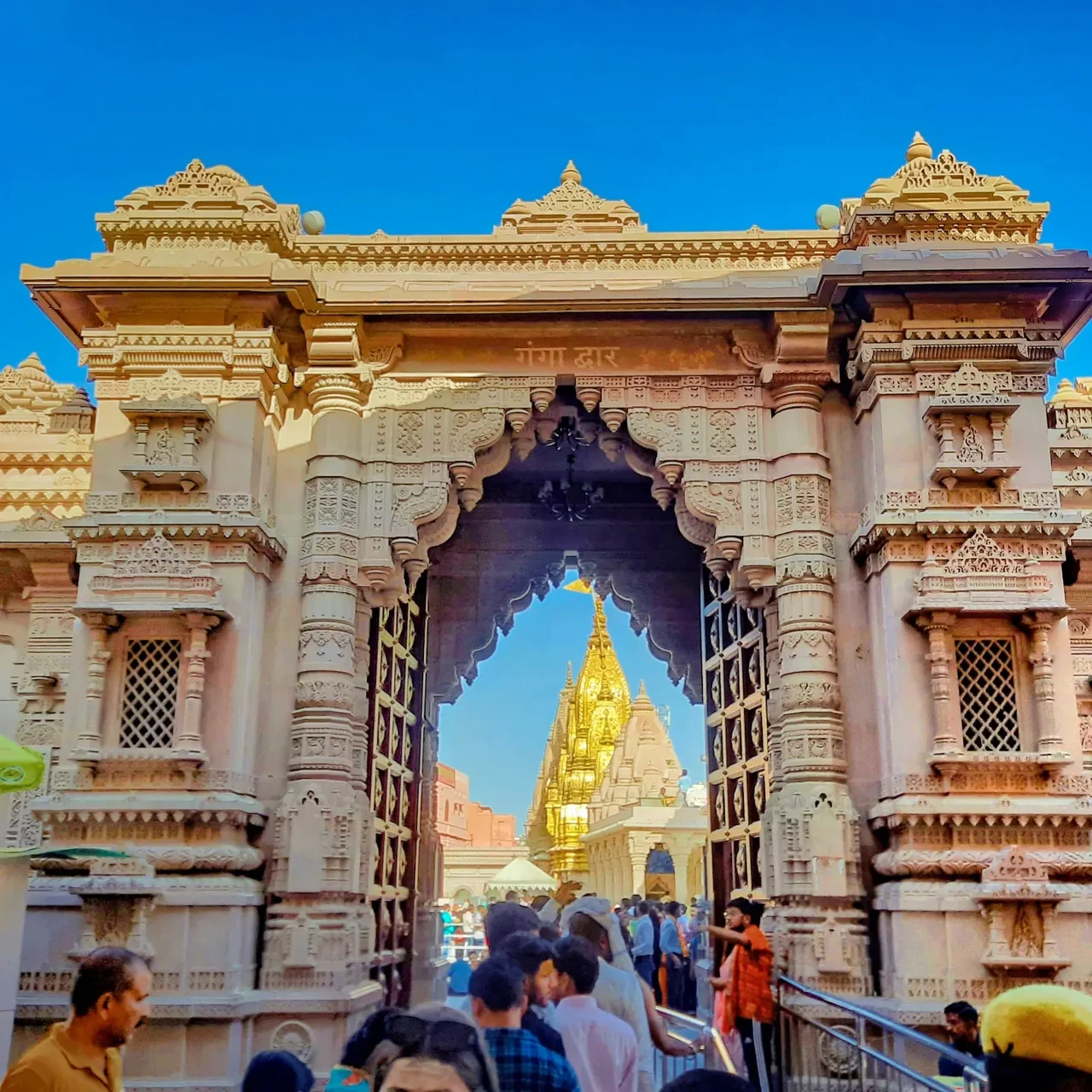
Kashi Vishwanath Temple enshrines one of the twelve Jyotirlingas of Shiva and charges no fee for general darshan as of 2026. The present structure dates to 1780, when Maharani Ahilyabai Holkar of Indore rebuilt the sanctum after Aurangzeb's forces demolished the earlier temple in 1669 and raised the Gyanvapi mosque partly on its plinth — the two structures still stand adjacent, separated by a barricaded lane and a permanent security post. The 800-kilogram gold plating on the two main domes was donated in 1839 by Maharaja Ranjit Singh of Punjab, which is why locals call this the Golden Temple, unrelated to the Amritsar shrine of the same name. The temple now sits inside the Kashi Vishwanath Corridor, a 2019–2021 redevelopment that cleared roughly 300 buildings along a 400-metre stretch to link the sanctum directly to the Ganga at Lalita Ghat. Pink Chunar sandstone paves the corridor's open plazas, replacing the tangle of lanes pilgrims once threaded on foot. The sanctum sanctorum itself remains modest, only a few square metres, so the corridor's scale exists to move crowds of 50,000 to 100,000 daily visitors rather than to enlarge the shrine.
Best time of day: 04:00 – 06:00. Right after the 03:00 Mangala Aarti, when the general queue is shortest and the inner sanctum is least congested.
Kashi Vishwanath Temple timings
- Opening hours
- 03:00–12:20
Mon–Sun 03:00–23:00 and 11:15–12:20 - 03:00 – 23:00 daily, with the sanctum closed to general darshan from 11:15 to 12:20 for Bhog Aarti
- Closed on
- Open every day
Good to know: Queue times extend to several hours during Shravan (July–August) and Maha Shivratri, when police route pilgrims through barricaded lanes well beyond the corridor itself.
Opening hours compiled from shrikashivishwanath.org and public records, last updated . They change without notice — confirm before you travel. How we write these guides
Kashi Vishwanath Temple ticket price
| Ticket | Price |
|---|---|
| Indian visitors | Free |
| Foreign visitors | Free |
| Children | Free |
| Camera | Free |
General darshan through the Gate 4/Saraswati Phatak queue line is free for all visitors as of 2026. Sugam Darshan, a paid line that bypasses the general queue, costs ₹300 per person, bookable at darshan.kashi.gov.in or at the counter — as of 2026, verify at the counter since the trust revises this rate periodically. Phones, leather goods, and electronics are barred past the security check and must go into a paid cloakroom outside the perimeter (₹10–₹20).
Prices compiled from shrikashivishwanath.org and public records, last updated . They change without notice — confirm before you travel. How we write these guides
Best time to visit Kashi Vishwanath Temple
- Quiet
- Moderate
- Busy
- Very busy
03:00 – 06:00
Mangala Aarti and Early Darshan
Devotees gather for the 03:00 Mangala Aarti; the general queue immediately after runs 20–40 minutes. Quietest window for photography in the outer corridor.
Moderate06:00 – 11:00
Morning Peak
Local worshippers and tour groups converge; queue times reach 60–90 minutes. Cloakroom lines outside the perimeter also lengthen.
Busy11:15 – 12:20
Bhog Aarti ClosureBest time to go
Sanctum closed to general darshan for the midday ritual. Corridor plazas remain open and comparatively empty.
Quiet18:00 – 22:00
Evening Aarti Rush
Saptarishi Aarti (19:00) and Shringar Aarti (21:00) draw the day's largest crowds; queues from Gate 4 can exceed two hours on weekends and during Shravan.
Very busy
History of Kashi Vishwanath Temple
Kashi Vishwanath's recorded history is a cycle of destruction and rebuilding running to at least the 12th century. Qutb-ud-din Aibak's forces destroyed an earlier temple around 1194, and successive structures fell to further demolitions under the Delhi Sultanate and, most consequentially, under Aurangzeb in 1669, when the emperor ordered the temple razed and the Gyanvapi Mosque built using part of its foundation and columns. The site was rebuilt nearby by Maharani Ahilyabai Holkar in 1780 — her Maratha-era temple is the structure standing today.
Subsequent rulers added to the complex rather than altering the sanctum. Mohd Ibrahim Khan built the Naubatkhana (drum house) facing the temple in 1785 at the instance of Governor-General Warren Hastings, and Maharaja Ranjit Singh's 1839 gold donation gilded both principal domes. The temple passed from private management to a government-appointed trust on 28 January 1983, with the Divisional Commissioner of Varanasi serving as its ex-officio chairman since. Adi Shankaracharya, Ramakrishna Paramahamsa, Swami Vivekananda, Goswami Tulsidas, and Guru Nanak are all recorded as having worshipped here, underscoring its standing across multiple strands of Indian religious history.
Rules & etiquette at Kashi Vishwanath Temple
Kashi Vishwanath Temple requires all visitors to pass through a two-stage security check before reaching Gate 4, and phones, cameras, bags, and leather items are barred beyond the second checkpoint. A paid cloakroom (₹10–₹20) sits just outside the perimeter on Gyan Vapi Road; queue here before joining the darshan line, since re-exiting to deposit items later can cost 30–45 minutes.
Men are expected to remove shirts before entering the sanctum sanctorum itself, a custom applied to all devotees regardless of nationality, though it applies only at the innermost linga chamber. Touts near Godowlia crossing and Vishwanath Gali frequently offer 'VIP darshan' passes for ₹500–₹2,000 in cash; the only legitimate paid route is Sugam Darshan booked through darshan.kashi.gov.in or the official counter, and cash deals struck outside carry no guarantee.
Photography is prohibited throughout the inner temple precinct, enforced by security personnel stationed at multiple points since the corridor's 2021 opening. The outer plazas, including the riverside promenade toward Lalita Ghat, permit photography freely.
Tips for visiting Kashi Vishwanath Temple
- 1
Kashi Vishwanath Temple rewards visitors who arrive before the 04:00 Mangala Aarti crowd builds, since the queue from Gate 4 can stretch past two hours by mid-morning, particularly on Mondays (Shiva's day) and during Shravan. Carrying nothing beyond a coin purse and identification avoids the cloakroom detour — leave phones and wallets at the hotel where possible.
- 2
The corridor's northern viewing gallery offers a clear, legal sightline onto the Gyanvapi Mosque boundary wall without approaching the barricaded lane directly. Licensed pandits registered with the trust wear a laminated badge and are stationed inside the corridor for those wanting a guided ritual (typically ₹200–₹500, negotiate first); unregistered men offering the same service outside are not affiliated with the trust.
- 3
Combine the visit with the corridor's riverside end at Lalita Ghat, from which Manikarnika Ghat is a five-minute walk north and Dashashwamedh Ghat a ten-minute walk south — both logical continuations of a morning circuit beginning at the temple.
How to reach Kashi Vishwanath Temple
The red star is Kashi Vishwanath Temple; the numbered pins are the 9 nearest places in our guides, each showing its rank in its city. Tap a pin for details.
Lahori Tola, Vishwanath Gali, Varanasi, Uttar Pradesh 221001Directions in Google Maps
From Lal Bahadur Shastri International Airport (VNS)
₹600–₹90025 km · 45–75 min
Prepaid taxi/OLA/Uber); shared airport shuttle approximately ₹150 per seat.
From Varanasi Junction Railway Station (BSB)
₹100–₹1804 km · 15–25 min
Auto-rickshaw, negotiated); e-rickshaw to Godowlia crossing then a 10-minute walk, ₹40–₹60.
From Godowlia Crossing
1 km · 10–15 min walk
Free — vehicles are barred from the final approach lanes; the walk is unavoidable for all visitors.
Nearest airport
From Lal Bahadur Shastri International Airport (VNS), Babatpur
approximately 25 km, 45–75 minutes by road.
Nearest railway station
From Varanasi Junction (BSB), also known as Varanasi Cantt
approximately 4 km, 15–25 minutes by auto-rickshaw.
Kashi Vishwanath Temple FAQs
Is Kashi Vishwanath Temple entry free?
Yes. General darshan through the Gate 4 queue costs nothing as of 2026. Sugam Darshan, a paid express line, costs approximately ₹300 per person and can be booked online at darshan.kashi.gov.in.
Can foreign or non-Hindu visitors enter Kashi Vishwanath Temple?
Yes, in principle, but in practice entry is tightly controlled by the security perimeter rather than religion, and all visitors — Indian or foreign — pass the same identification and bag checks. There is no religion-based exclusion at the gate itself, though the innermost sanctum area is managed for high-volume ritual worship rather than tourism.
What can I not carry into Kashi Vishwanath Temple?
No phones, cameras, bags, belts, wallets with metal clasps, or other electronics are permitted past the second security checkpoint. A paid cloakroom outside the perimeter on Gyan Vapi Road holds these items for ₹10–₹20.
How is Kashi Vishwanath Temple connected to Gyanvapi Mosque?
The two structures stand adjacent because the mosque was built in 1669 partly on the plinth and using columns of the temple Aurangzeb's forces demolished. A barricaded lane and permanent security post separate them today, and the current temple building dates only to 1780, a later Maratha-era reconstruction on adjoining land.
Compiled with AI assistance from official sources and public records, and published only after the checks in How we write these guides. Nobody from Traveliac has visited this place. Last updated . How we rank and check places
Places to visit near Kashi Vishwanath Temple
Straight-line distances from our map; times are estimates.
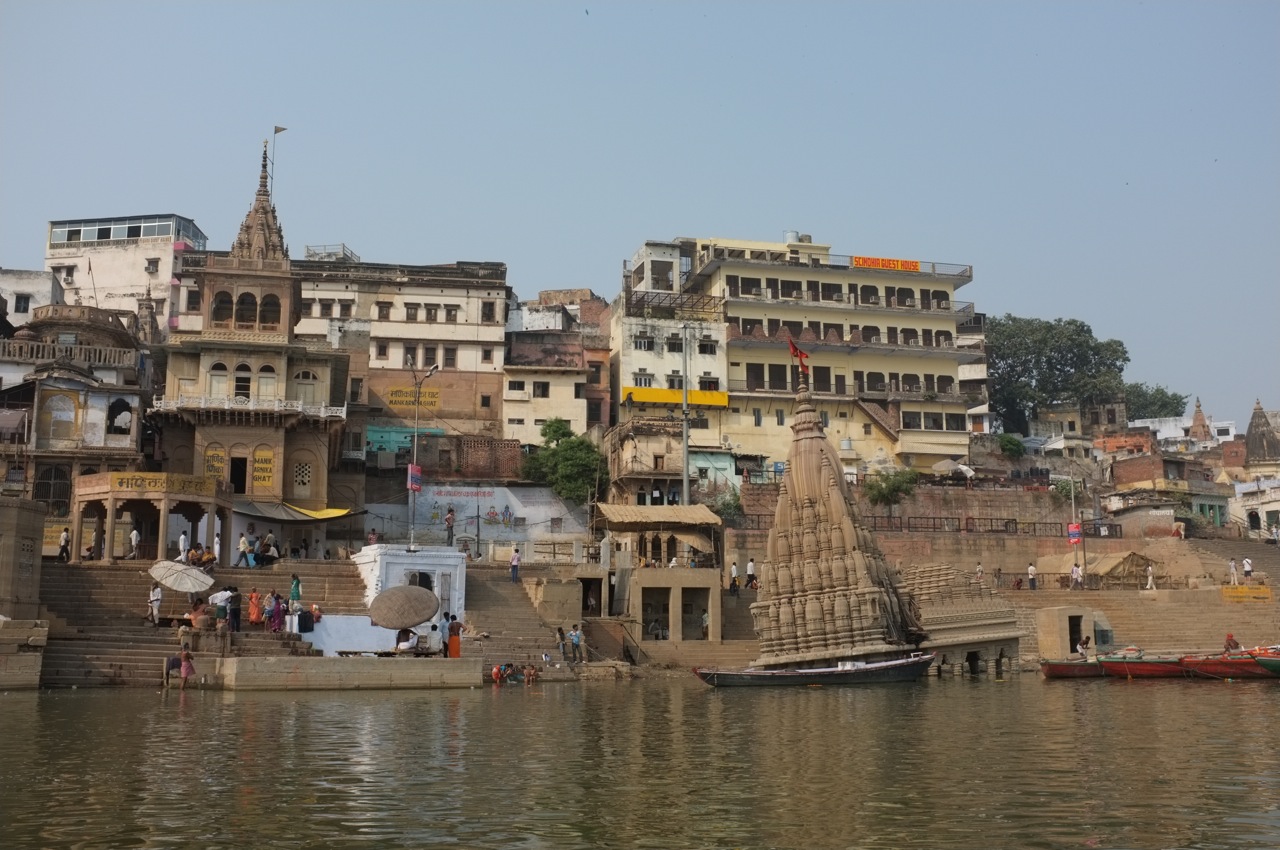 #3 in VaranasiFree entry
Manikarnika Ghat
Temple · 350 m · about 6 min walk
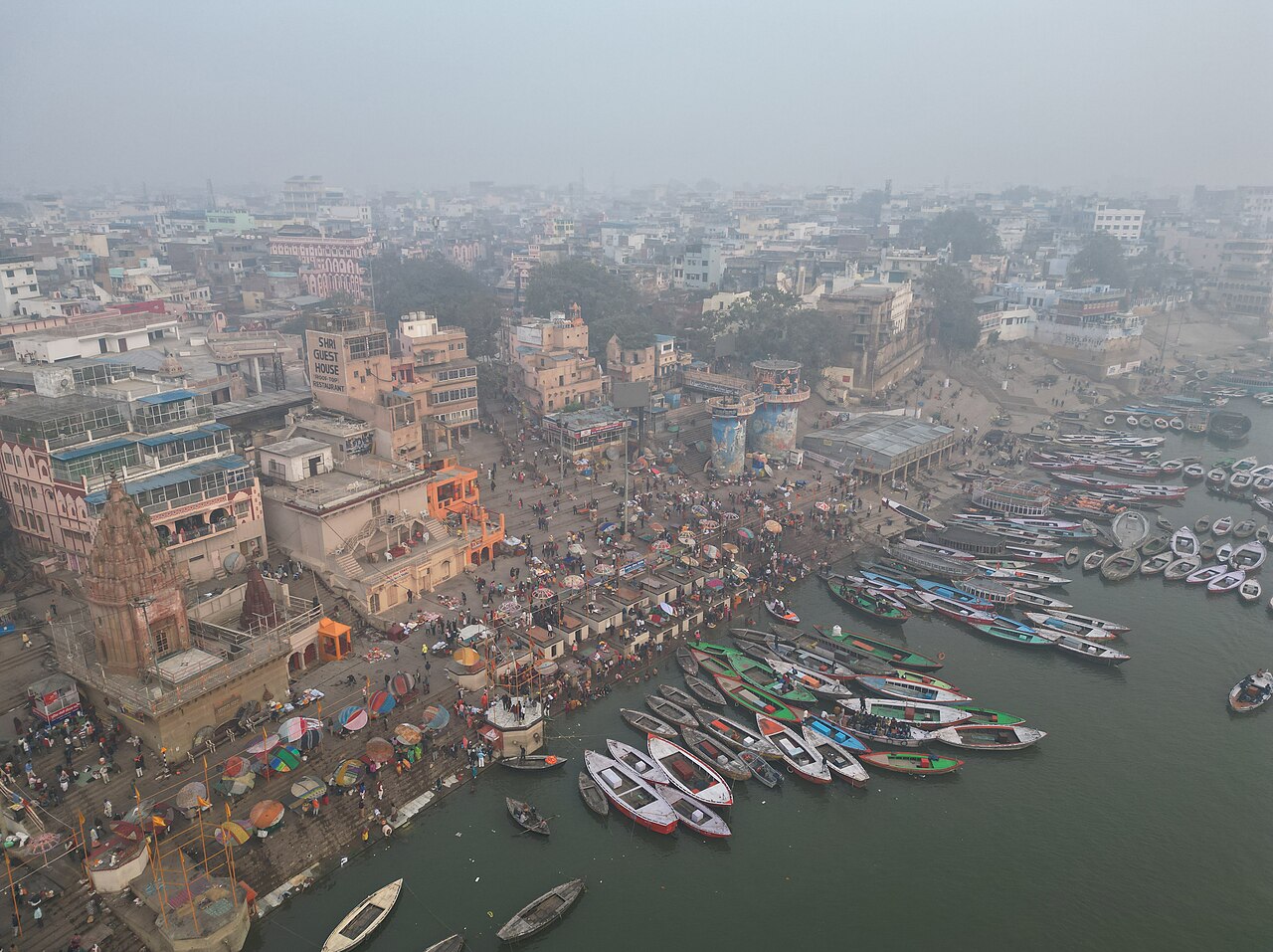 #2 in VaranasiFree entry
Dashashwamedh Ghat
Temple · 400 m · about 7 min walk
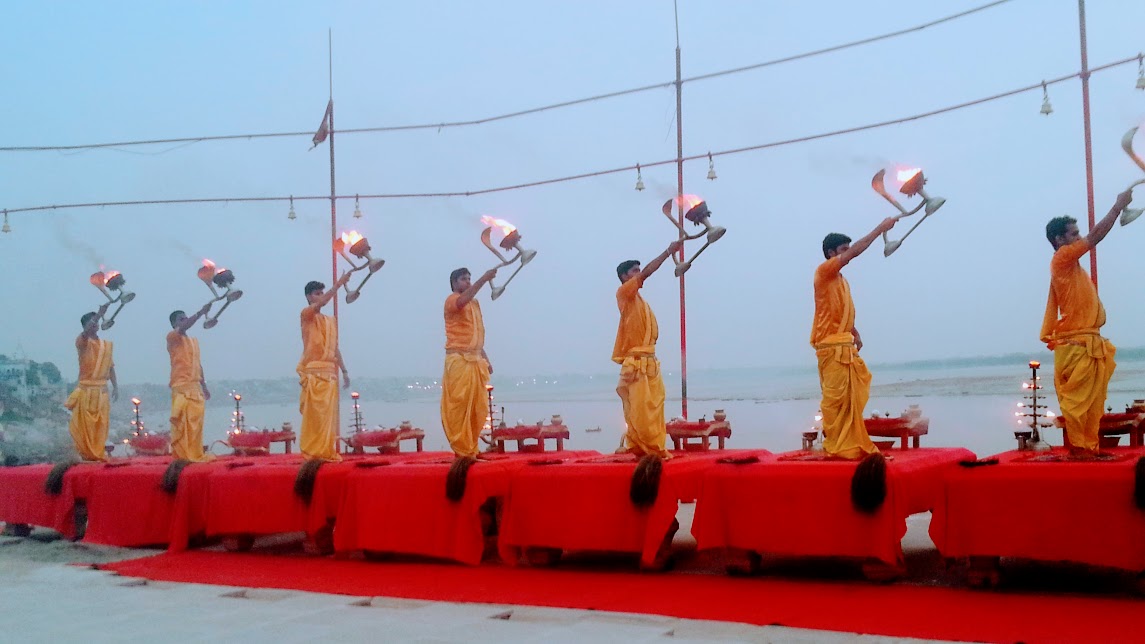 #7 in VaranasiFree entry
Assi Ghat
Temple · 2.5 km · about 40 min walk
 #4 in VaranasiFree entry
Durga Temple
Temple · 3 km · about 10 min by road